Michael Belcher Michael Belcher

Warm Wishes for the Class of 2026

Looking back on many beautiful years with the Class of 2026.
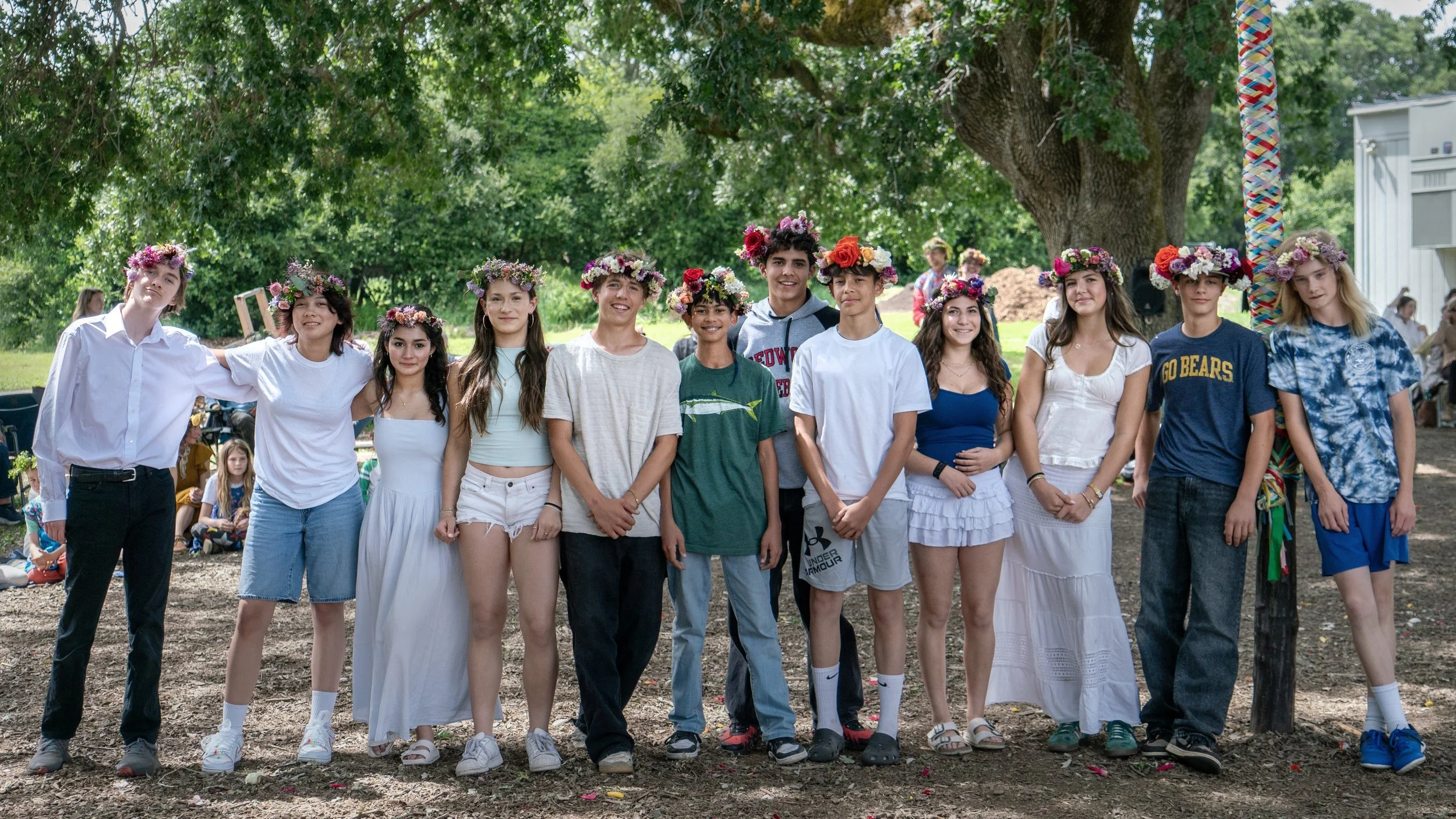
The school year ended on a bright spring morning as we gathered in the the campus amphitheater to celebrate the Class of 2026. It was a beautiful day, filled with music, flowers, and speeches. (Scroll down to see photos from the day!)

It has been a joy and an honor to watch these remarkable young people grow over many years—stretching all the way back to preschool and kindergarten. Below, we share memories of the class over their years at Marin Waldorf School.

Above: (L) With their 8th grade buddies and teacher Melinda Martin at the Rose Ceremony on the first day of 1st grade for our graduating 8th grade class, September 2018. (R) The Rose Ceremony last day of 8th grade for the Class of 2026, June 2026.


Memories from Melinda Martin

Melinda Martin was the Class of 2026's lead teacher from 1st grade to 4th grade.
Below she shares some special memories and wishes for the class.

In the fall of 2018, you were losing your first teeth, singing “one for the golden sun,” and learning to write letters through drawing pictures of mountains (M) and geese (G). Of course, I knew many of you for two years before first grade, from the time you were 4, when you just learned how to use the coveted sharp shovels and enjoyed the wonder of your beloved wee ones in the kindergarten. So while I have not seen most of you in quite some time, I have many memories of the early years that were foundational to who you are today.

In some respects a Waldorf class resembles family, being that you have experienced much together for many years. One major experience we shared was COVID. Our outdoor classroom will live in my memory forever, as a time when the community came together to build a classroom to enable us all to be at school. We harvested and juiced the garden grapes. Some of you periodically scaled the wooden poles to tighten the ropes when the sun tarp sagged. You cuddled my baby chicks (still alive and clucking!) and we all sat, masked, on stumps reciting poems and multiplication tables. (Do you remember when a mama deer gave birth to a baby deer behind our chalkboard?) 

Over the years you performed beautiful plays, had a 3rd grade store, built shelters, and did animal reports. We traveled to Live Power Farm and you arose in the dark on rainy days to feed the pigs and milk the cows, before the farmers would offer you breakfast. As you can see, my memories are endless (and very fond), with too much to write about here.

I hope that the memories of your Waldorf experience stay with you, as they have stayed with me, for they have been ingredients that have helped you to become the person you are, and are continuing to become. I wish for you the best, as you continue to seek out the things that bring you happiness and fulfillment in your precious life.  

— Melinda Martin


An Extraordinary Journey

It has been an honor and a joy to watch the Class of 2026 learn, play, collaborate, and grow over many years together. Some of our soon-to-be graduates started their MWS journey wearing capes and eating honey buns as Buttercups, Sunflowers, Hollyhocks, and Morning Glories. Others joined the class later in their journey, quickly becoming an important part of the class community. Over the years, they said goodbye to dear friends who moved across the country and the world. Together, they created a beautiful community!


8th Grade: A Capstone Year

The 8th grade year is a capstone to the Marin Waldorf School experience, and the Class of 2026 made the most of theirs. Over the course of the school year, our students built motors in physics class, learned to use a sewing machine in handwork, and studied the lives and work of famous revolutionaries through history. They helped set up a beautiful Dia de Muertos celebration and lit up the amphitheater with a beautiful rendition of the song "Todos Juntos" by the Chilean band Los Jaivas in the Spring Assembly.

Social responsibility, stewardship, and They helped their 1st grade buddies learn to knit and carve pumpkins (see below!). They played soccer, they biked through the Lucas Valley open space, and they competed as a team in the annual inter-school 8th grade track meet in Aptos, California.They learned about bugs on a hike with a famous entomologist. They performed in their final class play (pictured above). And they each spent months planning, researching, and working with a mentor to complete a multifaceted 8th grade projects on a subject of their choice.

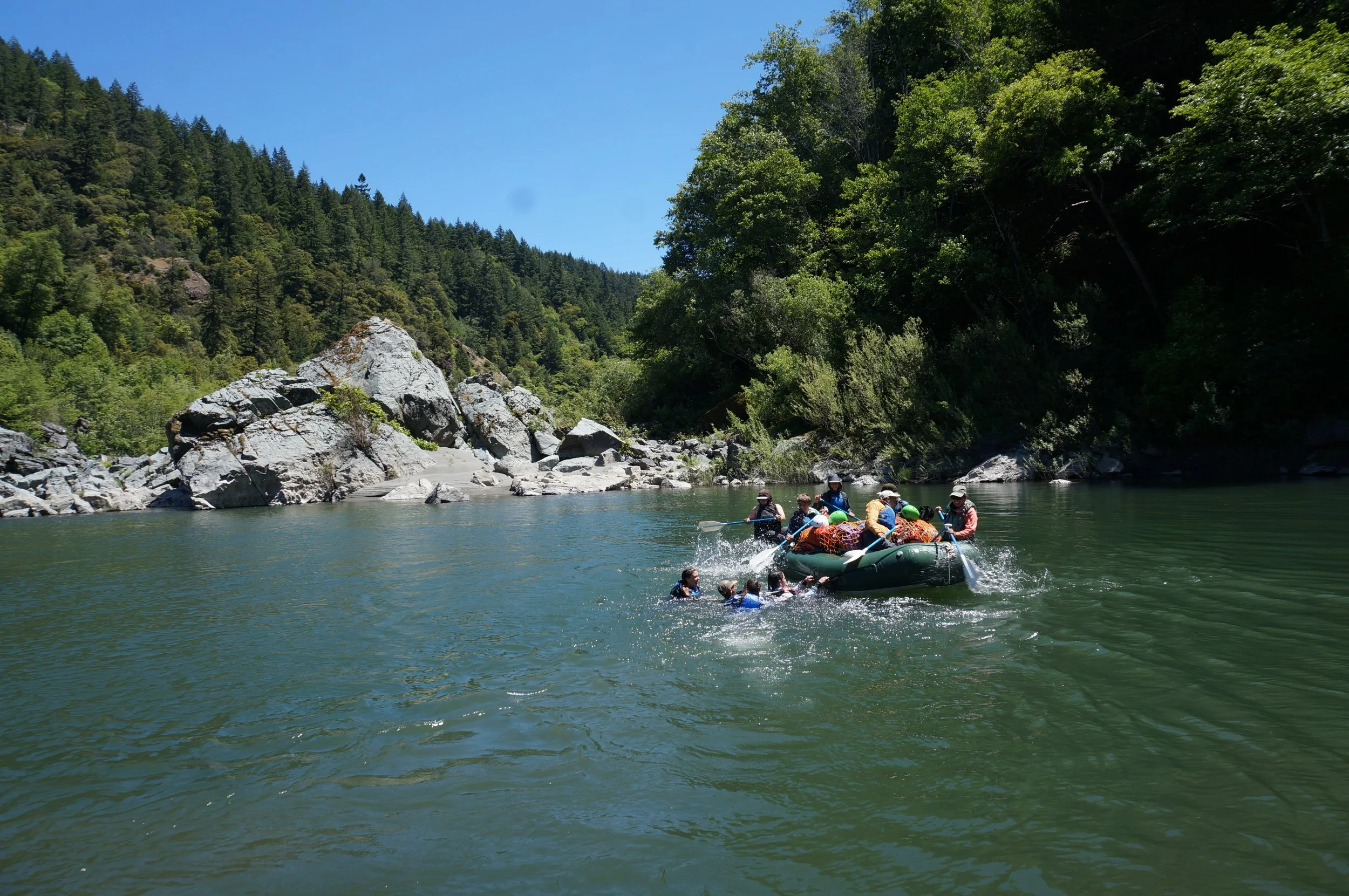
At the end of May, the Class of 2026 shared a week of campfires, starlight, river swims, redwood groves, laughter, challenge, and true camaraderie on a trip to Trinity and Klamath Rivers with Farthest Field Adventures and Mr. Neale. A river-to-the-sea rafting trip, the expedition was an opportunity for our students to explore the beautiful Northern California wilderness and to test their own strength and endurance on the river.

Click here for more photos from the 8th Grade Expedition to the Trinity and Klamath Rivers.


Graduation


Where are they going?

Our 8th graders were accepted at independent and charter schools across the Bay Area. Here’s where they’ve chosen to go next year!

  • San Rafael High School

  • Marin School of the Arts

  • Redwood High School

  • Marin Academy

  • The Bay School

  • San Domenico

  • Credo High School

In addition, our students were accepted at Marin Catholic, Lick Wilmerding, St. Ignatious, and San Francisco Waldorf High School.

Read More
Michael Belcher Michael Belcher

The 8th Grade Expedition: A Capstone Experience

The 8th grade expedition is a capstone to the middle school experience. This year’s class explored the Trinity and Klamath Rivers on a rafting trip to the sea.
At the end of May, the Class of 2026 shared a week of campfires, starlight, river swims, redwood groves, laughter, challenge, and true camaraderie on a trip to Trinity and Klamath Rivers with Farthest Field Adventures and Mr. Neale. A river-to-the-sea rafting trip, the expedition was an opportunity for our students to explore the beautiful Northern California wilderness and to test their own strength and endurance on the river.

The 8th grade expedition is a capstone to the Marin Waldorf School experience, an annual service and outdoor education opportunity for students to challenge themselves physically and personally, and to connect with the natural world firsthand. Perhaps most importantly, it is an opportunity for our students to spend meaningful time together as a class before graduation.

In Waldorf education, building a relationship with nature is central to a child’s development. Time outdoors teaches children about the Earth’s natural rhythms and cycles, allows them to experience natural phenomena before studying them in a classroom, and fortifies the child’s relationship with and respect for the natural world. Starting in preschool, our students spend a large part of their day outside, rain or shine. Kindergartners take weekly hikes in the hills near campus and learn that, as the saying goes, “there is no such things as bad weather, only bad clothes.”

Throughout the grades, the relationship with nature that was built in early childhood continues through gardening, environmental education, outdoor education trips, and weekly hikes off campus. For many of our students, a snowy ascent up Mt. Shasta or jumping into nearby Miller Creek during an environmental education class may be among their best memories at school. By 8th grade, they are ready for a true wilderness adventure.

Read More
Michael Belcher Michael Belcher

Celebrating Teacher Adam Neale's Career at Marin Waldorf School

As our school’s woodworking and outdoor education teacher, Mr. Neale made a positive impact on hundreds of Marin Waldorf School students, alumni, and parents.
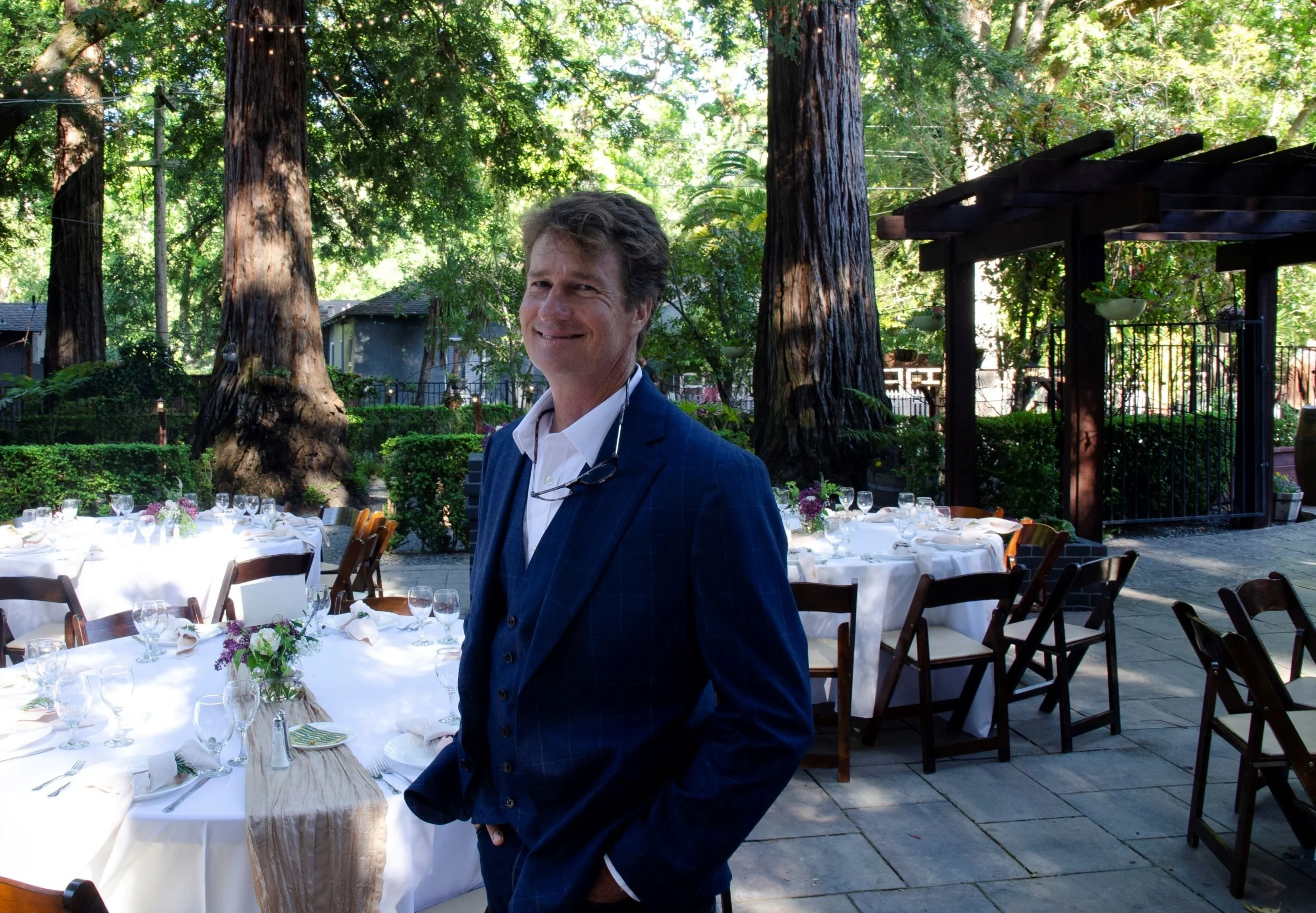
Adam Neale has been an important and deeply beloved member of our school community for decades, first as a parent and later as our school's woodworking and outdoor education teacher. Today, we'd like to remember and celebrate his career as his retirement approaches.

Mr. Neale had a tremendous impact on the hundreds of students he's taught over more than 15 years on the faculty at Marin Waldorf School—especially as a trip leader for on the annual 8th grade expedition, a memorable and often challenging experience that takes students out into the wilderness and far from the comforts of home. Out in the field, Adam's steady presence and deep knowledge of the natural world helped bring joy, self-confidence, and strength to our students, in addition to building their respect and love for the outdoors.

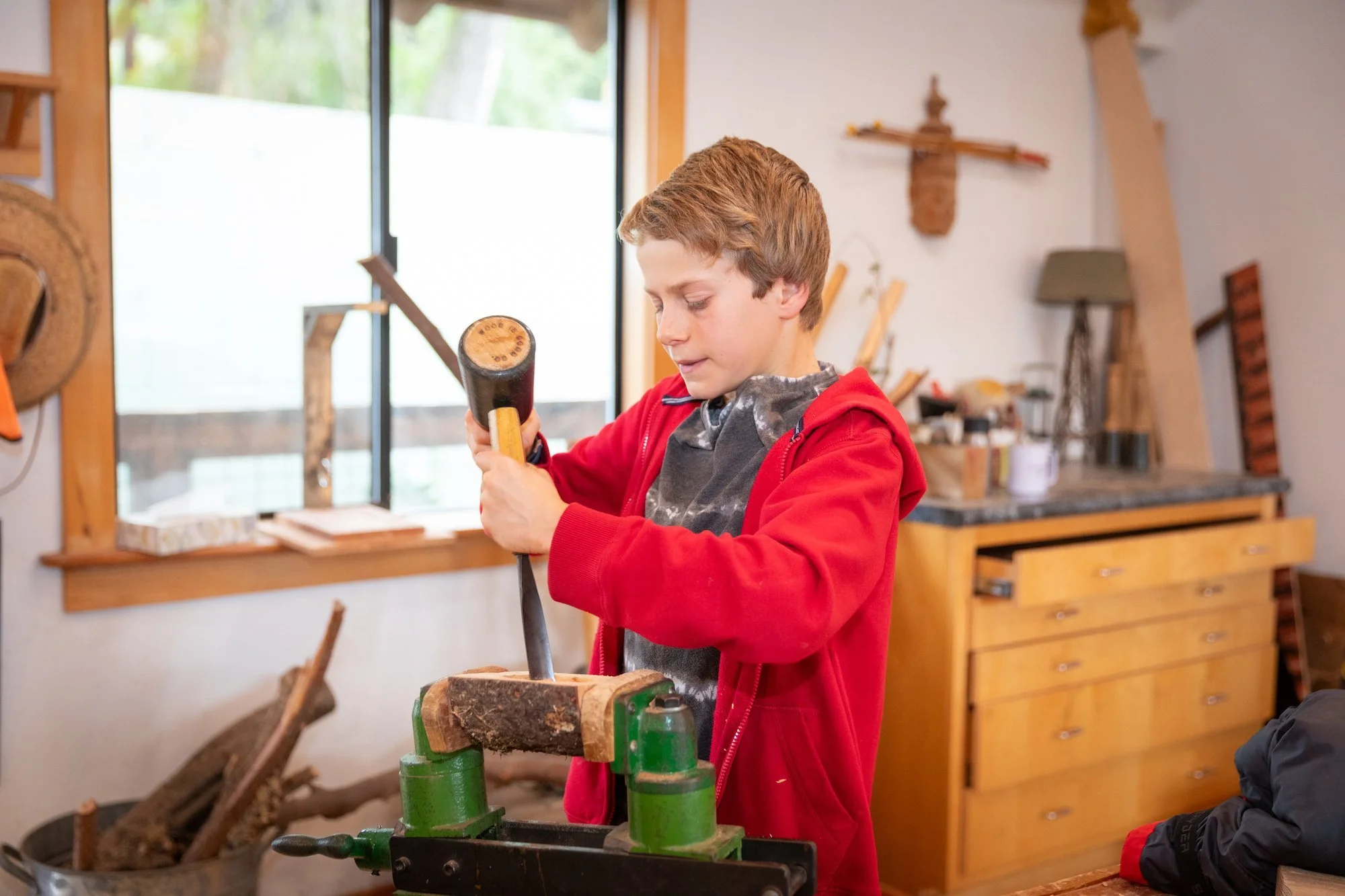
But Mr. Neale has contributed to our school's spirit and community in countless other ways. In the wood shop, he offers children gentle guidance alongside the silence and space to create. He gives an Oscar-worthy performance as the sleeping giant at the Harvest Faire. He's a frequent speaker at 8th grade graduation. And who knows how flower wreath will get to top of the May Pole next year without Adam there to place it?

Please join us in celebrating Adam's career at MWS and wishing him well as he begins his retirement.

A Lasting Impact

Ahead of Adam Neale's retirement, we asked former parents and students to share their reflections.


"During my time as a student at Marin Waldorf School Mr. Neale’s woodworking class and our class’s Friday hikes with him were my favorite days and the times I remember feeling most free and at ease while at school. I attribute these happy feelings to being in the comfort realm of Mr. Neale and his connective and joyful energy.

He supported my random ponderings and my quirky enthusiasm, and acknowledged me for being myself—he made me feel seen. Mr. Neale was willing to spend time in conversation with me, not making me feel separate from him as an adult. 

Since graduating 8th grade, I see Adam on occasion and I always feel filled with good memories as well as excitement for hearing what he’s been up to. I feel loved when he asks me where I’ve been! He was so kind to literally pay for my Garmin in reach satellite device that I needed to bring on my 2,650 mile hike from Mexico to Canada in 2024. I’m excited to go surfing with him!" — Willow, Class of 2019, and current student at Colorado Mountain College in Leadville, Colorado


Woodworking was great, of course I loved it. But Mr. Neale had this welcoming, warm, steady presence that made me feel safe always—on field trips, adventures, in every class. I will always think of him as the best part of the spirit of Waldorf." — Treya Tompkins, Class of 2018, current student at Amherst College


“One 8th grader. One wheelbarrow. And Mr Neale. That’s the basis of my story of appreciation for Adam Neale! It was Spring 2016, and we were on the culminating journey of our Marin Waldorf School education. Naturally, Mr Neale was on board for the trip. We found ourselves doing service work at a Navajo homestead in Four Corners and while chopping firewood there, I made one big bad swing with the axe—fortunately I didn’t chop off any toes (!) but I did do a number on my ankle making it hard to walk. I was basically benched and kind of bummed. But not for long because Mr. Neale had a bright idea to keep me mobile and keeping pace with the group. He spied a dilapidated old wheelbarrow and shot me a glance. “Get in!” he commanded, with that telltale grin and sparkle of his. And off we went! I’ll never forget our laughs and the way Mr Neale supported me. Nothing but love and gratitude for you, Adam Neale!” — Katie Spegar, Class of 2016, current student at UC Berkeley


I trusted Adam with both our children, completely and in any context: in the class room, on field trips in the depth of nature or the heart of a city, in the woodworking studio. And every year at the school auction, we bid on whatever experience Adam was offering - more time for them to learn with him at any cost was an easy “yes.” Most importantly, he modeled for my children (and all of us adults) what it means to be authentic, strong, humble - and deeply kind - and to live a life on one’s own beautiful terms."
Diane Tompkins, Alumni Parent


Mr. Neale taught all three of our children the master lesson: how to keep at it when things didn't come easily. He did this by example all the time as he worked with the students on their projects and on the class plays and projects, building anything needed. Amazing! He took them on fantastic Friday hikes (their favorite times) and exquisite 8th grade trips, too. He really saw them and he knew them so well. When I asked Leo to reflect on Mr. Neale as a teacher, he said a lot of great things and then he said, "He's perfect." — Kina Mandelbrot, Alumni Parent


Do you have a memory of Adam Neale you’d like to share? We’d love to hear from you! Please reach out to alumni@marinwaldorf.org to share your favorite moments with Mr. Neale.

Adam Neale: Mentor and Maker

Mr. Neale has been a part of the Marin Waldorf School community for decades, first as a parent and later as the woodworking and outdoor ed teacher. in 2019, we talked with him about his childhood in Miami, first-day jitters as the new MWS woodwork teacher, and (as you hoped!) how he met his wife, MWS director Megan Neale.

Adam Neale has always had a fondness for making things. He brought that gift, along with his genuine kindness and affability, to Marin Waldorf School over a decade ago, and today is one of the most beloved teachers on campus. An outdoor enthusiast and sportsman, he is a veteran of many MWS class trips, as well as an alumni parent.

What was your childhood like?

I grew up in Miami, Florida. I loved it. I was really into the natural world, being outside all the time, being on the water, in the woods, in the mangrove swamps. That’s where I loved to spend my time. My parents really enjoy being outside too. My mom studied marine biology. My dad was into fishing. They loved bird-watching. We spent our weekends out and about. 

I’ve always liked making things. One of my first memories of woodworking was from summer camp in North Carolina. We dug up these little sassafras trees and I made a cane with the wood. I spent so much time working on that walking stick—and it’s funny to think it’s the same thing I do today, something that I was really drawn to as a child. Now I work surrounded by all these sticks! It’s endless what you can do with that stuff. 

How did you find your way from Florida to California?

I met Megan at a wedding in LA. She had decided that she wanted to live in Miami before I met her. I was living in Phoenix, Arizona, at the time. I told her I needed a ride from Phoenix to Miami to visit my parents—because I liked her. She was living in Marin and had just graduated from UC Santa Barbara, and she came through Phoenix to pick me up on the way to Miami. Our first date was driving across the country... Read more in this 2019 interview with Mr Neale!


Memory Lane: Pandemic Projects for Middle School

During the 2020 school closure, Mr. Neale kept students engaged with some wonderful at-home projects—and we’ve still got the videos! Here are a couple of fun clips of Mr. Neale’s inventions for middle schoolers.


Thank you, Mr. Neale, for everything you’ve brought to Marin Waldorf School!

Read More
Michael Belcher Michael Belcher

Screen-Free Week Special: What Does It Really Mean To Be Tech Savvy?

What does it really mean to be tech savvy? At Marin Waldorf School, we help children grow into educated digital citizens who use electronic media and technology as a resource and a tool.
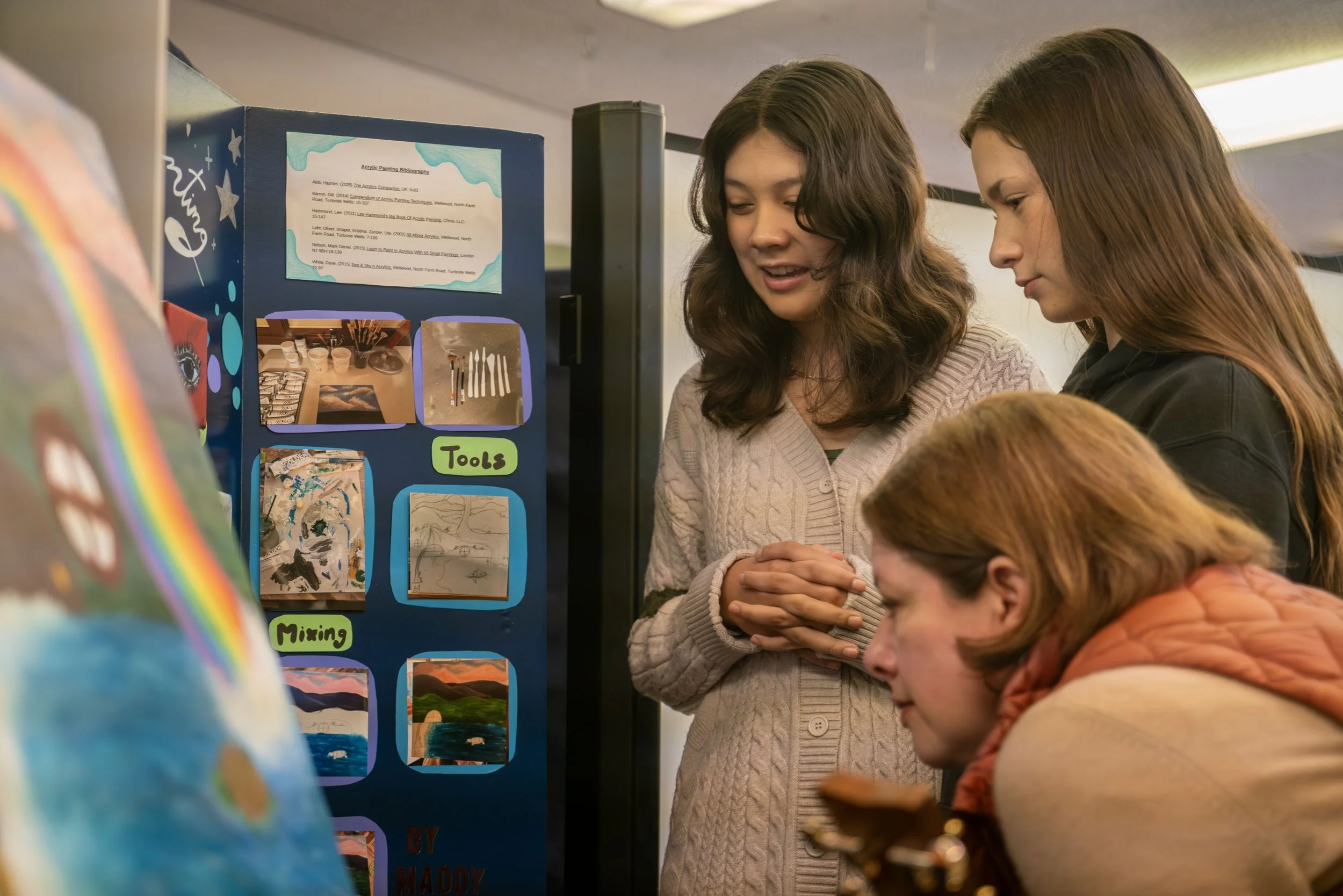
At Marin Waldorf School, we take a slow and thoughtful approach to tech education. Through a progressive and age-appropriate curriculum, we aim to educate our students to become grounded, responsible, and savvy tech users. But what does it really mean to be tech savvy?

Here, we don’t define a tech savvy as someone who is fluent in the latest apps, devices, and software, but an educated digital citizen who understands how to use electronic media and technology as a resource and a tool.

Slow Tech—Not No Tech—Curriculum

Waldorf education is over 100 years old, but our outlook on tech is based on the most recent research about the effects of screen time on developing brains, the impact of social media on emotional well-being, and the exposure to violence, advertising, and adult content in media. Our campus is intentionally screen free and we don’t use educational technology in the classroom, unless it is required for assisted learning.

Our rich interdisciplinary curriculum emphasizes hands-on experiences, human relationships, creativity, social responsibility, and connection with nature, before introducing the often overpowering influence of media and technology. Our curriculum and pedagogy are based on the understanding that, as best-selling author Jonathan Haidt writes in his book The Anxious Generation, “Experience, not information, is the key to emotional development.”

At Marin Waldorf School, we take a slow approach to tech, especially for young children. During early childhood and grades 1 to 4, children are guided by parents and teachers in building strong social and communication skills—with little or no influence from digital media at home. At school, children are encouraged to build social skills through group work and free play; to develop their imagination and creativity through the arts, music, and stories; and to boost their bodies and brains with experiential activities, from games to knitting to woodwork.

Importantly, we don’t simply discourage technology and screen-time; we actively encourage the tactile, hands-on, real-world, and social experiences that children need to build a healthy foundation for their future.

A Tech-Savvy Middle School

In grades 5 to 8, media and technology are gradually introduced at school, teaching students how to positively use these tools in their lives and relationships. Our approach to tech education includes letter writing, phone calls, emails, and other forms of communication, which teach children how technology fits into a larger social context. We prioritize social-emotional learning through group work in the classroom, as well as cooperative projects, like class plays and orchestra performances. And we offer direct instruction in digital citizenship through social ethics and Cyber Civics courses in middle school. Read more about our step-by-step approach to tech education here.

A Like-Minded Community

In today’s tech-centric environment, it is difficult to limit or eliminate screen-based media from your child’s life—particularly when media, movies, and video games have become such a widely accepted aspect of childhood. 

Many families choose Marin Waldorf School because they are looking for a low-tech environment. Here, we encourage parents to work in partnership with our faculty to limit the influence of media and technology at home, creating a community of children who are nourished by real-world relationships and hands-on learning. 

Why Limit Screens?

Research shows that screen time and media, especially for young children, can curtail attention, reduce empathy and slow language acquisition, interfere with sleep, and negatively affect academic performance over the long term. Even without research, we know it on a gut level: Children are unnaturally captivated by screens, tuning out human interaction and experience—or even basic needs, like hunger—when pulled into a television show or video game. 

We encourage parents to limit screen time so that their children can observe and experience the world with their senses, naturally building neurological pathways, social skills, and the ability to learn new things, as their brains are built to do.

Resources for Families

Let's help our kids grow up to be tech savvy! For families looking to make strong media choices at home, we have some resources and recommendations to share. 

  • Diana Graber, founder of the Cyber Civics curriculum and author of Raising Humans in a Digital World, is a frequent speaker at Marin Waldorf School. Click for Diana’s most recent presentation to the MWS community or download resources from her presentation here.

Tell Us About Your Family!

What are your family media goals? Share your screen-free stories with us!

Read More
Michael Belcher Michael Belcher

A Holistic View of Achievement: How Waldorf Schools Assess Student Progress

How do Marin Waldorf School students become engaged and diligent learners without grading, tests, and quizzes? And how do teachers measure and assess students progress? Learn more about our whole-child approach.
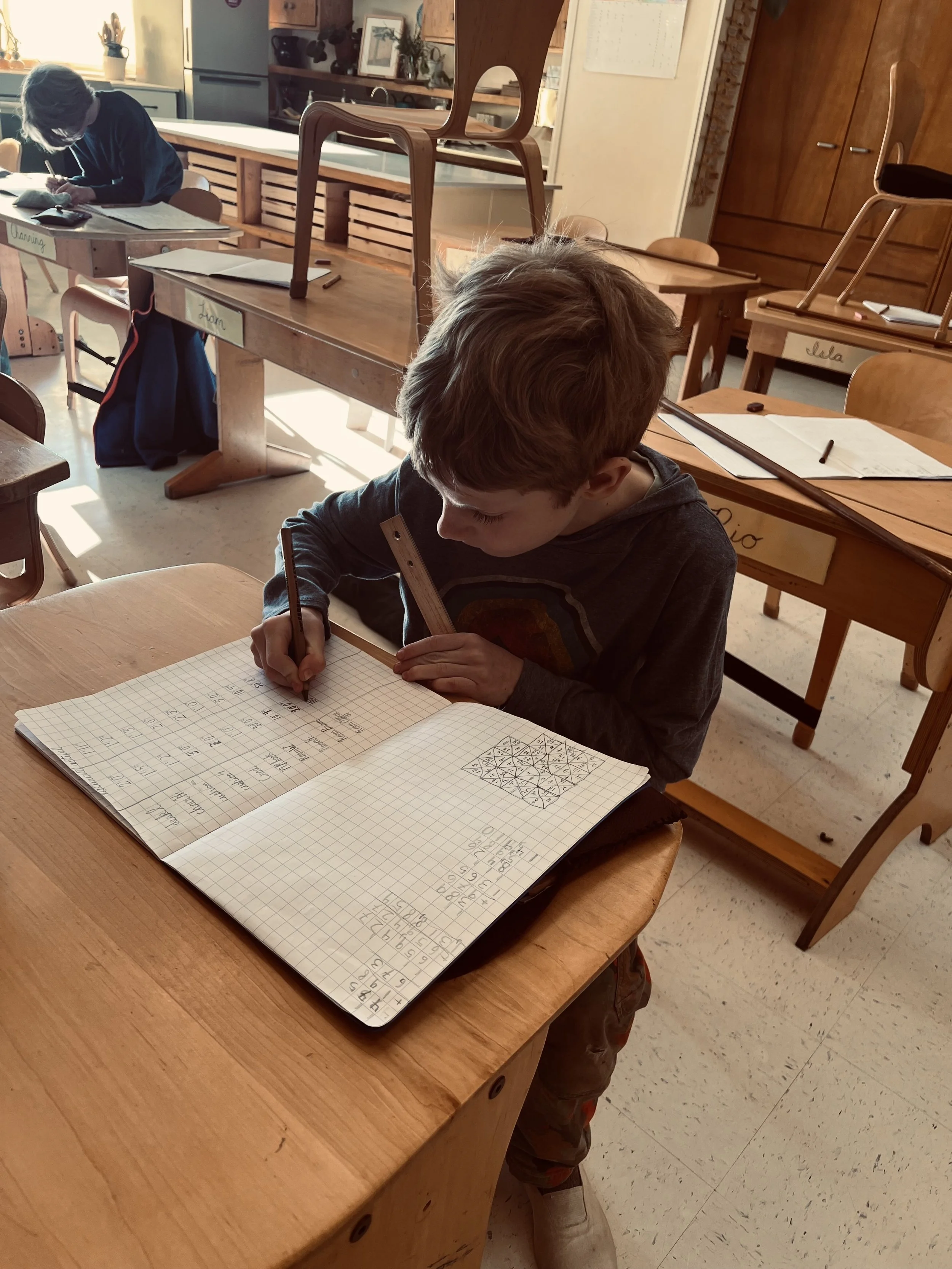
Students at Marin Waldorf School don’t receive letter grades until middle school, yet they are active and engaged learners. How do we inspire them—and assess their progress? 

It’s morning in the 4th grade classroom at Marin Waldorf School and students are silently writing in their lesson books. The class teacher walks slowly between aisles of desks, checking work and occasionally leaning in to quietly share a comment.

It is a familiar classroom scene—one that, on first glance, looks similar to a class of students diligently completing a quiz or writing graded essays. But 4th graders at Marin Waldorf School don’t take tests or quizzes. They don’t receive letter grades or traditional report cards. And they are encouraged to cooperate, not compete, in the classroom.

How do our students become invested and diligent learners without grading? How do teachers measure and assess students progress without the standard toolkit of grades, tests, and quizzes? And how do parents know that their child is progressing academically? 

Our Focus Is On Learning—Not Grades

“Grades create a preference for the easiest possible task. Impress on students that what they're doing will count toward their grade, and they will likely avoid taking unnecessary intellectual risks,” writes author and social scientist Alfie Kohn in the essay The Case Against Grading. According to Kohn, “Extrinsic motivation, which includes a desire to get better grades, often undermines intrinsic motivation, a desire to learn for its own sake.”

Marin Waldorf School classrooms provide daily proof that children are more likely to learn at the highest level when they are motivated by curiosity, close teacher-student relationships, and multisensory activities—like art and movement—that make learning enjoyable. Without grades, learning is unlimited, allowing exceptional students to reach their fullest potential. At the same time, students are supported through challenges in a school that emphasizes skill building, learning, and cooperation over competition and achievement.

“There’s this extrinsic motivation that’s tied to grades, which adds to student stress, and in some cases can lead to really unhealthy practices like perfectionism or great anxiety, paralysis. And it could also really turn kids off,” says Denise Pope, Ed.M.’89, a senior lecturer at Stanford, in the article The Problem With Grading, published by Harvard’s Graduate School of Education.

A Holistic Approach to Assessment

Evaluating each student’s progress is essential to every teacher’s work. Our faculty is specially trained to observe and evaluate a student’s academic, physical, social, emotional, creative, spiritual, and personal development, along with their executive functioning and organizational skills. Our approach is rooted in the understanding that each child is a unique individual—and our goal is to encourage each child to reach their potential, at a pace that supports meaningful learning. 

Working in partnership with the Educational Support Program Director, class teachers are continually observing their students, making note of each student’s strengths, challenges, and learning differences. Teachers also take time to closely examine each student’s main lesson book, where students record and illustrate what they are learning in class, reflecting their understanding and mastery of the material. 

In addition, students are formally assessed every year for academic and developmental milestones, including pattern-based spelling, comprehension, vocabulary and reading fluency, and math, as well as developmental benchmarks. We don’t take a one-size-fits-all-approach to teaching, nor do we expect students to meet benchmarks at the same pace. 

Meeting Academic Benchmarks

While parents appreciate the lower stress and increased camaraderie of the Waldorf classroom, many have questions about how we measure student progress. If we don’t use grades or tests to track student progress, how do our teachers know that children are meeting academic goals? And how do we know they will be prepared at the same level as their peers in other schools?

From early childhood to 8th grade, Marin Waldorf School’s curriculum is built around a carefully developed Scope and Sequence, which outlines the math, reading, literacy, and language arts skills taught at each grade level, within the context of the rich Waldorf curriculum. The Scope and Sequence gives teachers a framework to review student progress, with learning goals set for each grade level. 

Our Scope and Sequence is not a standardized set of skills that all students are expected to achieve. As educators, we know and respect that students will arrive at benchmarks at a different pace; we use the Scope and Sequence to ensure that each class is progressing and that individual students are meeting agreed-upon standards.

Reports and Grading: Parents and Teachers in Partnership

At Marin Waldorf School, education is a partnership between home and school. Our teachers encourage parents to maintain open communication about student progress throughout the year, in addition to providing formal assessments several times a year. 

In the late fall, parents preschool to 8th grade meet individually with their child’s class teacher. These meetings are an opportunity for parents to see student work, discuss developmental milestones, and exchange information about progress at home and at school. In addition, parents of students in grades 1-8 receive a written report twice a year: at the end of the first semester, in January, and at the end of the second semester, in July. 

These reports include skills-based assessments based on our school’s Scope and Sequence alongside personal comments from teachers, observing a student’s progress through different areas of the curriculum, as well as their social-emotional development. These assessments provide a comprehensive and nuanced assessment of a student’s progress.

Making the Transition to High School

By middle school, most of our students are eager, motivated, and curious learners, steadily advancing in the academic and executive functioning skills they will need to succeed in high school. During the middle school years, students receive increased feedback and evaluation from their teachers, including a test and personal evaluation at the end of each main lesson block and biannual reviews from subject teachers.

While our students demonstrate intrinsic motivation to learn, we recognize that many of our graduates go on to public high school or to a more traditional private school where grading and standardized tests are the norm. Starting in 7th grade, our students receive a letter grade for each class in the curriculum, which are recorded in their midyear and end-of-year reports and will become a part of  the student’s permanent transcript. 

Okay, But How Do We Really Know It Works?

Check out the scores and percentiles for public Waldorf charters, which are required by law to administer standardized tests to their students. Reports show that Waldorf students consistently outperform their peers on standardized tests over the long term.

Read More
Michael Belcher Michael Belcher

Research: The Cognitive Benefits of Handwriting

Long-term research shows that taking notes by hand leads to higher quality learning and recall than typing. Researchers have even found that writing by hand creates new connections in the brain.
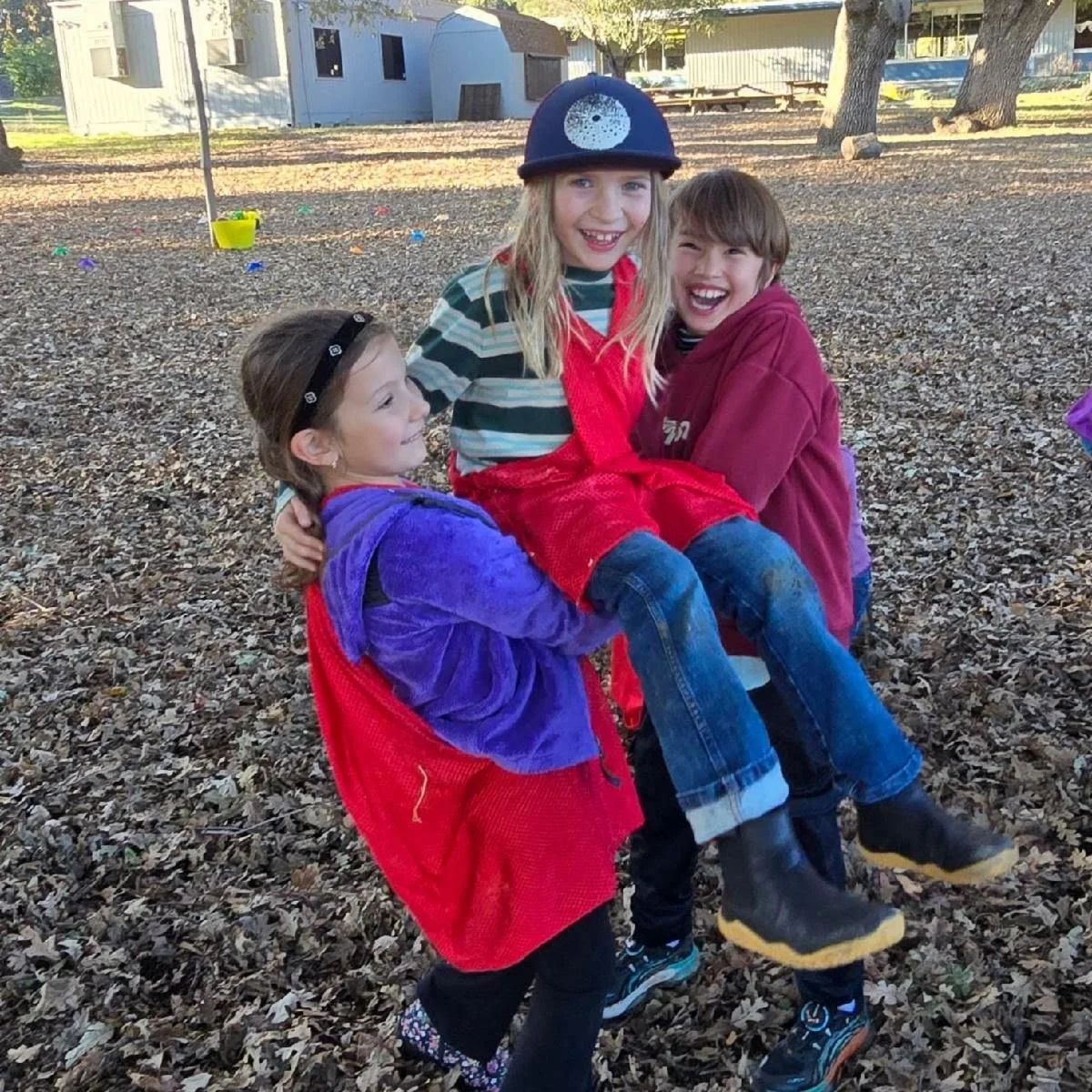
Long-term research has shown that taking notes by hand leads to higher quality learning and recall than typing. Researchers have even found that writing by hand creates new connections in the brain.

Results from 24 separate studies across 21 articles revealed that taking and reviewing handwritten notes leads to higher achievement, even though typing notes benefits note-taking volume, among college students. Furthermore, our binomial effect size display shows that taking handwritten lecture notes is expected to produce higher course grades than typing notes among college students.

At Marin Waldorf School, our low-tech, creative, and experiential approach to teaching encourages cognitive development in children—including through the creation of handmade lesson books in every subject, in which both aesthetics and content are evaluated. All students learn cursive writing starting in 2nd grade, and note-taking is integrated into the middle school curriculum, alongside other executive functioning and organizational skills that students will need in high school and beyond.


Read More
Michael Belcher Michael Belcher

Social-Emotional Learning at Marin Waldorf School

How we promote a healthy social community and emotional intelligence in our students.
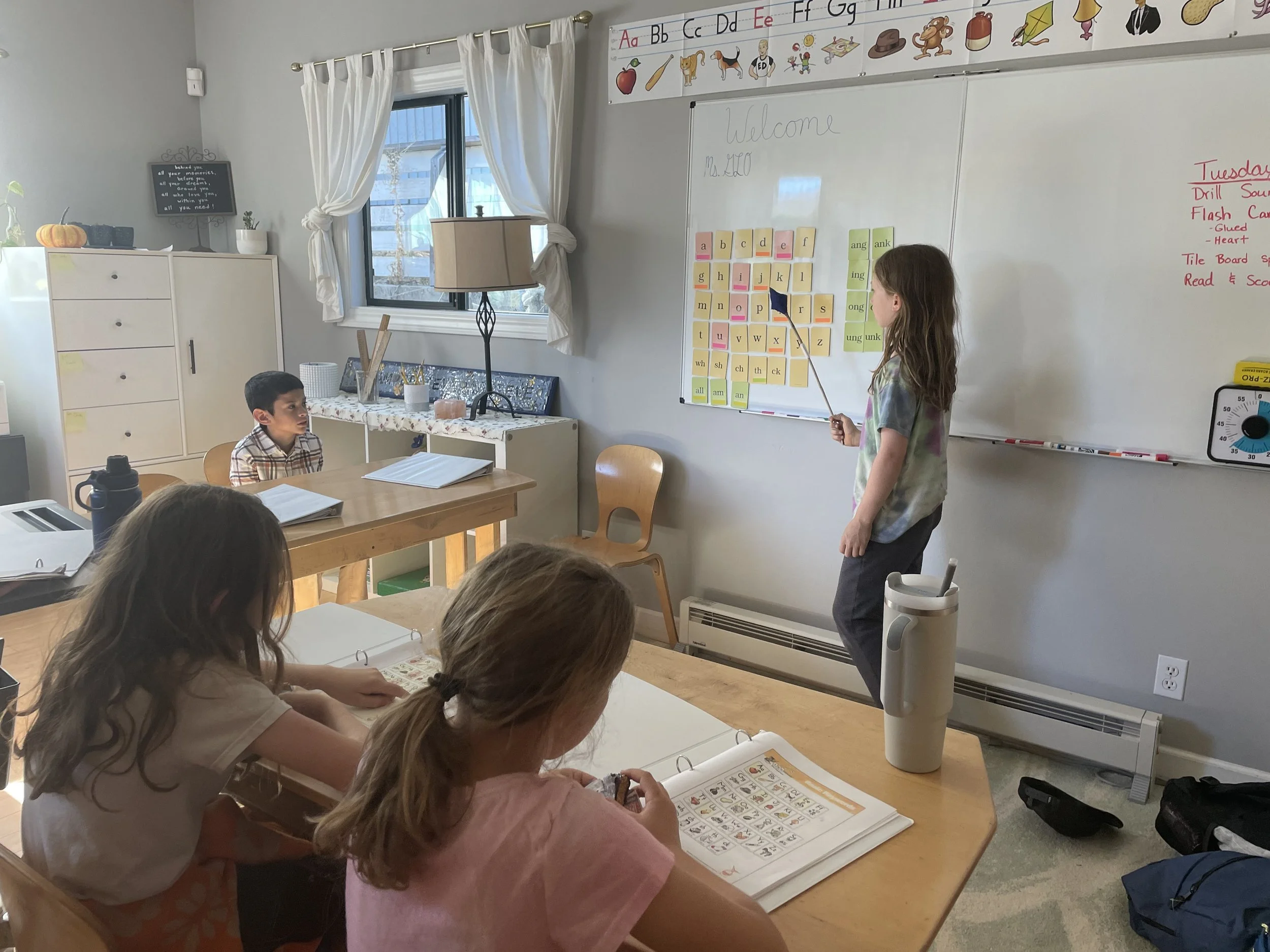
 

Emotional intelligence can't be bought or rushed. It develops with the slow emergence of identity, and the gradual accumulation of life experiences. — Kim John Payne, Simplicity Parenting


"Now is the time for leaders, across sectors, to develop new ways for students to learn that are more directly, and more dynamically, tied to where our economy is going, not where it has been. Critically, that involves bringing the same level of rigor to training around people skills that we have brought to technical skills," write authors Aneesh Raman and Maria Flynn in a 2024 op-ed New York Times, discussing the importance of developing deep human capacities in the age of artificial intelligence.

From Davos to Silicon Valley, thought leaders expect human skills to become increasingly coveted as AI and other technologies change the role of human beings in the job market. But the benefits of learning emotional intelligence goes beyond future job prospects. Research shows that programs that teach social and emotional skills can have a direct positive impact on academic performance, relationships, and confidence in students over the long term. In a time Most important, building deep and meaningful relationships are the foundation of a satisfying and meaningful life.

At Marin Waldorf School, building a healthy social environment and emotional intelligence in our students is fundamental to our work—and you can see it. Our students are eager learners, resilient in the face of challenges, and confident interacting with each other and their teachers. How do we teach these skills?

How Do We Teach Emotional Intelligence?

Social-emotional skills are embedded into every aspect of the curriculum—and it shows in our warm and close-knit school community.

Strong Class Culture
Close teacher-student relationships and intentionally small class sizes bolster our students' self-confidence and sense of belonging within the MWS community. Here, students benefit from working with the same team of teachers over multiple years, creating an environment in which each student is individually seen and supported. (Click here to read more about how we build strong teacher-student relationships through a practice called looping.) Importantly, our teachers model compassion and kindness, and ask our students to do the same. We also promote open conversations between parents and teachers, building a trusting relationship with the child’s needs at the center.

Sign up here to visit our beautiful Lucas Valley campus during a school day to see our classrooms in action.

Collaborative Learning
Starting in preschool and kindergarten, Marin Waldorf School emphasizes cooperation and collaboration in the classroom, with ample time for both guided group work and unstructured play. In the grades, we place tremendous value on activities that encourage students to work together, whether that’s building a motor with a partner in 8th grade physics class

Music and Ensembles
When it comes to group activities, music, in particular, encourages students to cooperate and listen to each other—one of the many reasons that both choir and instrumental music are such a big part of our curriculum. Students in grades 1-8 also collaborate every year while rehearsing and performing their annual class play.

A Close-Knit School Community
In our close-knit school community, children get to know each other across ages and grade levels. Both preschool and kindergarten classrooms are mixed-age, laying the groundwork for the cooperative community feel in grades 1-8. Our 1st grade-8th grade buddy program unites our oldest and youngest graders, while students in grades 1-8 get an opportunity to play together during recess, twice daily. Frequent all-school assemblies and festivals, from the Michaelmas pageant to the annual Lunar New Year assembly, bring the entire school community together. Importantly, we want families to be involved in their children’s lives and education.

A Thoughtful Approach to Technology
At Marin Waldorf School, our rich interdisciplinary education emphasizes hands-on experiences, human relationships, and creativity. We don’t use tech in the classroom, unless it is required for assisted learning.

A Real-World, Hands-on Approach
Our curriculum and pedagogy are based on the understanding that, as best-selling author Jonathan Haidt writes in his new book The Anxious Generation, “Experience, not information, is the key to emotional development.” In place of tablets and technology, children are encouraged to build social skills through group work and free play; to develop their imagination and creativity through the arts, music, and stories; and to boost their bodies and brains with experiential activities, from games to knitting to woodwork.

A Program in Social Ethics for Middle Schoolers
Research shows that programs that explicitly teach social-emotional skills can have a lifelong positive impact on learning, social skills, and confidence in children. Starting in middle school, students at MWS participate in an articulated program in social ethics and social emotional learning, which includes topics like technology and its responsible uses, anti-bias education, sexual ethics, and health. These discussion-based classes are an opportunity for students to share their thoughts and questions in a supportive adult-guided environment.


Would you like to see our dynamic and social classrooms for yourself?
Sign up for a campus tour with our admissions director
here.


Why Do We Teach Social-Emotional Skills?

In recent years, social emotional learning, or SEL, has become an increasing focus in elementary and middle school education. Research has repeatedly shown that there are many benefits to teaching social-emotional skills in school, including the following.

Improved Learning Outcomes
Teaching SEL is linked to improved academic achievement in students—over the long term. Studies have shown that students who participated in SEL programs saw an 11 percentile increase in their overall grades and better attendance.

A Sense of Belonging and Improved Mental Health
Researchers show that social and emotional skills reduce anxiety and enhance emotional regulation, resilience, and confidence.

Positive School Culture
Emphasizing social-emotional skills creates more inclusive and supportive classrooms, decreasing conflicts and bullying, and promoting a sense of belonging among students.

Skills for an Unknown Future
Not only is SEL linked to improved student performance and overall well being in school, it promotes the uniquely human capacities—like communication, collaboration, and empathy—that are expected to become increasingly critical in the future.

Sign up for a campus tour with our admissions director here.


Read More
Michael Belcher Michael Belcher

Structure and Story: Our Approach to Literacy in Grades 1-5

Through storytelling, creative activities, and a program of structured literacy, students in grades 1-5 become confident and enthusiastic readers. Learn more in Part II of our series on literacy at MWS.
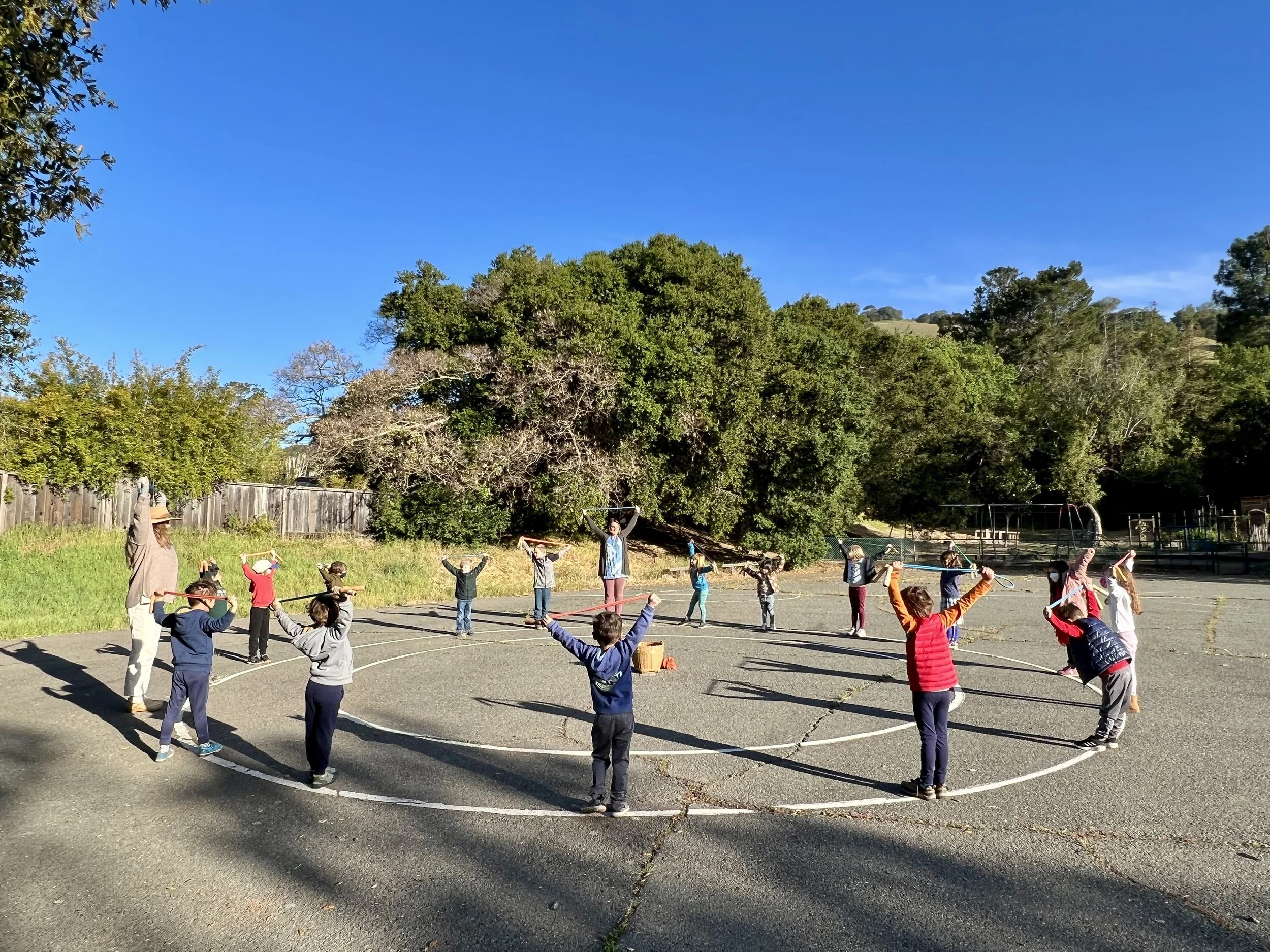
In elementary school, Marin Waldorf School’s innovative and research-backed approach to literacy fosters capable and enthusiastic readers, writers, and communicators.

When a recent 7th grade class staged a production of The Imaginary Invalid by French playwright Molière, you might have been surprised to see 1st and 2nd graders held rapt by the 17th-century prose—and quick to laugh at the play’s many gags and parodies. 

The Class of 2021 performs Moilere’s The Imaginary Invalid.

At Marin Waldorf School, children aren’t intimidated by difficult vocabulary, complicated plot lines, or sophisticated syntax—in fact, they begin listening to complex stories in preschool and kindergarten, and continue to learn through folktales, mythology, biographies, theater, poetry, and other written and oral texts throughout elementary school.

A focus on rich language and storytelling is just one of the many ways our school’s literacy program is unique. Here, through a creative and research-backed approach, we teach our students to read and write with confidence and skill, while thoughtfully encouraging a love of reading, writing, and language that will last throughout their lifetime. 

Read more about our approach to literacy below.


Age-Appropriate Instruction

Waldorf education is based on a deep understanding of human development and current scientific research about how children learn. Research shows that when reading and writing skills are taught at an appropriate age, the experience is far more likely to be positive and self-motivated. 

At Marin Waldorf School, the approach to literacy is carefully sequenced to build foundational skills—like comprehension, vocabulary, and mental picturing—before beginning formal instruction in reading and writing in 1st grade. Our goal isn’t to rapidly build up reading skills to meet benchmarks, but to guide students in becoming engaged, capable, and confident readers and writers, who will find joy in literature and language throughout their lifetime. 

“The job of teaching is to assess where your children are and give them the most appropriate teaching related to their level of development," says Dominic Wyse, a professor of education at University College London, in an article on early literacy published by the BBC. With this in mind, our program approaches literacy from multiple angles, building diverse and complementary skills.


Creative and Multisensory Literacy Learning

Our core literacy curriculum follows a carefully designed scope and sequence that emphasizes the joy and creativity in learning to read and write. In 1st grade, letters are introduced through imaginative stories and pictures, allowing children to form a personal connection with each symbol. From these, children begin building simple words and sentences.

The study of letters, their sounds, and their qualities is complemented by a range of multisensory activities that support foundational literacy, such as form drawing, listening to fairy tales, reciting verses, and illustrating stories, among other activities. This work is in turn complemented with a program in structured literacy (see below) that continues throughout elementary school.

The multisensory approach to learning supports the development of increasingly complex literacy skills over the course of 2nd and 3rd grade, with students beginning to take on independent reading at home, learning the basics of grammar, and building vocabulary and spelling rules, among other foundational skills. Class teachers continue to build these abilities through art, movement, recitation, music, and story, creating an environment rich in language and creativity. 


A Program of Structured Literacy 

Alongside our school’s innovative language arts curriculum, class teachers are trained in structured literacy, using a research-backed approach to instruction that breaks reading, writing, and spelling down into smaller skills involving letters and sounds. 

Structured Literacy begins in 1st grade with weekly word study classes and expands in 2nd grade and 3rd grade language arts, as students dig deeper into phonics and decoding skills. In these grades, students continue to build literacy skills at their own pace and level, but many reach new fluency. 

As part of our effective structured literacy program, teachers are supported by our educational support director and literacy expert Greer Lanzet-Ourian. Working together with faculty, Ms. GLO assesses students against national benchmarks and the MWS Scope and Sequence. 


A Focus on Story Across the Curriculum

At Marin Waldorf School, literacy is woven into the curriculum across subject areas, connecting reading and writing with history, science, mathematics, and the arts. This integrated approach means that literacy goes beyond decoding words, prompting children to “read to learn” and to understand the world through language. 

Structured literacy instruction continues throughout elementary school; with this support, students become confident, competent, and enthusiastic readers by 3rd and 4th grade, ready to tackle longer chapter books and readers at home and at school, and—importantly—to discuss and analyze their reading in class. 

As children become more competent readers, they also have an opportunity to become more independent in their reading. In every Marin Waldorf School classroom from 1st to 5th grade, there’s a cozy nook with bookshelves, pillows, a rug to recline on, and maybe a couple of beanbag chairs. It’s a space for silent reading, often used on rainy afternoons or during the last half of a language arts class. 


Speaking and Public Performance

A strong emphasis on public speaking, oral communication, and performance distinguishes the Marin Waldorf School approach to literacy, contextualizing reading and writing skills within the larger world of communication and connection. 

According to a 2022 article from the BBC, “Studies also show that reading ability is more closely linked to a child's vocabulary than to their age, and that spoken language skills are a high predictor of later literary skills.” Building on that understanding, students at MWS memorize and recite verses and poems as a class, memorize lines for their class play, sing and perform seasonal songs, and read out loud—learning pronunciation, building vocabulary, and building confidence in public speaking through these activities. 

Drama is likewise an integral part of building communication skills at MWS. Each class puts on an annual play—such as the 7th grade’s wonderful Moliere—which encourages students to engage deeply with texts and their meaning, in addition to supporting their presentation and public speaking skills. Importantly, students also have the opportunity to watch each other perform, giving younger students an opportunity to look ahead to the skills and experiences that await them in later years. 


Get to Know Marin Waldorf School

Give your child the joy of reading! Learn more about Marin Waldorf School’s approach to literacy and language arts. Sign up for a campus tour or schedule a phone call with our admissions team here.

Read More
Michael Belcher Michael Belcher

Research: The Power of Multimodal Learning

Studies show the powerful outcomes of multisensory, multimodal learning. See the research.
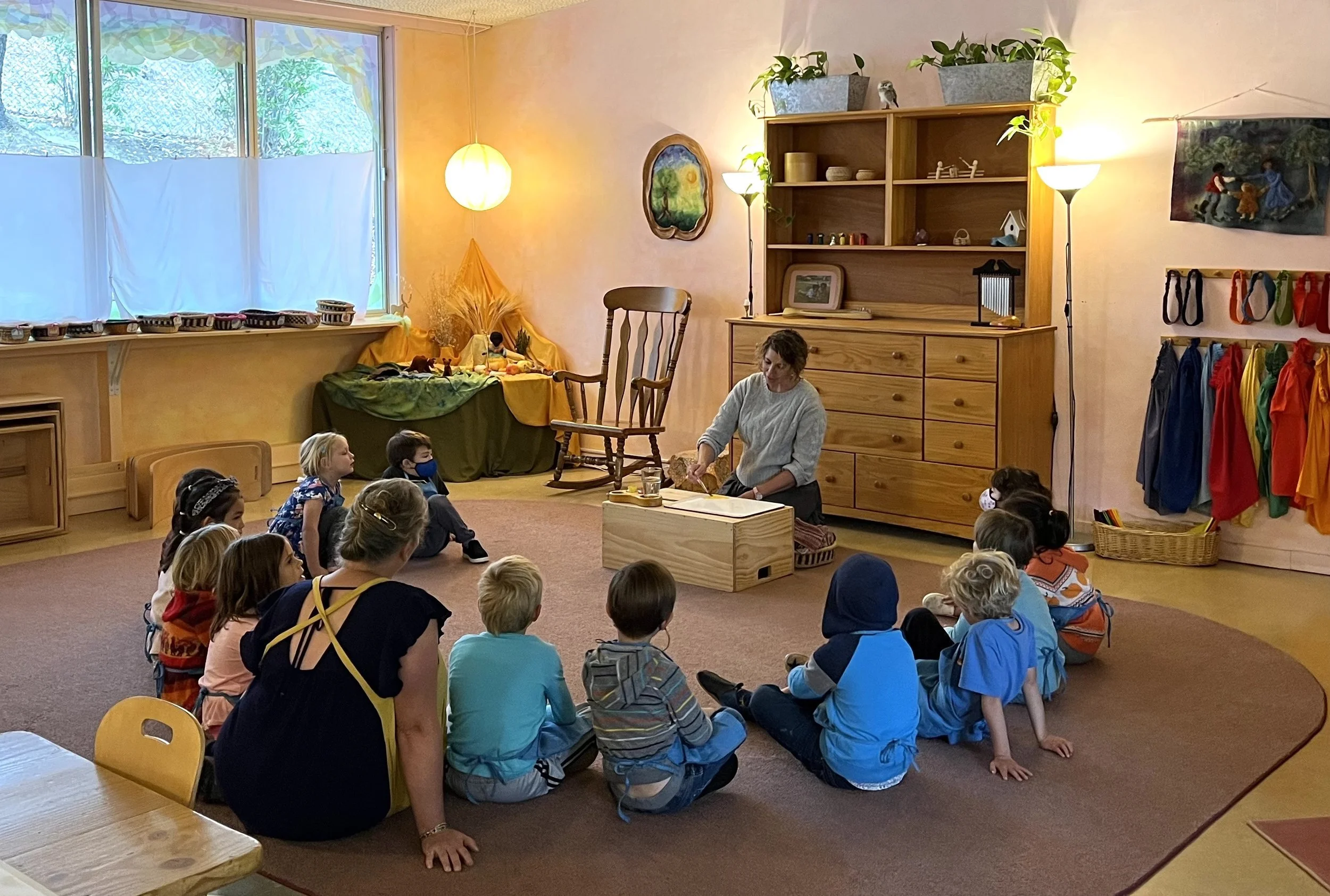
Edutopia: When students engage multiple senses to learn—drawing or acting out a concept, for example—they’re more likely to remember and develop a deeper understanding of the material, a large body of research shows.

“It might seem like a scene from a wildlife documentary, but turning students loose to stride and hop around the classroom pretending to be lions, and then gazelles, is a powerful lesson on the differences between predators and prey,” write authors Youki Terada and Stephen Merrill in a March 2025 article, “The Power of Multimodal Learning (in 5 Charts),” in Edutopia. “A growing number of studies reveal the neural underpinning of what researchers call ‘embodied learning’ or “multimodal learning”—using your body to encode material more deeply by drawing, singing, or dancing, for example—and provide a window into how and why the approach works so well.”

The article goes on to describe several studies that show the power of multimodal learning, including a 2022 meta-analysis that ”concluded that pairing words with actions—bodily recreating the motion of the earth, moon, and sun when learning what an ‘eclipse’ is, for example—is a ‘reliable and effective mnemonic tool’ with an effect size of 1.23, well above the 0.8 threshold for a ‘large” impact.’”

How do we use multimodal learning at Marin Waldorf School?

At Marin Waldorf School, we use movement, art, games, verse, music, and play to reinforce learning across academic disciplines. Read more below.

Main Lesson: A Multisensory Approach to Teaching
Main lesson is an intensive two-hour class that begins the school day for students in grades 1 to 8. It is taught first thing the morning, when children’s minds are most receptive, alert, and able to concentrate on complex topics. On most days, the class time is centered around a single subject in the curriculum, which teachers approach through a range of multi-sensory activities that engage the head, heart, and hands. Learn more about main lesson.

The Waldorf Approach to Math
At Marin Waldorf School, a multidisciplinary, multilayered approach to math encourages students to see the joy and beauty in numbers, approach math work from many perspectives, and eventually build up to the conceptual ideas that fuel advanced-level math in middle school. Here’s how we do it.

Learn more about our innovative programs or schedule a tour to see our dynamic classrooms in action.

Read More
Michael Belcher Michael Belcher

Rich in Language, Inspired by Story: Literacy in Waldorf Early Childhood

In preschool and kindergarten, children build strong foundational literacy skills, including vocabulary, focus, and mental picturing. Read more in Part I of our series on literacy at MWS.
Learning to read and write are a fundamental aspect of early education—and arguably the most important skills that children learn in school. At Marin Waldorf School, our innovative and research-backed approach to literacy begins in early childhood, where children are immersed in rich language experiences, laying the groundwork for formal literacy instruction in elementary school—including a program of structured literacy that begins in 1st grade.

Importantly, Marin Waldorf School’s approach to literacy goes beyond the mechanics of reading and writing. Here, we seek to foster strong vocabulary and comprehension skills, an ability to read deeply and critically, and a profound lifelong love of stories and language that will last throughout a lifetime.

Early childhood is the first step in the journey. Here’s our approach.

Classrooms Rich in Language

Researchers have found that a key predictor of academic success over the long term is growing up in an environment rich in language. Marin Waldorf School’s preschool and kindergarten programs place tremendous emphasis on complex and high-quality opportunities to build language skills through fairy tales, stories, songs, and verses, as well as activities in which students must listen carefully and follow a teacher’s indications or instructions during circle time or play.

“Time spent on fostering speaking and listening skills is particularly important for reading comprehension — studies have shown that oral language activities support reading comprehension skills, even for more complicated texts in later grades,” writes academic publisher McGraw Hill in the article “Foundational Literacy: What Research Tells Us About Speaking and Listening.”

A Focus on Story

Story time is a beloved moment in the MWS preschool and kindergarten day. It is also a crucial element in our literacy program. Through listening to stories with complex themes and high-quality vocabulary, children learn to understand the narrative structure of a story, from beginning to middle to end, alongside new words and syntactic structures. 

Particularly important is that our teachers tell stories from memory, rather than using picture books to guide them. This approach encourages imagination and mental picturing, a key skill in literacy development. In fact, recent studies show a strong connection between children’s reading skills and their capacity to create mental representations or mental images. Mental picturing—like many other pre-literacy skills—must be encouraged and practiced.

Human-Centered Learning

In a recent interview with Ezra Klein at the New York Times, education policy expert from the Brookings Institution Rebecca Winthrop said, “We know that in early childhood, the more screen time kids have, the less language acquisition they have. We know that when infants are learning language, they learn a lot of language from human-to-human contact. And if you put the same sentences on a screen, they don’t learn it.”

This is more than just Winthrop’s own conclusion. Ample research shows that children build a deeper understanding of material when they are taught by humans. Across disciplines, human relationships are at the core of our school’s approach to instruction. We never use technology in early childhood classrooms, giving children a foundation in the rich and varied world of human communication. 

The Value of Play

Our school’s play-based early childhood programs are built on the firm belief that “play is at the core of the development of the child,” as explained by education researcher Syeda Sazia Zaman, a researcher at theBRAC Institute of Educational Development, in a report on literacy published by UNICEF. At Marin Waldorf School, our daily rhythm in preschool and kindergarten includes ample time for unstructured, social, child-led play, both indoors and outdoors.

When it comes to early literacy, play is essential. Research has shown that children use their most advanced language skills during free play with peers. “Through play, children can express their thoughts, ideas and feelings, building essential communication skills,” says a paper from the National Literacy Trust. “Play stimulates creativity and innovation, creates a solid foundation for literacy and ignites a lifelong love for learning.”

In the same article, the authors also discuss the importance of time outdoors. “Play outdoors can also provide rich opportunities for language development,” they write. “Children often communicate differently when outside – with freer, louder voices – and are often enthusiastic to share and talk about their discoveries.”

Why We Don’t Rush Reading

There is a common misconception that Waldorf schools delay reading instruction until 1st or 2nd grade. In reality, literacy skills are woven into every day in the Marin Waldorf School preschool and kindergarten. It is important to underline, however, that effective early literacy instruction does not equal early reading. Our program is intentionally designed to emphasize core skills in comprehension, vocabulary, mental picturing, and motor development before introducing the mechanics of reading and writing. 

Why? Because Waldorf education is build around a deep understanding of child development and current scientific research on brain development. We teach subjects and skills when children are ready to learn them, making instruction more effective. When it comes to reading, a wide breadth of research shows that reading instruction in kindergarten provides no meaningful long-term benefits and may even be detrimental to children by creating stress or pressure to achieve before children are cognitively ready. 

And it isn’t just a Waldorf innovation. Finland, widely regarded as having Europe’s top educational system, students receive no formal instruction in reading and writing until they begin grade school at age 7; however Finnish students routinely outperform students from other countries in reading and writing over the long term. These outcomes, along with continuing research on early childhood, have led countries like England and Australia to begin advocating for later school starts and a return to social, play-based classroom environments for young children. 

At Marin Waldorf School, we choose to follow an effective and developmentally appropriate approach to reading and writing—and one that leads to long-term positive outcomes over the long term.

Read More
Michael Belcher Michael Belcher

What's the Buzz on Campus?

There is a new hive of honeybees in the 3rd grade garden! Find out what’s ahead for our campus green spaces… and, hey, what’s the 3rd grade garden?
A new beehive, our school in the Marin IJ, and more.

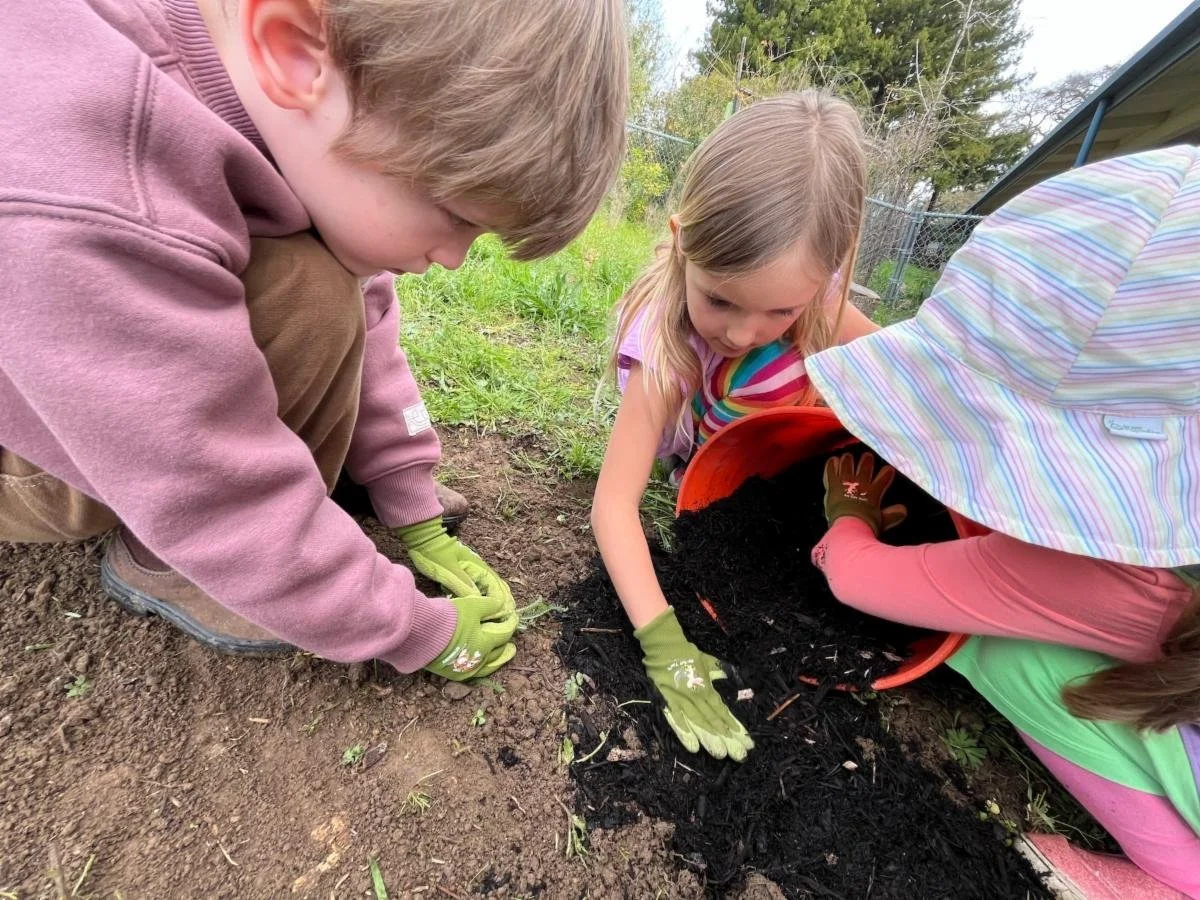
Fostering a connection with nature and respect for the natural world is fundamental to our school’s mission and values. Through daily time outdoors, a robust gardening program, exploration in the neighboring open space, and outdoor education trips across California, students at Marin Waldorf School learn to cherish the Earth and their role as its stewards. 

At Marin Waldorf School, we believe that spending time outdoors—for learning and in unstructured play—is essential to a healthy childhood. Research shows that spending time in nature during childhood is linked to a variety of benefits, from lower stress to a more robust immune system. Not surprisingly, spending time outdoors in childhood is also linked to pro-environmental attitudes in adulthood.

A Green Future at MWS

Our school’s 10-acre campus, nestled beside the Lucas Valley open space, is an essential to our identity and culture. It is home to a grassy playing field, a old-growth oak grove, several biodynamic teaching gardens, and dedicated play yards for preschool and kindergarten students.

Our gardens are beautiful and serene spaces for relaxation and play. They are also hands-on outdoor learning labs, which support the study of environmental and life sciences across the curriculum. Through activities like planting seed starts, preparing compost, pruning and weeding, and harvesting crops, students gain a practical understanding of the carbon cycle, botany, basic organic chemistry, nutrition, and more.

Learn more about how MWS’s hands-on, nature-based, and social education builds creative and engaged students.

Expanding our school’s gardening program and upgrading our teaching gardens has been a priority for our faculty and administration over several years. Led by a team of committed MWS faculty, our site committee has been busy planning a renovation and expansion of the current gardens, with the specific aim to upgrade and expand the school’s main biodynamic teaching garden, just behind the library. 

In the spring of 2024, we completed the first phase of the project, installing new garden beds from recycled wood and planting “three sister” crops. This year, the site committee’s vision included the installation of a beehive to support pollination in the garden and across campus, as well as to teach basic beekeeping skills as part of our garden curriculum. In tandem, as their parting gift to the school, the Class of 2024 chipped in to clean the pond and trim back the lilies, remove worn flower beds, build six new benches, and donate a cedar picnic table to the garden.

Growing in Partnership

In addition to our active gardening program, Marin Waldorf School is committed to the responsible stewardship of our beautiful campus and its magnificent oak grove. In the spring of 2025, Marin Waldorf School began a multi-year partnership with Point Blue, a Marin-based conservation nonprofit that promotes and funds science-backed solutions to climate change.

Working alongside the Blue Point team, students and teachers from kindergarten to 8th grade are working together to plant perennial pollinators in several large patches, as well as a number of native pollinator "islands" to provide stepping stones for the insects and birds. The program also includes educational sessions with Blue Point staff and scientists.

We held our first all-school event with Point Blue in the spring of 2025 and were delighted to have our program featured in the Marin Independent Journal in October. “Projects like these don’t just help pollinators and improve soil health, they also give students a concrete sense of agency in Earth stewardship,” writes Marin IJ garden editor PJ Bremier. “By planting native species, conserving water and building habitat corridors, students learn that restoring even a small patch of land can have ripple effects far beyond the school gates.”

Introducing La Casita Abejita

As part of our work with Point Blue, handwork teacher Isabel Dow and her father, Duncan, installed a new hive of honeybees in the 3rd grade garden. We kicked off the 2025 school year by choosing a new name for the beehive with the Beehive Naming Challenge. The winning entry (selected by our faculty) was Casita Abejita (little house of the bees), submitted by the Morning Glory kindergarten.

What Is the 3rd Grade Garden?

Did you know that Marin Waldorf School has three teaching gardens? There's the kindergarten vegetable garden, the all-school biodynamic garden behind the library, and the 3rd grade garden near the music room, where the bees are now getting comfortable with their new Lucas Valley lifestyle.

Why does 3rd grade have its own garden? Because 3rd graders study gardening and agriculture as part of the wonderful practical arts curriculum, which also includes topics like cooking, carpentry, shelter-building, and time and measurements in math. Over the course of the school year, students tend to the vegetable beds and grape vines in the garden, and they learn to cook meals from scratch using food they've harvested with their own hands. (A beloved tradition for 3rd graders is stomping grapes for grape juice every fall!) They also take several farm trips, including a day trip to Slide Ranch and their first overnight field trip to Three Springs Farm, a beautiful biodynamic farm in Bodega, California.

Gardening also plays an important role in the 5th grade year, when students take up the study of botany. 5th graders spend a lot of time in our biodynamic garden, in addition to foraging and identifying plants around campus and across Marin County! Here’s some pictures from a recent 5th grade botany trip to Point Reyes.

Learn More

Read More
Michael Belcher Michael Belcher

Play in the Waldorf Preschool

How our play-based preschool programs foster cognitive and social development in young children.
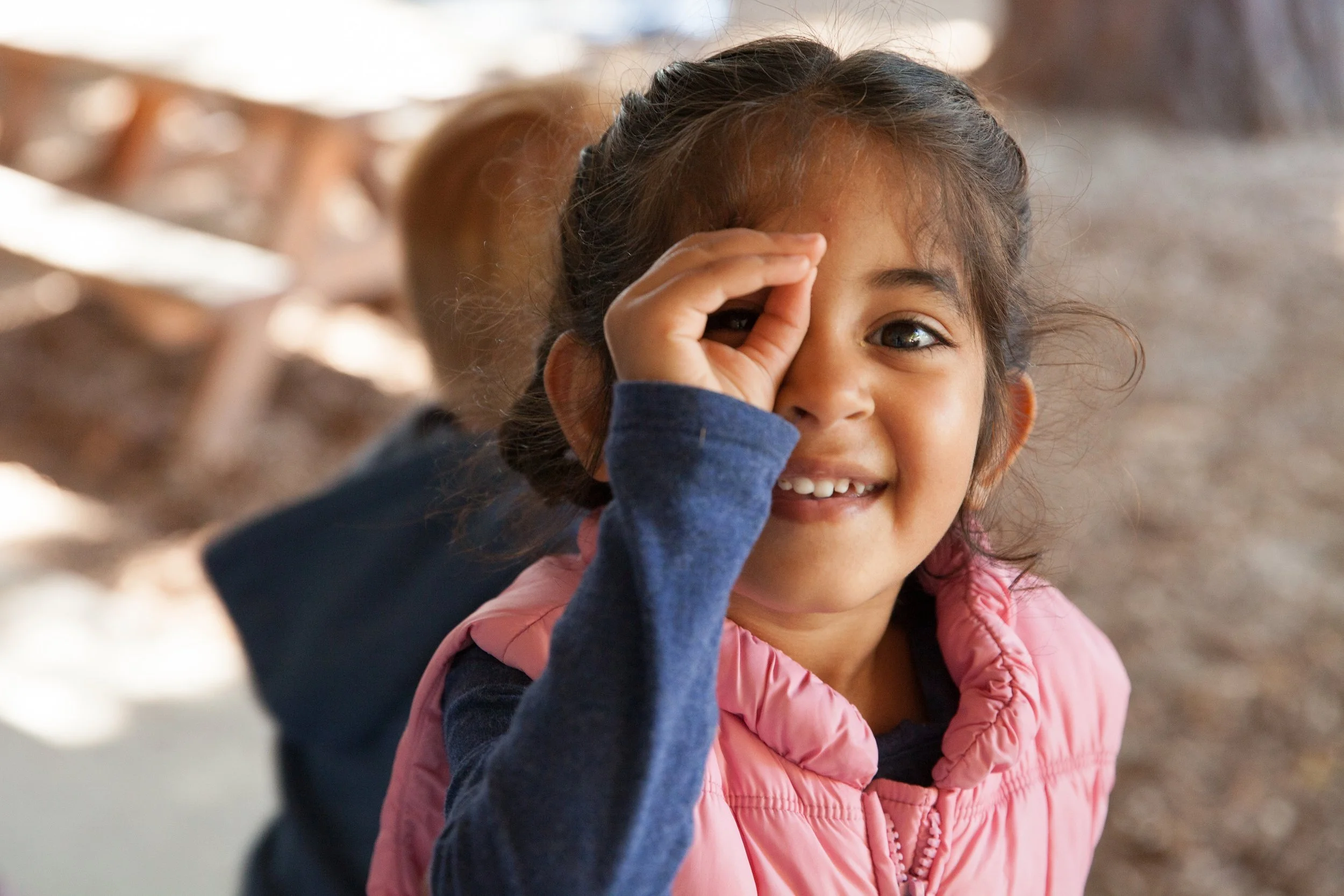
At Marin Waldorf School, a play-based preschool program nurtures the young child’s natural curiosity and imagination.

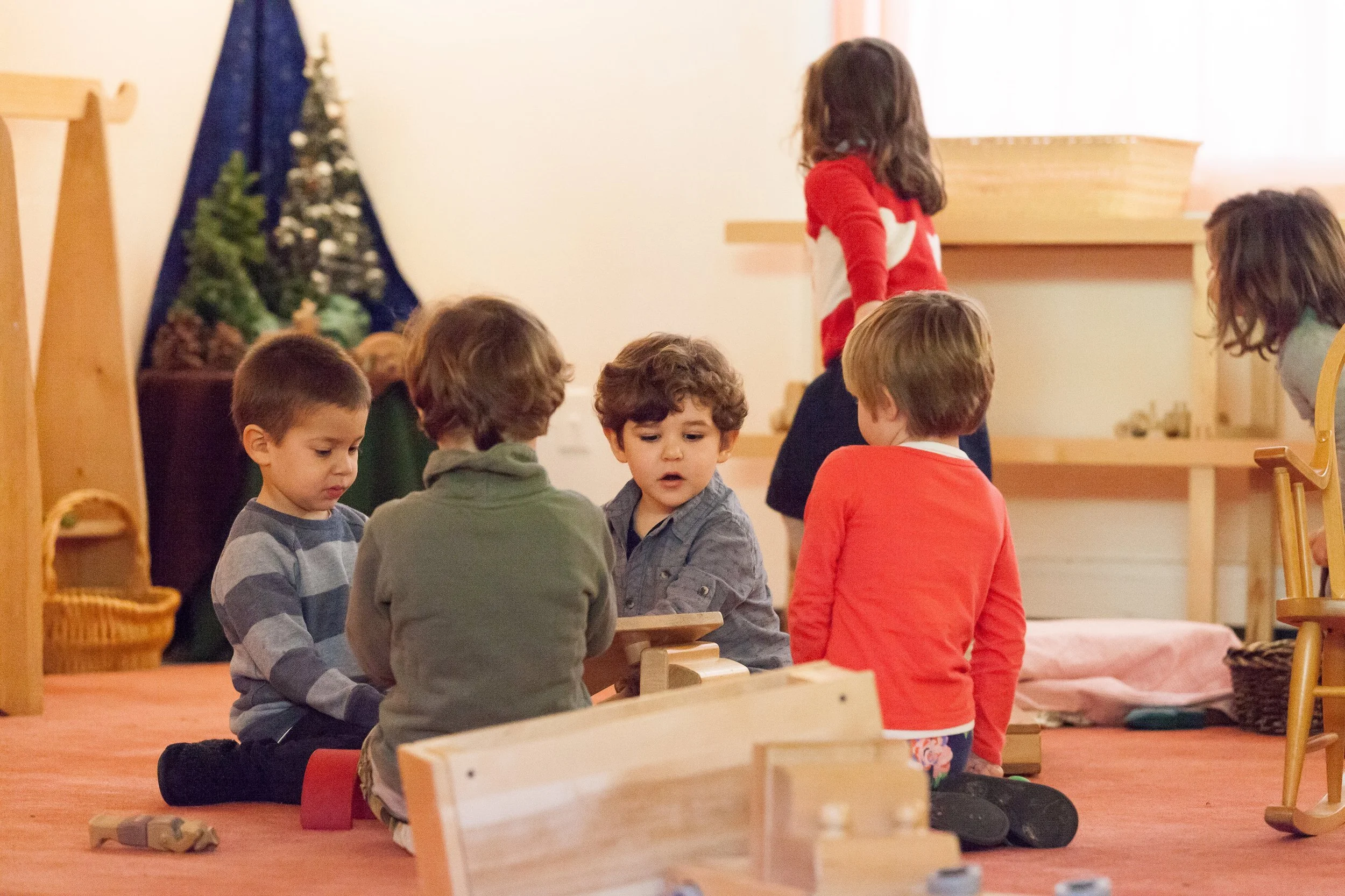
All it takes is a set of wood blocks, a tree to climb, or a couple of friends. When given the opportunity, young children are naturally drawn into immersive, imaginative, and creative play. At Marin Waldorf School, imaginative play is at the center of the day’s activities—and for good reason. There is a wide breadth of research that shows unstructured play is essential to cognitive, physical, emotional, and social development in young children.

The American Academy of Pediatrics released a clinical report in 2012 outlining the fundamental importance of play. “Play offers more than cherished memories of growing up, it allows children to develop creativity and imagination while developing physical, cognitive, and emotional strengths,” the AAP wrote. Childhood play is even linked to a longer life expectancy!

Play Encourages Cognitive and Brain Development

Play naturally stimulates a child’s neural pathways, encouraging healthy cognitive and brain development. Specifically, researchers have found that free, unstructured play builds connections in the prefrontal cortex, the brain’s executive control center.

"The experience of play changes the connections of the neurons at the front end of your brain," says Sergio Pellis, a researcher at the University of Lethbridge in Alberta, Canada. "And without play experience, those neurons aren't changed," he says.

Play Builds Social Skills and Self-Control

Open House
October 18, 10am-12pm

Meet our wonderful preschool and kindergarten teachers, visit classrooms and playgrounds, and chat with current families at our annual Open House.

This is an all-ages, family-friend event! Sign up here.

From rocking on a seesaw to setting up a tea party, play is how children learn to interact with one another, building essential skills in cooperation, conflict resolution, self-regulation, and communication. Crucially, these skills continue to serve the child for years into the future, with research showing that children who engage in unstructured play in the toddler and preschool years had better self-regulation abilities at ages 4–5 and 6–7 years.

Play Supports Physical Health

Skipping, jumping, swinging, grasping, stacking, balancing! Play helps young children develop both fine and gross motor skills while exploring their own interests and imagination. Play is also a natural opportunity to promote movement and physical expression in children—which has benefits for body, heart, and mind!

In May 2025, an article published by UNICEF shared, “Children are also more likely to take risks when they are playing outdoors – think climbing trees, or jumping from a height. A growing body of research has found that this kind of risk-taking outdoors not only helps children get the physical activity that they need to be healthy and strong, but promotes children's resilience, creativity and their social skills.”

Play Develops Problem-Solving Skills

They also learn to develop important problem-solving skills, by thinking up solutions to their own problems, like how to stack a pile of boxes and sticks to build a fort. In an article in the journal Pediatrics, the authors explain, “When play is allowed to be child driven, children practice decision-making skills, move at their own pace, discover their own areas of interest, and ultimately engage fully in the passions they wish to pursue.”

Play Supports Language Skills & Literacy

There is ample evidence that children’s literacy and communication skills are developed during play. In fact, research indicates that children use their most advanced language skills while playing, which in turn supports literacy skills taught in the classroom.

“When children play and communicate through play, they are learning how language works and gaining an understanding of how to interact with other people. Eventually, children connect the meaning of spoken language to written language, which is the key to success in school,” says a study published in the Journal of Inquiry and Action in Education.


Get to Know Marin Waldorf School

Give your child the gift of play! Learn more about Marin Waldorf School’s approach to preschool and kindergarten at our annual fall Open House on Saturday, October 18. More info & registration here.


Learning to Learn: How We Prepare Preschoolers for Elementary School Academics

Nurturing pre-academic skills during preschool and kindergarten leads to confident and curious learners in elementary school and beyond. At Marin Waldorf School, our preschool and kindergarten programs carefully nurture the young child’s natural curiosity and capacity for learning. Learn more about how our teachers foster essential pre-academic skills in preschoolers and kindergartners.

More Research on Play

There are extensive studies on the power and importance of play in early childhood. We encourage you to read more below!

Scientists Say Child's Play Helps Build A Better Brain,” NPR, 2014
Learning through play: Strengthening learning through play in early childhood education programmes,” The LEGO Foundation in support of UNICEF
In Elementary Classrooms, Demand Grows For Play Based Learning, KQED, 2022
Why Play = Learning,” Encyclopedia for Early Childhood Development, 2008
The Importance of Play in Promoting Healthy Child Development and Maintaining Strong Parent-Child Bonds,” Pediatrics, 2007
Developing Literacy through Play,” Journal of Inquiry & Action in Education, 3(1), 2009

Read More
Michael Belcher Michael Belcher

Learning to Learn: Fostering Pre-Academic Skills

Taking the time to build foundational skills—and providing challenges that are appropriate for a child’s age and stage of development—leads to engaged, curious, happy, and confident learners over the long term.
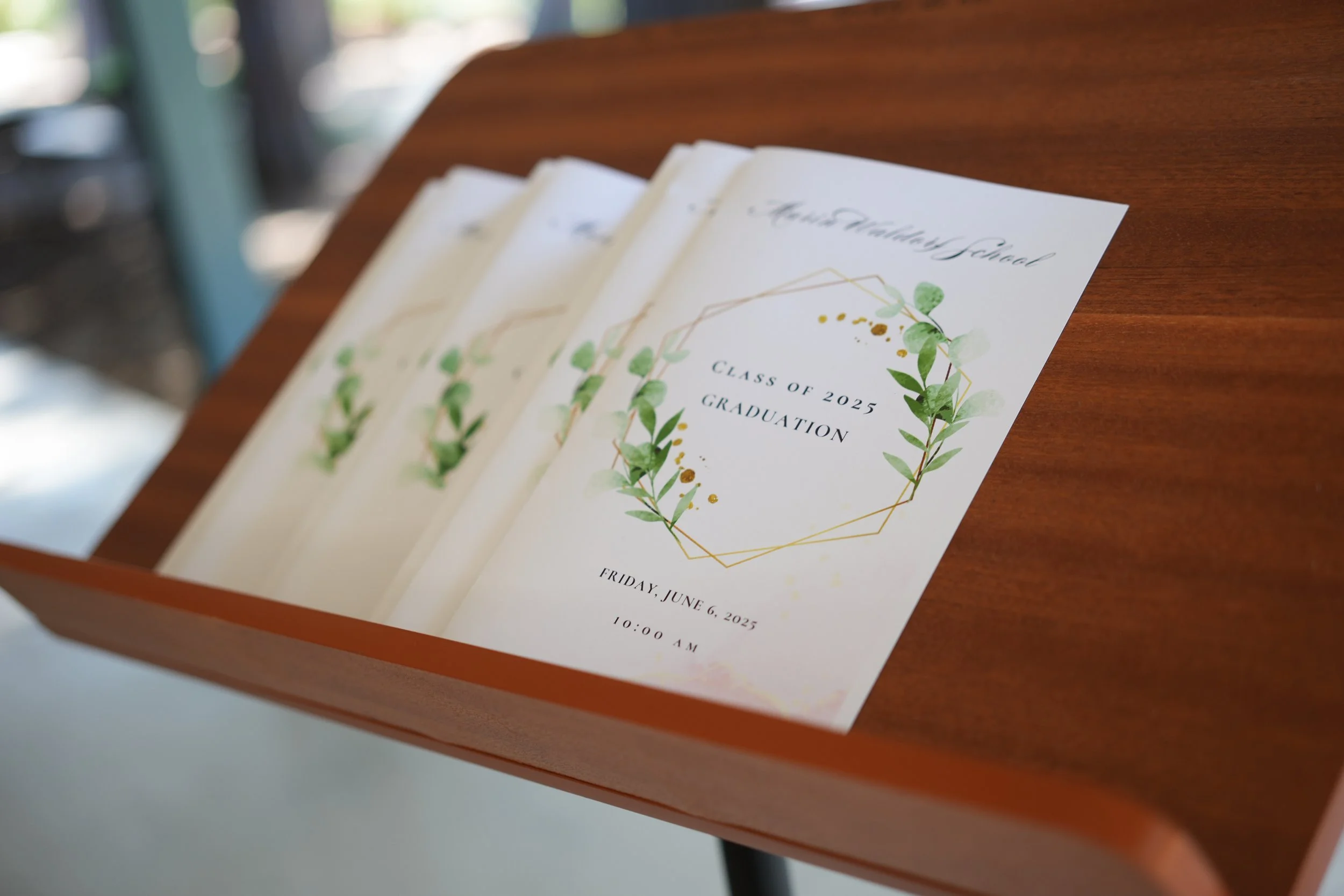
Nurturing pre-academic skills during preschool and kindergarten leads to confident and curious learners in elementary school and beyond

From the moment they’re born, children are learning. Through imitation, imagination, exploration, and play, they steadily build an understanding of the world around them and their place within it. 

At Marin Waldorf School, our preschool and kindergarten programs carefully nurture the young child’s natural curiosity and capacity for learning. Through ample opportunity for free, imaginative play combined with guided activities that encourage each child’s growing intellectual, social, emotional, and physical skills, we promote confidence and competence in our youngest students as they prepare for elementary school.

Pre-Academic Skills Are the Building Blocks for Learning

Before they begin formal academics, children need to develop foundational skills that will support their ability to learn, effectively and joyously, in the classroom. Many of these skills—including basic number sense, pattern recognition, foundational language and communication skills, and the ability to solve simple problems—directly lay the groundwork for academic disciplines in later years, like reading, writing, and math.

Just as important, students need strong social, emotional, and communication skills to effectively learn. They must be able to pay attention to their teacher, follow instructions, and sustain focus on a single task in the company of their classmates. They also need physical capacities like balance, hand-eye coordination, and fine motor skills to be able to sit at a desk, hold a pencil, and keep their workspace organized and tidy.

How We Foster Pre-Academic Skills

Marin Waldorf School preschool and kindergarten teachers are experts in child development and deeply intentional about everything they do, from the toys they choose for the classroom to the songs they sing at circle time. Throughout the school year, our teachers carefully observe their students, seeking to encourage their holistic development through varied, multisensory activities every school day. Here are some of the ways we prepare our students for academics.

Foundational Literacy
Our school’s carefully sequenced approach to literacy begins in preschool with a program rich in stories, songs, verses, and language. By immersing children in stories, they develop memory and attention, learn new words and syntax, and build crucial comprehension skills. These skills bolster students’ initiative and understanding when structured literacy instruction begins in 1st grade, paving the way for a deep, lifelong love of reading.

Basic Numeracy and Math
Our preschool and kindergarten teachers deliberately weave mathematical concepts into daily activities, laying the groundwork for formal math instruction in 1st grade. Through games, stories, movement, music, and play, our students develop an intuitive understanding of patterns, rhythm, and high-level concepts like less vs. more or capacities like sorting and classifying. Read more about our approach to math in early childhood here.


Come see our vibrant preschool and kindergarten classrooms in action!


Observation and Curiosity
When two preschoolers climb onto a seesaw, they quickly figure out how to tip the beam from one side to the other, shifting their weight to make it go faster or slower with their movements. It’s play, but it’s also a demonstration of a natural human intuition about how the world works. In our preschool and kindergarten, the inquiry-based nature of play is combined with guided activities that encourage observation and curiosity, laying the groundwork for future science learning in elementary and middle school. (Read more about how we teach children to think like scientists at MWS.)

Motor Skills and Coordination
Before beginning elementary school, children need to develop the coordination, balance, and fine and gross motor skills needed to hold a pencil, walk in a line behind their classmates, and sit at a desk—among many other physical challenges. Our teachers prepare students for these skills through a range of activities, including craftwork and art projects, guided movement during circle time, and activities like walking on balance beams or folding laundry.

Stick-to-itiveness and Personal Responsibility
Speaking of folding laundry, young children are often eager to take on real-world chores and responsibilities, like raking the lawn or vacuuming the carpet—just as they see adults do. And they often lose interest in those activities five minutes later! Throughout early childhood, our teachers encourage children’s communal responsibility and a capacity for focused work by giving them meaningful classroom chores, like chopping vegetables for soup or picking up toys after play time.

Social-Emotional Readiness
A classroom is a social environment. Our preschool and kindergarten teachers foster social-emotional readiness through many channels, including unstructured social play, teacher-led games and circle time, and a culture of care and cooperation that defines our school community. Teachers model good citizenship and kindness in the classroom, and gently guide students in learning to work together, resolve conflicts, and cooperate.

We Don’t Rush Foundational Skills

In recent decades, parents and educators have aimed to improve achievement in elementary-age children by pushing more formal academic work into preschool and kindergarten programs—even though research suggests that, for many children, early academics can be counterproductive to learning. 

There is no shortcut to building a strong vocabulary or understanding the nuance and complexities of a story. Taking the time to build foundational skills—and providing challenges that are appropriate for a child’s age and stage of development—leads to engaged, curious, happy, and confident learners over the long term.


Get to Know Marin Waldorf School

Give your child the gift of play! Learn more about Marin Waldorf School’s approach to preschool and kindergarten on a campus tour. Sign up for an upcoming tour here or reach out to our admissions director, Kate, at admissions@marinwaldorf.org to set up a phone call or visit.


Read More
Michael Belcher Michael Belcher

Reflections From an MWS Graduate: ‘You Were Raised to Shine‘

MWS alum and current parent Jake Pearl spoke at the 2025 graduation ceremony. We are proud to share his words and wisdom here.
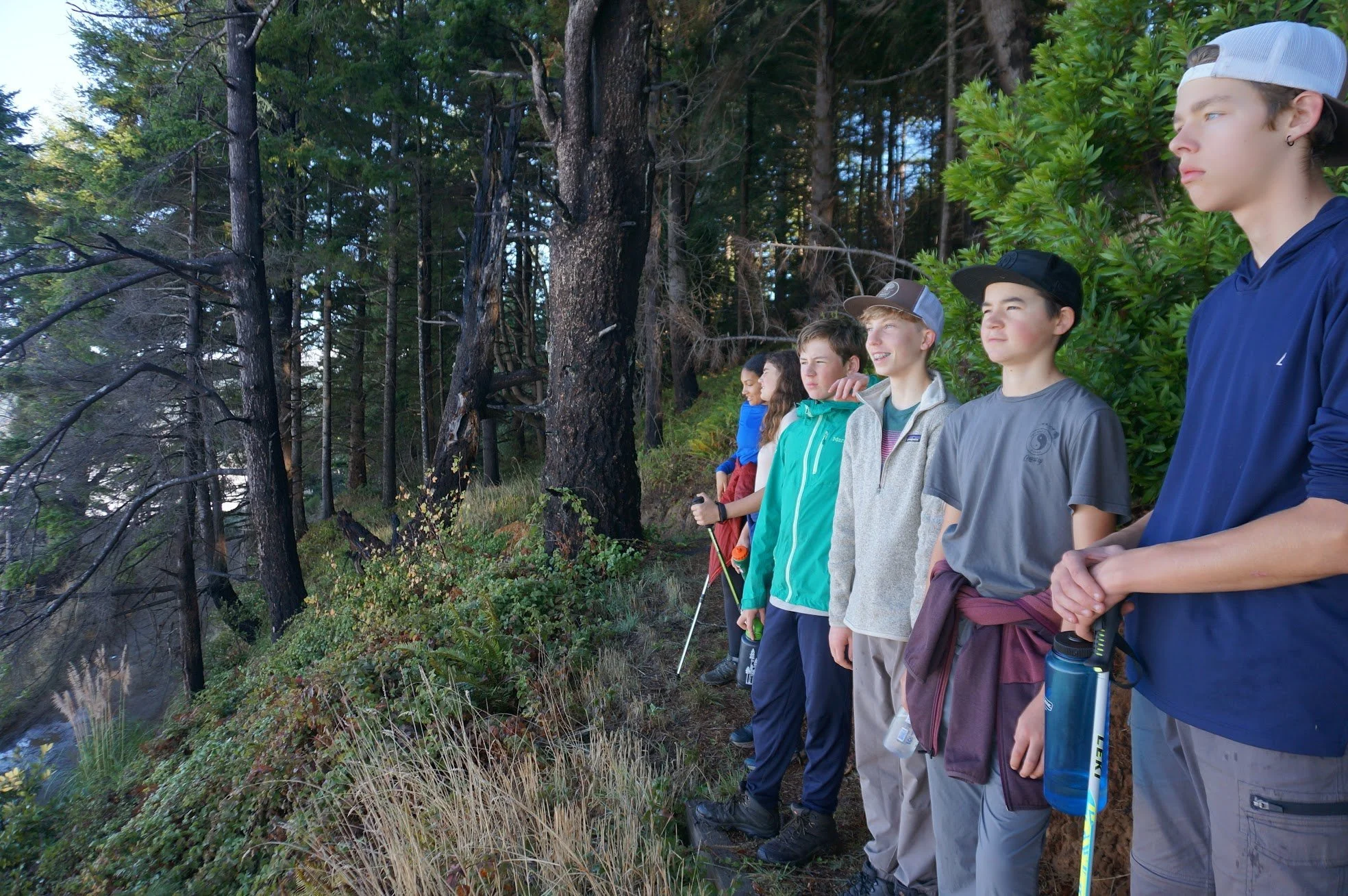
At this year’s graduation ceremony, Marin Waldorf School alum and current parent Jake Pearl (Class of 2005) spoke to graduates and their families. We share his beautiful reflections below.

Hello everyone, my name is Jake Pearl.  I want to give a big thank you to the school and Megan Neale for giving me the opportunity to briefly say a few words to the departing 8th grade class. 

In May of 2005, my friends and I sat right here in these chairs where you are now, for our 8th grade graduation from Marin Waldorf School.  We were excited but also nervous about the next chapter, stepping into high school and facing life beyond Waldorf. 

I’m going to tell you five things that I learned throughout my life that wish I had known on that day.

First, be patient with the rest of world and the people you meet. The people you are going to encounter didn’t receive all the gifts that you have. They were not raised in the same spirit-nurturing environment that you have been. They won’t be the same; be patient with them

Second, always remember that you were raised to shine. Today from you I’ve seen poetry, moving speeches, and musical performance. Most 8th graders can’t do these things, not like you can. When a volunteer is called for, remember, you are the one. When it’s time to risk, time to be vulnerable, time to sing your song and speak the truth, many will be afraid to do so, but you will not.  A bright light has been slowly nurtured in you while you have been here.  Shine it for yourself, and the world. Do not be afraid. It’s who you are.

Third, you were built to lead.  In the same spirit, the places, people, communities, and institutions you will touch are all thirsting for leadership. Your experiences here have prepared you for that role, whether you realize it or not. Step forward, show them the way, call on those around you to share their gifts, make them safe to do so. When you find yourself in an aimless group, full of uncertainty, and everyone is wondering who to follow. Remember, you are the one.

Fourth, be grateful to your parents and teachers. They have done so much more than the average parents and teachers. They have sacrificed and pledged extreme effort and dedication to give you the most supportive education possible, and in this they have risen above most. It’s not their job to tell you this, and they never will. I had to have children of my own before I could see everything mine had done. Realize it now, keep a warm heart of gratitude for them.

Last, keep your Marin Waldorf friends. These relationships will last forever if you nurture them. You will make friends in high school, college, and beyond, but your MWS classmates will forever be sacred, their loyalty and love for you will always there. Keep it with you.

Welcome to the Marin Waldorf School Alumni Association.  We are so glad and proud to have you.  Congratulations.

June 6, 2025

Read More
Michael Belcher Michael Belcher

Celebrating the Class of 2025

Read the moving words 8th grade teacher Julia McIlroy shared with this year’s graduates and their assembled friends and families.
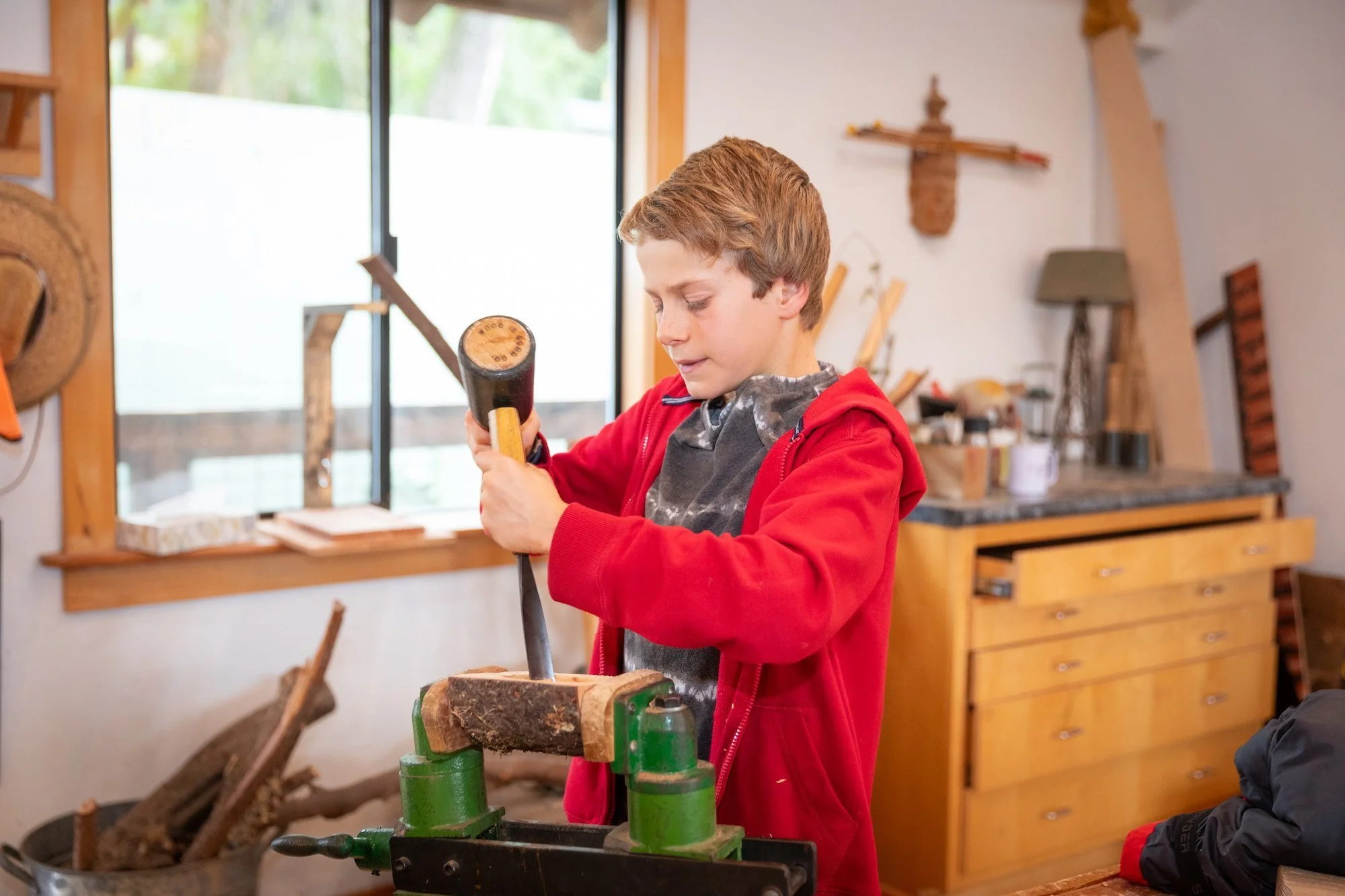
Last Friday, we said farewell to the Class of 2025 at a beautiful graduation ceremony in the campus amphitheater. Together, we celebrated the 8th graders and their shared experience at Marin Waldorf School. We heard from their class teacher Ms. McIlroy, from MWS alum and current parent Jake Pearl, and from the students themselves, who each took a turn to speak at the podium. It was a beautiful and heartwarming sendoff.

A highlight of the day was the beautiful speech given by 8th grade class teacher Julia McIlroy. In her moving words to the graduates, Ms. McIlroy highlights the importance of community and care at Marin Waldorf School—something exemplified by this year’s 8th graders. Please take a moment to read her message to the Class of 2025 and their assembled friends and family, below.

Good morning, graduates, family, friends, alumni, and faculty!

My name is Julia McIlroy, and I’ve had the immense honor of being this class’s teacher for the past year and a half, and their math teacher for much longer. And let me just say—it’s been a wild, wonderful ride. A bit like herding cats... if the cats had opinions about revolutionary America, independent research projects, and whether lunch should start five minutes early. 

There’s a truth I’ve come to see every day in this classroom: what matters most in life isn't just what we know or achieve—it’s how we treat each other. It’s our relationships. The way we show up for one another, even when we disagree. Even when someone takes our spot in the cozy nook.

At Marin Waldorf, being part of a class is like joining a family. Sometimes it’s loud. Sometimes someone "borrows" your colored pencils without asking. But always, it’s rooted in deep care and connection. Social-emotional growth here is just as vital as physics or math lessons. In fact, in a world increasingly shaped by AI, automation, and ever-smarter devices, our ability to connect—to be truly human—is more important than ever.

A groundbreaking Harvard study—now over 85 years running—found that the single greatest predictor of happiness and health over a lifetime isn’t wealth, intelligence, or even genetics. It’s the quality of our relationships. Good relationships keep us healthier, happier, and help us live longer. That truth is at the heart of what we practice every day in this school.

Maya Angelou once said: "I've learned that people will forget what you said, people will forget what you did, but people will never forget how you made them feel."

These six students have been learning how to make each other feel seen, heard, and respected—even when things weren’t easy. I’ve watched them wrestle with big ideas, with each other, and with how to share the last brownie without causing an international incident.

Dr. Martin Luther King Jr., who the students studied this year, said: "We must learn to live together as brothers or perish together as fools." This class has lived that lesson. They are six very different individuals who have learned to work together, compromise, argue, reconcile, and grow. And this kind of learning—how to live with people who aren’t just like you—is the foundation of any peaceful, meaningful society.

Some of the growth I’ve witnessed has been profound. Stella, who once hardly said a word aloud in school, has found her voice—and when she speaks, we all listen. Kiian—well, he’s learned that sometimes the most powerful thing you can do is pause—stop walking—and really listen to someone else speak. And when you’re as funny and full of thoughts as Kiian, that’s no small achievement.

Reece has brought joy, spontaneity, and a deep sense of community to this class. She has a way of drawing people in, making sure no one feels left out, and reminding us to laugh—even when things feel heavy. Lucas is our quiet leader. With calm presence and strong convictions, he leads not by volume, but by example—always thoughtful and steady, with astute observations thrown in.

Colin has brought his immense intellect and fierce curiosity to every conversation. He has a talent for dissecting complex ideas, and a willingness to debate every detail. This year, he has found his softer, kinder side. He has shown up for his friends in a very different way. And Adam—Adam brings a quiet, steady happiness to everything we do. He shows up with a smile, ready to help, ready to draw whatever picture we ask, and always ready to be a true friend. In so many ways, he has been the glue that holds this class together.

Of course, none of this happens without the teachers who helped build the foundation these students stand on. Subject teachers, thank you. You’ve each played an essential role in preparing this group for what lies ahead—with your brilliant teaching, wisdom, and unwavering support.

Ms. Rhian Dale guided and loved this class from first through third grade, helping to shape the vessel that has carried them to this moment. We’re so happy you could be here with us today. Ms. Stroud, Ms. Ashley, and Mr. O’Connor—though not with us today—each left a meaningful imprint on these students’ lives. And Ms. Reed, thank you for the time, care, and talent you’ve shared so generously with these students. Your presence means so much.

To the students—thank you. Truly. You’ve taught me as much as I’ve taught you. Some days, possibly more. Watching you grow—academically, socially, emotionally—has been one of the great privileges of my life. I have laughed with you, learned with you, and cheered for you. And I love each one of you.

You’ve filled our classroom with curiosity, passion, creativity, and heart. You’ve also left behind a few wrappers, about twelve unwashed mugs, and one or two unfinished handwork projects—so sorry, Ms. Dow! But most importantly, you’ve left a lasting mark on me, and on this school.

As you step into the next chapter, take with you everything you’ve built here: your kindness, your curiosity, your ability to work through hard moments with grace—and yes, with humor. Know that no matter where you go, a part of you will always be here. And I will always be cheering you on.

Congratulations, Class of 2025. You’ve made us proud. You’ve made me proud. Now go make the world a little better… and come back to visit us once in a while.


8th Grade at Marin Waldorf School

The 8th grade year is a memorable capstone to the Marin Waldorf School experience, and the Class of 2025 made the most of theirs. Over the course of 2024-2025 school year, our students built motors in physics class, learned to use a sewing machine in handwork, and participated in service-learning and educational field trips to places like the SF-Marin Food Bank and the local wastewater treatment plant. They carved pumpkins with their first grade buddies, played soccer after school, and participated in the annual inter-school track meet in the East Bay. They backpacked on the Lost Coast, challenging themselves beyond their limits and felt proud at what they had accomplished together. They visited the murals in San Francisco's Mission district and performed for our school community (in Spanish!) in ¡Sí Se Puede, Amigos! a César Chávez & Dolores Huerta Day celebration. And they each spent months planning, researching, and working with a mentor to complete a multifaceted 8th grade projects on a subject of their choice.

Read More
Michael Belcher Michael Belcher

More Green Time, Less Screen Time

A thoughtful approach to tech, combined with a hands-on, nature-based, and social education, builds creative and engaged students.
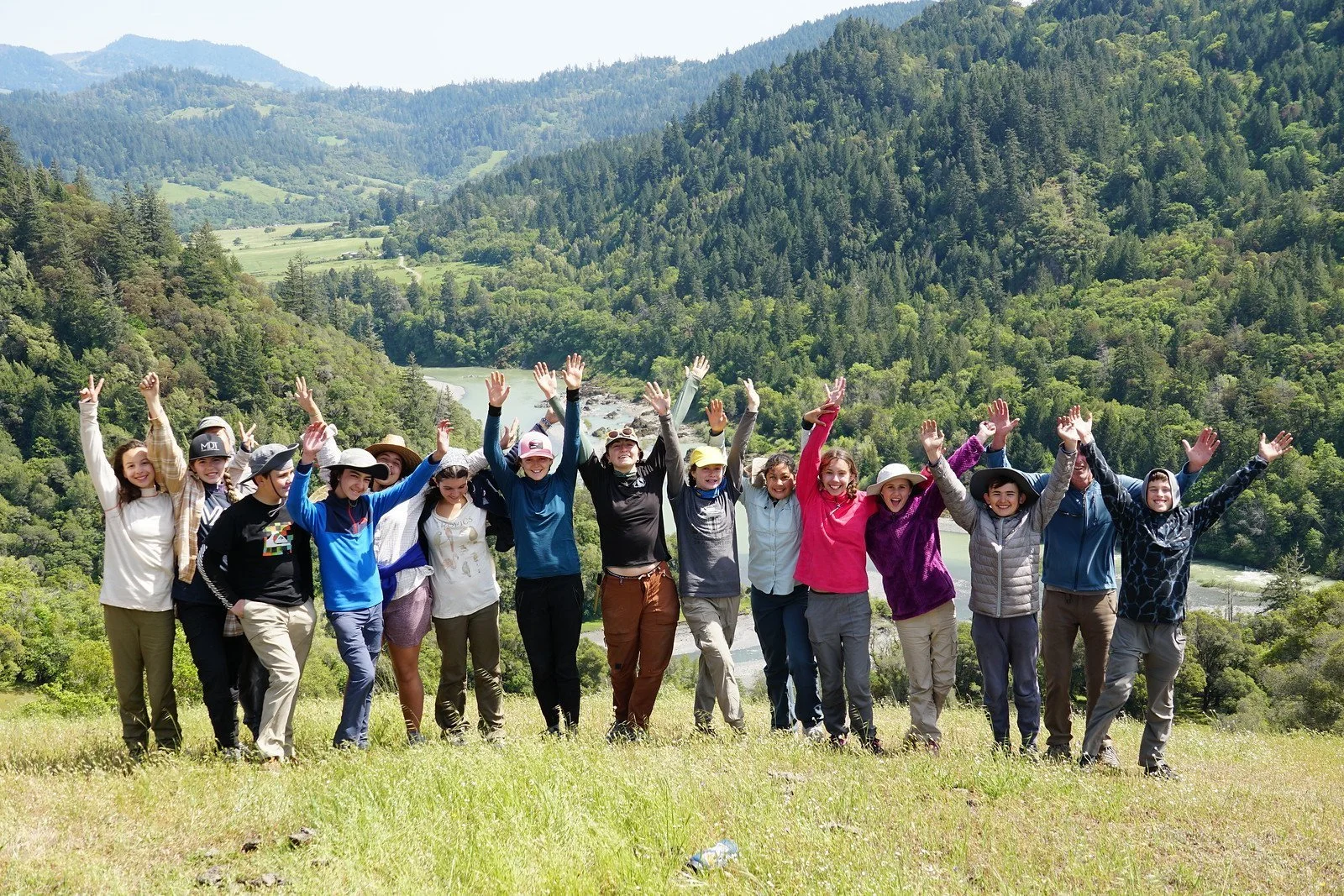
A hands-on, nature-based, and social education builds creative and engaged students.

As parents and educators, we know that technology is an essential and inextricable part of today’s world. At the same time, we know that making sensible choices about tech and digital media can have significant cognitive, social, physical, and emotional benefits for children, both today and in the future.

In a recent interview with Ezra Klein at the New York Times, education policy expert from the Brookings Institution Rebecca Winthrop said, “We know that in early childhood, the more screen time kids have, the less language acquisition they have. We know that when infants are learning language, they learn a lot of language from human-to-human contact. And if you put the same sentences on a screen, they don’t learn it.”

“I think we should make school a place where kids can actually interact with each other, develop human-to-human socialization capacities, because there is massive commercial tech the minute they leave school that is vying for their attention,” Winthrop says.

Intentional, Experiential, Screen-Free

At Marin Waldorf School, we advocate a slow, thoughtful approach to tech—both at home and at school. Our rich interdisciplinary curriculum emphasizes hands-on experiences, human relationships, creativity, social responsibility, and connection with nature in children, before introducing them to the often overpowering influence of media and technology. Our curriculum and pedagogy are based on the understanding that, as best-selling author Jonathan Haidt writes in his new book The Anxious Generation, “Experience, not information, is the key to emotional development.”

Our campus is intentionally screen free and we don’t use educational technology in the classroom, unless it is required for assisted learning. Our teachers don’t rely on tablets and laptops to engage their classes, but invest time in creating dynamic and developmentally responsive lessons across subject areas. Even parents are asked to keep their phones tucked away in bags or pockets while on campus. 

Why? Because children learn through doing, exploring, and experiencing. And research shows they learn best when they are able to build quality in-person relationships with their teachers.

Slow Tech—Not No Tech—Curriculum

Starting in early childhood, we prioritize building academic, social, and emotional capacities in our students, slowly and intentionally introducing media and technology so that it can be used as a resource and a tool.

Importantly, we present technology within a larger context of human-to-human communication and literacy, paving the way for a healthy relationship to media and technology in the future. For example, we consider tech education to include activities like letter writing, phone calls, emails, and other forms of communication, teaching children how technology fits into a larger social context.


Preschool and Kindergarten: An Experiential Foundation

The smell of bread baking, watercolor paintings on the walls, wooden toys to play with: as soon as you step into a Marin Waldorf School classroom, you’ll feel the difference. Our welcoming preschool and kindergarten classes are built for tactile learning, social engagement, and play.

According to experts at UNICEF, “Dozens of studies have now found that spending time outdoors, especially in free play, benefits children's physical health, social skills, and even their concentration and school readiness.” In fact, the May 2025 article says, “A growing body of research has found that children who spend more time in green spaces, such as wooded playgrounds or gardens, have better focus, lower stress levels and better emotional resilience.”

In early childhood, children benefit from a rich experiential foundation with little or no screen time or influence from digital media. We work in partnership with parents to reduce or limit media and to model healthy habits around technology at home. By emphasizing experiential learning through outdoor play, alongside artistic activities, movement, music, handwork, and lots of time outdoors, our students build essential cognitive, problem-solving, memory, and social-emotional skills.

Green Time, Every Day
At Marin Waldorf School students in every grade, starting in preschool, spend a large part of their day outside, rain or shine. Kindergartners take weekly hikes in the hills near campus and learn that, as the saying goes, “there is no such things as bad weather, only bad clothes.”

In Waldorf education, building a relationship with nature is central to a child’s development. Time outdoors teaches children about the Earth’s natural rhythms and cycles, allows them to experience natural phenomena before studying them in a classroom, and fortifies the child’s relationship with and respect for the natural world. Click here to see our kindergarten classes in the nearby Lucas Valley open space.

Elementary School: Foundational Skills

During grades 1 to 4, children are guided by parents and teachers in building social skills through group work and free play; they develop their imagination and creativity through the arts, music, and stories; and they build essential physical and fine/gross motor skills through collaborative games, ample time outdoors, twice daily recess, and applied arts, from knitting to woodwork. Our elementary school teachers don't use technology classroom, and we encourage parents to limit digital media and devices at home during the early grades.

It's important to note that our approach isn't simply to discourage technology and screen time; we actively encourage the tactile, hands-on, real-world, and social experiences that children need to build a foundation for capable, healthy, and responsible tech use in the future.

Middle School: Technology As a Tool

In grades 5 to 8, media and technology are gradually introduced at school, teaching students how to positively use these tools in their school work and in their relationships.

During middle school, students are introduced to internet research for school projects and learn keyboarding skills, all while maintaining and deepening real human relationships with their peers and benefiting from classrooms free of educational technology. We continue to prioritize social-emotional learning through group work in the classroom, as well as cooperative projects, like class plays and orchestra performances. Learn more about our approach to social-emotional learning.

Importantly, we talk about tech and its responsible uses. We guide students to become thoughtful and safe digital citizens through our engaging social ethics and Cyber Civics curriculum, which covers topics like social media, online safety, mass media, and other crucial topics during 6th, 7th, and 8th grade.

A Like-Minded Community
In today’s tech-centric environment, it is difficult to limit or eliminate screen-based media from your child’s life—particularly when media, movies, and video games have become such a widely accepted aspect of childhood. 

Marin Waldorf School provides an alternative. We know many families choose our school because they are looking for a low-tech environment. Here, we encourage parents to work in partnership with our faculty to limit the influence of media and technology at home, creating a community of children who don’t feel pressured to play the latest video games or who aren’t constantly asking to borrow your phone. 

As children grow older, we encourage parents to serve as mentors and guides to their children when introducing media at home. That means setting boundaries about when and where we use technology, discussing media and its uses with our children, and co-viewing movies and television programs as a family.


Why Limit Media?

Research shows that screen time and media, especially for young children, can curtail attention, reduce empathy and slow language acquisition, interfere with sleep, and negatively affect academic performance over the long term.

“Children need to explore their environment using all their senses to learn about the world, so it is very important that they can interact with three-dimensional spaces and activities,” says Dr. Jennifer F. Cross, pediatrician and a developmental pediatrics expert at NewYork-Presbyterian Komansky Children’s Hospital.

Even without research, we know it on a gut level. Children are unnaturally captivated by screens, tuning out human interaction—or even basic needs, like hunger—when pulled into a television show or video game. 

We encourage parents to limit screentime so that their children can observe and experience the world with their senses, naturally building neurological pathways, social skills, and the ability to learn new things, as their brains are built to do.


More Resources for Families

Let's help our kids grow up to be tech savvy! For families looking to make strong media choices at home, we have some resources and recommendations to share. 

  • Diana Graber, founder of the Cyber Civics curriculum and author of Raising Humans in a Digital World, is a frequent speaker at Marin Waldorf School. Click for Diana’s most recent presentation to the MWS community or download resources from her presentation here.

  • Author and educator Phillip Done shares his tips for navigating technology at home in How I Got My Students to Stop Staring at Screens in Time Magazine.

  • Screen Sense, a family and school advocacy organization, shares a tool for limiting technology and offers an age-appropriate outline for a slow tech approach at home.

  • Jonathan Haidt, the bestselling coauthor of The Coddling of the American Mind, investigates the youth mental health crisis and offers a plan for a healthier childhood in his new book The Anxious Generation.

Read More
Michael Belcher Michael Belcher

A Letter From the Director: Celebrating Our School's Commitment to Childhood

Marin Waldorf School has long advocated for a thoughtful and age-appropriate approach to technology. It is heartening to see that the entire nation is now moving in this direction, reinforcing the values we have long upheld.
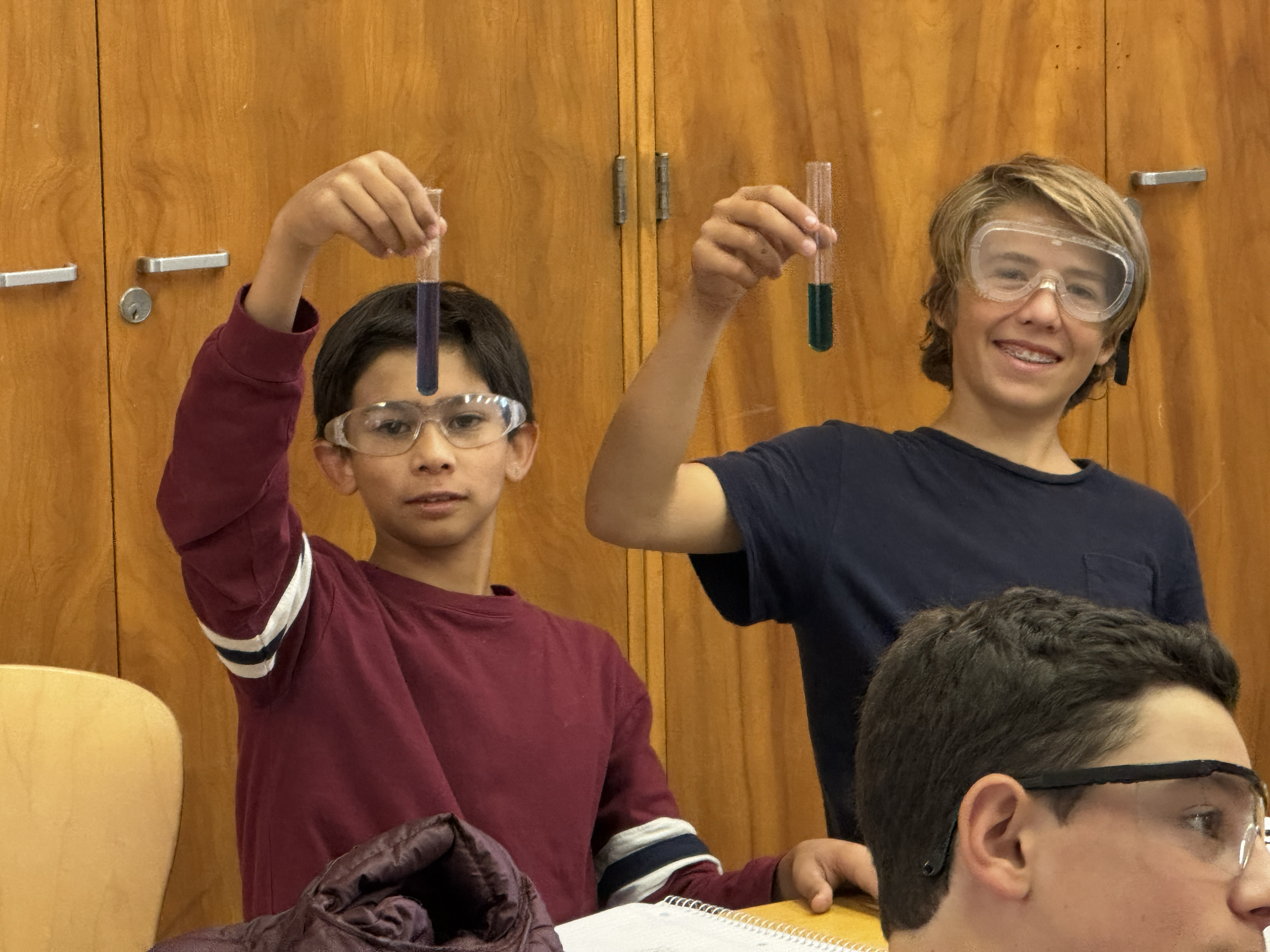
Last week, our school director, Megan Neale, shared the following letter with our school community about our school’s approach to technology and the national conversation about children and social media.

Dear Marin Waldorf School Community,

For years, our community has been on the front lines in supporting the mental health and well-being of the younger generation. Since its founding, our school has been intentionally tech-free, emphasizing the healthy experiential, tactile, and social experiences children need to grow. It is heartening to see that the entire nation is now moving in this direction, reinforcing the values we have long upheld.

The Wait Until 8th movement—which asks families to commit to delaying smartphone use until at least eighth grade—has gained national traction, aligning with the wisdom we have embraced in our approach to childhood and education. Leading voices like Jonathan Haidt, author of best seller The Anxious Generation, have been instrumental in shedding light on the impact of social media on young minds. His recent conversation with Ezra Klein is a must-listen.

The message is more urgent and unsettling in the new British series Adolescence, which in just two weeks became the most-watched limited series on Netflix. Clearly, the show and its themes struck a chord within society. I just finished watching the series and I found it offers a dark yet remarkably nuanced view of how multiple factors, including unsupervised technology use, loneliness, and toxic online communities, can be devastating for adolescents.

These discussions affirm what we have always known: Children thrive when given the space to develop at their own pace, free from the pressures of social media and screen dependence. As the world catches up with what our school has long championed, let us take a moment to celebrate our commitment to nurturing a childhood that is rich in imagination, play, and real-world connection.

We are proud to stand together in this movement, ensuring a brighter, healthier future for our children.


Learn more about Marin Waldorf School's commitment to promoting a healthy, natural childhood through a thoughtful approach to technology, an articulated program of social-emotional learning, and a campus-wide commitment to community and connection.

Social-Emotional Learning at Marin Waldorf School
Less Screen Time, More Green Time: Our Approach to Technology
For Parents: Talking About Sexual Ethics and Sexual Literacy With Our Children

Read More
Michael Belcher Michael Belcher

Learning to Think Like a Scientist

In our classrooms, science is taught through multidisciplinary experiences, encouraging students to use imagination, original thinking, and problem solving skills.
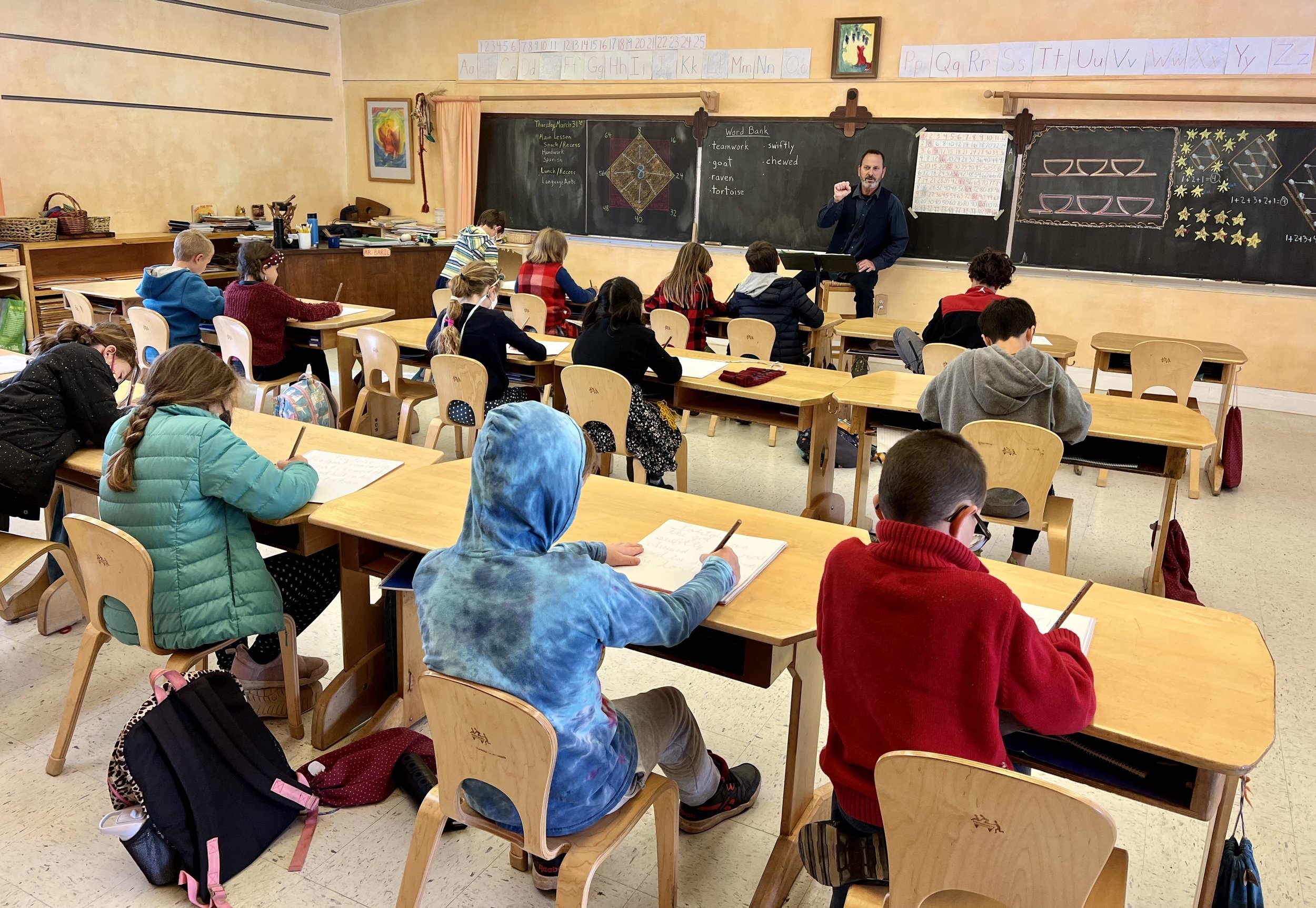
How Marin Waldorf School teaches science in elementary and middle school

When two preschoolers climb onto a seesaw, they quickly figure out how to tip the beam from one side to the other, shifting their weight to make it go faster or slower with their movements. It’s play, but it’s also a demonstration of a natural human intuition about how the world works—in this case, what’s described in physics as a lever, a simple tool with a beam and fulcrum that can be used for leverage of heavy loads.

At Marin Waldorf School, our youngest students are engaged science learners—whether they know it or not! Through time outdoors, through songs and structured activities, and—most importantly—through play, our preschool and kindergarten students are building the capacities they’ll need to excel in STEM in elementary school, middle school, and beyond. (Click here to read more about the incredible cognitive, emotional, social, and physical benefits of imaginative play!)

Grades 1-5
In the Waldorf elementary school classrooms, teachers approach science education with the same spirit of imagination and discovery we see in the young child. While teachers bring scientific lessons to the class, science isn’t confined to the classroom, but taught through rich multidisciplinary learning experiences. From zoology to geology, students are guided in observing natural phenomena, evaluating what they are observing, and learning to draw conclusions about their experience.

Hands-on and experiential learning is key to the MWS science curriculum in the early grades. During their study of agriculture and ecology, 3rd graders mix clippings, manure, and straw to make compost in the school’s biodynamic garden, giving them a real-world understanding of the carbon cycle. During their study of the animal kingdom, 4th graders use clay to sculpt an animal’s body, gaining a hands-on understanding of anatomy and function. Even playing a wind or stringed instrument—which all our students begin in 4th grade—is a way to understand acoustics.

Grades 6-8
In our middle school classrooms, where 6th, 7th, and 8th graders explore complex topics in chemistry, physics, physiology, biology, and geology, science instruction begins with observation, using what is known as a phenomenological approach. In a phenomenological approach, students aren’t introduced to scientific principles through lectures and reading. Instead, a lesson begins with experiment, observation, and hypothesis. 

Here’s a video of then-7th grade teacher Ms. Terziev performing a simple experiment in combustion called “The Flaming Jug.” Ms. Terziev did not explain the demonstration or its purpose before she began. She asked her students to watch carefully, in silence.

After watching the experiment, students brought their questions and theories to the group, inspiring both curiosity and critical thinking in the classroom. When they'd finished the discussion, Ms. Terziev explained states of matter and what caused the rapid combustion inside the bottle. In this way, students learn the concept behind a phenomena after observing it and drawing their own conclusions.

By encouraging children to observe, to use their senses, and to discover through experience, we encourage them to approach problems in science like scientists. The result is students who know how to use original thinking, imagination, enthusiasm, and problem solving in their approach to science—and bring these skills to any advance-level discipline.

Integrating Art (or STEAM)
Art is integrated into every discipline in the Waldorf curriculum, including science. Why? Across disciplines, art helps students build a personal connection to the material they are studying, it helps boost retention of material over time, and it promotes innovation and creative thinking. 

Creative thinking is essential to advanced-level science. In fact, many education researchers and technology innovators have now advocate for the inclusion of an “A” for “art” in the popular acronym STEM (science, technology, engineering, and math), underscoring the importance of creative thinking to these disciplines. 

Art also supports the close observation and attention to detail that are required in advanced-level science. In fact, observing a lit candle—noting the details like the change in color of the flame —is an essential activity in the 7th grade combustion block

Read More
Michael Belcher Michael Belcher

Main Lesson: A Multisensory Approach to Teaching

For grades 1-8, mornings start with main lesson, an intensive two-hour class that gives students an opportunity to connect deeply with a single topic.
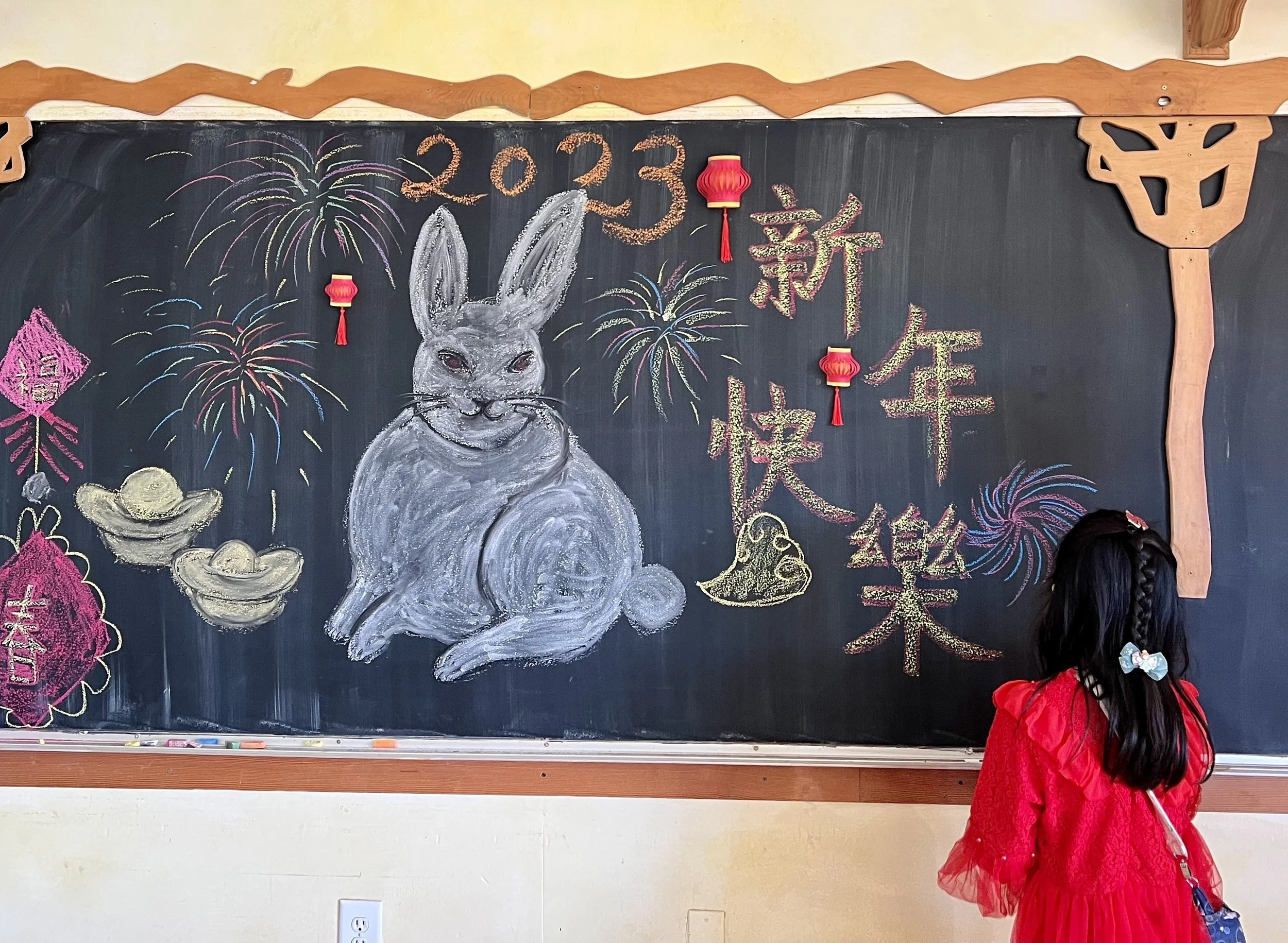
Intensive interdisciplinary morning lessons are one of the innovative teaching practices that enrich learning at Marin Waldorf School

Mornings at Marin Waldorf School always begin in the same way: The bell rings, classroom doors open, and teachers step outside to greet each of their students with a handshake. Then a hush falls over the school as main lesson begins.

Main Lesson: A Multisensory Approach to Teaching
Main lesson is an intensive two-hour class that begins the school day for students in grades 1 to 8. It is taught first thing the morning, when children’s minds are most receptive, alert, and able to concentrate on complex topics. On most days, the class time is centered around a single subject in the curriculum, which teachers approach through a range of multi-sensory activities that engage the head, heart, and hands.

Every class teacher has their own unique approach to main lesson, which may begin with a song or a verse, stretches, or a morning warmup outside. After that, each lesson includes three main parts: something new, something reviewed, and something to do. These parts may be approached through a blend of instruction, book work, group projects, games, recitation, movement, singing, art, and discussion.

Art, movement, song, and rhythm are not just enriching elements of Waldorf education—they are powerful tools for encoding new ideas. Encountering concepts through multiple modalities fosters nuance and deeper understanding, reinforcing learning in a meaningful way. Through varied activities, teachers to cater to different learning styles while simultaneously keeping children engaged in learning throughout the morning.

Instructional responsiveness is at the heart of this approach, prioritizing student thinking over rigid instructional sequences. Lessons evolve based on student engagement, ensuring that learning remains dynamic and relevant.

Handmade Lesson Books
While every classroom has its own library and reading spaces, you won’t find textbooks at Marin Waldorf School. With the teacher’s guidance, students create their own handmade lesson books, with illustrations and summaries of the material presented in class. Below, you can see two examples of main lesson book pages from blocks on the Struggle for Rights (8th grade) and Patterns in Math (2nd grade).

The creation of a main lesson book is one of the ways Waldorf teachers incorporate art, creativity, and meaning into academic coursework, encouraging recollection and a personal connection to the material. In a Waldorf school, children don’t reference textbooks to remember their lessons, but their own handmade work.

Block Schedule
In grades 1-8, the core curriculum is divided into blocks of 2-4 weeks. During each block, the whole class focuses on a single topic in the curriculum. At any given time on the Marin Waldorf School campus, 2nd graders might tackling word problems in a math block on place value while 4th graders study Norse mythology and 7th graders delve into combustion during a chemistry block.

With ample time and space to explore each topic, blocks allow teachers to provide additional challenge or extra support to students, as needed. Learning to persevere through a challenging topic—even when it doesn't come naturally—builds confidence, resolve, and growth mind-set in our students.

Arts Integration
Creating main lesson books is one of the many ways that teachers incorporate creativity and artistic expression into the academic curriculum. Throughout elementary and middle school, art is integrated into every subject at MWS. Why? Because art helps students build a personal connection to the material and boosts retention of that material over time. Art naturally promotes observation, creativity, and innovation. And art teaches students to approach their work with close observation, detail, and care— qualities that will serve them in advanced-level academics in high school and beyond.

Interdisciplinary Learning
Here, math, science, language arts, social studies, art, and music aren’t taught as discrete topics, but thoughtfully intertwined to promote critical and creative thinking across disciplines. The block schedule gives teachers the time and space to take a rich multidisciplinary approach to each topic, promoting a deeper understanding and connection to class material.

For example, in the 5th grade botany block, students delve into the world of plants through instruction in the botanical life cycle, observation and schematic illustration, and hands-on and experiential work in the school garden or hiking in the open space. In addition to instruction during main lesson, grades students take afternoon track classes in math and language arts, giving their essential skills a boost.

Double Doses of Math and Literacy
Core skill-building in language arts, math, visual art, and social-emotional learning are integrated into every block, allowing students to build essential academic skills across subject areas. That means that math and literacy skills are taught in context, a more engaging approach for most students.

At the same time, we bolster student learning through math and language arts track classes in the afternoons. These skill-focused classes start in 1st grade and continue though middle school, ensuring students are receiving a sold foundation before moving onto more complex academic subjects in middle school and high school.

Looping
When it comes to building strong teacher-students relationships, one of the most important innovations in Waldorf education is looping. Looping is when a teacher stays with the same class for multiple years or grade levels. In some cases, MWS class teachers will stay with the same group of students all the way from 1st to 8th grades! Our school’s specialty teachers also work with the same children year after year, creating the same sense of support and continuity in subject classes like music, handwork, gardening, orchestra, physical education, woodworking, and middle school math. Read more about looping here.

A Balanced Day
Just like our curriculum as a whole, every school day is carefully planned to alternate between activities that require concentration and focus and activities that encourage social interaction and joy. Alternating between these activities helps students stay engaged and on task, develop different skill sets, and, best of all, enjoy a school day that meets their physical, social, and emotional needs.  

Read More
Michael Belcher Michael Belcher

Why We Teach Two Foreign Languages Starting in 1st Grade

At Marin Waldorf School, we teach both Mandarin and Spanish starting in first grade. Here's how our dual-language approach sets us apart.

World language is an important part of the elementary and middle school program at Marin Waldorf School. Here, children receive formal instruction in both Mandarin and Spanish from 1st to 6th grade. After that, students focus on the study of a single foreign language for the final two years of middle school.

In the early grades, teachers bring language to life through stories, games, songs, art, and verses, reinforcing oral and listening skills. Building vocabulary is another key focus in grades 1-3, with students playing games and telling stories to learn greetings, colors, animals, numbers, days of the week, and other practical words and phrases.

In 4th grade, students begin to learn basic Mandarin grammar while more complex writing is explored in Spanish class, including the introduction of adjectives, articles, and regular verbs. By middle school, students are ready to take up more complex Spanish grammar and character writing in Mandarin. As with all subject classes, many of the topics we cover in Mandarin and Spanish mirror themes in the core curriculum.

The Benefits of Language Learning

Cognitive Development

Research consistently shows that there are profound cognitive benefits to learning a foreign language, as well as many qualities promoted through language acquisition, like open-mindedness, creativity, and critical thinking. Learning a language has also been linked to academic achievement across subject areas and creative thinking. Children’s brains, characterized by their neuroplasticity, are particularly receptive to new languages, making elementary and middle school an excellent time to begin their formal study.

Supports Language Arts Curriculum

In elementary and middle school, the language arts curriculum covers increasingly complex topics in English composition and grammar. Through Spanish and Mandarin instruction, children learn how language works, enhancing their abilities in English by deepening their understanding of grammar, sentence structure, parts of speech, and verb conjugation.

A Cultural Gateway

Learning a new language teaches us new ways of thinking and connects us to the world around us. At Marin Waldorf School, our foreign languages program is specially designed to serve as a cultural gateway to Spanish- and Mandarin-speaking countries and people. Taught by experienced teachers who are also native speakers, both Spanish and Mandarin classes engage children through stories and mythology, traditional music, folk dance, regional cooking and cuisine, and artistic projects that teach them about world cultures.

Our language programs are also the focus of two beloved all-school festivals, Día de Muertos in November and Lunar New Year in February. At these events, students have an opportunity to perfect their speaking and presentation skills by performing songs, dances, and verses in Spanish and Mandarin at an all-school assembly. (Read more about the wonderful 2024 Día de Muertos festival here.)

Why Two Languages?

We require two languages for students in grades 1-6. Why?

  • It’s Practical! Mandarin and Spanish are are among the most widely spoken languages globally. Learning these two languages opens the door to communication with people across the Bay Area and across the world.

  • Cognitive Boost. Acquiring new languages stimulates new neural pathways in the brain. In fact, there is evidence that learning Mandarin, with its complex tones and character writing, stimulates parts of the brain that aren’t stimulated by English and romance languages.

  • New Perspectives. Learning foreign languages gives us access to new ways of thinking and expressing ourselves. Learning multiple languages promotes creativity and flexibility in children, as well as a deeper understanding of the human experience.

  • Cultural Connection. A language is a gateway to culture. Our rich and experiential world languages program is specifically designed to connect children with the world around them through cultural lessons and experiences, enriching their educational journey. Through the study of English, Mandarin, and Spanish, we travel across the globe and through time, learning to understand human culture and history.

Read More