
Curriculum Overview
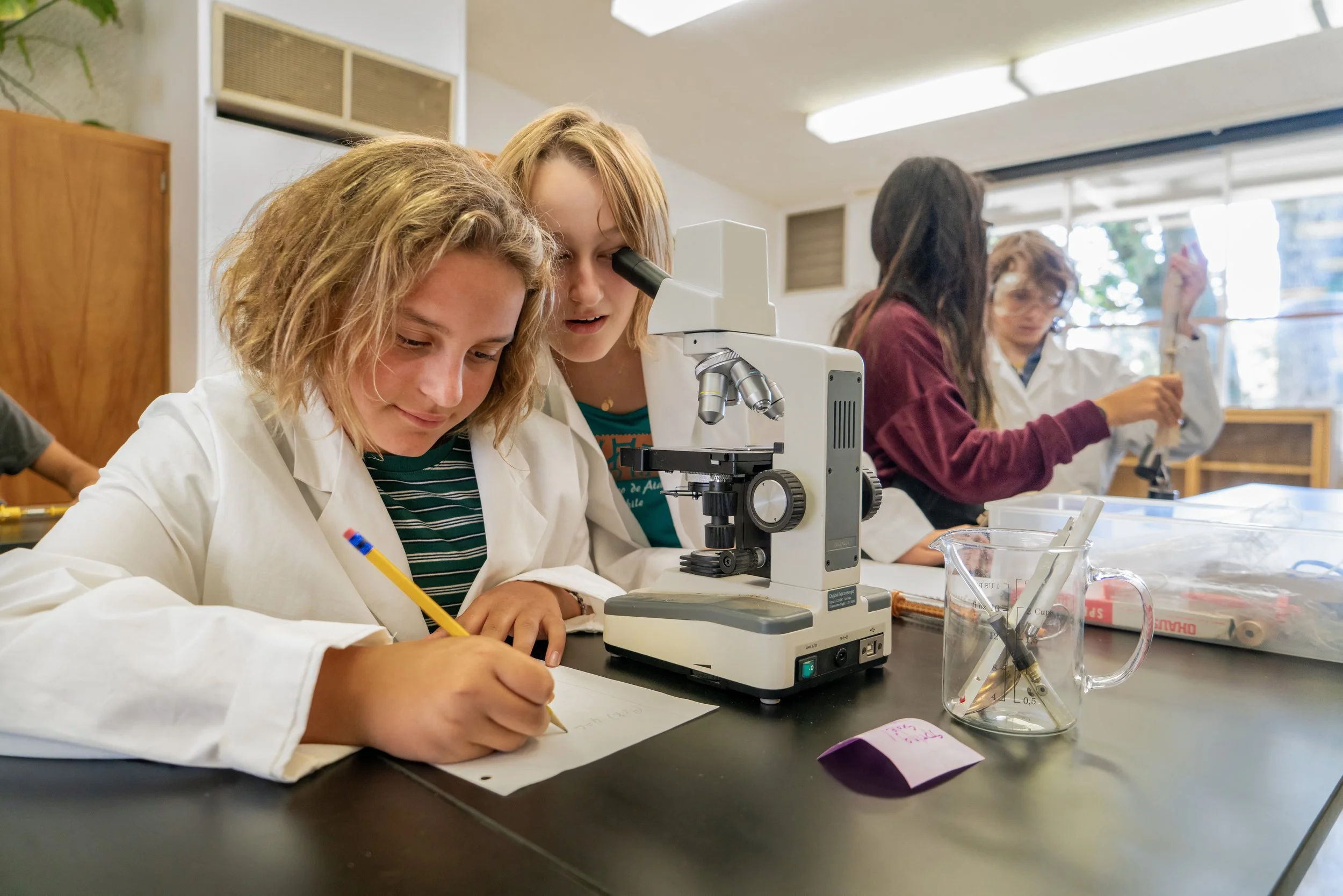
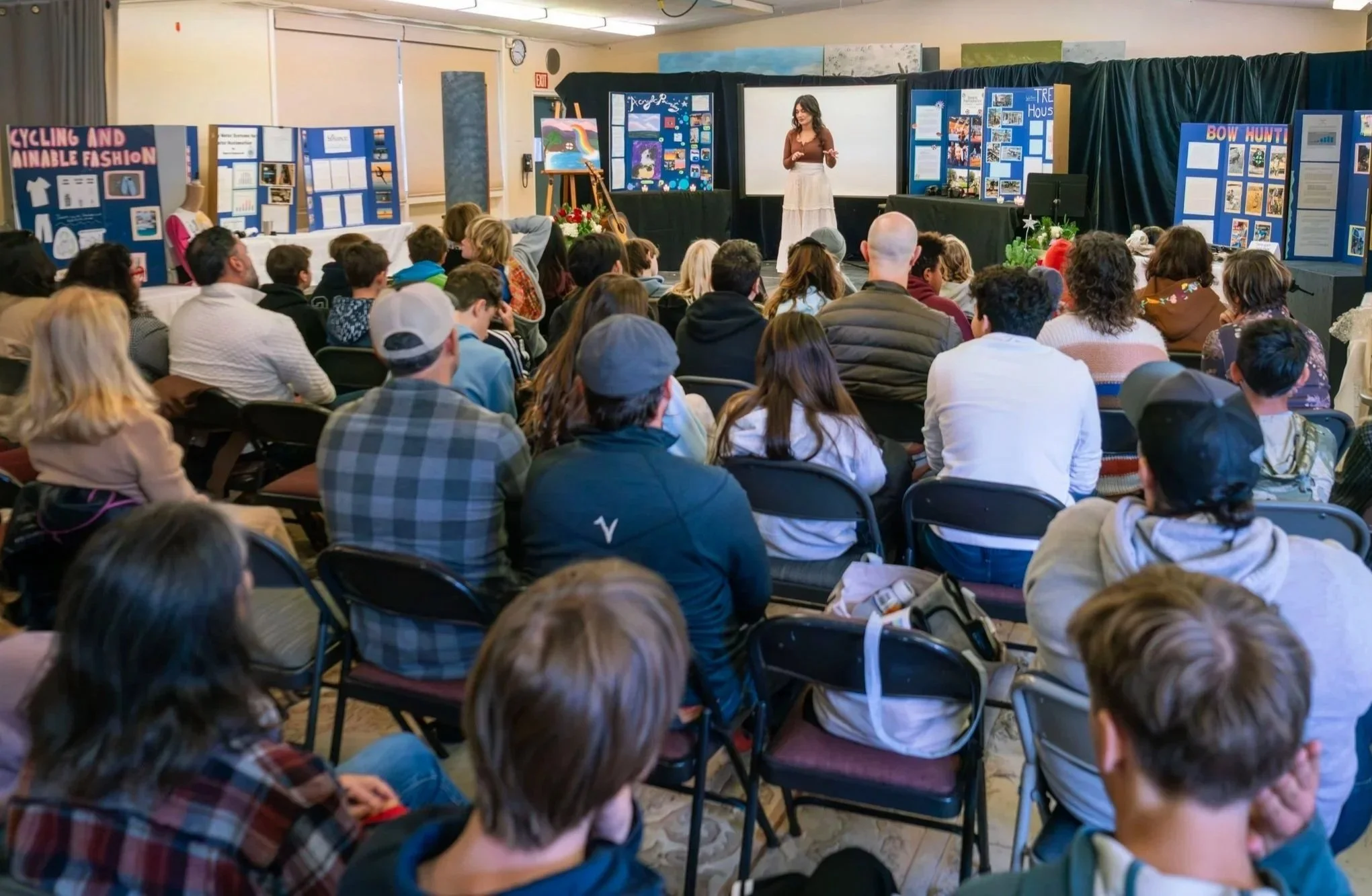
-
For over 50 years, MWS has engaging students through their heads (intellect), hearts (feeling), and hands (action).
For example, when students study the nautilus shell, they explore its spiral in geometry, render its form in drawing, sing its story, and move its proportions through gesture. This is not enrichment added to “real” learning — it is a more complete picture of learning, using the entire human apparatus as an information-retaining instrument, and research shows it is the most effective approach for “owning” information and loving the learning process.
-
The curriculum is a living response to student development. Each grade opens below with the developmental picture of that age — what is happening inwardly — followed by how the curriculum meets the student within that developmental context. Skills that are introduced when students are truly ready are learned more deeply, retained more durably, and enjoyed more fully.
-
You will notice intentional overlap between academic categories. That is where the magic happens. History feeds literature; geometry feeds drawing; music feeds mathematics; handwork feeds executive function. The ability to make unexpected connections across disciplines — to see the mathematics in music, the physics in movement, the pattern linking art to ecology — is the key to dynamically solving problems in an ever-evolving world, and we build it deliberately.
A detailed overview of our educational offerings from Birth through 8th Grade: what students learn, why they learn it when they do, and how the whole child is engaged every year. Think of it like our roadmap for the gradual wholesome awakening of a free, capable, and compassionate human being.
Jump to: Parent-Child · Preschool · Kindergarten · Grade 1 · Grade 2 · Grade 3 · Grade 4 · Grade 5 · Grade 6 · Grade 7 · Grade 8
Parent-Child
AGES
Birth - 2 years and 9 months
THEME
Safe and Familiar: Gentle environment, predictable rhythm, and the loving presence of caregivers.
-
From birth to age three, the essential developmental work is building trust in the world — through consistent care, warmth, movement, and rich sensory experience.
The young child learns primarily through imitation and through the loving presence of caregivers; who we are around them matters more than anything we say to them.
These years hold the three great achievements of early life — uprightness and walking, speech, and the first stirrings of independent selfhood — each unfolding on its own timetable.
The senses are wide open and impressionable: every texture, tone, and rhythm is forming the child’s picture of what the world is like.
-
Parent and child attend together: the program nurtures the child through environment and rhythm while supporting the parent with guidance, perspective, and community.
A warm, home-like room with simple natural materials offers exactly enough — and not too much — for this age’s sensory and imaginative needs.
Nothing is taught formally; everything is absorbed. The teacher’s calm, purposeful work is the lesson, for child and parent alike.
Head, Heart & Hands: Head, heart, and hands begin as one gesture: a parent kneading dough while a child watches, reaches, and joins in — attention, warmth, and doing, indivisible from the very start.
-
Parent-Child classes gather caregivers and their young children in a gentle, predictable rhythm modeled on healthy home life — often a family’s very first step into school community.
Highlights
A consistent weekly rhythm: free play, purposeful work, shared snack, songs and lap games, and outdoor time
A warm, beautiful, home-like environment — wool, wood, cotton, and handmade playthings chosen with intention
The teacher models calm, unhurried care; children absorb the mood, and parents absorb the approach
Small groups foster real relationships among families
Outcomes
Children experience school as a warm extension of home — and parents leave with a felt sense of rhythm they can carry into family life
-
In these years, movement is development: rolling, crawling, pulling up, walking, climbing — each conquest wiring the brain and building the body.
Highlights
Open floor space and simple climbing opportunities invite self-directed movement at each child’s own stage
Natural materials — wool, beeswax, wood, water, dough — educate the senses gently and truthfully
No devices, no flashing toys: the sensory world is calm, warm, and real
Freedom to move at one’s own pace — we never rush a child toward the next milestone
Outcomes
Children build balance, coordination, and body confidence on their own developmental timetable — the physical foundation for everything that follows
-
Language arrives through the ear and the heart: songs, rhymes, lap games, and the teacher’s warm, unhurried speech.
Highlights
Seasonal songs and verses repeated week after week — repetition is how the young child takes hold of language
Lap games and finger plays pair words with touch and movement
Simple puppet moments and gentle storytelling for the oldest children in the group
Teachers model clear, melodic, screen-free speech — the richest language environment there is
Outcomes
Children absorb vocabulary, rhythm, and the music of language — the true roots of literacy, planted years before letters
-
The heart of each class is real work done in the children’s presence: baking, washing, sweeping, preparing snack.
Highlights
Children watch, imitate, and join purposeful adult activity as they are ready — a hand in the dough, a cloth to wipe the table
Sequence, patience, and care absorbed without a word of instruction
Shared snack — often bread the class helped make — practices gratitude and community
Parents experience how much young children want to contribute, and how to let them
Outcomes
Children gain proprioceptive, social, and sequential learning through imitation — and parents gain a workable picture of home life with a toddler
-
The first social curriculum is security: a child who feels safe can begin to notice, approach, and eventually play alongside others.
Highlights
Predictable rhythm and a trusted caregiver nearby give each child a secure base for exploration
First peer experiences — parallel play, watching, imitating — honored as real social development
Gentle, modeled guidance around sharing, waiting, and gathering
Warmth over correction: the mood of the room does the teaching
Outcomes
Children build the secure attachment and early self-regulation that preschool social life will grow from
-
Every class includes time outdoors on our 10-acre Lucas Valley campus — the natural world offered as a first and lasting companion.
Highlights
Outdoor exploration in every season: grass, gravel, garden beds, oak shade, puddles
Gardens and growing things observed and touched week after week
Weather met with equanimity — children learn early that the outdoors is home
Outcomes
Children form a deep, physical relationship with the natural world — and the campus that many will grow up on
-
This is family education designed to support parents in addition to students. Teachers are seasoned guides for the questions of early parenting.
Highlights
Conversation and guidance on rhythm, sleep, play, screens, discipline, and development — grounded in child development and offered without judgment
A community of intentional, open-armed parents — many lifelong MWS friendships begin here
Teachers serve as trusted resources between classes as questions arise
An unhurried window into Waldorf education — families experience the approach before ever choosing a school
Outcomes
Parents leave with practical tools, steadier confidence, and real community — the family strengthened alongside the child
-
Even the youngest families join the rhythm of the year: gentle seasonal celebrations shared in community.
Highlights
Simple seasonal moments — harvest, lanterns, spring — scaled tenderly to the very young
Songs and traditions that will accompany children through their whole MWS journey
First experiences of the wider school community
Outcomes
Families begin the shared traditions that root belonging — the same festivals their children may one day help lead as eighth graders
-
Parent-Child is the natural doorway into the school: by 2 years, 9 months, many children are ready for the gentle first separation that preschool offers.
Highlights
Familiar songs, rhythms, and materials continue into the preschool classroom — continuity eases the transition
Teachers help families read their child’s readiness for a first step away from home
The campus, the community, and the daily mood are already beloved and familiar
Outcomes
Children step into preschool already trusting the place and its rhythms — and parents step into the school community already at home in it
Preschool
AGES
2 years and 9 months - 4 years old
THEME
The first step from home: The world is good, and I am welcome in it.
-
Preschool is often a child’s first sustained step away from home — the developmental task is a secure first separation, built on trust in new caregivers and a new place.
Play is deepening from parallel play toward first true collaboration: noticing playmates, imitating them, and beginning to build together.
Language blossoms: vocabulary multiplies, sentences lengthen, and the inner life begins to find words.
Will forces are strong and fine motor skills are forming; the young student learns through doing, imitating, and repeating — not through instruction.
Imagination is opening: a pinecone becomes a boat, a scarf becomes a river — and this capacity deserves protection, not acceleration.
-
Our preschool classrooms are designed as a gentle transition from home — warm, tender spaces that feel like an extension of family life, with every aesthetic touch point intentional.
A consistent, breathing daily rhythm — active and restful by turns — provides the predictability that makes a young student feel safe enough to explore, risk, and grow.
Teachers do real, visible work — baking, sweeping, gardening, mending — and students join in naturally: the environment is the curriculum.
Teachers serve as powerful resources for parents navigating the early years — family education continues from the Parent-Child program.
Head, Heart & Hands: A morning of bread-making holds the whole approach: counting balls of dough (head), the pride of contributing to snack (heart), and small hands kneading (hands) — no one calls it a lesson, and that is why it works.
-
Literacy in preschool is oral, rich, and joyful: the daily feast of story, song, and verse that reading will one day be built on.
Highlights
Daily storytelling and Circle Time, with stories repeated across days so students absorb language deeply and form their own inner pictures
Rhymes, finger plays, and songs tune the ear to the sounds of language — the earliest roots of phonemic awareness
Teachers model clear, warm, well-enunciated speech all day long
Vocabulary grows through real activity: the names of tools, plants, foods, and weather, learned in use
Outcomes
Students speak in growing sentences, join in verses and songs from memory, and listen to a full story with sustained attention
Aural and spoken literacy instruction is underway — it simply feels like fun and games
-
Numeracy is introduced through practical activities — real counting for real reasons.
Highlights
Counting lunch settings, snack portions, and balls of dough — one-to-one correspondence in daily use
Sorting and ordering through tidying: baskets of chestnuts, shelves of cups, pairs of boots
Counting songs and rhythmic verses give number a felt, bodily quality
Pattern and sequence absorbed through the rhythm of the day and the year
Outcomes
Students count with meaning, sort and classify by attribute, and sense pattern — mathematics as a natural part of caring for the world
-
Science begins as unhurried wonder: daily outdoor life and the turning seasons, observed with the whole body.
Highlights
Daily outdoor play in every weather on our 10-acre campus — mud, wind, sun, and rain as first teachers
Gardening and seasonal work: planting, watering, harvesting, composting
Watching real transformations — dough rising, seeds sprouting, leaves turning
Sensory-rich natural materials — wool, beeswax, wood, water — educate the senses truthfully
Outcomes
Students observe closely, ask “what” and “why,” and develop the reverent attention that all later science refines
-
Preschool at MWS is entirely screen-free — by design, and backed by research on what young minds need most.
Highlights
No screens, no electronic toys: sustained attention, imagination, and human connection are given room to grow
Open-ended materials do the engaging — a basket of shells holds more possibility than any app
The analogue-first arc begins here: capable hands and long attention before any tool with a battery
Outcomes
Students build the focus, creativity, and self-directed play that form a healthy foundation for a later relationship with technology
-
History at this age is the rhythm of the year itself: festivals, traditions, and the stories of people at work.
Highlights
Seasonal festivals mark the turning year and give students their first experience of tradition
Simple folk and nature tales carry the archetypes all later stories build on
Practical life — baking, washing, building — quietly shows how people have always lived
Outcomes
Students gain a felt sense of time, rhythm, and belonging — the ground from which historical understanding later grows
-
The humanities are lived daily as culture and courtesy: songs, celebrations, gratitude, and care for one another.
Highlights
Songs, stories, and festivals drawn from many world cultures
Grace and courtesy practiced as habits: gratitude before snack, care for materials, welcome for visitors
Puppet shows and circle games cultivate shared attention and imagination
Outcomes
Students develop reverence, wonder, and warmth toward others — cultivated capacities that anchor the humanities for years to come
-
Movement is the main work of the preschool day — indoors and out, fine and gross, free and guided.
Highlights
Long outdoor play: climbing, digging, balancing, hauling, running — spatial awareness, strength, and proprioception in the making
Circle games and seasonal ring games build rhythm, coordination, and joyful group movement
Finger plays and early handwork strengthen the small muscles that writing will one day need
A breathing rhythm of active and restful periods paces the day to young bodies
Outcomes
Students develop balance, coordination, grip strength, and stamina — developmentally rigorous movement, experienced as play
-
The great social-emotional work of preschool is the first separation from home — met with warmth, rhythm, and unhurried time.
Highlights
A tender, home-like classroom and consistent teachers make the first step away from home a safe one
Play moves from parallel toward collaborative: negotiating, sharing ideas, and building together — executive function in its natural habitat
Predictable rhythm builds patience, impulse control, and trust in what comes next
Teachers partner closely with parents through the transition — family education in action
Outcomes
Students arrive fully as themselves: secure in a new place, beginning true friendships, and discovering their own gifts
-
The preschool day is sung: melody carries transitions, work, play, and rest.
Highlights
Seasonal songs and gentle pentatonic melodies woven through the whole day
Songs signal transitions — tidying, gathering, resting — so the day flows without commands
Lap games, clapping, and movement keep rhythm in the body
Outcomes
Students carry dozens of songs by heart and experience music as belonging to everyone — readiness for the instrumental journey that begins in Grade 1
-
Art is sensory experience offered with reverence: color, texture, and form explored without pressure or product.
Highlights
Watercolor painting as pure meeting with color — no outlines, no expectations
Beeswax modeling warms in small hands and responds to stories and seasons
Simple crafts follow the festival year — lanterns, garlands, gifts
A beautiful, intentional classroom surrounds students with quiet examples of care and craft
Outcomes
Students handle materials with confidence and care — and experience beauty as something they can make
-
Leadership begins as genuine contribution: even the youngest students do real work that the classroom community depends on.
Highlights
Students help set snack, water plants, and carry baskets — needed, not performed
Older preschoolers naturally model routines and songs for newer arrivals
Shared work — preparing for a festival, baking for the class — teaches that my effort serves us
Outcomes
Students experience themselves as capable contributors — the taproot of the confident, empathetic leadership the grades will grow
-
The preschool year culminates in shared celebration — theater and song without performance pressure.
Highlights
Teachers perform puppet plays and simple marionette stories for the class
Students dramatize stories informally through circle games and creative play
Seasonal festivals, shared with families, are the year’s culminating community moments
Outcomes
Students absorb story structure, character, and dramatic language — quiet preparation for the class play tradition that begins in Grade 1
Kindergarten
AGES
4-6
THEME
Warmth: Guiding teachers model kindness and regulation. Students learn primarily through imitation, rhythm, group activities, and will.
-
In the first seven years, energy is devoted to physical growth, sensory development, and building the body — the foundation for all later learning.
Students learn through imitation, movement, and rhythm, absorbing the gesture of their teachers, the quality of the environment, and the rhythm of the day.
The young student lives in imagination, where the boundary between inner and outer worlds is fluid — a capacity we protect from early intellectualization.
By the end of kindergarten, in the seventh year, growth forces devoted largely to physical development are freed to fuel intellectual work.
-
A warm, home-like environment and a consistent daily rhythm provide the safety and predictability that build trust and resilience.
Because young students learn by doing rather than by instruction, the environment itself is the curriculum: baking, sweeping, gardening, handwork, and rich storytelling.
Multi-age classrooms let students learn from older peers and practice care for younger ones — relational intelligence begins here.
Head, Heart & Hands: Head, heart, and hands are not yet separate streams — story, feeling, and purposeful movement arrive woven together, exactly as the young student experiences the world.
-
Literacy begins long before print. Daily storytelling, puppetry, and complex Circle Time build vocabulary, comprehension, and the inner picture-making that reading later depends on.
Highlights
Rich oral storytelling with repetition, so students fully absorb language and form their own inner pictures
Rhymes, finger plays, poems, songs, and word-clapping games make the sounds of language a daily joy
Teachers model clear, well-enunciated speech, cultivating listening and sound discrimination — the roots of phonemic awareness
Drawing and handmade books let students “write” and “read” their own stories, learning what a book is for
Outcomes
Students retell stories, recite verses from memory, complete rhyming pairs, recognize alliteration, and speak in complete sentences
Students hold a drawing tool with a tripod grip, cross the midline, and tell a short anecdote from beginning to end
-
Numeracy is set in the early years through real, purposeful activity — the foundation on which all later mathematics is built.
Highlights
Counting woven into practical life: place settings, snack portions, birthday candles, balls of bread dough
Sorting, grouping, and one-to-one correspondence through clean-up, laundry, and organizing playthings
Counting songs, circle games, and rhythmic verses give number a felt, bodily quality
Estimation and prediction arise naturally in play — how many blocks, how many friends fit in the “spaceship”
Outcomes
Students count with one-to-one correspondence, sort and classify by attribute, and recognize pattern and sequence in daily life
-
Science begins as wonder. Daily outdoor time and seasonal rhythms train the observational instincts that formal science will later refine.
Highlights
Daily outdoor play in every weather — climbing, digging, balancing, building
Observing real phenomena: bread rising, seasons turning, plants dyeing fabric, seeds becoming food
Gardening and care for the natural world on our 10-acre Lucas Valley campus
Sensory-rich natural materials — wool, beeswax, wood, water — educate the senses themselves
Outcomes
Students actively observe, ask questions, and investigate — the working posture of a scientist, formed before the vocabulary arrives
-
MWS supports a screen-free early childhood. Research shows excessive screen time undermines attention, creativity, and well-being — especially in the youngest years.
Highlights
Screen-free classrooms foster curiosity, sustained attention, and human connection
Open-ended materials — not electronics — do the work of engagement: a basket of pine cones becomes a castle, a forest, a ship
The “analogue first” arc begins here: capable hands and focused attention before any tool with a battery
Outcomes
Students build the attention span, imaginative flexibility, and self-directed focus that later make them thoughtful users of technology rather than passive consumers
-
History at this age is the living rhythm of the year: seasonal festivals, cultural celebrations, and the stories of people at purposeful work.
Highlights
Seasonal festivals mark the turning year and root students in shared tradition
Fairy tales and folk stories from many cultures carry archetypes of courage, kindness, and perseverance
Practical life — baking, building, harvesting — quietly introduces how human beings have always lived and worked
Outcomes
Students develop a felt sense of time, tradition, and belonging — the soil in which historical understanding later grows
-
The humanities begin as culture lived, not studied: songs, stories, celebrations, and courtesy practiced daily in community.
Highlights
Stories, songs, and festivals drawn from many world cultures
Puppet shows and circle games cultivate shared attention and cultural imagination
Grace and courtesy — gratitude before meals, care for materials, welcome for guests — practiced as daily habits
Outcomes
Students experience reverence, wonder, and appreciation — cultivated capacities that anchor the humanities for the next nine years
-
Movement is the primary curriculum of early childhood: fine and gross motor development are intentionally built through play, handwork, and daily rhythm.
Highlights
Outdoor free play every day — balancing on logs, digging, climbing — develops spatial awareness, grip strength, and proprioception
Circle games and seasonal dances build group rhythm, coordination, and cooperation
Finger-knitting and handwork develop the fine motor strength and dexterity that handwriting requires
Eurythmy brings language and music into meaningful movement and gesture
Outcomes
Students develop balance, coordination, dominant-hand consistency, and midline crossing — the physical readiness that classroom work depends on
-
Social-emotional learning happens through collaborative play, negotiation, and real problem-solving — with teachers modeling language and warmth throughout.
Highlights
Long, uninterrupted play periods require students to plan, share ideas, resolve conflicts, and follow through — executive function in its natural habitat
Predictable daily rhythm builds impulse control, patience, and the security to take social risks
Multi-age classrooms give every student practice both receiving care and giving it
Teachers serve as trusted resources for parents navigating the early years — family education is part of the program
Outcomes
Students follow multi-step instructions, see tasks through to completion, regulate impulses, and use language to build and maintain friendships
-
Singing fills each day. Music is absorbed through the ear and the heart before any notation — building tonal sensitivity, breath, and shared feeling.
Highlights
Daily seasonal songs and pentatonic melodies sung in unison
Rhythm developed through clapping, movement, and verse
Songs woven into transitions, stories, and festivals, so music belongs to the whole day rather than a single lesson
Outcomes
Students sing in unison, recall songs with multiple verses, and carry rhythm in the body — readiness for instrumental study beginning in Grade 1
-
Art at this age is sensory experience, not product: color, texture, and form explored with reverence and joy.
Highlights
Watercolor painting develops color sensitivity without outlines or expectations
Beeswax modeling responds to stories and seasons while building dexterity and focus
Handwork, crafts, and seasonal crafts cultivate patience, focus, and the satisfaction of making
Beautiful, intentional classrooms — every touch point is designed to be welcoming, because young students are forming their understanding of the world
Outcomes
Students approach materials with care and confidence, express inner pictures on paper, and experience beauty as something they can make
-
Leadership begins as responsibility: real contributions to the life of the classroom, offered as a matter of course.
Highlights
Students set tables, care for plants and materials, and help younger classmates in multi-age rooms
Older kindergartners naturally model routines and games for newer arrivals
Shared work — baking for the class, preparing for festivals — teaches that individual effort serves the community
Outcomes
Students experience themselves as capable contributors — the root of confident, empathetic leadership later on
-
Rather than staged performances, early childhood culminates in shared celebration — protecting young students from performance pressure while filling the year with drama and song.
Highlights
Teachers perform puppet plays and marionette stories for the class
Students act out stories informally through creative play and circle dramatization
Seasonal festivals — shared with families — serve as the year’s culminating community moments
Outcomes
Students absorb story structure, character, and dramatic language — preparation for the class plays that begin in the grades
-
The campus itself is the field trip: 10 acres of gardens, oaks, and open space in Lucas Valley, explored daily.
Highlights
Nature walks and seasonal exploration of the campus and surrounding valley
Gardening, harvesting, and seed-to-table experiences on site
Festival days bring the wider school community — including the older grades — into the early childhood world
Outcomes
Students form a deep, physical relationship with one beloved place — the pattern for the expanding journeys of the grade years
Grade 1
AGES
6-7
THEME
Awakening: the bridge from dreaming into learning.
-
Students cross gently from dreamy, imitative early childhood into a more awakened awareness — still living in imagination, learning best through story, relationship, and wonder.
Abstract concepts have no meaning yet; learning happens through living pictures and stories.
Fine motor coordination is still developing; fingers are gaining the strength that handwriting and handwork require.
Students begin learning to be in community, discovering the varied gifts that shine through themselves and their peers.
-
Academics are born from stories and art: letters arrive through fairy tales, numbers come alive through narrative and nature.
Every lesson engages the body — clapping, stepping, molding, drawing — because at this age, what moves through the limbs stays in the mind.
Daily rhythm and a beloved class teacher provide the security that lets students risk the leap into formal learning.
Head, Heart & Hands: A single fairy tale feeds all three: the mind meets the letter, the heart meets the character, and the hands draw, model, and act the story into memory.
-
Letters live first as images before becoming tools. MWS pairs this classic Waldorf approach with something rarer: every class teacher is trained in Structured Literacy, and a literacy specialist assesses every student.
Highlights
Pictorial letter introduction — “S” arrives as a snake, “K” stands tall as a king — with each image drawn from fairy tale or nature story
Explicit phonics instruction alongside the imagery: auditory, visual, and kinesthetic input together, addressing every learning style
Form drawing — straight and curved lines, symmetry — prepares the hand for writing
First reading emerges from the students’ own written work, so print is meaningful from the start
Outcomes
Students form letters confidently, decode and build simple words, and recite verses with clear speech
A three-fold, multi-modal process supports durable retention — students remember what they have drawn, moved, and heard
-
All four operations — addition, subtraction, multiplication, division — are introduced together through story, honoring how young students grasp the whole before the parts. A math specialist assesses each student and partners with the class teacher.
Highlights
The four processes arrive as story characters, hand-molded in beeswax and moved rhythmically before symbols appear
Roman and Arabic numerals; counting forward and back by 1s, 2s, 3s, 4s, 5s, and 10s from any starting point
Daily mental arithmetic; skip counting with rhythm and song plants the seeds of the times tables
The quality of numbers — what makes “three” feel like three — gives arithmetic meaning, not just mechanics
Outcomes
Students read and write numbers to 25, calculate number bonds to ten and doubles to twelve, and use +, −, ×, ÷, and = correctly
Students write number sentences from stories and manipulatives — translating the world into mathematics
-
Science remains rooted in direct experience: nature walks, seasonal observation, and stories of animals, plants, weather, and the elements.
Highlights
Regular nature walks tracking the turning seasons on campus
Nature stories personify wind, seed, and stream — imagination in service of attentive observation
Sensory awareness sharpened deliberately: noticing color, texture, light, and sound
Outcomes
Students observe closely, describe accurately, and care genuinely — wonder is kept intact for the formal sciences ahead
-
Grade 1 is intentionally screen-free at school. Students master analogue tools first — the MWS slow-tech sequence that runs through the grades.
Highlights
Mental math, handwriting, and hand tools before calculators, keyboards, or screens
Deep attention practiced daily — in knitting rows, form drawings, and long stories held in memory
Research shows this approach builds the attention span, resilience, and creativity that technology-rich classrooms struggle to protect
Outcomes
Students build durable foundational skills and sustained focus — the prerequisites for using digital tools powerfully in middle school
-
History begins as the inherited story-wisdom of humanity: fairy tales and folk tales from around the world.
Highlights
Fairy tales and folk tales carrying deep moral imagery and cultural symbolism
Seasonal festivals connect students to community and the rhythms people have always celebrated
A sense of place grows through nature, home life, and daily rhythm
Outcomes
Students absorb the archetypes — the journey, the trial, the transformation — that all later history will be hung upon
-
The humanities widen immediately: beginning in Grade 1, every student studies Spanish and Mandarin, absorbed through songs, games, and movement while neuroplasticity is at its peak.
Highlights
Spanish and Mandarin through counting songs, circle games, and verse — pronunciation and vocabulary learned through body and ear
World folk tales place students inside many cultures’ ways of seeing
Daily verse, poetry, and seasonal celebration make culture something students do, not just hear about
Outcomes
Students sing, count, and play in three languages — and experience other cultures as sources of delight rather than difference
-
Movement is woven through every lesson and practiced in its own right — walking, running, jumping, balancing, and rhythmic games.
Highlights
Arithmetic practiced through clapping, jumping, and stomping — movement and math reinforcing each other
Circle games build group rhythm, cooperation, and physical expression
Animal movements — hopping like a frog, slithering like a snake — build strength, flexibility, and agility
Eurythmy continues, bringing speech and music into visible movement
Outcomes
Students develop the coordination, balance, and body awareness that support both classroom stamina and playground confidence
-
Grade 1 focuses on becoming a class: learning to work together, navigate relationships, and trust the rhythm of school life.
Highlights
A predictable daily rhythm builds security, patience, and impulse control
The 8th Grade / 1st Grade Buddy System begins — older students mentor first graders through weekly activities, games, and projects
Long-form lessons and handwork projects train sustained attention and follow-through — executive function built by doing
Outcomes
Students gain inspiring role models, a felt sense of belonging in the whole-school community, and growing confidence in group life
-
Instrumental study begins for every student in Grade 1, alongside daily singing.
Highlights
The pentatonic flute — a scale with no “wrong” notes — builds finger coordination, breath control, and confidence
Daily unison singing of seasonal and story songs, learned by ear and heart
Music connects across the day: to Mandarin counting songs, to math rhythms, to movement
Outcomes
Students play and sing daily with joy — beginning an unbroken eight-year instrumental journey
-
Art is a daily language, not a weekly special: painting, drawing, modeling, and handwork all serve and deepen the academic work.
Highlights
Wet-on-wet watercolor with primary colors — color stories like “red meets blue”
Form drawing builds the precision, symmetry, and flow that handwriting requires
Beeswax modeling of story figures develops dexterity and focus
Knitting begins: two needles, real wool, and the patience and perseverance of finished work
Outcomes
Students complete real projects — a knitted flute case, a book of their own letters — experiencing competence as its own reward
-
First graders lead by contribution — and learn what leadership looks like from their eighth grade buddies.
Highlights
Classroom responsibilities rotate through the class as genuine, necessary work
The Buddy System shows students, weekly and up close, what confident, kind leadership looks like
Shared recess and aftercare across ages — students are never siloed into a single age group
Outcomes
Students form a picture of who they might become — leadership planted as aspiration years before it is asked of them
-
The class play tradition begins: each year, the class performs a play drawn from the heart of that year’s curriculum.
Highlights
Grade 1 typically dramatizes a fairy tale from the year’s stories, performed as a class with every student included
Chorus-style group speaking lets every voice participate without individual pressure
Daily verse recitation and tongue twisters build the clear diction the stage requires
Outcomes
Students speak clearly before an audience of families — the first step in an eight-year arc of growing stage confidence
-
Journeys begin close to home: the campus, the valley, and gentle outings that extend classroom themes into the world.
Highlights
Nature outings and seasonal explorations tied to the science and story curriculum
Community experiences — festivals, assemblies, buddy activities — widen the circle gradually
Every trip is preparation for the expanding overnight journeys of the upper grades
Outcomes
Students practice being ambassadors of their class in the wider world — in small, confidence-building doses
Grade 2
AGES
7-8
THEME
Duality: Seeing both sides of human nature.
-
New energies awaken the student’s emotional life: wonder, pity, joy, and sorrow arise with fresh intensity, and genuine moral feeling appears for the first time.
Students sense duality within themselves — kindness alongside mischief, courage alongside fear — and are drawn to stories with vivid contrasts.
Rather than direct moral instruction, stories do the work: students form their own inner pictures and moral feelings.
Growing self-awareness brings new sensitivity to others and to one’s place in the group.
-
Fables and stories of saints and noble figures let students see their inner contrasts reflected safely in the outer world.
Physical energy is harnessed for learning: times tables enter through clapping, stamping, and ball-bouncing rather than rote drill.
Teachers guide empathy and self-regulation as students learn to recognize their individuality in relation to the group.
Head, Heart & Hands: The fable is felt in the heart, analyzed by the head, and acted out with the hands and whole body — moral learning that no lecture could accomplish.
-
Fables, legends, and stories of heroic individuals from around the world are the backdrop for a decisive year of reading growth — supported by Structured Literacy instruction and specialist assessment for every student.
Highlights
Reading and writing drawn from the year’s fables and legends — print stays connected to meaning
Continued explicit phonics, sight words, and spelling patterns
Sentence structure begins: capitals, punctuation, and grammar introduced through lively dramatization — students leap as verbs and freeze as nouns
Copywork, recitation, and story recall build fluency and vocabulary
Outcomes
Students read with growing fluency and independence, write short compositions, and retell stories in sequence
Grammar lives in the body before it lives on the page — and is remembered accordingly
-
The four operations are strengthened and extended — place value, carrying and borrowing, patterns — with rhythm and movement making mastery joyful.
Highlights
Times tables internalized through clapping, stamping, and ball-bouncing: 1-2-CATCH — the rhythm enters the body
Vertical algorithms with carrying and borrowing, introduced through story
Odd and even, place value, and number patterns explored with movement and manipulatives
Daily mental arithmetic and imaginative word problems keep number sense flexible
Outcomes
Students compute with all four operations, know skip-counting patterns cold, and form numbers neatly and confidently
Playful repetition replaces rote drill — with the same fluency and far more affection for math
-
The animal world takes center stage through fable and observation — moral imagination and natural science nourishing each other.
Highlights
Animal stories and fables illuminate real animal characteristics and behavior
Cycles in nature: life cycles, migration, hibernation, the turning year
Garden and nature-based activities continue on campus
Outcomes
Students observe animals and seasons with sharpened attention — and begin connecting story-knowledge to the living world
-
The analogue-first sequence continues: capable hands, strong memory, and long attention before screens.
Highlights
Mental math and handwriting practiced daily as core disciplines
Handwork complexity increases — knitting in the round — building the sequencing and planning that programming logic later draws on
Sustained, screen-free attention is treated as a skill to be trained, not assumed
Outcomes
Students strengthen working memory, fine motor precision, and focus — the human capacities that make technology a tool rather than a crutch
-
History arrives as biography: fables from many traditions and lives of saints and noble figures who chose courage, humility, and kindness.
Highlights
Animal fables — Aesop, Indigenous, and global traditions — embody human characteristics in vivid contrast
Stories of saints and noble figures show moral strength overcoming challenge
Cultural festivals continue, connecting students to traditions across the world
First map-like drawings of home and school ground students in place
Outcomes
Students feel moral truth through story — Aesop’s fox and crow teach about vanity without anyone saying “don’t be vain”
-
World languages deepen and world stories multiply — the humanities as a widening circle of belonging.
Highlights
Spanish and Mandarin continue through songs, games, verses, and simple conversation
Fables and legends drawn deliberately from many cultures and traditions
Festival life connects the class to the whole-school community and the turning year
Outcomes
Students meet the same human questions — honesty, courage, generosity — across many cultures, and discover they are universal
-
Movement grows more skilled and expressive: gymnastics foundations, folk dance, and physical storytelling.
Highlights
Basic gymnastics: forward rolls, balance beams, simple jumps
More complex animal and nature movements build flexibility, coordination, and strength
Circle and folk dances develop rhythm and cooperation
Movement continues to carry academics — times tables bounce, grammar leaps
Outcomes
Students gain body control and confidence — and experience daily that thinking and moving belong together
-
Grade 2 is a year of growing self-awareness and sensitivity to others — met with stories, guidance, and daily practice in community.
Highlights
Students recognize their individuality in relation to the group and practice cooperation and conflict resolution
Fables provide a shared moral vocabulary the class can draw on all year
Multi-week handwork and writing projects train planning, patience, and completion — executive function through craftsmanship
Buddy System activities continue to connect students across the grades
Outcomes
Students develop empathy, responsibility, and self-regulation — with a growing sense of belonging in a supportive community
-
Singing expands from unison toward independence, and instrumental work advances.
Highlights
Introduction of simple rounds — holding your own part while listening to others
Pentatonic flute repertoire grows, with attention to breath, posture, and tone
Songs support the year’s fables, legends, and seasonal moods
Outcomes
Students hold a melody within a group texture — a musical skill and a social one, practiced at once
-
Artistic work grows more expressive and technically demanding, always in service of the year’s stories.
Highlights
More complex form drawing: running forms and first Celtic knots
Wet-on-wet painting with story-inspired color moods
Beeswax modeling of fable animals — fox, lion, bird — with gesture and character
Handwork advances to the purl stitch and knitting in the round: hats, animals, small garments
Outcomes
Students shape materials with intention and read simple patterns — precision and beauty pursued together
-
Leadership grows through moral imagination: students meet leaders in story before being asked to lead in life.
Highlights
Lives of noble figures offer concrete pictures of courage and service
Classroom responsibilities expand as capability grows
Students practice speaking up — and stepping back — in group work and circle games
Outcomes
Students build an inner gallery of admirable lives — reference points for their own choices
-
The Grade 2 class play typically brings the year’s fables or legends to the stage, with character and contrast at the center.
Highlights
Simple dramatizations of fables and legends with voice modulation and distinct characters
Every student participates; group speaking still carries much of the text
Gesture, tone, and expression practiced through the year in daily recitation
Outcomes
Students step into a character unlike themselves — rehearsal for empathy as much as for theater
-
Outings extend the year’s animal and nature themes into the field.
Highlights
Nature-focused excursions connected to the study of animals and natural cycles
Campus gardening and seasonal work continue as regular practice
Community festivals and whole-school events widen the circle
Outcomes
Students practice observation, courtesy, and care beyond the classroom walls
Grade 3
AGES
8-9
THEME
Individuation and Grounding.
-
Around age nine, students begin to experience themselves as separate from the world — sometimes bringing the first conscious loneliness and the first real question: “Who am I?”
New questioning emerges: students ask “What if?” and test authority, needing new inner security and emotional tools.
Nine-year-olds can sustain real physical effort — they are ready for genuinely purposeful work.
The curriculum must provide something solid, practical, and real: grounding for the student who has “fallen” from dreamy unity.
-
Hands-on practical life — farming, gardening, cooking, building — provides security, purpose, and visible competence.
Hebrew narratives offer material for genuine moral wrestling: leaving the known, wandering in uncertainty, learning to trust a larger order.
Practical mathematics — time, money, measurement — anchors abstract skills in the real world students now hunger for.
Head, Heart & Hands: The head measures the garden bed, the heart tends what was planted, and the hands grind the wheat and bake the bread. When the 3rd Graders host their own parents for an on-campus feast that they have designed and prepared, they complete the cycle of seed-to-table.
-
Language arts grow practical and structured, mirroring the year’s grounding theme — with formal grammar study beginning in earnest.
Highlights
Writing rooted in Hebrew narratives and real daily work: gardening, cooking, building
Formal grammar begins: nouns, verbs, adjectives, adverbs studied explicitly
Paragraphs, instructions, and short compositions; cursive writing introduced or strengthened
Structured Literacy instruction and specialist support continue for every student
Outcomes
Students write clear paragraphs and practical texts, identify parts of speech, and read with deepening comprehension
Language becomes a tool for real work — recipes, instructions, records — not only for stories
-
Mathematics is applied to everyday life: measurement, time, and money studied through real tasks that answer the nine-year-old’s need for the concrete.
Highlights
Length, weight, volume, and time measured in genuine projects — students measure the garden with their feet, then with rulers, discovering why standardized measurement exists
Money and practical exchange explored through real and imagined marketplace work
Multi-digit operations and place value deepen; fractions appear in everyday contexts like cooking
Story-based problem solving keeps computation connected to purpose
Outcomes
Students measure, estimate, tell time, handle money, and compute with multi-digit numbers — mathematics as competence in the world
-
Science is lived before it is named: farming, food production, and the study of shelter connect students to earth and human work.
Highlights
Farming and gardening: soil, planting, tending, harvesting — hands in the dirt of our Lucas Valley campus
Study of shelter: traditional house-building across cultures and climates
Cooking, composting, and food production trace seed to table
Weather and measurement observed as they shape real daily work
Outcomes
Students understand where food and shelter come from — through their own labor — and gain the observational habits of applied science
-
Grade 3 is the year of first technologies — the plow, the loom, the oven, the hand tool — studied by using them.
Highlights
Real hand tools used for real building and farm work — the original human technology, mastered first
Fiber arts, weaving, and food preparation reveal how humans have always engineered solutions
Screens remain absent; competence and confidence with physical tools come first in the MWS slow-tech arc
Outcomes
Students experience technology as human ingenuity meeting human need — the mental model that later makes them thoughtful digital citizens
-
Hebrew narratives — creation, the flood, Moses and the exodus — carry the year’s moral and historical weight.
Highlights
Stories of law, responsibility, and the human journey, offered for genuine moral wrestling rather than doctrine
Moses leading his people through the wilderness mirrors the third grader’s own journey through uncertainty
Practical history: how people across time have farmed, built, clothed, and fed themselves
Local geography and community studies begin grounding students in their own place
Outcomes
Students connect their inner experience of separation to humanity’s oldest stories of journey and trust — history as companionship
-
The humanities this year are the study of how humans live: shelter, food, clothing, and community across cultures — alongside continuing world language study.
Highlights
Shelter types across cultures and climates — comparative culture through practical need
Spanish and Mandarin continue with growing vocabulary and conversation
Work songs, spirituals, and folk traditions from many peoples fill the musical year
Note: these stories are shared as cultural heritage — MWS is non-denominational, meeting students where they are developmentally
Outcomes
Students see the universal human project — making a home on the earth — expressed in wonderfully different ways
-
Physical capability surges, and the movement curriculum meets it: track and field foundations, gymnastics, and team games.
Highlights
Introduction to running, jumping, and throwing — motor skills and endurance
Gymnastics develops body control, balance, and strength
Relay races and team games foster cooperation and strategic thinking
Eurythmy and rhythmic movement continue to integrate body and academics
Outcomes
Students channel their new physical power into skill, teamwork, and self-discipline
-
The nine-year change asks much of students emotionally — and the curriculum answers with grounding, structure, and meaningful work.
Highlights
Real responsibility — gardens to tend, bread to bake, projects to finish — builds confidence through visible contribution
Clear guidance and predictable structure provide the reassurance this age seeks
Round-singing teaches that holding your own voice against others is part of harmony — identity within community, practiced musically
Multi-step practical projects strengthen planning, sequencing, and follow-through
Outcomes
Students emerge more secure, capable, and self-reliant — grounded by work that matters
-
Musical independence begins: round-singing, growing instrumental skill, and first steps in reading notation.
Highlights
Students progress on the recorder with an expanding repertoire
Round-singing asks each student to hold a part while hearing the whole
Simple notation introduced through movement and memory
Work songs and folk melodies connect music to the year’s practical themes
Outcomes
Students read simple notation, sing in rounds, and play with growing independence — musicianship keeping pace with selfhood
-
Art turns toward structure and the earth: practical forms, landscapes, and craft with purpose.
Highlights
Drawing and painting of farms, shelters, tools, and biblical scenes; earth tones and structured composition
Beginning perspective: field, farm, and home
Clay and beeswax scene-building; simple vessels and pinch pots
Handwork advances to crochet, sewing, mending, weaving, and simple basketry — craft that clothes and equips real life
Outcomes
Students make useful, beautiful things — and learn that beauty and utility were never separate
-
Leadership this year means stewardship: responsibility for living things, shared projects, and the classroom community.
Highlights
Students take genuine ownership of gardens, animals in study, and long-term projects
Shared physical work teaches coordination of effort — leading and following as the task requires
Contribution to festivals and community events grows more substantial
Outcomes
Students learn that leadership begins with reliability — showing up for what depends on you
-
The class play typically draws on the year’s Hebrew narratives or practical-life themes, performed with growing individual confidence.
Highlights
Dramatizations of the year’s central stories, with small-group roles and simple lines
Chorus speaking still supports every student while individual parts expand
Songs and verses from the year woven into the performance
Outcomes
Students carry individual lines for the first time — confidence built on three years of daily recitation
-
Grade 3 is traditionally the year of farm experiences — extended, immersive time in agricultural life that crowns the practical curriculum.
Highlights
Farm visits and farming experiences connect classroom study to working agricultural life
Gardening and harvest cycles on campus anchor the year continuously
Trips are the curriculum in the field: measurement, food production, and shelter study made real
Outcomes
Students experience sustained work away from the familiar — an early, supported step toward the independence the upper-grade journeys will ask
Grade 4
AGES
9-10
THEME
The Crossing: Separateness, Courage, and the Search for Wholeness.
-
The protective blanket of the nine-year change is tossed aside: students may feel separate from or at odds with the world, and questions take on a personal edge — “How do you know?”
Students stand among oppositions — self and world, independence and vulnerability — and need to meet opposition in ways that lead toward wholesome resolution.
A new sense of self asserts itself: students want to be seen as capable, and may test boundaries and question authority.
This is healthy development — and the curriculum meets it with stories of struggle, moral dilemmas, and quests that honor conflict without resolving it too easily.
-
Norse mythology gives form to inner struggle: Thor, Loki, and Odin are full of opposition, cunning, humor, and consequence.
Zoology — the first true science block — and local geography help students find their place: every animal a specialist, the human being a generalist; the student’s own neighborhood, mapped by their own hand.
Fractions and cross-stitch both teach the same secret: wholeness can be made from many parts.
Head, Heart & Hands: The head masters the fraction, the heart meets Loki’s consequences, and the hands cross-stitch wholeness from a hundred tiny crossings — three approaches to one developmental need.
-
Norse mythology and animal study fuel a year of expanding independence in reading, writing, and research.
Highlights
Reading and writing through Norse myths and zoology — heroic verse alongside scientific description
Expanded grammar: prepositions, adverbs, sentence types
Research begins: the animal report — gathering facts, organizing, and writing a structured account
Dictionary use and independent spelling build self-sufficiency
Outcomes
Students produce their first structured research writing and read independently across fiction and nonfiction
Alliterative Norse verse sharpens the ear for language’s power and craft
-
Fractions arrive — parts and wholes made visible — precisely when students feel themselves in parts. Precision and logic grow through long operations and geometric drawing.
Highlights
Fractions: parts of a whole, equivalency, and operations, introduced concretely before abstractly
Long multiplication and division build computational stamina
Form drawing evolves into geometric forms, symmetry, and mirror drawing — Celtic knots that cross and recross yet never break
Daily mental arithmetic and increasingly complex word problems
Outcomes
Students compute fluently with whole numbers and work confidently with fractions — experiencing that wholeness emerges from complexity
-
Zoology is the first formal science block: the animal kingdom studied in relation to the human being, with structured observation and scientific drawing.
Highlights
Comparative study: every animal is a “specialist” — the eagle’s eye, the deer’s speed — while humans are “generalists” with free hands and versatile minds
Form, function, movement, habitat, and adaptation studied closely
First structured scientific drawings and written reports
Beginning cause-and-effect awareness prepares the ground for the physical sciences
Outcomes
Students observe with discipline, record accurately, and draw reasoned comparisons — the working method of science, learned through animals they love
-
Precision tools enter the picture: compass-quality drawing, pattern-reading, and first hand tools for carving.
Highlights
Simple hand tools — rasps, files, hand drills — introduced on soft materials with real projects
Pattern reading in cross-stitch: following symbolic instructions precisely — the logic that underlies all coding
Map-making introduces symbolic representation of real space
Screens remain out of the classroom; mastery of analogue precision continues
Outcomes
Students follow and create symbolic systems — patterns, maps, diagrams — building the abstraction skills digital work will later require
-
Norse mythology carries the year’s narrative arc, while local geography and history ground students in their own place.
Highlights
Norse myths: heroism, destiny, cunning, and consequence — struggle honored as part of the story
Local and regional geography: landforms, waterways, early peoples, and communities
Map-making: students draw their neighborhood and region, literally placing themselves on the earth
Understanding place and culture through contrast and comparison
Outcomes
Students locate themselves — in geography, in story, in community — just as the developmental moment demands
-
The humanities deepen through myth, verse, and place: how a people’s stories, land, and language shape one another.
Highlights
Norse alliterative verse recited and performed — poetry as living tradition
Spanish and Mandarin continue, with reading and writing entering both languages
Folk music and dances from Norse and Indigenous cultures
Local history connects students’ own landscape to the people who came before
Outcomes
Students grasp that culture grows from place — and begin to see their own place with a historian’s eyes
-
Coordination and teamwork advance: ball games and team sports begin, and gymnastics grows more demanding.
Highlights
Team sports introduced — cooperation, strategy, and healthy competition
Advanced balance and agility work: beams, vaulting, complex routines
Folk dances from world cultures develop coordination and cultural appreciation
Movement sequences matched to rhythm — the body as a precise instrument
Outcomes
Students play hard, play fair, and coordinate with teammates — opposition met and resolved on the field, daily
-
As students test boundaries and question authority, the curriculum offers worthy opponents: moral dilemmas, demanding projects, and stories where struggle has meaning.
Highlights
Norse myths honor inner conflict — Loki’s mischief always has consequences; Thor’s strength alone is never enough
Self-discipline and empathy developed through meaningful challenge rather than compliance
Research projects and pattern work train sustained planning and precision — executive function through rigor
Teachers meet questioning with respect and structure, not suppression
Outcomes
Students learn that struggle is part of every worthwhile story — including their own
-
Musical differentiation matches the year’s theme: part-singing and new instruments ask students to hold their own line within the whole.
Highlights
Singing in two parts: simple harmonies and rounds
Soprano and alto recorders introduce ensemble texture
Folk music from Norse and Indigenous traditions; syncopated rhythm games
Informal work with intervals and scales builds the ear
Outcomes
Students hold an independent musical line against another — individuality and harmony, practiced simultaneously
-
Bold imagery and growing precision: the year’s art is dynamic, contrasted, and increasingly skilled.
Highlights
Animal form studies: structure, movement, and detail from zoology
Norse mythology inspires bold, dramatic composition; complementary colors and dynamic contrast
Clay becomes the primary sculptural medium — animal forms with attention to body structure
Cross-stitch and embroidery: symmetry, pattern, and identity expressed in thread; first wood carving
Outcomes
Students work with growing precision across many media — and discover their own emerging artistic voice
-
Fourth graders practice standing firm: articulating positions, taking responsibility for research, and leading within teams.
Highlights
Heroic speech and dramatic monologue — strong, clear articulation and stage presence
Team sports distribute leadership: every position matters, every game rotates who carries the moment
Independent research (the animal report) makes each student the class expert on something
Outcomes
Students speak with boldness and back their words with knowledge — leadership as earned voice
-
The Grade 4 class play traditionally brings Norse mythology to the stage — thunder, cunning, and consequence performed with relish.
Highlights
Mythological scenes — Thor, Loki, Odin — acted with character development through gesture, voice, and stance
Dramatic monologues and heroic verse showcase the year’s recitation work
Staging and ensemble work grow more ambitious
Outcomes
Students embody characters at odds with each other — and find catharsis and mastery in the performing
-
Journeys follow the geography curriculum outward: the local landscape studied firsthand.
Highlights
Excursions tied to local and regional geography — landforms, waterways, and human communities studied in the field
Map-making connects direct experience to symbolic representation
Trips increasingly ask students to observe, record, and report — fieldwork, not just outings
Outcomes
Students know their home landscape as few adults do — rooted precisely when they feel most unmoored
Grade 5
AGES
10-11
THEME
The Heart of Childhood: Balance, Grace, and Harmony.
-
Fifth grade is often a golden period of equilibrium: body in proportion, emotions settled, thinking newly capable — balance before the storms of adolescence.
Students display openness, curiosity, and a capacity for genuine admiration and idealism.
Inner mobility flourishes: the fifth grader can enter sympathetically into experiences very different from their own.
A growing capacity for detailed observation lets students notice fine distinctions and hold multiple relationships in mind.
-
Ancient civilizations — India, Persia, Mesopotamia, Egypt, Greece — trace the story of human consciousness for students uniquely able to enter each worldview.
The Greek Pentathlon celebrates the year’s physical and emotional harmony: grace, camaraderie, and sportsmanship valued alongside achievement.
Botany and decimals cultivate the twin capacities now blooming: wonder and precision.
Head, Heart & Hands: Students observe a single flower for twenty minutes, drawing every petal — head’s precision, heart’s reverence, and hand’s craft holding grace and accuracy together.
-
The literature of five ancient civilizations feeds a year of maturing composition, poetry, and oral expression.
Highlights
Content drawn from India, Persia, Mesopotamia, Egypt, and Greece — including ancient poetry and epic
Paragraph construction, transitions, and sequencing formalized
Poetry writing and meter; literary elements introduced: character, plot, setting
Recitation from Greek myth and epic poetry — language at its most graceful
Outcomes
Students write organized, multi-paragraph compositions and speak memorized verse with poise
History, literature, and speech reinforce one another — one civilization studied through many modes
-
Decimals introduce the precision of place value, while geometry reaches back to the ancients — mathematics as both accuracy and beauty.
Highlights
Decimals and place-value relationships; the metric system and conversions
Operations with whole numbers and fractions refined toward mastery
Freehand geometric constructions inspired by ancient Greece
Exploration of the Platonic solids — mathematics the Greeks held sacred, drawn by students’ own hands
Outcomes
Students compute precisely with decimals and fractions and construct geometric forms with care — precision and wonder in one portfolio
-
Botany: the plant world studied from root to flower through artistic observation — the fifth grader’s new precision devoted to living form.
Highlights
Plant morphology and function: root, stem, leaf, flower, seed
Observational drawing and journaling — sustained attention to a single living thing
Trees, flowers, fungi, and algae studied in relationship to environment and climate
Cycles of growth and balance in nature mirror the year’s theme of harmony
Outcomes
Students observe with scientific patience and render with artistic care — and know the plant kingdom as a living system, not a diagram
-
Ancient technologies illuminate how civilizations rise: writing systems, agriculture, architecture, and craft studied at their origins.
Highlights
The birth of writing in Mesopotamia; hieroglyphics studied and practiced by hand
Engineering of the ancient world — pyramids, irrigation, temples — as human problem-solving at scale
Analogue mastery continues: research through books and observation, records kept by hand
Outcomes
Students understand technology historically — every tool an answer to a human question — before adopting the newest tools themselves
-
The great sweep from ancient India through Greece traces the development of human consciousness — history as an education of feeling and experience, not memorization.
Highlights
Five cultures in sequence: India (the dreamers), Persia (earth-transformers), Mesopotamia (birth of writing), Egypt (the pyramids), Greece (the ancient world’s culmination)
Biographies of early historical figures make each era personal
Arts, crafts, poetry, and music of each culture sampled firsthand
Emphasis on beauty, truth, and justice as civilizational ideals
Outcomes
Students carry an inner map of how human consciousness unfolded — and can enter each worldview with genuine sympathy
-
Geography, mythology, and the arts of five civilizations make this the most expansive humanities year yet.
Highlights
World mythology from India, Persia, Egypt, and Greece read, told, and performed
Geography of the ancient world and of students’ own country and region
Spanish and Mandarin continue with growing literacy in both
Music, art, and drama of ancient cultures experienced, not just described
Outcomes
Students experience the humanities as one fabric — a civilization’s stories, land, art, and music understood together
-
The movement year culminates in the Greek Pentathlon — the ancient ideal of grace, form, and sportsmanship experienced in students’ own bodies.
Highlights
Training in classic pentathlon disciplines through the year, with form valued alongside distance and speed
Gymnastics advances: cartwheels, handstands, climbing, strength, and flexibility
Team sports build coordination and strategy
Expressive movement follows musical phrasing — athletics and artistry converging
Outcomes
Students compete with grace, camaraderie, and sportsmanship — a discus throw judged not just for distance but for form
-
The balanced fifth grader responds to ideals — justice, truth, beauty — and the year offers worthy ones at every turn.
Highlights
Growing self-confidence, fairness, and empathy nurtured through the year’s idealistic content
Sympathy practiced at scale: entering the consciousness of five different civilizations
Sustained observational work — twenty minutes with a single flower — trains deep, calm attention
The Pentathlon frames competition as mutual striving rather than rivalry
Outcomes
Students consolidate a settled, generous confidence — groundwork for the emotional changes adolescence will bring
-
Music of the ancient world meets advancing skill: cultural repertoire, vocal harmony, and growing fluency with notation.
Highlights
Music of India, Egypt, and Greece studied and performed
More complex recorder work and vocal harmonies
Reading simple sheet music; building musical vocabulary
Emphasis on beauty of tone, form, and listening
Outcomes
Students read music, sing in harmony, and hear music as a window into other times and peoples
-
Ideal form is the year’s artistic study: symmetry, proportion, and the human figure, inspired by the civilizations under study.
Highlights
Painting mythological and historical scenes from Egypt and Greece; refined color blending and dry-brush technique
Drawing temples, landscapes, and cultural motifs with attention to symmetry and composition
Sculpture turns to the human form: figures, faces, urns, and columns; relief carving begins
Handwork advances — cable knitting, chart reading, embroidery — with textile arts linked to the ancient cultures; basic wood carving begins
Outcomes
Students pursue proportion and beauty deliberately — the Greek ideal practiced, not just admired
-
Leadership matures into example-setting: fifth graders stand at the summit of the lower school and know younger students are watching.
Highlights
The Pentathlon asks students to represent their school with dignity among peers from other schools
Chorus roles and structured drama distribute responsibility across the ensemble
Biographies of ancient figures offer studies in noble — and flawed — leadership
Outcomes
Students learn that how you carry yourself is itself a form of leadership
-
The class play typically rises from the year’s ancient material — Greek myth and epic given full theatrical treatment.
Highlights
Structured drama with chorus roles in the Greek tradition
Movement and speech combined in group presentation — balance, beauty, and unity of form
Recitations from epic poetry woven into performance
Outcomes
Students perform with ensemble discipline and individual grace — the year’s harmony made visible on stage
-
The Greek Pentathlon — a gathering with fellow Waldorf schools — is the crowning journey of fifth grade.
Highlights
Fifth graders gather for a Pentathlon where grace, camaraderie, and sportsmanship are valued alongside achievement
Botany study extends into field observation of the living landscape
Preparation for the Pentathlon unites athletics, history, and community through the spring
Outcomes
Students experience the ancient ideal in their own bodies — and represent their class in a wider community of schools
Grade 6
AGES
11-12
THEME
The Poetic Consciousness and the Search for Truth.
-
Early adolescence begins: students take a firm step into the outer world, moving from poetic consciousness toward a hunger for verifiable, demonstrable truth.
Cause-and-effect thinking awakens: students can now grasp events as linked in chains of causation.
Idealism appears alongside its shadow — students bask in “I can do anything” and benefit from seeing the consequences of unchecked power.
Students question authority and seek clarity, fairness, and logical structure — testing limits as they seek autonomy.
-
Roman history mirrors the moment: law, order, expansion — and the lesson that power without responsibility destroys itself.
Physics begins in astonishment — a darkened room, a prism, white light splitting into color — and lets concepts emerge from direct experience.
Business math, formal geometry, and precise construction answer the demand for logic with real rigor. A middle school math specialist joins the class teacher from this year forward.
Head, Heart & Hands: The head follows the geometric proof, the heart feels Rome’s rise and fall, and the hands construct a perfect hexagon with compass and straightedge — truth sought through every faculty.
-
Language arts turn analytical: formal grammar, writing across genres, and the beginnings of persuasion and debate.
Highlights
Grammar formalized: subject-verb agreement, tenses, punctuation rules
Writing across genres — letters, journals, descriptive essays — including business writing tied to the math curriculum
Persuasive writing and debate introduced; literary analysis begins
Summarizing across history and science blocks builds academic writing stamina
Outcomes
Students write clearly for different purposes and audiences, argue a position with evidence, and analyze what they read
Language becomes an instrument of reason — matching the year’s search for truth
-
Business math meets the sixth grader’s new interest in the adult world, while geometry becomes formal, precise, and beautiful. Specialist math instruction begins: three classes per week alongside daily main-lesson practice.
Highlights
Economics fundamentals: currency, loans, budgets, checking and savings; percentages applied to tax, tips, discounts, and simple interest
Formal geometric construction: compass, straightedge, and protractor — bisecting angles, dividing the circle, inscribing polygons and spirals
A portfolio of geometric drawings in which accuracy and beauty are both required
Fractions, decimals, and percentages interconverted fluently; rates and ratios understood conceptually
Outcomes
Students solve real financial problems, construct geometric forms accurately, use formulas for area and perimeter, and represent data graphically
Mathematics proves itself trustworthy — exactly what the truth-seeking twelve-year-old needs to see
-
Formal physical science begins — physics, geology and mineralogy, and astronomy — with observation always preceding concept.
Highlights
Physics through phenomena: acoustics, optics, heat, and magnetism — students darken the room, set up prisms, and watch white light split before any formula appears
Geology and mineralogy connect students to the physical composition of the Earth: rock types, crystals, soil, landforms
Astronomy: the visible sky, constellations, and planetary motion expand orientation in the cosmos
Scientific journaling: record observations first, draw conclusions after — the discipline of honest inquiry
Outcomes
Students observe, hypothesize, and articulate laws from evidence — the scientific method practiced, not just described
-
Middle school begins the gradual, deliberate introduction of electronic tools — now that analogue foundations are strong.
Highlights
The slow-tech sequence turns its corner: calculators, computers, and power tools enter after mental math, handwriting, and hand tools are mastered
Precision instruments — compass, straightedge, protractor — teach that tools extend, and demand, discipline
Structured woodworking introduces measurement, marking out, saws, clamps, and basic joinery
Outcomes
Students meet technology from a position of competence — tools serve their thinking rather than substituting for it
-
The rise and fall of Rome — republic, law, engineering, empire — arrives exactly when students are discovering their own power.
Highlights
Roman history: republic, law, expansion, engineering, and collapse — experienced through theater, drawing, and group projects
Roman biographies and campaigns give history human faces and human costs
The Grail stories introduce the theme of a life quest: what is worth seeking?
Historical cause and effect studied explicitly — the new thinking capacity given worthy material
Outcomes
Students grasp that power without responsibility destroys itself — a lesson landing at precisely the right developmental moment
-
World geography goes global, and the medieval world opens — the humanities stretching across continents and centuries.
Highlights
World geography: continents, climate zones, and the connection between geography, culture, and development
Medieval Europe and the Grail narratives; stories from Islamic, Hindu, and Buddhist traditions enrich the middle school years
Spanish and Mandarin continue with deepening literacy and cultural study
Music, architecture, and art of Rome and the medieval world studied through making
Outcomes
Students connect land, culture, and history into one intelligible world picture
-
Strength, endurance, and expression: movement grows more demanding and more artistic at once.
Highlights
Advanced gymnastics including partner work and acrobatic elements
Endurance training: longer runs and obstacle courses build stamina and perseverance
Folk and cultural dances deepen in skill and complexity
Team sports develop strategy, discipline, and collective effort
Outcomes
Students meet physical challenge with trained perseverance — will forces strengthened for the demands of adolescence
-
As students test limits and demand fairness, the curriculum answers with clear boundaries, logical structure, and moral reasoning.
Highlights
Rules, justice, and social dynamics examined openly — through Roman law and through classroom life
Group projects and structured activities build teamwork and individual responsibility within a greater whole
Geometry portfolios and multi-week projects train planning, precision, and revision — executive function at a new level
Cause-and-effect thinking applied to choices and consequences, not just history
Outcomes
Students develop self-discipline and a sense of justice grounded in reason — autonomy earned through responsibility
-
Music theory arrives to meet the logical mind: structure, notation, and ensemble discipline.
Highlights
Musical forms, intervals, and notation studied systematically
Recorder ensemble expands — soprano, alto, tenor — with canons and polyphony
Minor keys introduced: music’s expressive range widening with the students’ own
Repertoire connects to Roman and medieval studies
Outcomes
Students read, analyze, and perform structured music — hearing the mathematics in melody and the discipline in beauty
-
Precision becomes the artistic ideal: geometric drawing, architecture, and light and shadow.
Highlights
Geometric form drawing: mandalas and interlacing forms constructed with compass and ruler
Roman architecture — columns, arches, mosaics — drawn, painted, and modeled
Shading, depth, and light introduced; clay modeling of geometric solids; soapstone carving begins
Handwork turns to pattern drafting and hand-sewing garments — measurement and construction in cloth; woodworking projects apply geometry in three dimensions
Outcomes
Students produce work of measurable accuracy and genuine beauty — and learn those standards are allies, not rivals
-
Sixth graders study leadership at civilizational scale — and practice it in structured, accountable roles.
Highlights
Roman history offers the great case study: leadership, law, and the corruptions of power
Formal debate and persuasive speech train students to lead with argument rather than volume
Group projects assign real roles with real accountability
Outcomes
Students begin to distinguish authority from leadership — and to want to earn the latter
-
The Class Play becomes more dynamic as the class mounts fuller productions, often drawn from Roman or medieval material.
Highlights
Historical scenes from Roman life studied and dramatized; formal play production introduced
Memorization, vocal projection, and timing practiced as stagecraft
Persuasive and rhetorical speech — the Roman arts — explored on stage
Outcomes
Students hold an audience with trained voices and disciplined ensemble work
-
Journeys extend the year’s earth sciences and history into the field, with growing independence.
Highlights
Excursions connected to geology, astronomy, and the year’s historical studies
Fieldwork expectations rise: observation journals, collected specimens, structured reports
Overnight experiences build the group cohesion and self-management the middle school years will draw on
Outcomes
Students practice real independence within clear structure — the sixth grade balance, exactly
Grade 7
AGES
12-13
THEME
The Threshold: Carrying a Torch into the Unknown.
-
Seventh graders enter puberty and cross a threshold toward selfhood — explorers inwardly and outwardly, wanting to venture beyond the familiar.
Emotional intensity arrives with puberty: powerful feelings needing acknowledgment, refinement, and tools for expression.
Social consciousness grows complex: new awareness of friendship, loyalty, and rivalry.
The capacity for independent thought strengthens: students genuinely form their own nuanced, dynamic opinions.
-
The Age of Exploration and the Renaissance mirror the adolescent’s expanding worldview — the question “What is the human being capable of?” becomes their own.
Chemistry, mechanics, and human physiology meet the fascination with transformation: change studied in every domain, including their own.
Creative writing — Wish, Wonder, and Surprise — gives the emotional life conscious form: refinement of feeling, not suppression.
Head, Heart & Hands: The head derives the Pythagorean theorem, the heart writes the wish poem, and the hands build the working lever — and in the nautilus shell, all three meet: geometry, beauty, and craft in a single spiral.
-
Creative writing takes center stage — Wish, Wonder, and Surprise — alongside serious research skills and Renaissance literature.
Highlights
Wish, Wonder, and Surprise: students explore how a wish moves from within toward the world, wonder arises where inner meets outer, and surprise impresses itself from outside
Autobiography, poetry, short story, and character sketches; compare/contrast and point-of-view writing
Research skills formalized: note-taking, citations, report writing
Grammar deepened through editing and revision of students’ own work
Outcomes
Students convey specific feelings with literary precision — consciousness of the emotional life bringing confidence and liberation
Creative writing is cultivated as a healthy place to process and express — a lifelong tool acquired at the moment it is most needed
-
Abstract thinking dawns, and algebra rises to meet it — alongside geometry that reveals mathematics living in nature and art. Four specialist math classes per week.
Highlights
Algebra: variables, expressions, and balanced equations — constructed with a lever, with ratios, and with symbols
Irrational numbers including π, derived experientially; powers and roots; negative integers understood conceptually
The Pythagorean Theorem derived hands-on; the Golden Mean, Fibonacci sequence, and the pentagon’s hidden proportions
Perspective drawing and its geometrical laws — a portfolio of careful, artistic constructions
Outcomes
Students solve equations, work with ratios and proportions fluently, and construct the golden mean in multiple forms
Students see mathematics living in the chambered nautilus, the pinecone, paintings, and architecture — abstraction rooted in the visible world
-
Transformation is the thread: combustion in chemistry, force in mechanics, and the students’ own changing bodies in physiology.
Highlights
Chemistry: combustion, acids and bases, the lime cycle — a flame consuming a candle, understood
Physics II: mechanics — levers, pulleys, buoyancy — with simple computations connecting math to the physical world
Human physiology: the circulatory and other body systems as science and self-knowledge at once
Deeper lab work: hands-on demonstration, student observation, guided experimentation
Outcomes
Students conduct and document real experiments — and meet the transformations of adolescence with understanding instead of mystery
-
Electronic tools take a fuller place — introduced deliberately, on a foundation of analogue mastery.
Highlights
Computers, calculators, and digital research introduced with explicit skills: citation, evaluation of sources, purposeful use
Mechanics blocks reveal the physics inside every machine — students understand tools from the inside out
The sewing machine arrives in handwork: the first powered precision tool, mastered alongside hand techniques
More refined woodworking: scale drawings, independent planning, finer joinery
Outcomes
Students use digital and mechanical tools with judgment and intention — the payoff of the long analogue-first arc
-
The Middle Ages, the Renaissance, and the Age of Exploration: eras of expanding horizons for students whose own horizons are expanding.
Highlights
Medieval world: feudalism, castles, monasteries — and biographies from Joan of Arc to Saladin and Marco Polo
The Renaissance: art, science, and humanism — da Vinci and Michelangelo as models of the questing human spirit
The Age of Exploration: global encounters, maps, trade, and their consequences examined honestly
Focus on human courage, innovation, and cultural contact
Outcomes
Students see their own longing to venture beyond the horizon reflected — and dignified — in history
-
Biography becomes the great humanities teacher: real lives of striving, doubt, and discovery, across cultures and continents.
Highlights
Renaissance literature and biography read closely
World cultures met through the exploration narrative — multiple perspectives on the same encounters
Spanish and Mandarin continue toward genuine communicative competence
Wish, Wonder, and Surprise connects literature to the students’ own inner lives
Outcomes
Students form their own nuanced opinions about complex human stories — independent thought practiced on worthy material
-
Movement becomes expressive and strategic: advanced team sports, choreography, and partner work built on trust.
Highlights
Advanced team sports with focus on leadership, strategy, and coordination
Dance and movement as storytelling — solo and group choreography with emotional and narrative content
Partner acrobatics develop trust and communication
Personal movement style explored — the body as an instrument of individual expression
Outcomes
Students lead plays on the field and compositions in the studio — physical confidence in service of expression and team
-
Emotional intensity, the need for privacy, and emerging identity are met with creative outlets, collaborative work, and respect.
Highlights
Creative freedom and research projects let students assert individuality while working effectively with others
The emotional life made conscious through writing — awareness building confidence
Long-term independent projects train planning, time management, and revision — executive function approaching adult form
Social complexity — friendship, loyalty, rivalry — acknowledged and navigated with guidance
Outcomes
Students gain tools for expression and self-management precisely when the inner life grows most intense
-
Music turns inward and creative: Renaissance repertoire, first composition, and sensitive support through changing voices.
Highlights
Renaissance music, madrigals, and world music explored
First composition and improvisation — students make music, not only reproduce it
Voice changes acknowledged and supported sensitively
Music integrates with drama and poetry across the year
Outcomes
Students create original musical material — the inner life given yet another disciplined outlet
-
Perspective — in every sense — is the artistic theme: vanishing points, Renaissance masters, and the individual point of view.
Highlights
Linear perspective and vanishing points; light, shadow, and tonal transition
Still life, portrait, and expressive composition; study of Leonardo and Michelangelo
Sculpture turns to portraiture and expressive figures; soapstone carving refined
Handwork: machine sewing and clothing construction — pattern to garment, reinforcing spatial thinking and executive planning
Outcomes
Students render depth convincingly and express an individual artistic viewpoint — perspective mastered inside and out
-
Seventh graders carry the torch forward: leading younger students, driving group projects, and standing behind their own opinions.
Highlights
Growing mentorship roles across the grades — relational intelligence in practice
Group projects with student-driven direction and shared accountability
Biographies of explorers, artists, and reformers as case studies in initiative and its costs
Outcomes
Students discover that inquiry and creativity in a social context light the way for those following behind them
-
The Grade 7 class play grows ambitious: deeper themes, complex dialogue, and fuller individual roles.
Highlights
Full class play with deeper themes and more complex dialogue — often drawn from Renaissance figures or the year’s literature
Character studies and expressive monologues showcase individual growth
Improvisation games build creative courage and quick thinking
Outcomes
Students sustain complex characters across a full production — empathy, memory, and courage rehearsed together
-
Expeditions grow longer and more demanding, matching the year’s exploration theme.
Highlights
Extended and overnight journeys build self-reliance, group responsibility, and endurance
Trips connect to the sciences and history of the year — exploration studied and practiced
Students take on real logistical roles: planning, provisioning, and leading segments of the journey
Outcomes
Students venture beyond the familiar and return more capable — the threshold crossed, with a torch in hand
Grade 8
AGES
13-14
THEME
Vision: a Well-Rounded Picture of Human Life and the Universe.
-
Eighth graders stand on the verge of young adulthood with a firmer identity, capacity for abstract thought, and an emerging moral compass that is truly their own.
Individual identity crystallizes: students find their own voice, convictions, and style — ready to stand for something.
Abstract and critical thinking mature: students weigh evidence, construct arguments, and challenge assumptions.
The guiding question becomes: “What do I believe, and why?” — and the year’s aim is a well-rounded picture of human life that lets students enter fully into the life of their own time.
-
Modern history — the American, French, and Industrial Revolutions through today — shows how individuals and peoples have fought for freedom and justice.
Shakespeare and modern literature pose the deepest questions of freedom, conscience, and identity at the moment students are asking them.
The 8th Grade Project — independent research on a topic of personal passion, presented to the community — crowns the eight-year journey.
Head, Heart & Hands: One student builds a guitar from scratch: the head researches acoustics, the heart chooses the music that matters, and the hands do the joinery — then the whole student stands before the community and presents. That is the graduate.
-
Literature of human freedom — Shakespeare and modern works — meets rigorous analytical and persuasive writing.
Highlights
Shakespeare as an encounter with the full range of human experience: ambition, love, betrayal, mercy
Modern literature exploring individual conscience and the tension between society and self
Analytical essay writing: themes, symbols, literary devices, and the five-paragraph structure mastered
Speeches and persuasive writing; final projects may include a personal essay or original story
Outcomes
Students analyze complex texts, construct evidence-based arguments, and write with a voice recognizably their own
Students meet Shakespeare’s characters at the moment they are asking the same questions — with the maturity to begin holding them
-
Algebra reaches linear and quadratic equations while geometry goes three-dimensional — and the entire eight-year arithmetic journey is revisited through new number bases. Four specialist classes weekly.
Highlights
Algebra formalized: real number properties, absolute value, evaluating and simplifying expressions, solving linear and quadratic equations
Stereometry: Platonic and Archimedean solids constructed in clay and paper; volume and surface area of spheres, cones, cylinders, and pyramids
The Pythagorean Theorem extended to three dimensions — the long diagonal of a cube
Number bases ask students to rethink the decimal system itself; scientific notation, exponential vs. linear growth, and the Cartesian plane
Outcomes
Students solve linear and quadratic equations, master every kind of real number, and derive the exponential growth formula
A solid foundation for all high school mathematics — built on eight years of meaning, not shortcuts
-
The invisible forces shaping the modern world: electricity, magnetism, and electromagnetism — alongside organic chemistry, anatomy, and meteorology.
Highlights
Physics: electricity, magnetism, electromagnetism, aerodynamics, and hydraulics — students who build a motor understand the modern world from the inside
Organic chemistry explores the processes of life
Human anatomy and physiology: the major systems of the body
Meteorology: weather systems, clouds, wind, and climate patterns; lab-based learning with written reports throughout
Outcomes
Students design, conduct, and document experiments with scientific reasoning and ethical awareness — ready for laboratory science in high school
-
The slow-tech arc completes: students now use digital tools, power tools, and research technologies fluently — and understand the machines they use.
Highlights
Digital research, writing, and presentation tools employed for the 8th Grade Project
Electricity and electromagnetism studied hands-on — the physics inside every device made visible
Woodwork mastery: significant personal projects — furniture, instruments, useful objects — planned and executed independently
The Industrial Revolution examined as technology’s great moral case study: what happens when efficiency is valued above humanity?
Outcomes
Students graduate as capable, critical users of technology — skilled with the tools and awake to their consequences
-
Revolution and human freedom: the Enlightenment to the present, focused on individuals who changed the world.
Highlights
The American, French, and Industrial Revolutions — struggles for freedom, justice, and innovation
Modern history traced to the present day through outstanding biographies
Civics and government introduced: how a free society actually works
The Industrial Revolution engaged as a moral question students inherit
Outcomes
Students engage history as inheritors of this world — with the knowledge and moral seriousness to participate in it
-
The humanities culminate in synthesis: global geography, world literature, ethics, and the student’s own emerging worldview.
Highlights
Geography expands to a fully global, interconnected view
World literature and revolutionary biographies pose universal questions of conscience
Spanish and Mandarin conclude the eight-year sequence with genuine cultural and communicative depth
Social responsibility, ethics, and global awareness woven through every block
Outcomes
Students hold a well-rounded picture of human life and the universe — the stated aim of the year, achieved across every discipline
-
Mastery and performance: advanced athletics, ensemble choreography, and outdoor endurance challenges.
Highlights
Advanced sports and physical skills pursued toward personal mastery
Collaborative choreography: complex group movement created and performed by students
Outdoor challenges — hiking, endurance activities — build stamina and connection to nature
Expressive final performances integrate movement with the year’s culminating projects
Outcomes
Students command their bodies with confidence — eight years of intentional physical education visible in posture, capability, and poise
-
Eighth graders seek independence while still needing connection — and the year offers meaningful challenge, leadership, and guidance in equal measure.
Highlights
The 8th Grade Project demands adult-level executive function: choosing, planning, researching, revising, and presenting over months
Moral independence cultivated through literature and history — “What do I believe, and why?” taken seriously
A firmer identity supported by a community that has known each student for years
Project management taught explicitly: timelines, materials, milestones
Outcomes
Students step into the world as self-directed individuals — with empathy, adaptability, creativity, and moral courage
-
Composition and ensemble mastery: students write original music and perform publicly, completing the eight-year musical journey begun with a pentatonic flute.
Highlights
Music history from Baroque to Modern
Ensemble playing and singing in multiple parts
Composition projects: original pieces and songs
Public performances; music integrated with the class play and 8th Grade Projects
Outcomes
Students compose, perform, and collaborate as practiced musicians — artistry as a permanent capacity, not a childhood phase
-
Independent artistic vision: students choose media, set direction, and carry major projects to completion.
Highlights
Advanced drawing — figure studies, landscapes, perspective — and layered watercolor technique
Independent painting and sculpture projects inspired by history, literature, or personal themes; modern art movements studied
Handwork culminates in multi-step projects — quilts, garments, designed objects — with full project management
Woodworking mastery projects, often linked to the 8th Grade Project and exhibited at year’s end
Outcomes
Students conceive, plan, and complete substantial independent work — mastery demonstrated, not claimed
-
Eighth graders are the visible leaders of the school — and the Buddy System makes that leadership tender as well as confident.
Highlights
The 8th Grade / 1st Grade Buddy System: weekly mentoring through activities, games, and projects — eighth graders develop empathy, tenderness, and the confidence to lead
Students help script, stage, and direct the class play
Festival leadership and community roles place eighth graders in genuine service to the whole school
The 8th Grade Project presentation: standing before the community with original work
Outcomes
Students graduate having practiced leadership as service — the capstone of relational intelligence built since preschool
-
The Grade 8 play is the theatrical culmination: a major production — often Shakespeare or a modern work — with students involved at every level.
Highlights
Full production of historical or literary substance, integrating stagecraft, speech, and storytelling
Students participate in scripting, staging, and directing — not just performing
Public speaking projects and dramatic interpretation throughout the year build toward it
Outcomes
Students carry a demanding production as an ensemble of young adults — eight years of speech, music, and movement converging on one stage
-
The culminating class journey and the 8th Grade Project presentation together mark the completion of the eight-year arc.
Highlights
A capstone class trip — the most extended and independent journey of the grade school years
The 8th Grade Project: each student chooses a topic of personal passion, conducts independent research, and presents to the community — one builds a guitar, another writes a children’s book, a third researches a grandparent’s homeland
Graduation festivities celebrate the class’s journey with the whole community
Outcomes
In the choosing and the presenting, each student steps into the world as a self-directed individual — the whole curriculum’s aim, embodied