
Rigorous & Relational
this is whole-child education
10 Acre Campus in Lucas Valley, CA
✳︎
50+ Years of Educating, Since 1972
✳︎
10 Acre Campus in Lucas Valley, CA ✳︎ 50+ Years of Educating, Since 1972 ✳︎
Academic Programs
The MWS Advantage
-
The result of our “intentional tech” approach is longer attention spans, more resilience, more confidence. These are capacities that can't be retrofitted later.
Where most schools hand students devices earlier each year, MWS supports a screen-free early childhood and introduces digital tools gradually in the grades. Students master analogue tools first — mental math, handwriting, hand tools, library research — before their electronic counterparts in middle school. The research is clear and consistent: excessive screen time undermines attention, creativity, and well-being, especially in young children.
-
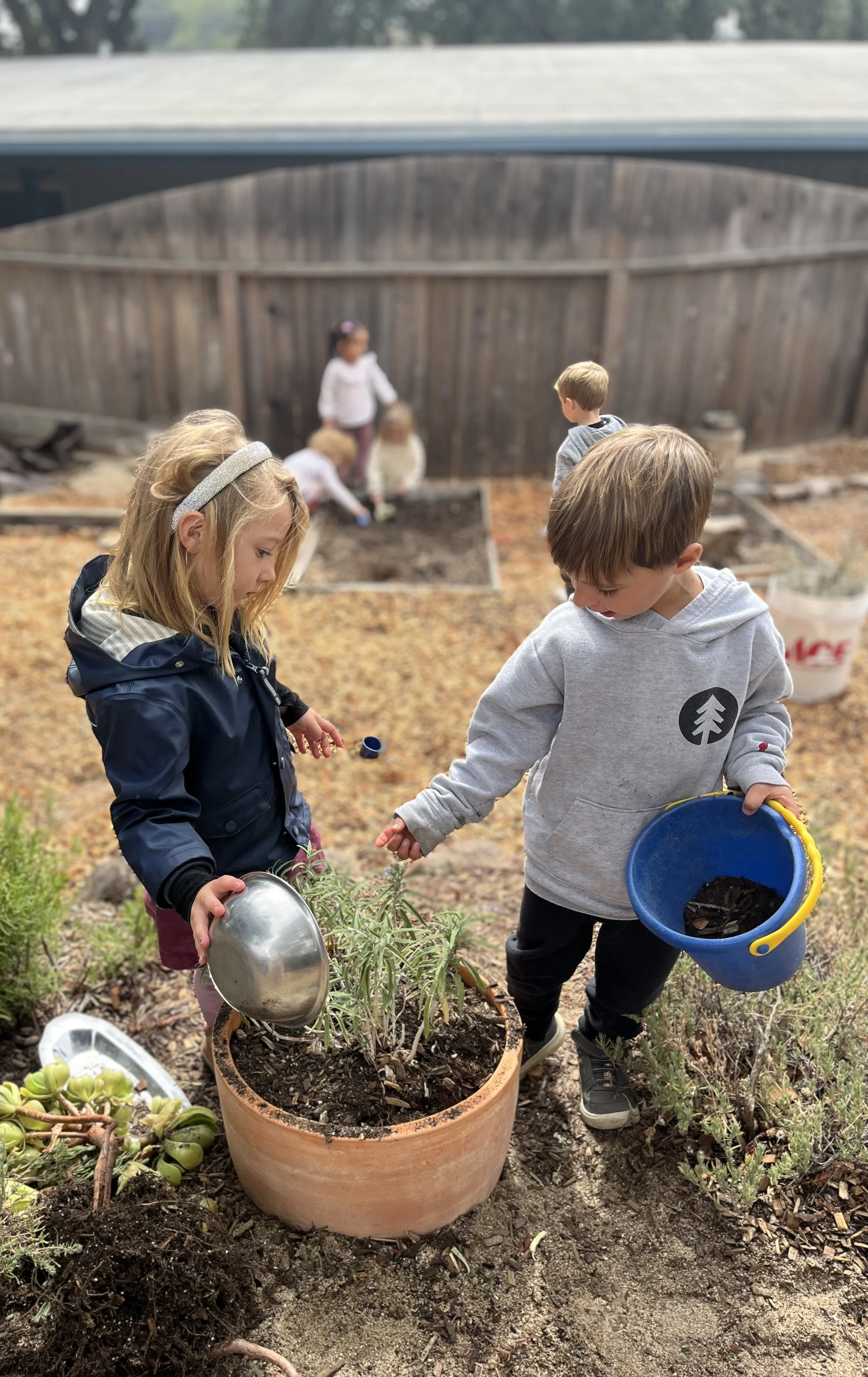
MWS students learn in context, not in the abstract — through field trips, class plays, gardening, handwork, and projects where knowledge has to work in the real world. The neuroscience backs this up: handwriting research (Van der Weel & Van der Meer) shows physically forming letters activates learning networks that keyboarding doesn't touch. When a 3rd grader builds a structure during the shelters block or a 6th grader measures geometry in the schoolyard, the learning creates meaning — and meaningful learning is what lasts.
-
MWS students aren't siloed by age. Shared recess, shared aftercare, mixed-age early childhood classrooms, and the buddy system create a village — and belonging isn't just pleasant, it's academically consequential, linked in research to health, well-being, and higher achievement. Where large schools engineer community through programs and assemblies, a 10-acre campus with 50+ years of continuous community produces it organically: children known by name across grades, families woven into festivals, graduates who leave with strong academics and the empathy and moral courage to use them well.
-
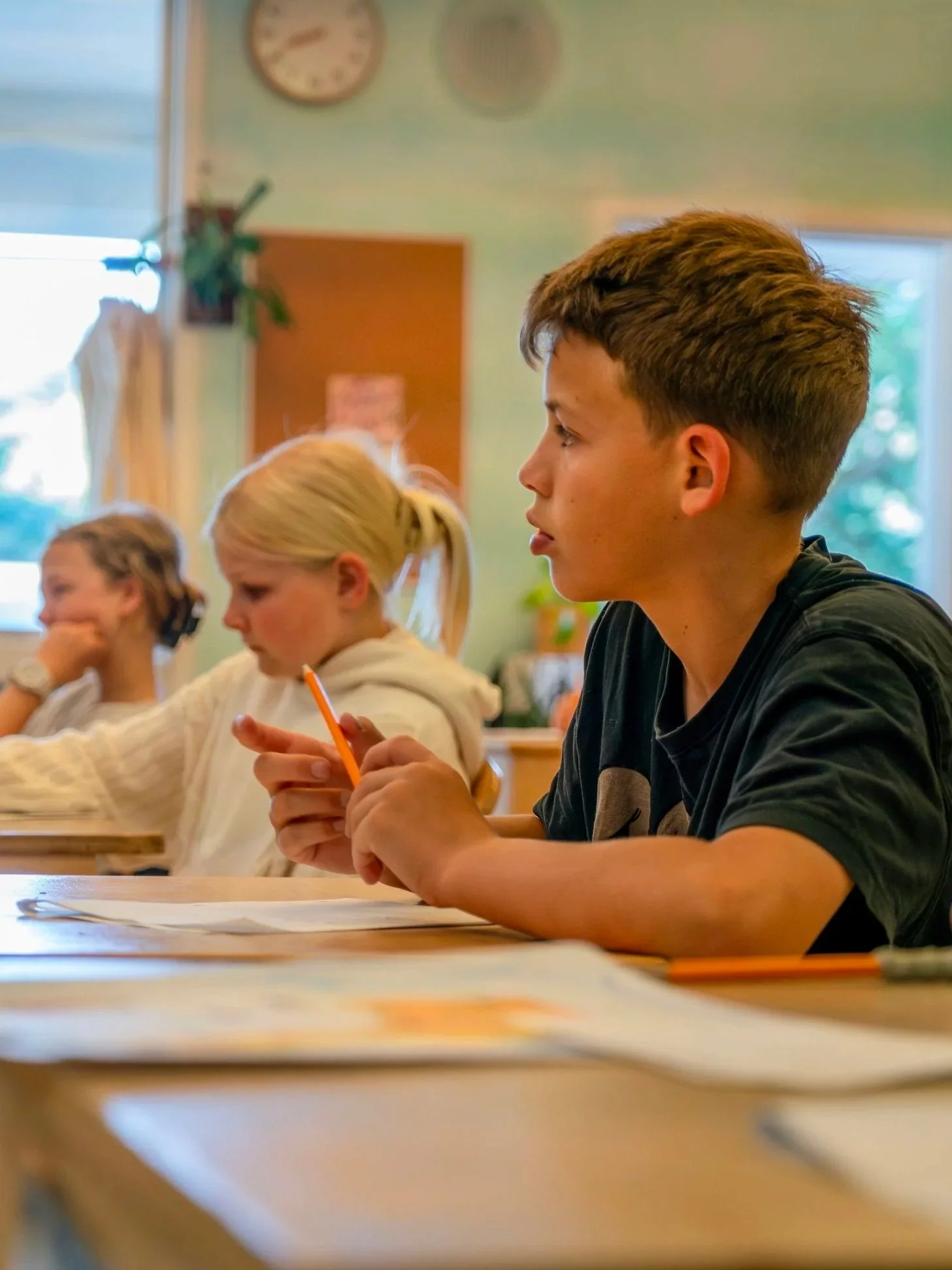
MWS students don't receive letter grades until middle school, yet they're diligent, invested learners. Teachers continually observe each child's academic, social, emotional, and creative development, and every student is formally assessed each year for academic and developmental milestones — reading fluency, comprehension, spelling, math — by the Educational Support Program Director. What's absent is the ranking, not the rigor. Research (Alfie Kohn; Stanford's Denise Pope) shows grades shift children toward extrinsic motivation, stress, and risk-avoidance. Without them, exceptional students are unlimited, struggling students are supported without stigma, and every child stays connected to why learning matters.
-
The science has caught up to our practice by showing that movement drives cognition, and students who learn through the body retain what desk-bound learning loses. At MWS, movement isn't a break from academics. It's how academics take root. Every school has PE. Almost no school has a movement curriculum designed to serve academic and inner development — and no educational model outside Waldorf offers eurythmy. In eurythmy class, students make language and music visible through the body: each sound and tone has a gesture, and a class moving together through a poem or a piece of music is simultaneously practicing listening, spatial awareness, ensemble sensitivity, and grace. Picture a 3rd grade class moving a geometric form in unison across the floor, each student tracking their own path while sensing eleven others — that is coordination, geometry, and social attunement in a single exercise. And eurythmy is only the most distinctive thread in a movement-rich day: math facts practiced with beanbags and jump ropes in the lower grades, form drawing that trains the hand before writing, circle games, daily outdoor play, and the 5th grade Greek Pentathlon, where students train all year in running, wrestling, javelin, and discus — striving not just for distance but for form and beauty.
-
How can we best support students to hold new, increasingly-complex information? In most schools, knowledge arrives pre-packaged in a textbook someone else wrote. At MWS, students create their own: each student records, illustrates, and organizes the year's learning in main lesson books — handwritten essays, original diagrams, maps, watercolors, and geometric constructions. Writing and drawing what you've learned demands a level of synthesis that reading a chapter never does, and the finished books serve as authentic evidence of mastery that teachers examine closely as part of assessment. By 8th grade, a student has authored a shelf of their own textbooks — a visible record of eight years of thinking, and a daily practice of turning knowledge into something made. This is how MWS students “own” the materials they’ve learned.
-
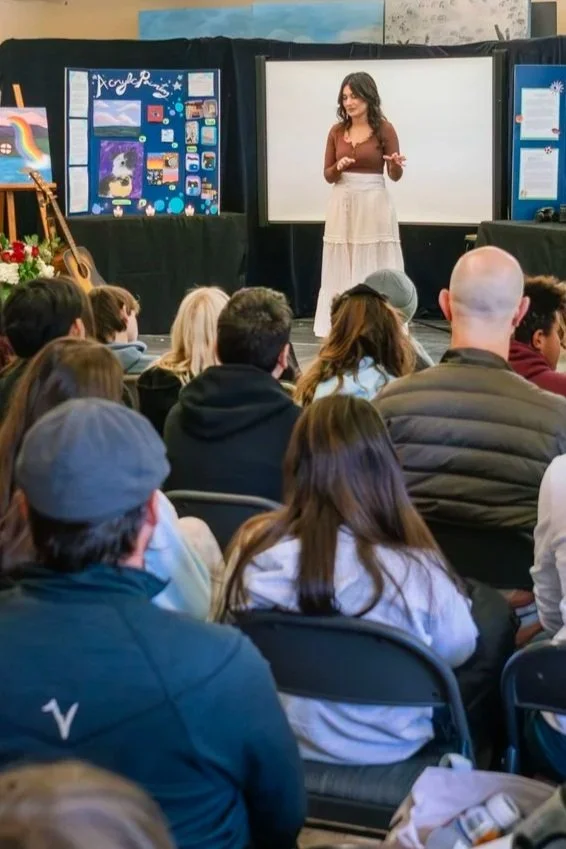
Most middle schools end with final exams. MWS ends with a capstone: each 8th grader chooses a topic of personal passion, conducts independent research across the year, and presents original work publicly to the community. One student builds a guitar from scratch; another writes and illustrates a children's book; another researches their grandmother's homeland. The project asks for everything the previous eight years have built — research and writing skills, craftsmanship, time management, and the poise to stand before an audience and speak about something you made. It's the difference between an education that ends in a score and one that ends in a self-directed individual stepping into the world.
-
This is where MWS distinguishes itself even among Waldorf schools: every class teacher is trained in Structured Literacy (either UFLI or Orton-Gillingham), and a dedicated literacy specialist assesses every student, providing targeted support where needed. Families sometimes worry Waldorf's later formal reading start means less rigor — at MWS, the opposite is true. Reading instruction begins in preschool and kindergarten. It is systematic, evidence-based, and individually monitored, delivered at the developmental moment when it takes root most deeply.
-
Most schools deliver a subject through one channel: textbook, lecture, worksheet. At MWS, students approach a single subject — say, the nautilus shell — through drawing, mathematics, movement, experiment, and story. This isn't enrichment layered on top of academics; it is the academics. Research consistently shows multi-modal learning produces stronger retention and deeper cross-disciplinary connection than single-channel instruction. When mainstream education talks about "engagement strategies," it's describing something that's we have been practicing at MWS for over 50 years.
-
MWS class trips are not rewards tacked onto the school year — they are the curriculum, taken outdoors and made real. A week of river rafting and camping. Overnight trips with solo nights of initiation. Backpacking in the Sierras. Each journey is matched to the year's studies, and the year's studies are matched to the developmental stage of the child — so the physical challenge, the academic content, and the emotional threshold all arrive together. The 6th grader studying geology stands inside the geology. The adolescent seeking independence spends a night alone under the sky and returns changed. These trips synergize the physical, mental, and emotional growth of each year, and they become the memories graduates name decades later as the moments they discovered what they were capable of.
-
A 1st grader who finishes a knitted recorder case has practiced project completion hundreds of stitches at a time — executive function, taught through the hands, years before anyone calls it that. While most schools eliminated shop, sewing, and cooking decades ago, MWS treats practical arts as core curriculum with a deliberate developmental progression: finger-knitting and knitting in 1st grade, purl stitch and knitting in the round by 2nd, then crochet, cross-stitch, woodworking, and by 8th grade, complex multi-step projects — a quilt, a garment, a piece of furniture — that students plan, manage, and complete themselves. The classic Waldorf phrase is "will-developed intelligence": fine motor work builds the same neural capacities that support focus, sequencing, and perseverance.
-
Most schools run on fragmentation — seven subjects a day, 45 minutes each, bells interrupting thought. MWS runs on rhythm. Academic subjects are taught in main lesson blocks: three to four weeks of deep, daily immersion in a single subject, giving students time to actually inhabit geology or Roman history rather than sample it. The daily rhythm alternates concentration and movement, "breathing in" and "breathing out." And the year itself has a shape: seasonal festivals mark its turning points, giving children (and families) shared anticipation, tradition, and memory. Rhythm isn't atmosphere — it's cognitive architecture. Predictable structure frees attention for learning, and the block rotation's cycle of immersion, rest, and return is precisely the spaced-learning pattern memory research says makes knowledge stick.
-
In most schools, the year culminates in a standardized test. At MWS, it culminates on a stage. Head, Heart, and Hands, all at once.
Each class produces a full theatrical production that weaves the year's curriculum into a single work — 4th graders performing Norse mythology they've studied all year, 8th graders staging Shakespeare as they wrestle with the same questions of conscience and identity. Each role and assignment is chosen very specifically for each student, and every student memorizes, speaks, sings, moves, builds, and performs before the whole community. It is an academic demonstration of competency — comprehension, language mastery, collaboration, and poise — that no bubble sheet can capture, and it gives every child the experience of carrying something demanding all the way to public accomplishment.
The ultimate group project. Memorization. Interpretation. Public Speaking. Music. Dance. Meaning Making.
-
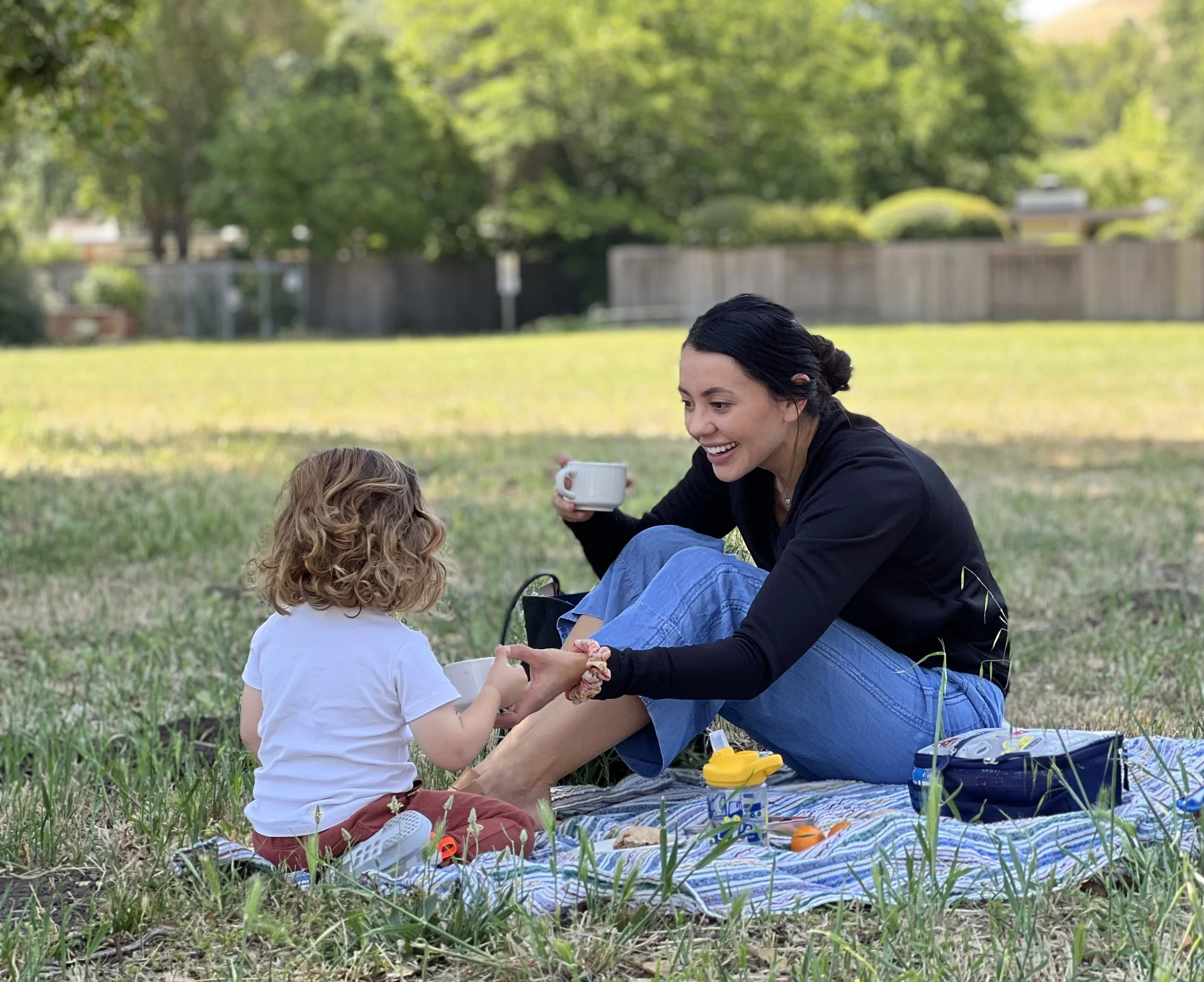
At MWS, we call this “Relational Intelligence,” and we very consciously develop it through a curriculum and culture of cooperation rather than competition. In preschool and kindergarten, students practice their social emotional skills during daily free play and collaborative circle time in their multi-age classrooms. In elementary and middle school, movement activities revolve around themes of “saving” and “joining” rather than “us vs them,” and multi-age aftercare and group projects give each student countless opportunities to develop their EQ. We also have an 8th Grade/1st Grade Buddy System, where older students mentor younger ones through weekly activities. 1st graders gain role models while 8th graders develop empathy and the confidence to lead. In contrast, many contemporary schools now purchase SEL as a curriculum package: a weekly block, a workbook, a poster on the wall. MWS students don't attend SEL class; they practice it all day, in real relationships with real stakes. At MWS, social-emotional development is a founding principle.
Frequently Asked Questions
-
In addition to the relational introduction of letters and numbers through stories and games, every grades teacher at MWS is trained in Structured Literacy (either UFLI or Orton-Gillingham): a research-based approach that sets us apart from most schools. We also have dedicated specialists who assess every student individually for literacy and math and collaborate with teachers to provide targeted support and advancement.
-
No. Waldorf schools are not religious, and at MWS we work with stories and traditions from many world cultures — Norse mythology in 4th grade; Islamic, Hindu, and Buddhist stories in middle school — chosen to meet students where they are developmentally. What you’ll notice at MWS is that we support the cultivation of reverence and a sense of the sacred. This is practiced through moments of quiet before a meal, songs of gratitude, and seasonal festivals, and the outcome of this is a sense of wonder and appreciation woven into the culture of our community. Almost no other educational model deliberately cultivates awe — and awe is a precursor to curiosity, optimism, and ethics.
-
Our lower grade classrooms are screen-free and designed to strengthen what research from the NAEYC suggests students need most: attention, self-regulation, language, and relationship. Beginning in 5th grade, students begin formal Cyber Civics study and gradually begin using computers for research and composition, gaining the skills and perspective needed to engage technology with judgment, balance, and care. Research shows this builds longer attention spans, more reliable resilience, and more creative problem-solving. Our graduates are highly capable with technology, because they already understand the foundations underneath it, having studied Cyber Civics, and having been given time to find belonging in themselves and their community.
-
We teach to the leading edge of comprehension and ability in each classroom. Teaching differentiation occurs as early as kindergarten, with additional, more advanced coursework brought to those who are ready, and our project-based curriculum allows each student to perform to the edge of their ability. Additionally, narrative assessments, rather than letter grades (which being in middle school), give our accelerated learners a borderless arena of achievement and allow them to focus on their potential, not the game of grades. With the well-rounded richness of the curriculum, from STEAM to theater, students typically find opportunities in the classroom to lead in one area and practice persistence in another.
-
The synergy of MWS’s educational support program, teacher looping, and narrative assessments creates an ecosystem to support success. Our Ed Support Director assesses every student individually and collaborates with teachers to provide targeted support, pushing into the classroom for 1:1 aid, and pulling out students for small group instruction. Having the same class teacher for multiple years means the teacher deeply understands both the learning style and the potential of each student. And having narrative assessments instead of grades reduces the stigma and emotional weight of struggling and gives nuanced, contextual feedback that helps students better understand themselves as learners.
-
“Looping” is a model that allows teachers to stay with a class for multiple years. When this happens, the teacher develops a nuanced understanding of each student and is more accountable for their long term success. Multi-year teachers naturally develop a deep and detailed understanding of each student’s learning potential and style of learning. Research from Brown University shows multi-year teacher relationships improve test scores, attendance, and classroom behavior, and we have found this to be the case at MWS.
Marin Waldorf Spotlight
-
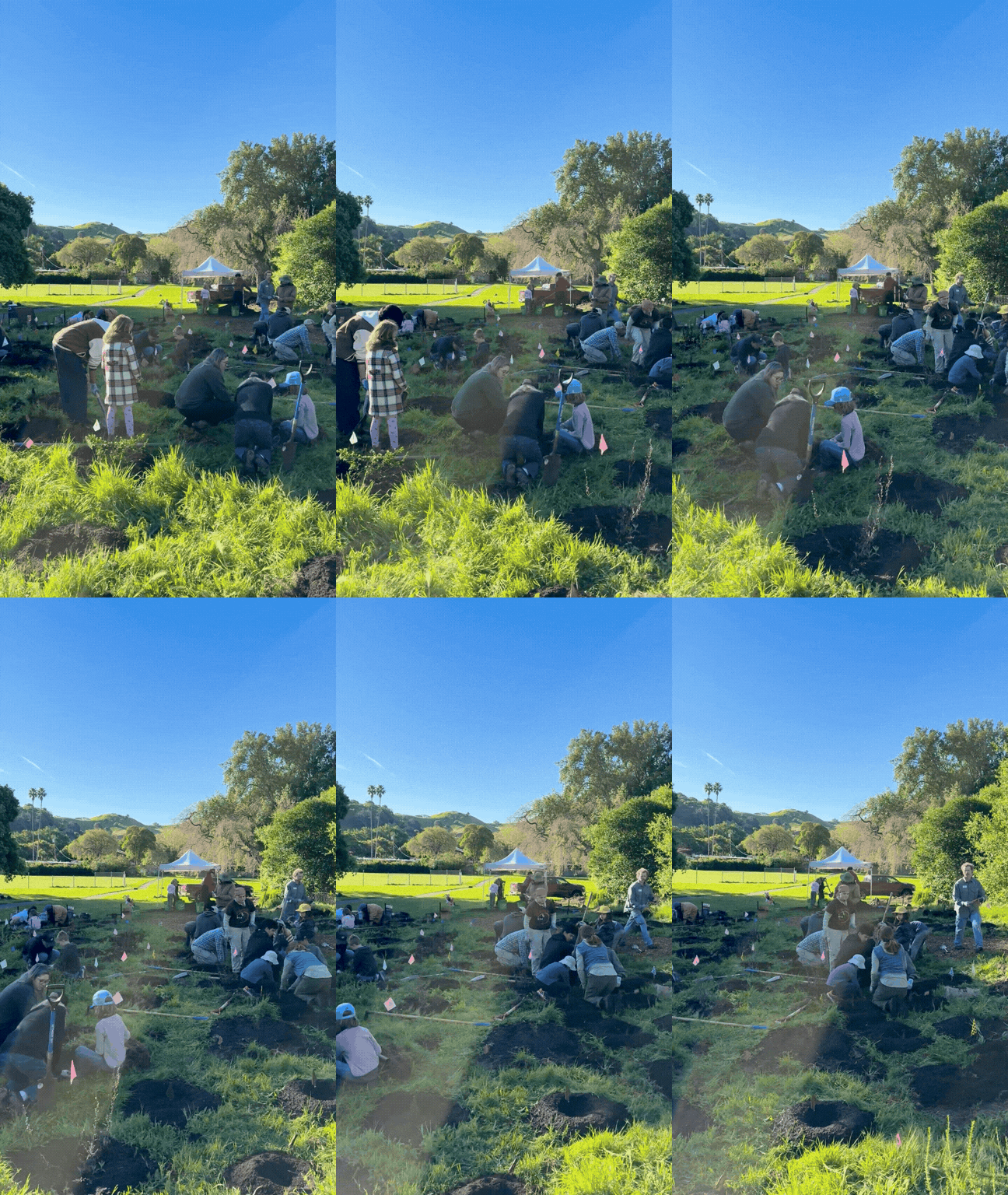
![People planting trees and gardening outdoors on a sunny day, with trees and hills in the background.]()
Point Blue Grant Awarded
In 2024, MWS was awarded a multi-year grant from Point Blue. As a result, each year, ecologists take over our campus to teach workshops to students about ecology, native plants, horticulture, and conservancy. This student-adult interaction, with community organization, is exactly the type of hands-on experiences that help to situate our students’ education within the wider context of the world.
-
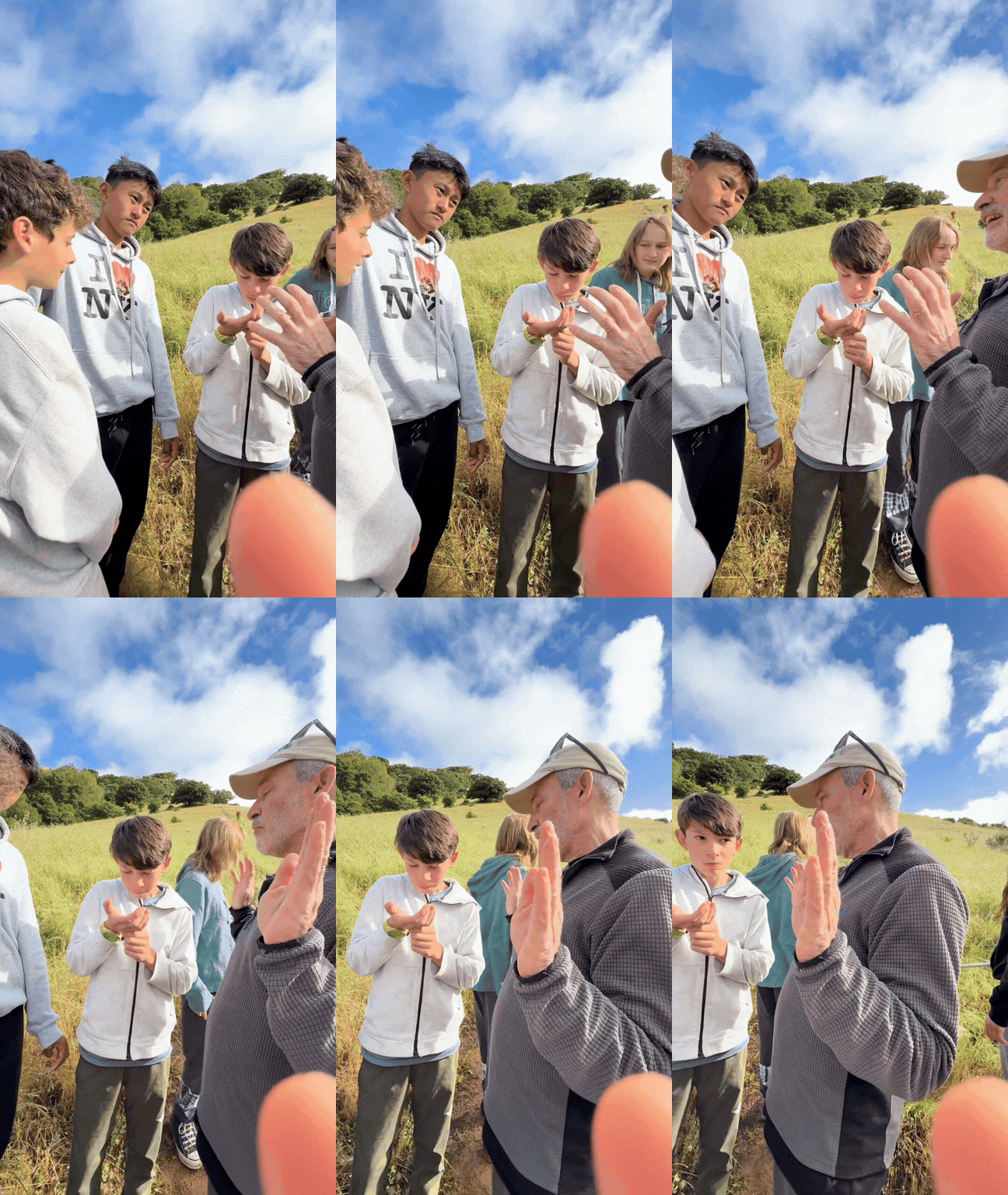
![Group of children outdoors listening to an adult's hand gestures during a conversation on a grassy hillside under a partly cloudy sky.]()
Academic Partnerships
In Middle School, students benefit from a village of visiting instructors who are highly accomplished in their fields, such as Brian Fisher, world-renowned entomologist and lead curator at the California Academy of Sciences. Hands-on field experiences are high-impact academic opportunities we prioritize and are proud to offer.
-
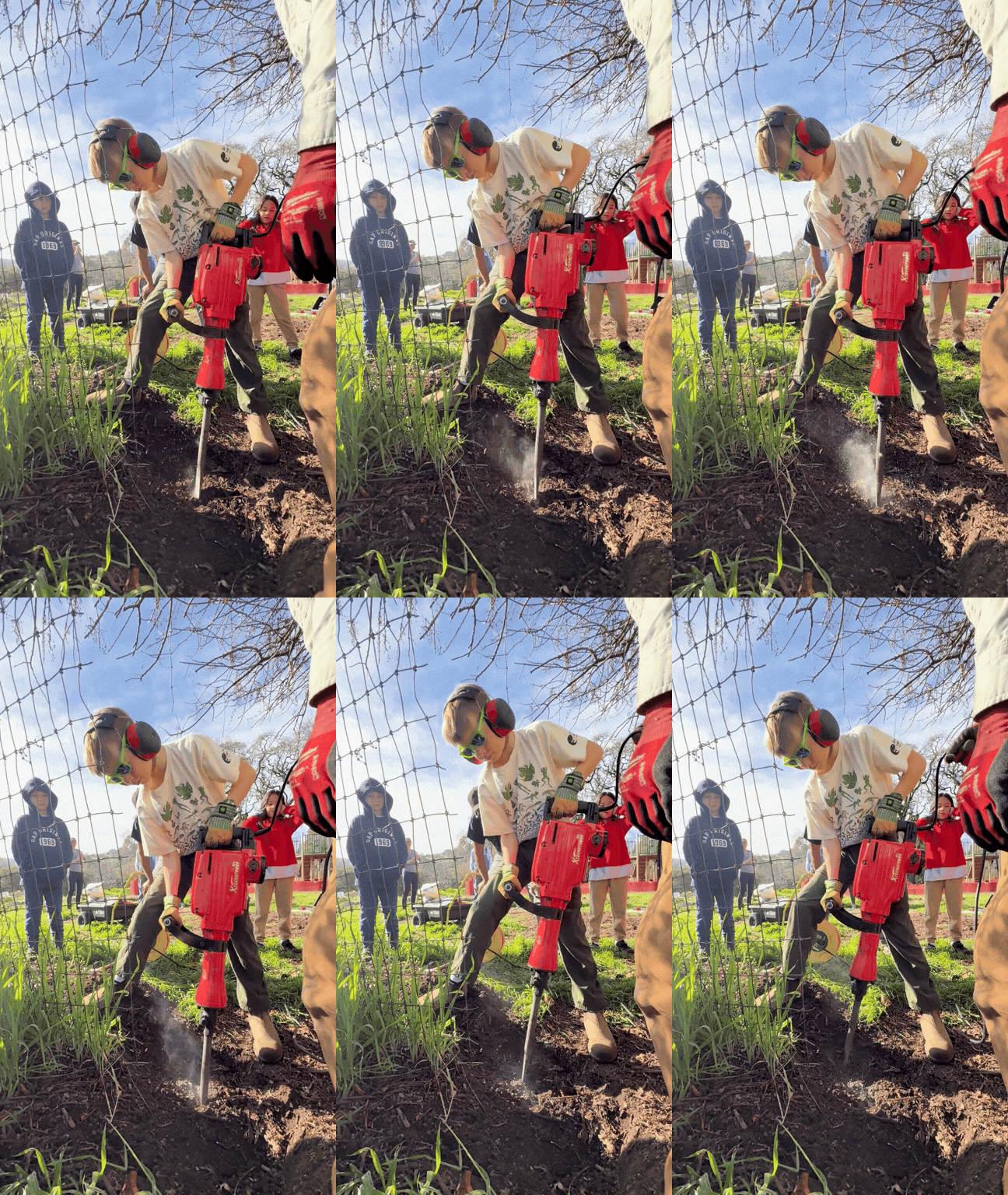
![A young boy using a red jackhammer to dig into the dirt outdoors, while others watch nearby.]()
Campus Care Crew
Our 10 acre campus is a vast canvas for growth opportunities. Every month, the MWS community gathers on a Saturday to get our hands in the soil, beautify the campus, and do the thing that happens when we collaborate as a community — Learn!
-
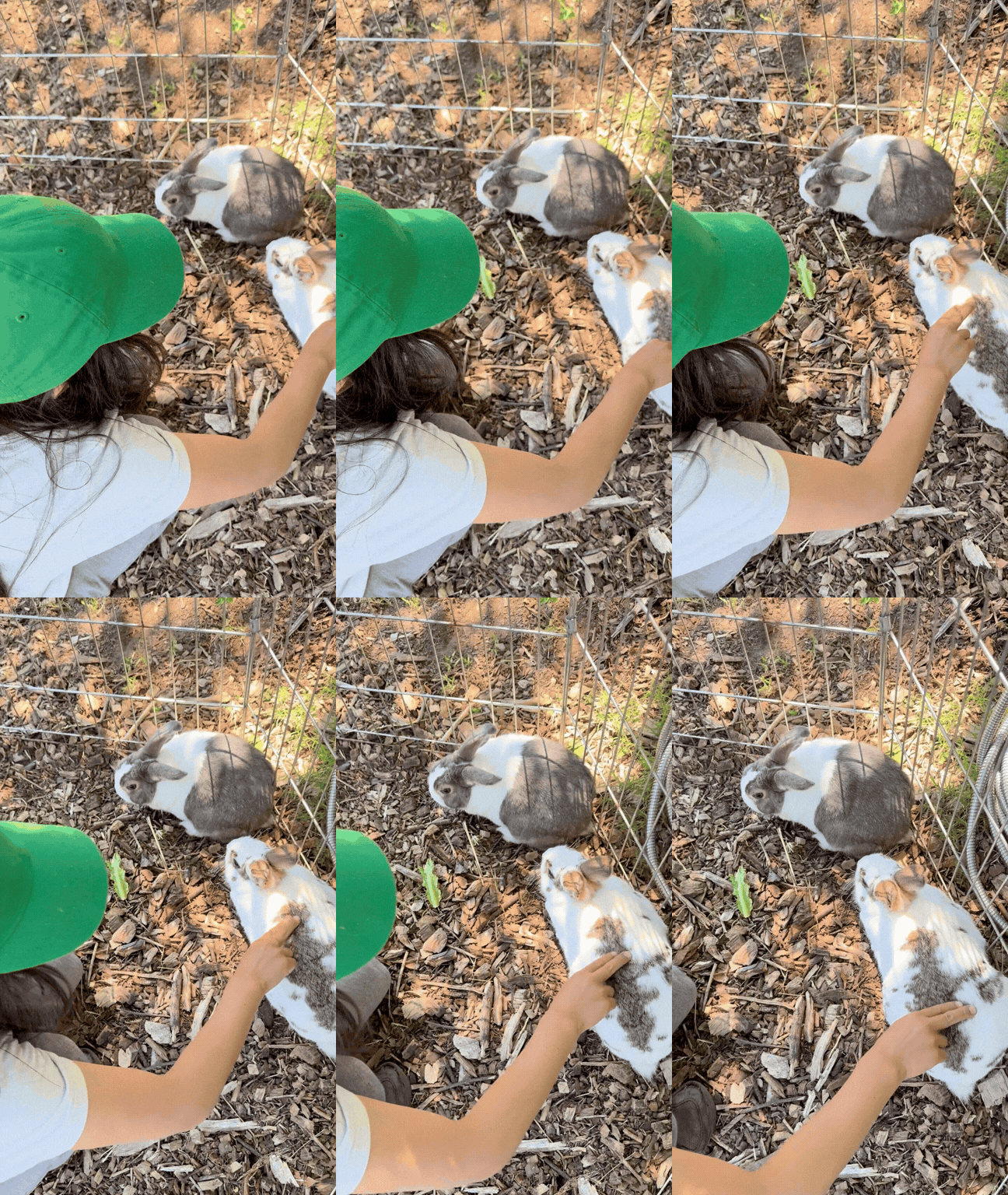
![Child reaching out to pet two rabbits inside a fenced enclosure with wood chip ground.]()
Smokey the Bunny
Our 2nd Grade classroom houses a rabbit named Smokey, and when you have a live animal in the classroom, suddenly there are opportunities for regulation, empathy, and collaboration that punctuate the daily rhythm.
-
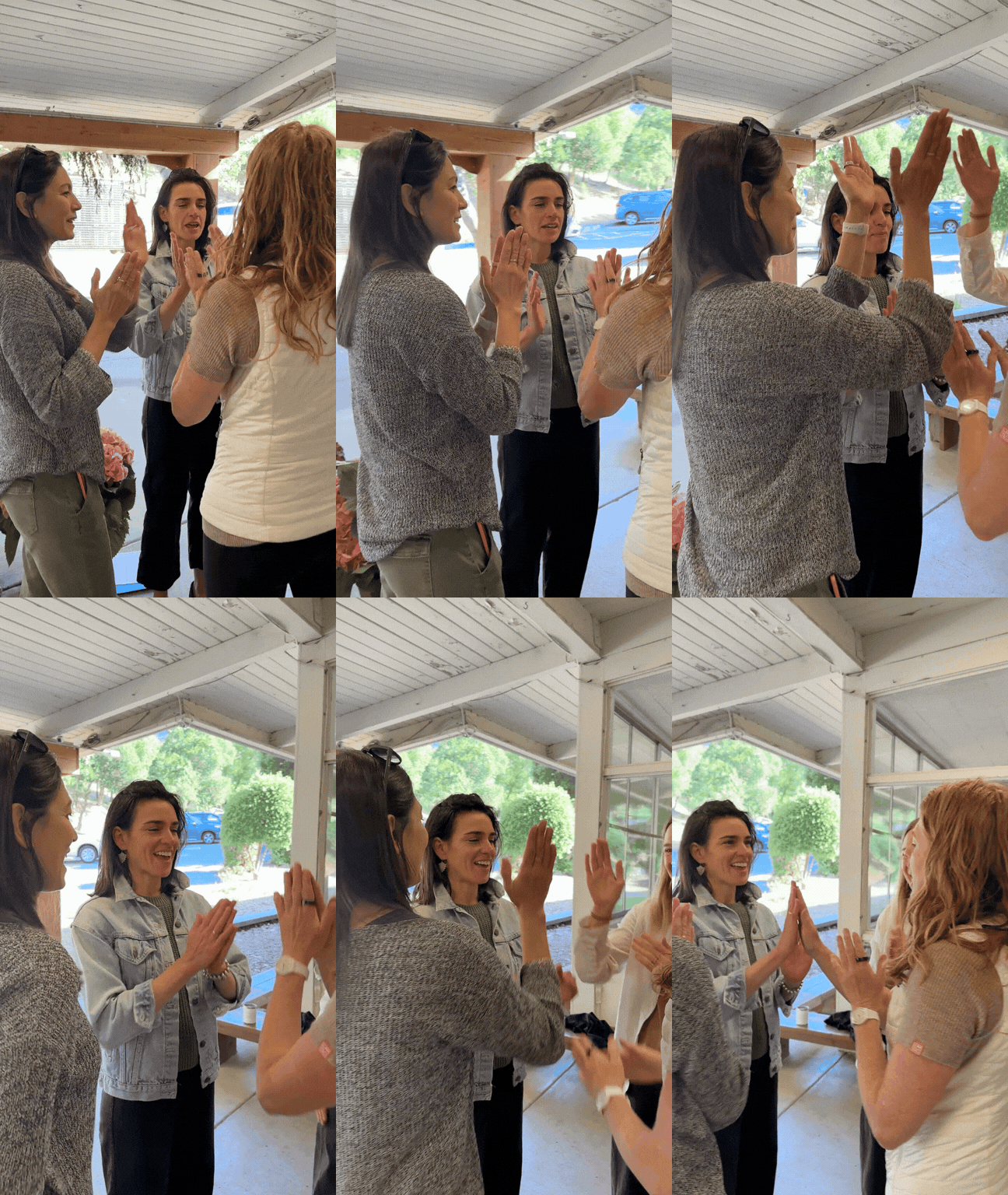
![Three women engaged in a lively conversation under a porch, with one woman in a white vest facing away and two women facing each other, gesturing with their hands.]()
Community Singing every Wednesday
What happens when we (the adults!) take 30 minutes to sing and play on a weekday morning? PERSPECTIVE: We remember what life is all about. JOY: We keep our inner child and sense of wonder alive and well. PEACE: We practice resonance and tune-in with our friends. This is one of the many ways we build community.
-
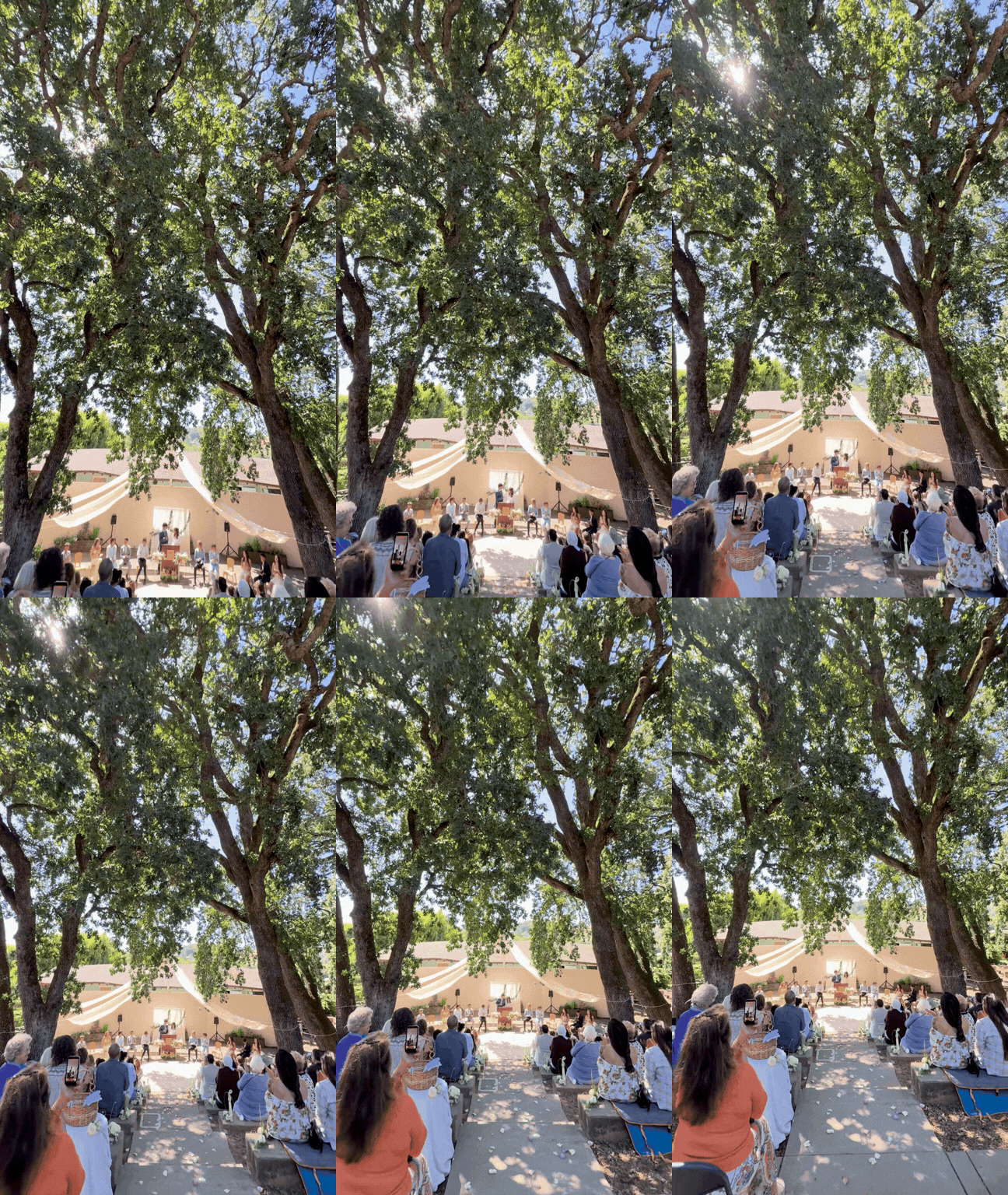
![Outdoor wedding ceremony setup beneath large trees with a white canopy, guests seated, and a small group of people performing or speaking in front.]()
8th Grade Graduation
MWS graduation ceremonies are unique in that every student delivers an address to the community, and beyond the gesture of celebration, students perform capstone expressions of the curriculum.
-
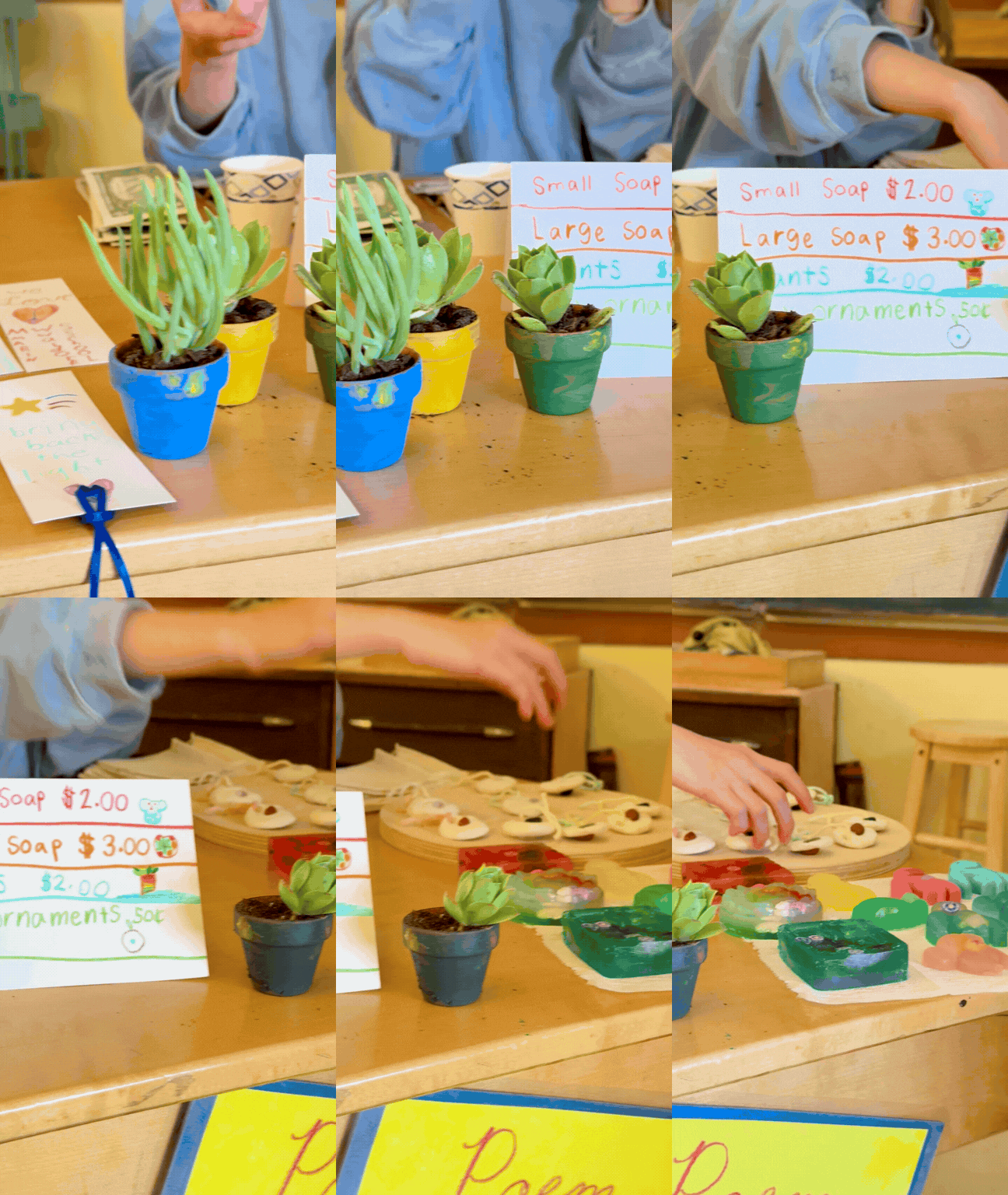
![Green cactus in a blue pot on a table, surrounded by dollar bills and hand-written notes.]()
Business Math
Starting in 3rd Grade, students study academic blocks focused on Business Math: buying, selling, inventory, etc. This culminates in several hands-on group projects, such as the 3rd Grade Store, where students create inventory, track expenses, interact with customers, handle transactions, and analyze ROI. This first-hand experience cements the lessons of the academics with real world context and first hand experience.