Michael Belcher Michael Belcher

Autumn Festivals 2024

It’s been a splendid autumn at Marin Waldorf School, filled with beautiful special events and all-school festivals.
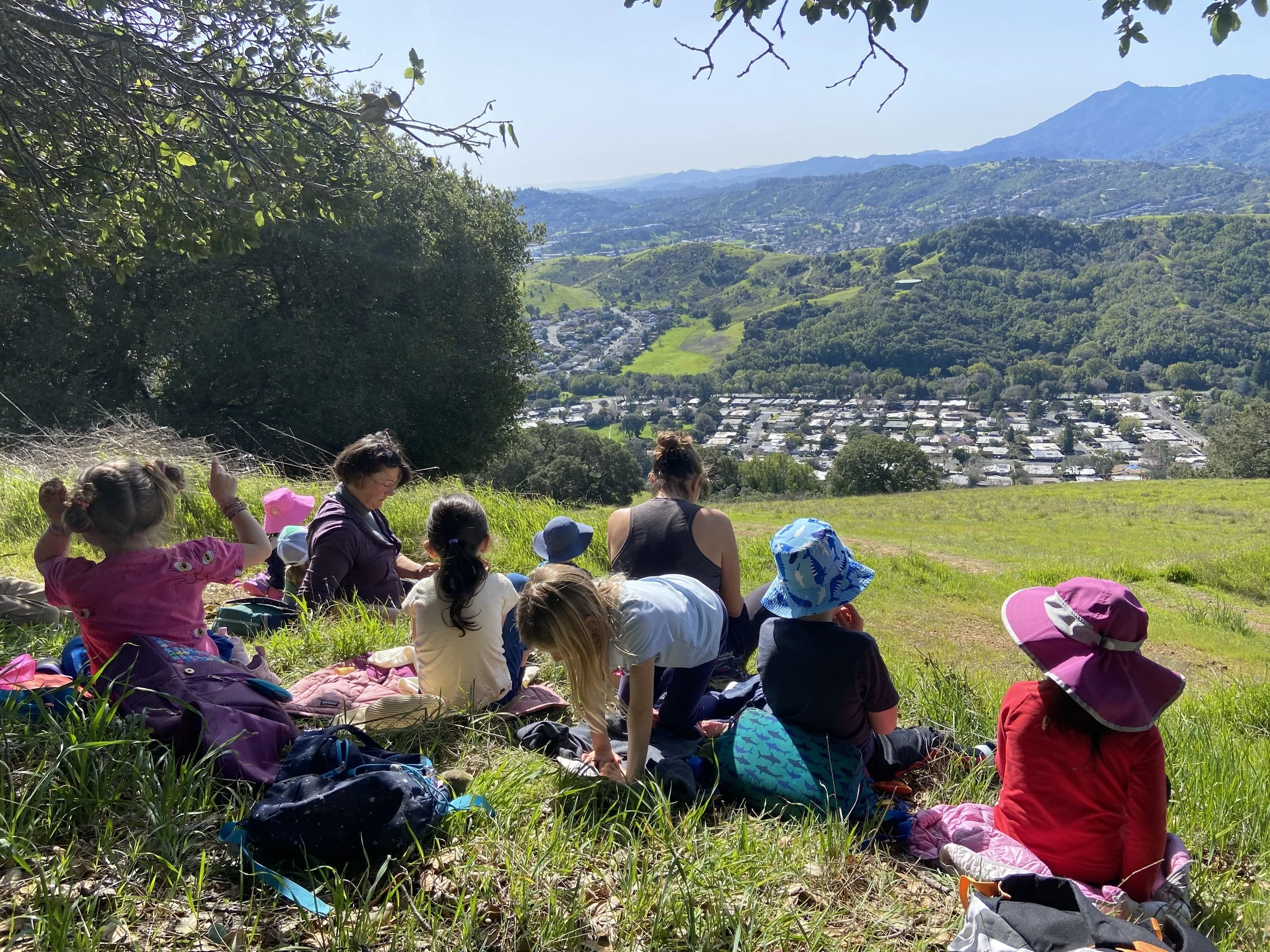
Autumn is a splendid season in Lucas Valley. As we near the fall equinox, the brilliant sunlight, deep blue skies, and leafy green canopy of trees bring a special beauty to our campus. After a blistering late-season heat wave, the weather is beginning to cool—and we’re looking back on a beautiful season of festivals and special events.

Michaelmas

In late September, our families gathered beneath the leafy canopy of Grandmother Oak to celebrate the annual Michaelmas pageant, a festival that celebrates the unique qualities of the autumn season. Everyone present agreed that this year’s pageant had a particularly beautiful tenor. Through song and verse we celebrate the arrival of the autumn season and kindle our inner light as winter approaches.

The pageant is performed by grades 2 to 8, with each class taking a role that is assigned to their grade; in this way, as children grow older, they will play every role in the pageant—making the experience a rite of passage. As with many of our festivals, the lessons of Michaelmas are also intertwined with the curriculum. For example, second graders, who play an important role in the pageant as the knights who tame the dragon, learn about Michael’s qualities of courage, compassion, and steadfastness as part of the larger second grade curriculum, through which they study the lives of inspiring people from around the world. On a deeper level, we can each think of the dragon as those things that prevent our awakening to our own humanity.

“Autumn is a time of transition. With attention, we can become sensitive to the subtle but profound changes in nature and notice what is called for inside ourselves to prepare for the coming darkness that winter brings,” explains MWS director, Megan Neale. “In many Waldorf schools in the northern hemisphere, Michalemas is the festival that celebrates and honors this transition and inner preparation. Many of the native people in California also celebrate this time, honoring the harvesting of the acorn that brings life and sustenance throughout the winter months. For the farmers, it is a time to begin to put the land to rest after an active growing season through the summer. There is preparation required for this transition to take place.”

Dia de Muertos

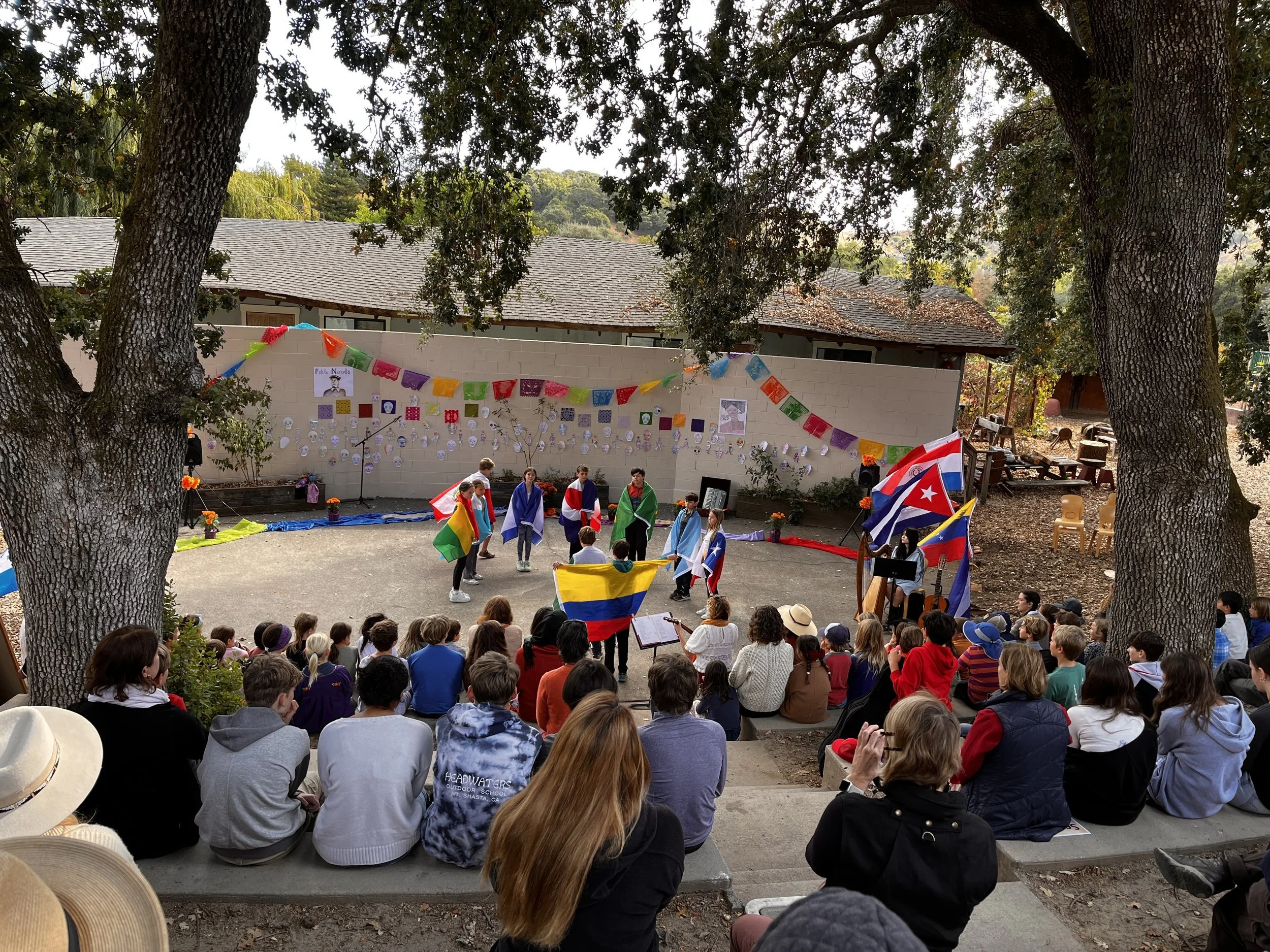
On the last day of October, our school community celebrated the Mexican holiday Día de Muertos as part of the grades Spanish language program. In preparation for the event, students, teachers, and parent volunteers helped to create a colorful altar in the breezeway, filled with photographs of loved ones, flowers, candles, and decorative skulls while the ceiling was decorated with colorful papel picado.

On Thursday, we gathered for a beautiful Día de Muertos assembly featuring musical performances from grades 1-8—as well as a special surprise from the subject teachers, who performed a traditional dance from Chile. It was a lovely event and a showcase for our excellent Spanish program, which blends language instruction with study of and appreciation for world cultures. The event wrapped with hot chocolate and pan de muerto (bread of the dead), served to the crowd by the 7th and 8th grade classes. A sweet sendoff before we all departed for trick-or-treating!

Our Spanish language teacher Señora Loreto shares, “The Day of the Dead (El Día de Muertos or El Día de los Muertos) is a traditional holiday celebrated annually on November 1 and 2, though in some regions it may also extend to October 31 or November 6. This multi-day observance brings together family and friends to honor and remember loved ones who have passed away. While the holiday commemorates the dead, it often takes on a celebratory tone, as participants share fond memories and recount joyful stories about the departed. Although it is widely associated with Mexico, where the tradition developed, it is also celebrated in other countries, particularly by those of Mexican descent. Rooted in ancient Aztec and Indigenous Mexican customs, the Day of the Dead has become a way to pay tribute to ancestors and the cultural heritage they passed down. The festivities are known for their vibrant and lively atmosphere.”

Diwali

In early November, our elementary and middle school students celebrated Diwali, the Hindu festival of lights, with a performance by special guests William Rossel on tabla and Will Marsh on sitar. The 5th grade class, in complement to their studies of Ancient India, created a sand mandala in the breezeway, which was later added to by the 2nd, 4th, 6th, and 8th grade classes.

Read More
Michael Belcher Michael Belcher

An Evolving Land Acknowledgment

Current draft written by the Class of 2023

This school resides on the unceded ancestral land of the Coast Miwok, Yokuts, Patwin, Ohlone and other Indigenous peoples. They still live here, thrive here, and care for this land.

We want to learn histories from multiple perspectives so we can better understand the places we call home. We want to grow in a community that cultivates an expansive mindset with diverse ideas, people, and practices. 

We believe it is our responsibility to help restore the people and places that have been damaged, and to do our part to ensure a regenerative future.


One year ago, the Class of 2023 presented the school with a beautifully written land acknowledgement (above) to replace the one our school had previously adopted. It carried a heartfelt quality infused with values we hold dear here at Marin Waldorf School. Additionally, the class tasked future 8th grade classes to reconsider the words each year, and to offer any updated ideas or language the statement may need. How wise! 

The class of 2024 followed their suggestion and set themselves to the task. We looked over the version created by the class of 2023 and found it so insightful that the wording did not need to be changed. We did, however, learn that many indigenous groups and leaders feel that a land acknowledgement without a form of action behind it falls short of its intention. For example, our own land acknowledgement says that “we believe it is our responsibility to help restore the people and places that have been damaged,” but we felt conflicted knowing that our words alone cannot do that. We pondered how our land acknowledgement could offer some type of action embedded within it. 

We then discovered that many people are beginning to take action in what is being referred to as a nationwide land-back movement. In Berkeley, an Ohlone Cultural Center will be built this summer using funds received in part through the Shuumi land tax and Sogorea Te Land Trust. Many people are beginning to couple information about these land taxes with land acknowledgements in their homes and businesses. We liked this model a lot.

Additionally, in 2001, the Lakota Waldorf School in South Dakota put out a call to action to all Waldorf schools of North America, urging offer full tuition assistance to native applicants; Marin Waldorf School is just one of three schools to heed this call, launching the MWS Native Reconciliation Tuition Program in the spring of 2023. After learning more about this program, we felt this was the best way for our community to “take action” here on campus. Moreover, Native students are applying, and this has us excited that our school can be an example to others. It seemed clear to us that placing a QR code alongside our current land acknowledgement (see below) was exactly the update that it needed. Aligning with our school’s values and desire to take reparations seriously, our class has made a $500 contribution to the program, hoping others will be inspired to do the same. 

We are grateful for the invitation from the class of 2023 to add to the legacy they began, helping to bring greater awareness to native reparations. Through our school’s land acknowledgment, we learned that we can be part of the necessary change “to ensure a regenerative future.”
—Rising Percey, Teacher, Class of 2024

Read More
Michael Belcher Michael Belcher

Waldorf vs. Montessori Preschools: What's the Difference?

Waldorf vs. Montessori. What parents should know about the two popular early childhood programs

Both Waldorf and Montessori are long-standing, time-tested educational programs, developed in the early 20th century by Rudolf Steiner and Maria Montessori, respectively. Today, they are among the most popular alternatives to mainstream education.

What are some of the key differences and similarities in Waldorf and Montessori? Here, we compare the Montessori and Waldorf approach to early childhood education to help you decide what method will work best for your child and family. 

In a Nutshell
Waldorf preschool and kindergartens aim to promote imagination, creativity, social skills, and cognitive development through storytelling, group activities, a connection with nature, and ample time for unstructured child-centered play. 

Montessori early childhood classes use self-directed, self-motivated learning activities to promote cognitive, language, social-emotional, and physical development in children. 

Similarities Between Waldorf and Montessori Preschools

Here are a few of the many ways that Waldorf and Montessori schools align on early childhood education.

  • Love of Learning: Though their approach may be different, both Waldorf and Montessori foster a natural curiosity and love of learning in children!

  • Teacher Training: Waldorf and Montessori schools are run by teachers who are professionally trained in their school’s methodology. 

  • Screen time and media: Both Waldorf and Montessori discourage media and screen time for young children. 

  • Mixed-age classrooms: Montessori early childhood classrooms span three years of age, a practice that continues through elementary school; Waldorf preschool and kindergarten classrooms span two years. After early childhood, Waldorf classrooms are same age.

  • Child Development: A theory of child development guides the educational program at both Waldorf and Montessori schools, though their theories of development are different. 

  • Focus on the Whole Child: Waldorf and Montessori programs emphasize a holistic approach to education, incorporating the physical, intellectual, and spiritual development of every child.

How Are They Different?

  • Waldorf is child-centered, Montessori is child-directed: In Waldorf schools, teachers lead group activities, with generous time in the day for imaginative and interactive child-directed free play. In Montessori schools, children select and complete their tasks individually, with learning paced according to their individual skill set and needs.

  • Core Academics: In a Waldorf school, children learn through play and through guided group work, like songs, storytelling, and movement (learn about the Waldorf approach to math here). Traditional academic work begins in 1st grade. In a Montessori school, children learn practical life skills, everyday tasks, and core academic skills as early as age 3.

  • Daily Rhythm: Both Waldorf and Montessori schools build the day around a daily rhythm that alternates between complimentary activities, though the focus of the day and its activities differ. Waldorf focuses on a dependable daily routine, with activities that alternate between guided group activities and social free play, with set time for rest and for nourishment. The Montessori day is built around uninterrupted periods of focused individual work, with periods for explorative play, rest, and nourisment.

  • Imagination vs. Practical Skills. Waldorf education in preschool and kindergarten is play-based (read why here!) and emphasizes imagination, with teacher-led practical tasks (sewing, gardening, folding laundry) built into the day as a compliment to child-led play. Montessori focuses on practical tasks and hands-on work to stimulate curiosity, learning, and skill-building. Children are encouraged to play through practical work and reality-based activities, rather than fantasy and imagination.

  • Materials & Environment: A hallmark of Montessori are the specially designed materials that encourage a hands-on approach to learning. Decor in the classroom is generally clean and minimal, to encourage independent work. A Waldorf preschool classroom is, by contrast, designed to feel homelike and cozy, with the aim to encourage a feeling of safety and warmth.

Learn More
Both Waldorf and Montessori are complex educational systems based on a holistic concept of child development. We’ve just scratched the surface today! You can learn more about Waldorf early childhood education at the Waldorf Early Childhood Association of North America and about Montessori education at the American Montessori Society website.

Read More
Michael Belcher Michael Belcher

For Parents: Talking About Sexual Literacy & Sexual Ethics With Our Children

As parents, we hope our children will build meaningful, mutually respectful, and honest relationships as adults. At the same time, many of us are unsure how to talk honestly about topics like intimacy, sexuality, relationships, and consent. How can we open the lines of communication? How can we identify and share our values with our children, rather than allowing them to be unintentionally educated by friends, pop culture, and the media?

At Marin Waldorf School, we encourage a straightforward and proactive approach to sex education, which unites open communication at home with an age-appropriate sexual literacy and sexual ethics curriculum at school. Let’s learn together!

When (and Why) Should We Talk to Our Kids About Sex?
When should you start talking to your child about sex and intimacy? Probably earlier than you think! While parents and teachers traditionally begin sex education during puberty, today pediatricians recommend that parents start having honest age-appropriate conversations about body basics, bodily autonomy, and consent starting at 5 years old. Why?

Research shows that children and teenagers who have regular conversations with their parents about intimacy and sex are less like to take risks and more likely to make safe and healthy choices in their personal relationships. Research also shows that children today are far more likely to learn about sex and sexuality unintentionally—often from peers or unsupervised access to the internet.

Importantly, opening the lines of communication in elementary school lays the groundwork for more detailed discussions about intimacy, relationships, and sex during middle school and high school. The key is to scaffold the conversations in age-appropriate ways. (Scroll down for some resources to help you get started. It’s never too early—or too late!)  

Educating Ourselves to Educate Our Children
For most of us, sex education was awkward, outdated, or uninformative—certainly not a model for how we’d like our children to learn about this important aspect of life and society. So how can we approach the topic more effectively?

One of the first steps is defining our values and expectations, and sharing those values and expectations with our children. That’s according to author, activist, teacher, nonprofit founder, and frequent MWS guest speaker Natasha Singh. During her lively and thought-provoking presentations, Natasha emphasizes the importance of understanding our own view of sex and sexual ethics—even helping us define the values or biases we may not be aware of!

Natasha’s roadmap to sexual literacy includes discussing your values directly with children, starting in the early years, in addition to having age-appropriate conversations about topics like bodily autonomy, body parts, consent, and relationships in elementary school. (Scroll down for more resources and tips from Natasha.)

Through these conversations, we lay the groundwork for topics puberty, sex, and relationships in middle school and high school. "Even when parents say little to nothing about sex, their silences—or what little they do say—reveal a lot about their attitudes towards sex," writes Natasha Singh in The Atlantic.

What Can I Expect My Child to Learn at School?
At Marin Waldorf School, we aim to educate children to become responsible, informed, respectful, and open-minded adults. Topics like consent, personal boundaries, and bodily autonomy are discussed in early grades, and sex education is explicitly introduced in middle school as part of the social ethics curriculum, a discussion-based class that covers social topics in a wide range of areas, from racism and anti-bias education to personal health and digital citizenship.

In social ethics, students discuss topics like puberty, sex, sexual orientation, gender and gender roles, consent, and how to be a responsible friend and partner in an open, age-appropriate way, and within the context of relationships, health, personal responsibility, and society. The goal is to empower middle-schoolers to reflect and share their opinions with the class in a supportive, teacher-led setting. 

In complement to the social ethics curriculum, middle schoolers study anatomy, physiology, and the human reproductive system during science blocks in 7th and 8th grade, giving them deeper insight into the changes taking place in their own bodies.

Resources: Talking About Sex With Our Children 

“Parents fear the conversation will be awkward, embarrassing, not knowing the right words to choose,” says Dr. Asma J. Chattha, M.B.B.S., a pediatrician at Mayo Clinic Children’s Center, in the article “When To Start Talking About Sexual Health With Your Child.” “Our discomfort is the biggest barrier to getting this knowledge to children. That’s why I’m a huge believer in equipping parents with educational material — what to talk about and when.”

  • Join us on Thursday, January 16, at 6:30pm, for a special evening with author, activist, nonprofit founder, writer, and speaker Natasha Singh. Open to the whole MWS community and appropriate to parents of children of any age, Natasha’s presentations provide practical tools and strategies that can lay the groundwork for healthy communication with your children. More information here.

  • Natasha Singh’s Tips & Resources for Waldorf Parents includes a discussion of values, scaffolding age-appropriate conversations, consent, bodily autonomy, and other key issues.

  • Get a taste of Natasha's practical and compassionate approach to sex education in this podcast from Parent Footprint with Dr. Dan. 

Read More
Michael Belcher Michael Belcher

Our Garden Grows: An Update on Our Campus Garden

Read more about our plans to revitalize the campus garden and how you can contribute!
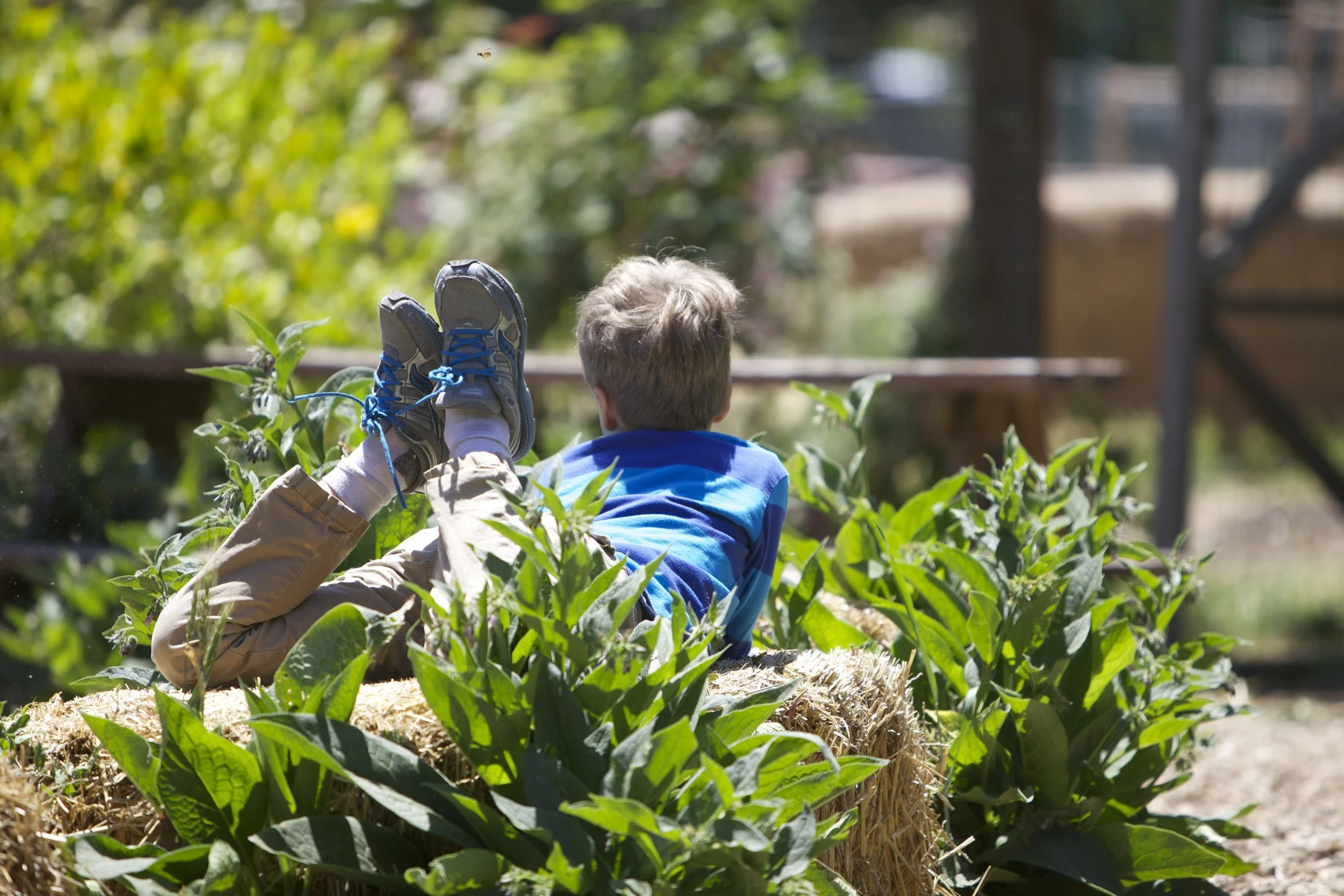
This spring, parents, teachers, and friends gathered on the Marin Waldorf School campus for the Spring Art Show & Auction. It was lovely evening, filled with live music, delicious wine from McIlroy Cellars, and wonderful company! And, of course, the auction itself, which featured this year’s class projects, which were created with love by our school’s students, parents, and teachers.

This year, 100% of the proceeds from these beautiful keepsakes are benefiting our school’s biodynamic teaching garden, which will be getting a needed upgrade.

Please read more about our plans for the garden below!

Here, look in the garden bed,

Something beautiful is growing,

Bright, shaped like a cup all red,

Tulip opens to the sun.

Last night it was small and green,

Flame-like, now it is a-glowing,

This one is the first I’ve seen,

Now sweet weather has begun.

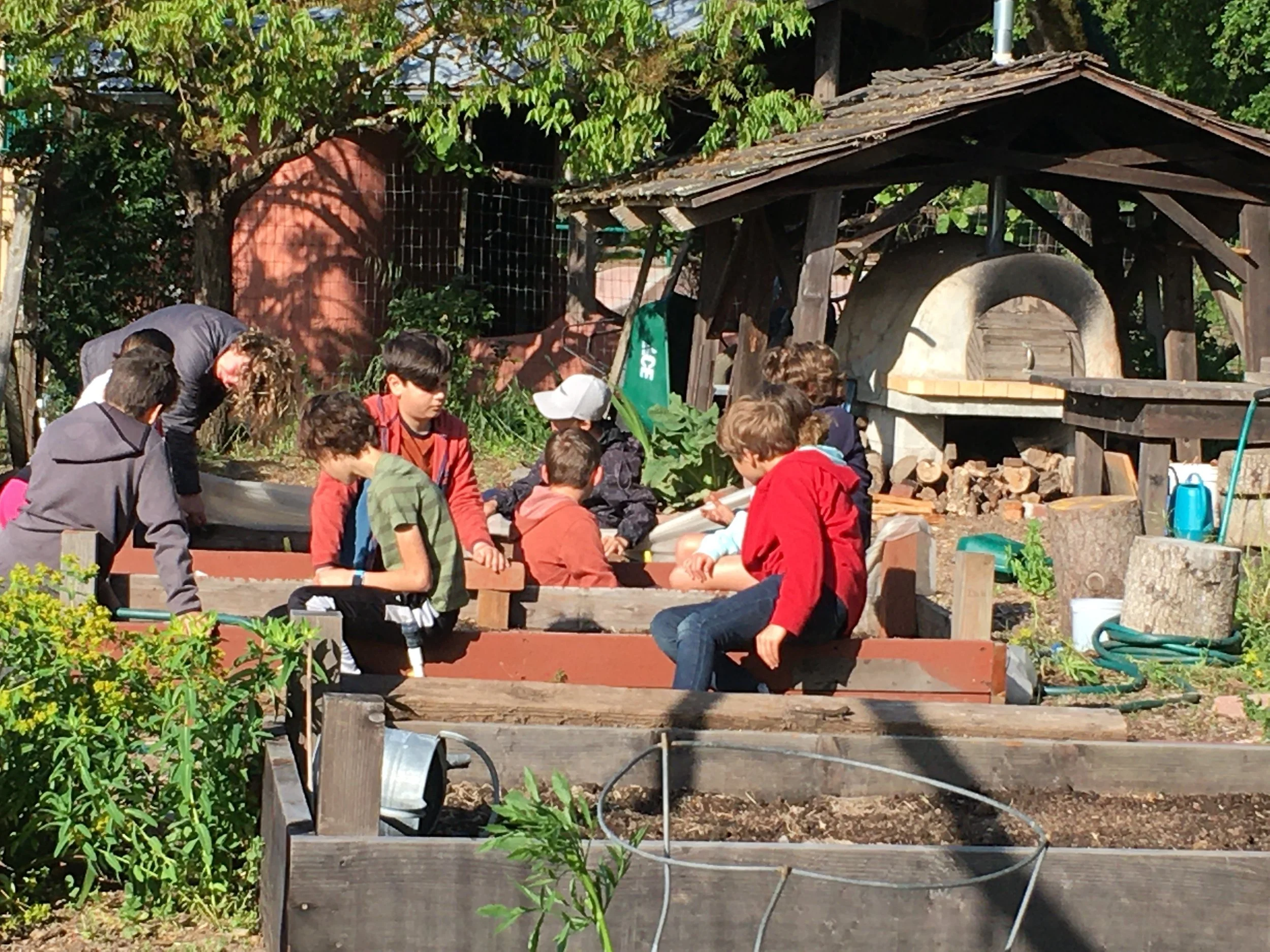
This fall, the Pedagogical Site and Gardening Committees began re-envisioning the biodynamic teaching garden at Marin Waldorf School. Many of the garden beds that had been lovingly built many years ago were rotting, and those rascally gophers had found their way through the wire mesh that for so long had kept them out, leaving a feast for those underground dwellers but not our hardworking students. There were other slow changes, such as the willow and Chinese tallow trees, which were growing larger and larger, casting large swaths of shade on beds whose plants were yearning for the sun. And so, just as nature is ever unfolding and growing, we decided it was time to rethink how the school garden is used for nature study, botany, reflection, will activity. and, on a practical level, to grow crops the children can plant from seed, watch grow, and harvest. 

To meet those new needs, planning has been underway with these two school committees. We decided to add more garden beds (built from reclaimed wood by the 5th grade) in sunny areas of the garden, and are working with the 8th grade to prepare the shadier areas (where humans love to rest) for outdoor classroom/presentation space/picnic tables. Currently all newly built beds are teeming with three-sisters crops: tomatoes, greens, peppers, cucumbers, beans, onions and peas. The 5th grade has just built a biodynamic compost pile outside the garden, and fruit trees they pruned last fall are filled with fruit. The 2nd graders have been preparing beds, planting potatoes, creating trellises for the cucumbers to climb, harvesting lemons and pulling weeds. It is a beehive of activity!

Looking forward, we would like to see the garden thrive in the following ways:

  • Expanded biodynamic gardening programs across grades levels, giving students an opportunity to learn and spend time in the school garden

  • A new outdoor classroom, presentation space, and picnic area in the shade of the garden trees.

  • Construction of a new perimeter fence, with an expansion of the garden boundaries beyond the apple tree corner

  • Installation of two new garden gates for the south and west entrances

  • Installation of a new tall, shallow greenhouse for seed starts

  • An updated irrigation system for the new garden beds, fruit trees, and perimeter beds, and removal of the current irrigation system in the shaded areas

  • Additional handmade garden beds made from recycled lumber

Our garden working verse:

I slept and I dreamt that life was joyful

I woke and I found that life was work

I worked and I found that life was joyful

– Rabindranath Tagor

Thank you to all the students, parents, and staff who helped to create our beautiful auction items in support of the campus garden, and to everyone who placed a bid in the Spring 2024 Silent Auction! You’re helping our garden grow. Didn’t attend the auction? We invite you to make a contribution to the campus garden project, you can do so here or at the link below.

Read More
Michael Belcher Michael Belcher

Across Cultures: A Visit From Our Sister School in Peru

When Quechua educator and activist Román Vizcarra visited the Marin Waldorf School campus, students and faculty had an opportunity to learn more about Peruvian culture.
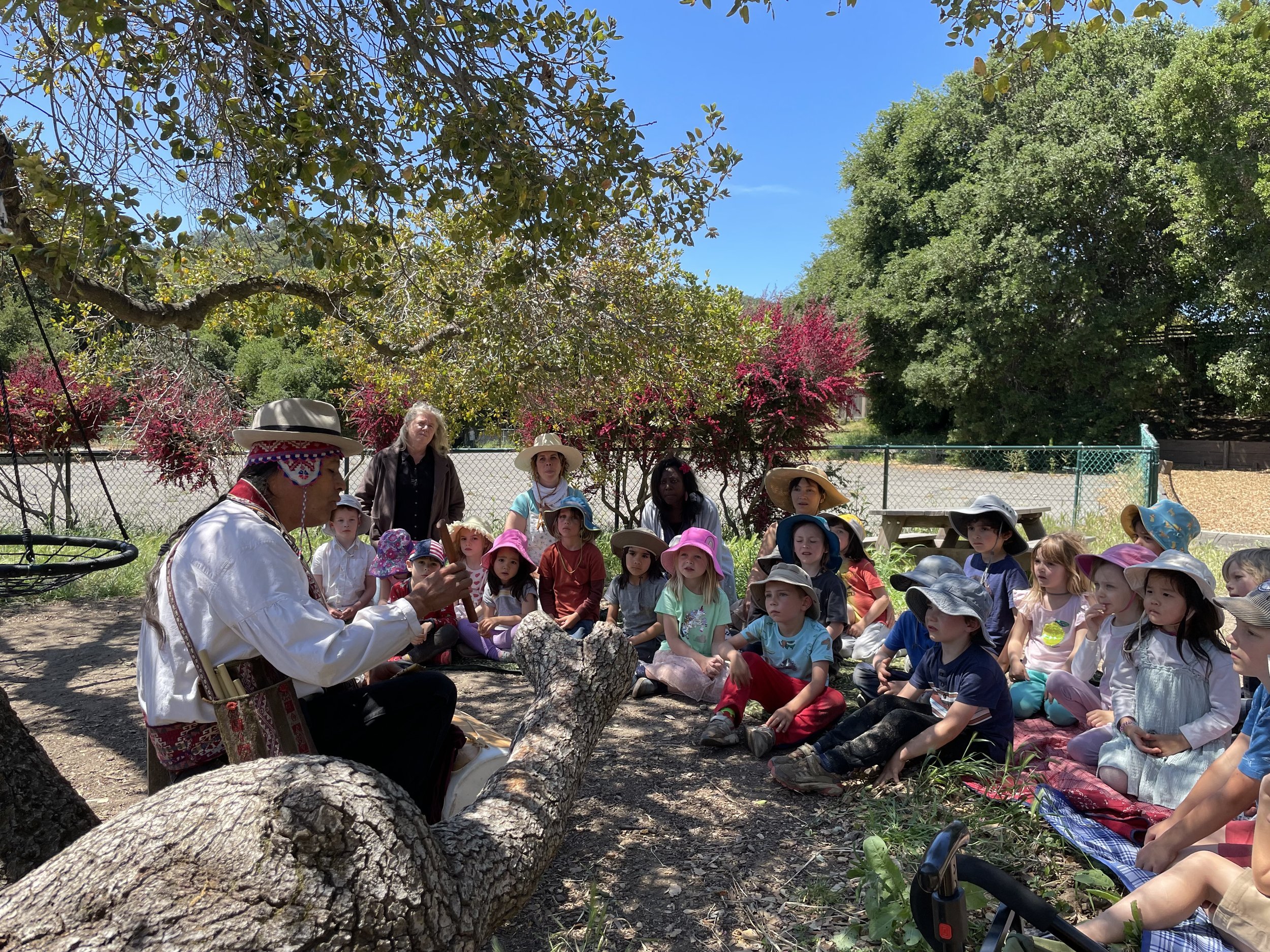
Last week, our school community received a very special visit Roman Vizcarra, a Quechua educator, activist, and founding member of Waldorf-inspired Kusi Kawsay Andean School  in Pisac, Peru. Roman’s much-anticipated visit to our school was another chapter in the long-term collaboration between the Bay Area Center for Waldorf Teacher Training (BACWTT), Marin Waldorf School, and Kusi Kawsay.

Since 2013, students and teachers from BACWTT and Marin Waldorf School have been visiting Kusi Kawsay through a collaboration we call The Tinkuy Project. Tinkuy is a Quechuan word for an exchange of ideas, experiences, and values. It describes the experience of encountering another being or culture with a deep level of respect and with the intention of truly seeing who and what is there. 

During his visit this spring, Roman taught lessons in our grades classrooms, played the pan flute for kindergartners, and spoke and facilitated discussion at our faculty meeting after school, discussing the importance of reviewing our curriculum with a rigorous eye toward cultural diversity.

Roman’s visits are a highlight of the school year, and we look forward to the next time we meet! Below, we’d like to share reflections Hollyhock lead teacher Ms. Kimi about Roman’s visit to the kindergarten classrooms.

The Kindergartners gathered around Roman as he shared stories about his village and how music and dance are at the heart of every aspect of life and all celebrations in Peru.  

He described how the Andean people do a special dance that helps to make the potatoes grow, they even pour a little bit of libations on the soil; for this makes the potatoes happy and when you eat these happy potatoes, you are taking in this happiness. 

Roman then reached down into his brightly colored hand-woven satchel to produce his Andean pan flutes. He told us how people in his country bring their flutes with them wherever they go, to play songs for the wind, for the trees and for the animals and birds; to converse with them.  We listened, as he played for us and for the birds and the wind. 

He then invited us to join him in a rousing dance around our yard.  We made a VERY long train, each of us holding the waist of the friend in front of us, as Roman joyously led us, playing now on his drum as he danced us around the yard. Everything came to a joyous conclusion as Roman gradually led our long line of dancers into a spiral; as our spiral  wound in upon itself, we found ourselves increasingly bound together, unable to move any further and all that remained dancing was our laughter!

What a treat it was to have him come and share a bit of time with us!  Thank you, Roman!

—Kimi Keating, Hollyhock lead teacher, May 2024
(Photos and video by Rod DeRienzo, Hollyhock assistant teacher)

Read More
Michael Belcher Michael Belcher

Let’s Celebrate Screen Free Week by Setting Media Goals As a Family

We have resources designed especially for Waldorf families who want to make smart choices about screen time, technology, and media.
At Marin Waldorf School, we take a slow approach to tech. Our families are conscientious about screen time and aware of the negative effects of mass media on children’s minds and development. Even so, most of us could make some adjustments to our use of screens at home. 

Knowing that children model our behavior, parents can and should make thoughtful decisions about how and when to use media and technology at home. Maybe you want to stop bringing your phone to the dinner table. Maybe you’d like to buy an alarm clock rather than using your phone to wake up. Maybe it’s time to cut out weekday screen time for your child, once and for all.

Let’s celebrate May’s Screen-Free Week by setting media goals together. We’ve got resources to help. Let’s do this!

What is Screen-Free Week?

Held annually during the first week in May, Screen-Free Week is a global invitation to take a break from entertainment on screens—and, as a result, to experience more peace, connection, and fun at home. Sponsored by Fairplay (formerly Campaign for a Commercial-Free Childhood), Screen-Free Week is a response to overwhelming evidence that child-targeted marketing— and the excessive screen time it encourages—undermines kids’ healthy development.

Resources for Parents

In today’s world, running a household with no or limited media isn’t easy. We encourage you to review the attached resources from Waldorf teacher and tech educator Ben Klocek, which include an overview of appropriate tech/communications activities for each age group, a useful worksheet called the Family Screen Culture Plan, and the Slow Tech Media Diet for Children, developed by Patti Connoll and Diana Graber, a frequent speaker at our school (you can watch Diana Graber’s most recent presentation to the MWS community or download resources from her presentation here). 

We also encourage parents to open an honest dialogue with their children, other class parents, and their child’s teacher, who can offer support in making these guidelines realistic in their household.

Tell Us More! 
What are your family media goals? Did you try something different this week or have advice to share? Share your screen-free stories!

Read More
Michael Belcher Michael Belcher

The Waldorf Approach to Math

Through a multidisciplinary, multilayered approach to math, starting at the earliest ages, students learn to see the joy and beauty in numbers, approach math work from many perspectives, and eventually build up to the conceptual ideas that fuel advanced-level math in middle school. Here’s how we do it.

A multimodal and multidisciplinary approach is the key to our school’s mathematics program

Every child is capable of achieving in math. Just ask Jo Boaler, a Stanford education professor who is on the forefront of math education research. “We are all mathematics learners, and we can all develop active, inquiring relationships with mathematics,” Boaler writes in the paper Prove It to Me! “When we do, and mathematics becomes a creative, open space of inquiry, mathematics learners will find that they can do anything, and their mathematical ideas and thinking can extend to the sky—and beyond!” Boaler’s research shows that building a strong foundation in number sense—a feel for numbers and the ability to use them creatively—is key to becoming a successful math thinker, as is an ability to grasp big ideas and make connections between them.

At Marin Waldorf School, our approach to math is designed to do just that. Through a multidisciplinary, multilayered approach to math, starting at the earliest ages, students learn to see the joy and beauty in numbers, approach math work from many perspectives, and eventually build up to the conceptual ideas that fuel advanced-level math in middle school.

“A growing number of studies reveal the neural underpinning of what researchers call ‘embodied learning’ or ‘multimodal learning’—using your body to encode material more deeply by drawing, singing, or dancing, for example—and provide a window into how and why the approach works so well,” write the authors Youki Terada and Stephen Merrill in a 2025 article in Edutopia, who go on to demonstrate the many ways that movement and art can be used in support learning across subject areas—including math.

Here’s how we do it at Marin Waldorf School.


Early Childhood: Foundational Numeracy and Play

At Marin Waldorf School, our youngest students are engaged math learners—whether they know it or not! Starting at the earliest ages, our preschool and kindergarten teachers deliberately weave mathematical concepts into daily activities, helping students develop foundational numeracy and math skills.

"Watching the ease and joy of a preschool or kindergarten Waldorf classroom, it’s easy to assume that there is no set curriculum," says MWS math program director Julia McIlroy. "Each activity, game, song, and task in which they engage has been carefully curated to develop every aspect of a child’s mind, body, and heart." (Click here to read more from Ms. McIlroy on the Waldorf approach to math in early childhood.)

Early Childhood and Math: Math teacher and program coordinator Julia McIlroy details the approach to math education in the Waldorf preschool and kindergarten, which includes the use of fingers, which is known to correlate with math achievement.

Importantly, students are given ample time for free play, the best way for young children to explore and understand the world around them. More than any other activity, play naturally stimulates a child’s neural pathways, encouraging healthy cognitive and brain development. Among other compelling research, scientists have found that free, unstructured play builds connections in the prefrontal cortex, the brain’s executive control center. In an interview with Ed Source, Gennie Gorback, president of the California Kindergarten Association, explains, “Children learn high-level, intangible concepts such as the laws of gravity, conservation of liquids/mass, mathematical concepts such as more vs. less, all through hands-on, interactive play."


Elementary School: Multimodel Teaching and Number Sense

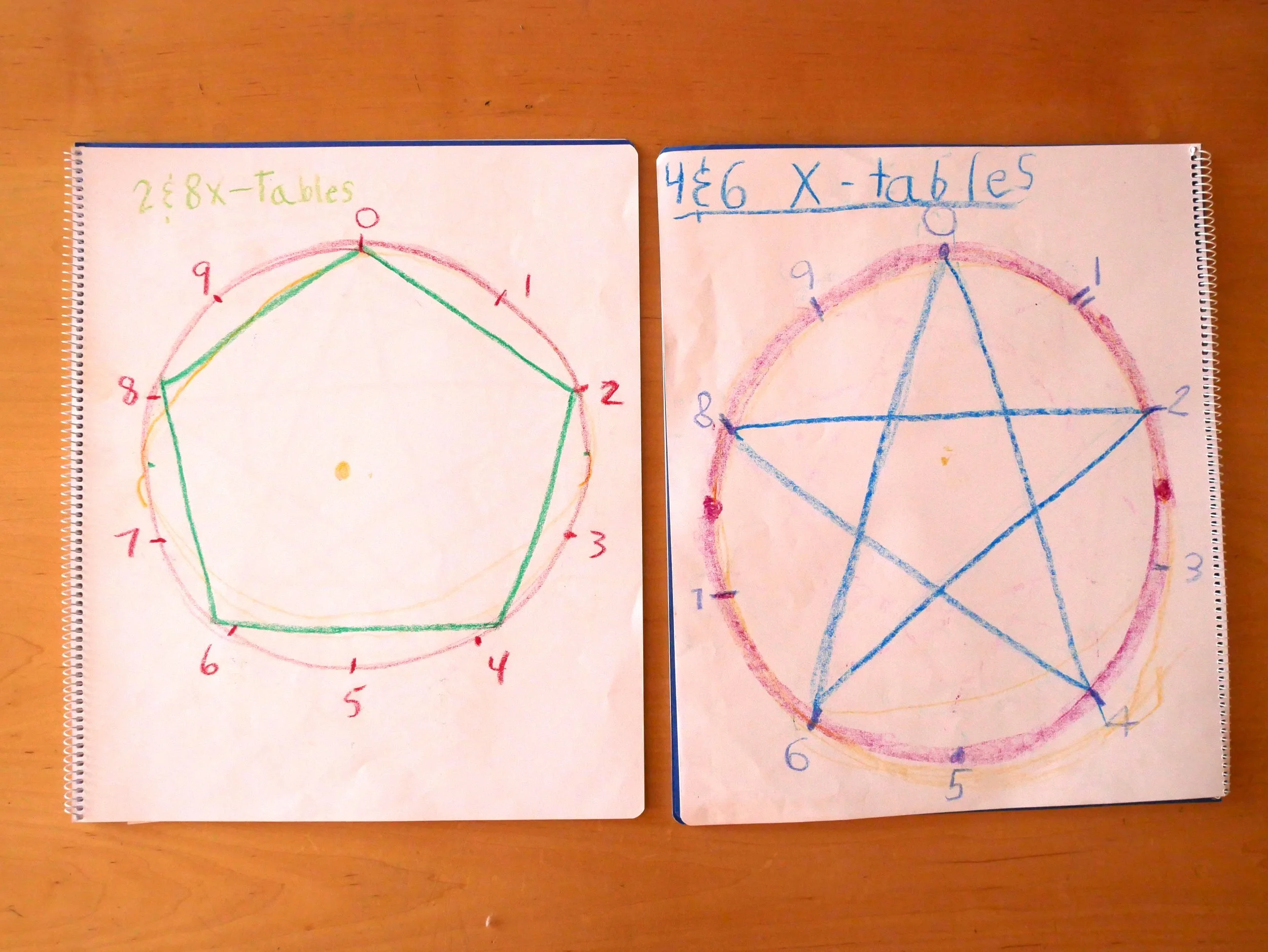
Stories, visual exercises, mental math games, skip counting, and the use of wood manipulatives are some of the many ways our teachers help build an awareness of numbers and an enthusiasm for math in the lower grades. Math exercises could range from skip counting while jumping rope in 1st grade to drawing decagons, decagrams, pentagons, and pentagrams to find the number patterns (and multiplication tables) in 2nd grade.

“Good mathematics teachers typically use visuals, manipulative and motion to enhance students’ understanding of mathematical concepts, and the US national organizations for mathematics, such as the National Council for the Teaching of Mathematics (NCTM) and the Mathematical Association of America (MAA) have long advocated for the use of multiple representations in students’ learning of mathematics,” write the researchers in the Seeing as Understanding: The Importance of Visual Mathematics for our Brain and Learning.

We also use story and imagination to give math context and meaning. For example, in second grade, teacher Ms. Terziev introduced the charming story of a mouse named Monsieur Fromage and his cheese cubes to helps bring a more abstract concept like place value to life. With this imaginative story to guide their activities, 2nd graders practice working with and solving problems using increasingly large numbers. (Click here to read more about the lesson.)

With a sense of wonder and creativity imbued in their math work, children are naturally drawn to the more complex problems they encounter as they move through the grades.


Middle School: Confidence and Concepts

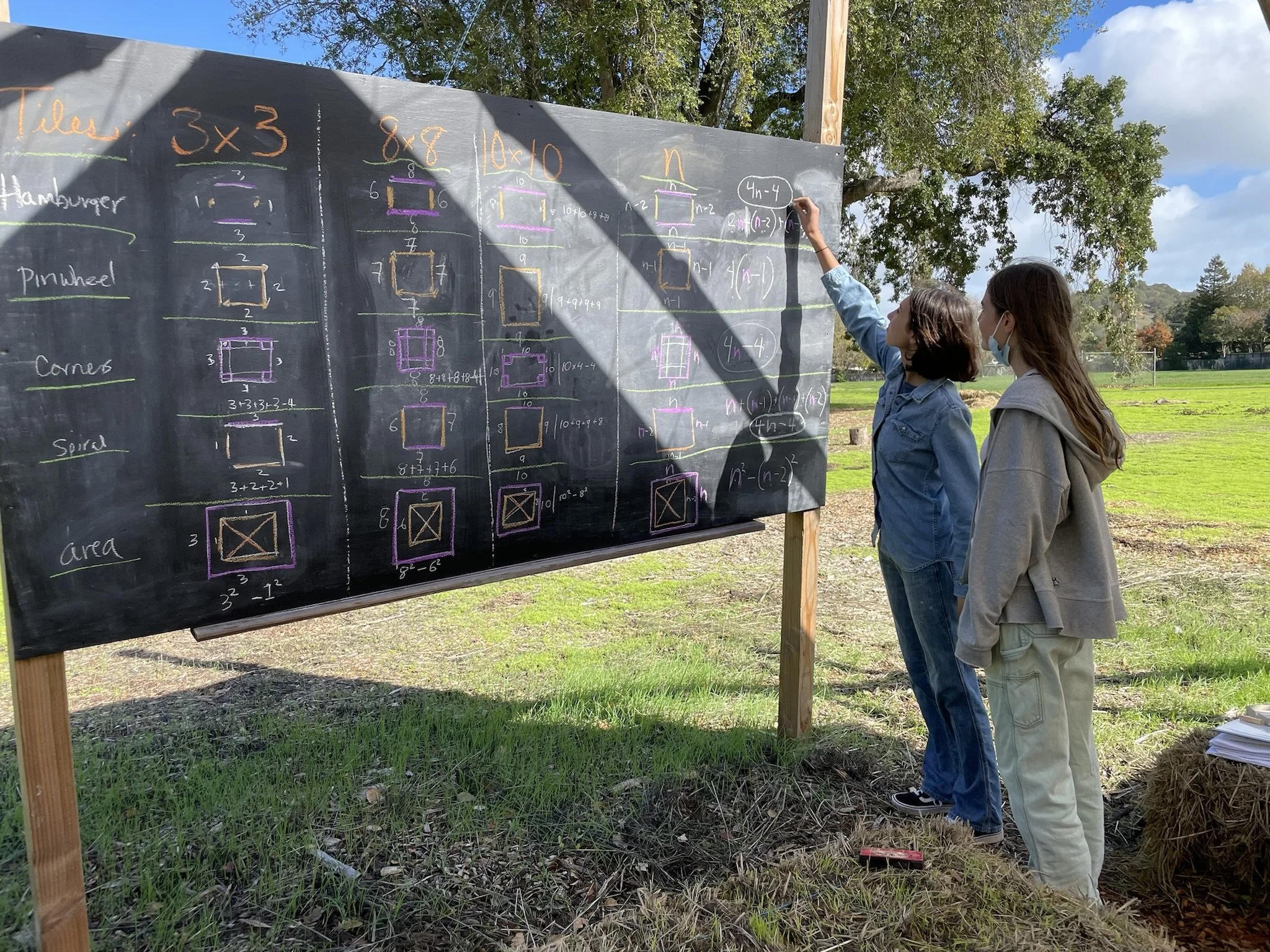
By 6th grade, students are beginning to develop the ability to think abstractly, and our math curriculum meets their growing abilities with more complex concepts. Middle school math teacher Julia McIlroy aims to show students how mathematics is integral to all parts of life by looking at big ideas, patterns, and relationships between mathematical ideas and by grounding all subjects in experiential learning before moving to abstract principles. 

"How do I develop a conceptual understanding? What I do is encourage more problem-solving and active learning. I want them to be engaged in learning, so they have confidence in themselves to go out and solve any problem that they encounter," says Ms. McIlroy. In 7th grade, for example, students measure large circles on campus to discover the relationship between the diameter and circumference (which we know as pi), before looking at it through the lenses of geometry, ratios, and algebra.

"What I’m trying to do is bring more complex tasks, where there are no immediate right or wrong answers. This prepares them for higher education and the workplace and keeps everyone engaged,” explains Ms. McIlroy. “If you have rich tasks, the students who may be behind academically can do something, and the students who are really high-achieving can take it to the highest levels.”

Group work is also a key component to Ms. McIlroy’s teaching, requiring students to work together to solve unfamiliar problems in both concrete and abstract situations—to find patterns, make conjectures, and test those conjectures, and to understand that mathematical structures are useful as representations of phenomena in the physical world.


Want to learn more about our math program?

Please click on these stories to read more about our creative, multifaceted approach to math education.

Early Childhood and Math: Math teacher and program coordinator Julia McIlroy details the approach to math education in the Waldorf preschool and kindergarten.

Beyond Numbers in Middle School Algebra: Creating a context can help students connect with material and understand how complex ideas evolved. In a recent algebra lesson, 7th graders learned about Mohammed ibn Musa al-Khwarizmi, considered the "father of algebra," was a mathematician who worked in the House of Wisdom in Baghdad during the 800s CE.

A Second Grade Math Lesson: To teach the concept of place value, teacher Ms. Terziev introduced her students to Monsieur Fromage.

Meet Julia McIlroy, Bringing Magic to Middle School Math: Read this wonderful interview with Marin Waldorf School's math program coordinator and middle school math teacher Julia McIlroy.

First Grade Math: Bird by Bird: Students unite art and math with story-problems in first grade.

Read More
Michael Belcher Michael Belcher

From the Director's Desk: A Balanced Education

As teachers, we connect to our own humanity so that we can teach it to students. By listening to them, we show them how to listen to others.
In a recent letter to parents, our school director Megan Neale shares her perspectives on the role of Waldorf education and our children’s inner education.

After a remarkably wet winter season, the first hints of spring are all around us. The days are slowly growing longer and wildflowers are blooming across the hillsides in Lucas Valley. Here on campus, students are immersed with their work, cozy in their classrooms, and growing almost as quickly as the green winter grasses.

We all are affected by the steady, predictable change of season and the ongoing relationship between light and darkness. With attention, we can become sensitive to the subtle but profound changes in nature that take place throughout the year. As the world awakens from its winter sleep, the approaching spring equinox offers a welcome moment of balance, when night and day are equal lengths.

For our faculty, late winter is traditionally a time for reflection and growth. During the February break, we host the annual Bay Area Center for Waldorf Teacher Training's midyear conference, providing a space for teachers from across the country to engage in professional and personal development. This moment of reflection is vital in bringing ourselves into balance, like the seasons. It also brings us closer to our deeper purpose as educators.

Since its founding over 100 years ago, Waldorf education has been committed to social renewal and the conscious development of healthy human relationships. Over my six years as school director, I have thought deeply about how Waldorf schools, and our school in particular, can educate children so that they may connect with and serve humanity, even in a world that seems to be pushing people further apart. Today, we have a thousand encyclopedias’ worth of knowledge at our fingertips, AI can generate seemingly thoughtful responses to deep philosophical questions, and social media allows us to live within a bubble created by algorithms. Society and politics are riddled with the polarizing forces of war, hatred, and violence, dividing us further.

At Marin Waldorf School, we are concerned with the inner education of our students: guiding them to recognize their life's purpose, to respond to the quest for social and environmental justice, and to build rich and meaningful lives, based on a real human connection. It isn't easy. True communication—true listening—takes openness, practice, patience, and interest. It often includes conflict and tension as part of the process. Our job as educators, and as parents, isn't to fend off pain or eradicate tension, but to strengthen the forces within young children so that they may meet life’s inevitable challenges with love, care, and strength. 

Community is something that must be demonstrated, not just taught. As teachers, we connect to our own humanity so that we can teach it to students. By listening to them, we show them how to listen to others. I believe these skills are essential to every child, as well as to the future of our local community, our greater society, and the world.

Last week, our families demonstrated their commitment to these values and to our school community by signing their reenrollment contracts for the next school year. For me, it's a deeply gratifying moment: grounded in the present and looking ahead to the future, with optimism. Nature teaches us to accept change. It also shows that there are moments of equilibrium, balance, and hope in a constantly evolving world.

Thank you for being a part of our extraordinary school community.

With optimism,

Megan Neale
Director

Read More
Michael Belcher Michael Belcher

Beyond Numbers in Middle School Algebra

At Marin Waldorf School, students learn new concepts in context, including the history of a subject. For middle schoolers tackling algebra, that includes a study of the history of abstract mathematics.
How Algebra is taught in a Waldorf School

Chalkboard drawing of the Father of Algebra.

Mohammed ibn Musa al-Khwarizmi, considered the "father of algebra," was a mathematician who worked in the House of Wisdom in Baghdad during the 800s CE. He could translate between Ancient Greek and Indian, allowing him to compile the findings of both, and wrote his own texts on algebra, geometry, astronomy, and geography. Al-Khwarizmi wrote the first known book on algebra around 825 CE, which was called Hisab Al-Jabr w’Al-Muqabala, meaning “the Compendious Book on Calculation by Completion and Balancing." Al-jabr was later latinized as “Algebra,” meaning “reuniting broken parts” -- such as bone setting or moving an algebraic term from one side to another to balance an equation.

At Marin Waldorf School, students learn new concepts in context, including the history of a subject. This brings the subject alive, giving them an understanding how these ideas evolved, and how actual humans grappled with challenging concepts.

Particularly in mathematics, it's important for students to see math as an interconnected web of ideas, rather than sets of rules and algorithms to be memorized. Learning math as a living subject that is always unfolding makes it accessible and connects the student to the subject.
—Julia McIlroy, middle school math teacher


Math Education at Marin Waldorf School
Through a multidisciplinary, multilayered approach to math, starting at the earliest ages, students at Marin Waldorf School learn to see the joy and beauty in numbers, approach math work from many perspectives, and eventually build up to the conceptual ideas that fuel advanced-level math in middle school.

“Watching the ease and joy of a preschool or kindergarten Waldorf classroom, it’s easy to assume that there is no set curriculum and teachers just let ‘kids be kids.’ True, you won’t find children at desks completing math worksheets. And yet there is a carefully considered scope and sequence of learning starting in preschool,” writes Julia McIlroy in her article “Early Childhood and Math.”

Read more about our progressive, multidisciplinary approach to math education here or read a wonderful interview with our middle school math teacher Julia McIlroy here.

Read More
Michael Belcher Michael Belcher

The Power of Connection

At Marin Waldorf School, we know that a healthy community is at the heart of a well-rounded education and a meaningful life. How do we foster community?
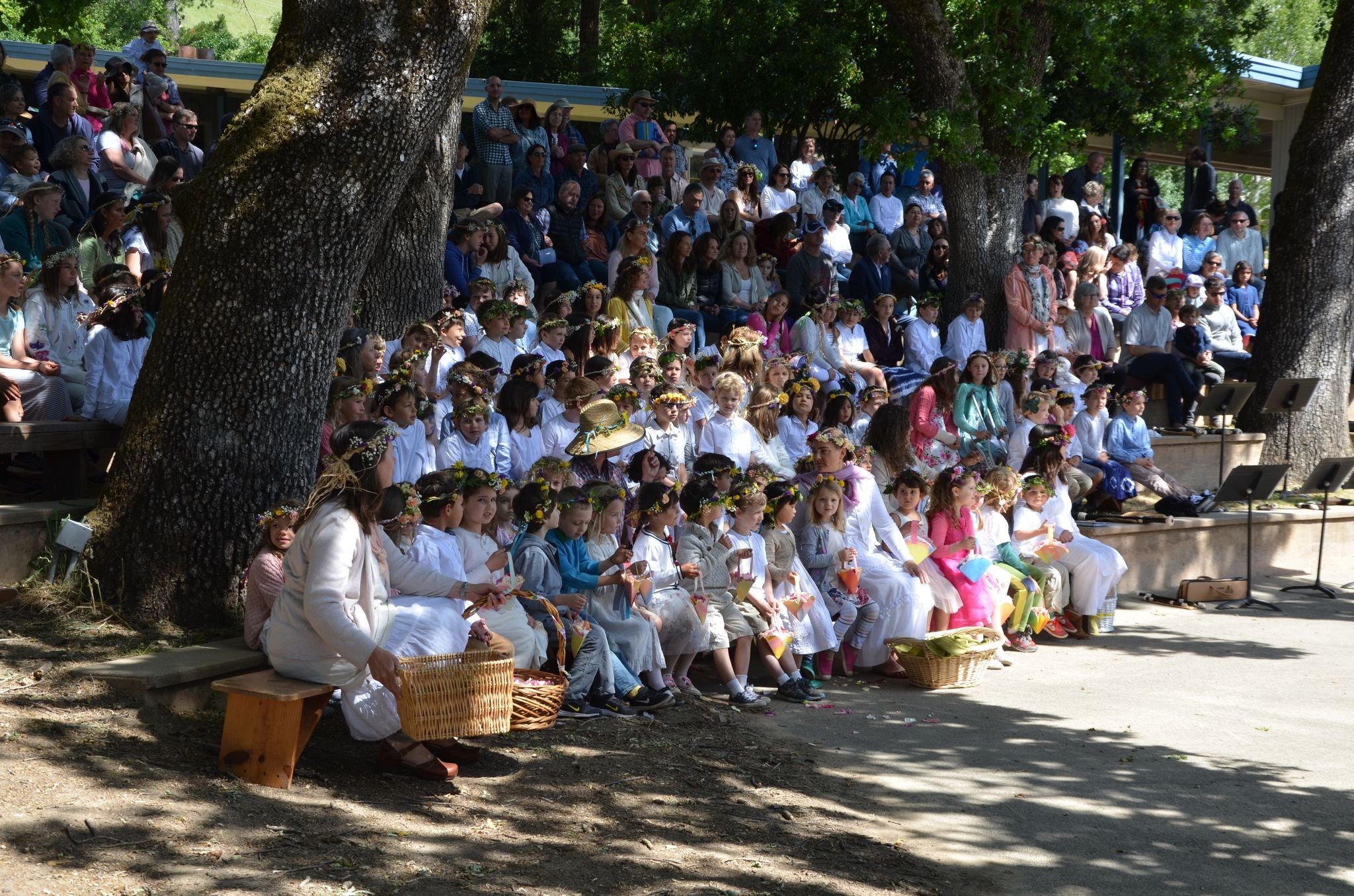
Building community at school

At Marin Waldorf School, we believe a healthy social life is at the heart of a well-rounded education and a meaningful life. In our classrooms and across the school community, we nourish and value relationships between students, teachers, and families.

Research makes it clear that a supportive community is fundamental to fostering children’s growth and development at school. A supportive community benefits parents, too. At Marin Waldorf School, we hope that, within a welcoming community of families and in partnership with our faculty and staff, parents will lean into the joy and personal growth that comes with raising children.  

A Focus on Relationships
At Marin Waldorf School, students work with the same team of teachers for multiple years, allowing them to build deep, trusting, and supportive relationships with the adults at school. (Click here to read more about how we put this in practice through teacher looping.) 

Parents, too, build strong, trusting, long-term relationships with their children’s teachers. All human relationships require effort and care, and we make those relationships a priority. We emphasize open and honest conversations between parents and teachers, building a trusting relationship with the child’s needs at the center.

Built-in Support
In addition to the support offered by teachers, administrators and faculty advisors serve as a bridge between the school and our families. Difficulties and differences of opinion are inherent in human encounters; we are committed to communication practices that lead to increased awareness of the needs of others, the community as a whole and ourselves. This is fundamental to a healthy community.

One sources of support is grades director Sarah Whitmore. In addition to her work as a mentor to faculty, Sarah works closely with parents, helping them navigate issues around parenthood, and working with them toward achieving the best outcomes when communicating with their child’s class teacher. Sarah works particularly closely with new families, helping them integrate into the school and feel part of the community.

Parent Engagement & Learning
Parents at Marin Waldorf School end up in the classroom too! Throughout the year, class teachers hold parent evenings in their classroom to talk about what’s happening at school, discuss the curriculum, and share insights about child development. It’s a moment to learn and to connect with each other.


Parents (and our extended community) are also encouraged to attend events in our annual Speaker Series, free annual program of guest lectures and community conversations with experts in health, parenting, and education. Recent topics have included Simplicity Parenting, sexual ethics, and diversity, equity, and inclusion.

Parents are also encouraged to get involved as school-day volunteers. There are numerous ways for parent volunteers to get involved with their child’s classroom, including opportunities to help handwork class, in reading groups, with festival celebrations, setting up for school plays, chaperoning on field trips, and more.

Festivals
 and Community Events
Once a month, on Friday mornings, we host a Community Coffee in the breezeway outside the front office. It’s a simple affair: mugs of warm coffee and tea, homemade snacks, and, when we’re lucky, live music performed by one of our parents. Community Coffees are an invitation to set aside a few minutes in a busy Friday morning to breathe, relax, and connect with other people. It’s a small but beloved aspect of parent life at Marin Waldorf School.

Assemblies and festivals, from the Michaelmas pageant to the annual Lunar New Year assembly, bring the entire school community together. Integrated into the academic curriculum, seasonal festivals strive to awaken the child's reverence for the wonder and beauty of life, and connection with the rhythms of the earth and cosmos.

Read More
Michael Belcher Michael Belcher

A Second Grade Math Lesson

An imaginative story about the inhabitants of Mouse Lane (and a messy mouse chef) help 2nd graders connect with large numbers and the concept of place value.
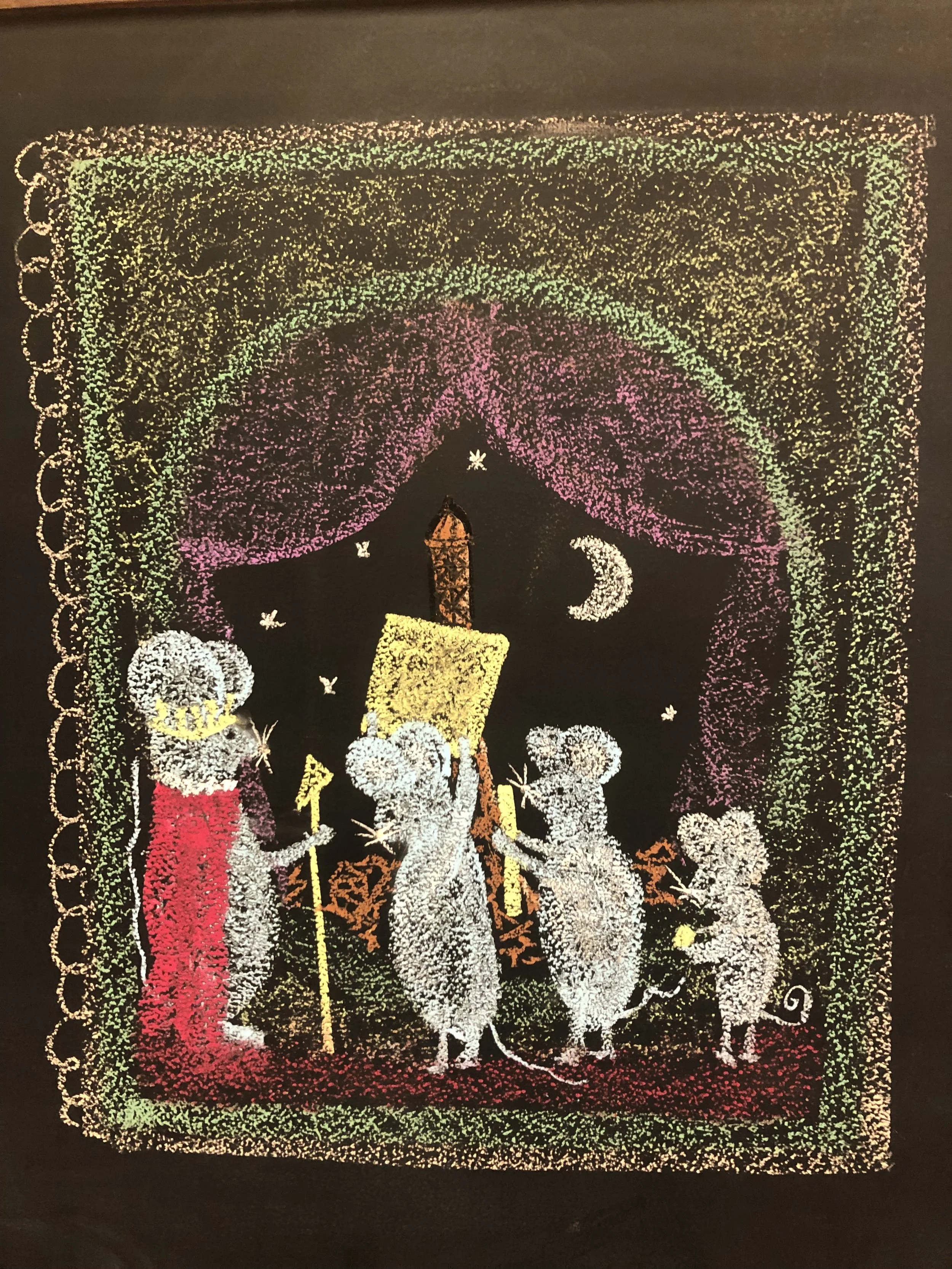
Introducing Monsieur Fromage and the concept of place value

The 2nd grade math curriculum builds on the 1st grade’s study of the four processes (addition, subtraction, multiplication, and division) with larger numbers and more abstract concepts, like place value. How does our second grade teacher Ms. Terziev make these concepts fun and memorable?

May we introduce you to Monsier Fromage?

Ms. Terziev’s drawing of Mouse Lane.

Monsieur Fromage is a retired French chef living in Paris after a long career of world-famous cooking. He had to stop cooking in restaurants because he began losing his sight to the point of mixing up salt, sugar, and other ingredients. He is most famous for his dishes that include cheese. He is so fond of cooking with cheese that he grates huge amounts at a time. He is also quite careless and messy as he has always had other people to clean up after him. Now that his sight is so bad, he doesn't notice all the cheese that falls to the floor when he cooks. 

Unknown to him, Mr. Fromage moved into an apartment on Mouse Lane. There are three houses on each block and many hundreds of mice live in these houses. They are all the loyal subjects of the Mouse Emperor who lives in the last house on the third block.

The Emperor used to live on a pirate ship and learned from their captain all about keeping track of things, specifically about how to keep count by having a place for everything and putting everything in its place. The mice on Mouse Lane have all been assigned the job of keeping food (and keeping count) for the Emperor. When Mr. Fromage moved into the "ones house," they started adding up and delivering cheese to their leader, who lives in the "hundred millions house." 

With this wonderful story to guide their activities, 2nd graders practice working with and solving problems using increasingly large numbers. Mimicking the work of the busy mice of Mouse Lane, children use wooden manipulatives—cubes, sticks, and blocks—to count up and collect cheese for the emperor. The mice smoosh ten pieces of cheese together into sticks and transport them out the chimney and into the next house. Then ten sticks of ten get smooshed together into a brick, reaching higher and higher numbers.

In addition to their activities counting cheese, 2nd graders drew their own versions of Mouse Lane and shared their work with each other during a “museum tour” in the classroom, below.

Ms. Terziev notes that the original version of this story was dreamed up by Kristine Deason (beloved MWS class teacher 2005-2021), and Ms. Terziev adapted it (to wild success!) with this year’s 2nd grade.

Read More
Michael Belcher Michael Belcher

Innovation in Teaching: Looping

Building meaningful relationships between teachers and students takes time, but it’s the key to developing curious, happy, and engaged learners at Marin Waldorf School.
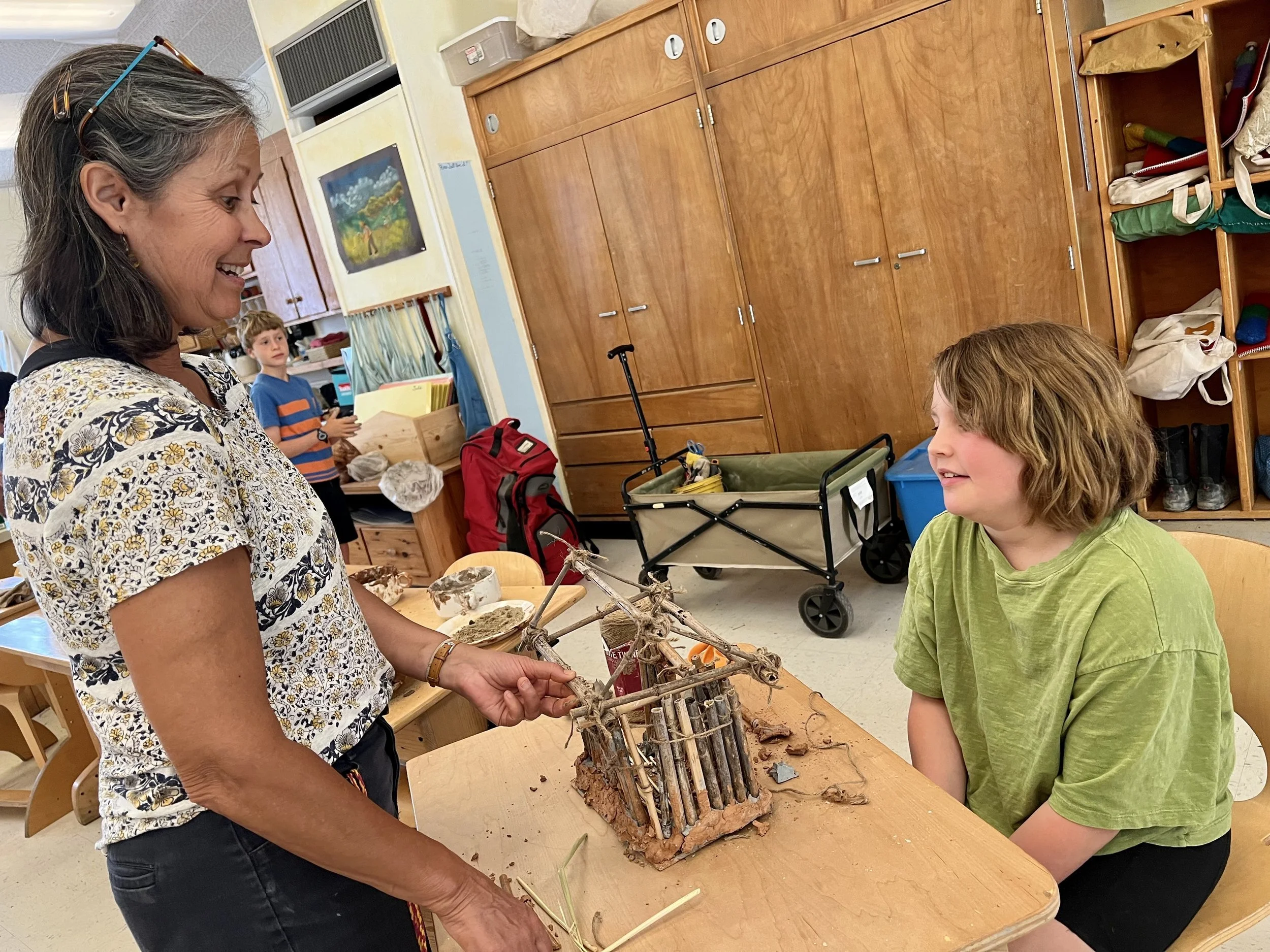
The Waldorf approach to building teacher-student relationships

There is no substitute for true human connection. We know it intuitively, but there’s also a wide body of research that shows children learn best and feel most confident when they are seen and understood by their teachers. Multi-year connections create a sense of trust and stability that enhances student confidence and engagement.That’s one of the reasons that meaningful relationships are at the heart of every classroom at Marin Waldorf School. 

When it comes to building strong teacher-students relationships, one of the most important innovations in Waldorf education is looping. Looping is when a teacher stays with the same class for multiple years or grade levels. In some cases, Waldorf class teachers will stay with the same group of students from 1st to 4th grade, or even all the way from 1st to 8th grades! Our school’s specialty teachers also work with the same children year after year, creating the same sense of support and continuity in subject classes like music, handwork, gardening, orchestra, physical education, woodworking, and middle school math. 

Building strong relationships takes time. Marin Waldorf School teachers and students have the opportunity to build strong and trusting relationships, creating an environment in which each student is individually seen, supported, and appropriately challenged. For Waldorf teachers, spending multiple years with the same class allows them to develop an in-depth understanding of each student's strengths, challenges, and unique learning style.

Looping also promotes meaningful collaboration between teachers and parents, facilitating open communication and compassionate conflict resolution as needed.

The Class of 2021 with Ms. Terziev (center), who led the class from 2nd grade through 8th grade graduation.

Though it’s long been practiced in Waldorf schools, looping has been getting a boost in the mainstream lately. The concept has been the subject of widespread research and opinion, especially following the pandemic, when many teachers chose to stay with their classes for a second year after schools were closed in 2020.

The practice continues to gain traction and supporters. In October 2023, contributing opinion writer Adam Grant wrote a piece about looping in the New York Times. A proponent of the practice, he argued:

With more time to get to know each student personally, teachers gain a deeper grasp of the kids’ strengths and challenges. The teachers have more opportunities to tailor their instructional and emotional support to help all the students in the class reach their potential. They’re able to identify growth not only in peaks reached, but also in obstacles overcome. The nuanced knowledge they acquire about each student isn’t lost in the handoff to the next year’s teacher.

A 2015 study by Stanford University of  Alice Birney, a Waldorf-Inspired School in Sacramento City Unified School District, reached similar conclusions about the power of looping. The researchers wrote:

When teachers have the luxury of time, as well as the primary responsibility for their student’s education, they are not under pressure to prepare students to a certain level of proficiency at an arbitrary point in time in order to hand off to their next teacher. Teachers can be responsive to the students’ needs, readiness for new learning, and skill development in designing their instruction.

The transformative power of looping extends beyond the confines of a traditional classroom, shaping a community of learners who embrace curiosity, resilience, and supportive connections.

As educators, we strive to teach children to love learning. By fostering an environment where every student feels seen, understood, and safe, our teachers instill the confidence to thrive, encouraging the development of individual learning styles and interests. When you visit a Marin Waldorf School classroom, you can quickly see that our students are eager learners, resilient in the face of challenges, and secure in the knowledge that they are fully supported by their teachers.

Read More
Michael Belcher Michael Belcher

Experience Waldorf 2024

For decades, a Saturday morning open house has been a staple of Marin Waldorf School's enrollment events for current and prospective families. This year, we made some changes to our tried-and-true formula, renaming the event Experience Waldorf and reimagining the flow of the day. What did we do differently?
Experience Waldorf, our Saturday morning open house, returns to Marin Waldorf School on Saturday, January 20, 10am-1pm. An interactive day of activities, music, and community, Experience Waldorf is an opportunity for current and prospective families to immerse themselves in the Waldorf way of doing things and get to know our unique school community. It’s a day filled with smiles, hands-on learning, the sound of children at play, and music everywhere you turn! And, as at all MWS events, we’re guaranteed to have delicious homemade food, beautiful music, and plenty of time to connect with others.

What can you look forward to?

Preschool and Kindergarten Mini Days
During the morning, our welcoming preschool and kindergarten classrooms and beautiful outdoor spaces are open to new and current families, who will get a taste of what daily life is like in the early childhood wing through activities and free play. Last year, soon-to-be kindergartners and their families were invited to watch the puppet show put on by our lead teachers Ms. Kimi and Ms. Marieke. Preschool and kindergarten mini days always fill to capacity. Please click here to RSVP.

Grades Family Workshops
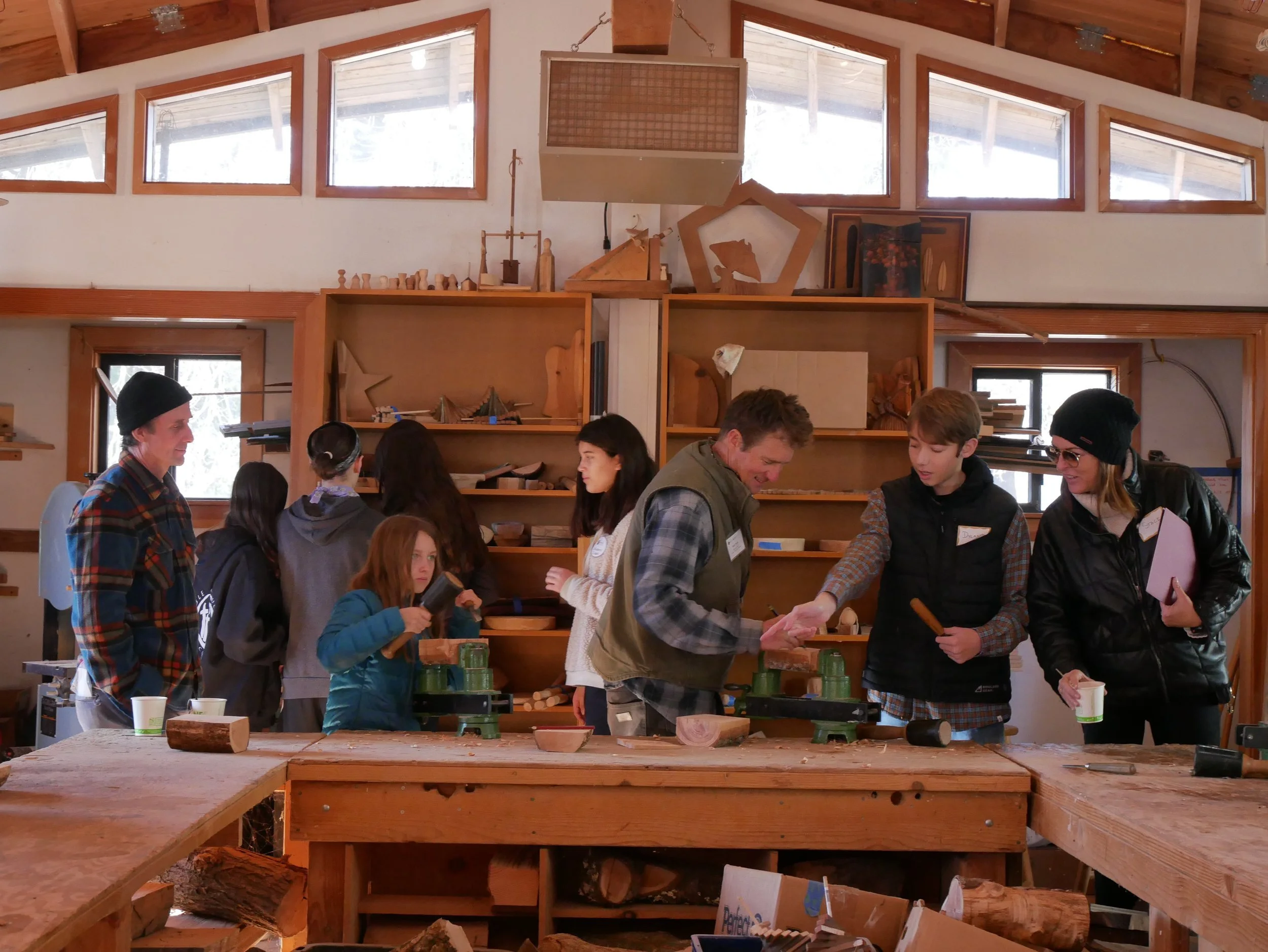
Learn about the Marin Waldorf School grades curriculum at one of our hands-on family workshops. For 2024, we are offering an interactive crafting workshop with master teacher Mia Terziev, woodwork win our beautiful woodshop, and world languages (Spanish and Mandarin). These workshop is designed for current and prospective families with children in grades K-7 (click here for more details or to register).

Watercolor & Waldorf Theory with Sarah Whitmore (for Adults)
New this year! Grades director Sarah Whitmore will offer a guided watercolor workshop for parents who are interested in learning about Waldorf theory. As we learn the meditative watercolor technique used in Waldorf classrooms, Sarah will discuss Waldorf pedagogy and how the creative arts are incorporated into the curriculum at Marin Waldorf School (click here for more details or to register).

Music and Treats Are a Must
The day would not be complete without an amazing spread of homemade treats and delicious coffee, lovingly prepared by the school’s Parent Association. Check out last year’s now-legendary snack table in the photos below. Music is a big part of Waldorf education, so having beautiful music is also a must! This year, we’re looking forward to a mid-morning performances by the 6th grade class on strings, accompanied on cello by orchestra teacher and MWS alum Michael Fecskes. (A professional cellist and youth orchestra leader, Michael first picked up a stringed instrument right here on the MWS campus! Michael will be participating in our Alumni Panel at noon, so stick around to hear more from him.) And speaking of music, we’ll have were guitars, ukulele, and songs down at the fire pit with Ms. Marllard, where we can keep warm and connect with each other on this chilly afternoon.

The day concludes with the always-fascinating alumni panel, which features diverse Waldorf alums reflecting on their life and education. We are incredibly excited for this year’s panel, which includes alum and current parent Jake Pearl, biologist and outdoor lover Dr. Rachael Olliff-Yang, management consultant and new mom Marissa Parks, and our own orchestra teacher Michael Fesckes. MWS graduate and current admin team member Ashley Dawson will moderate. You can watch the video from last year’s wonderful panel below.

Read More
Michael Belcher Michael Belcher

A sixth grade history lesson

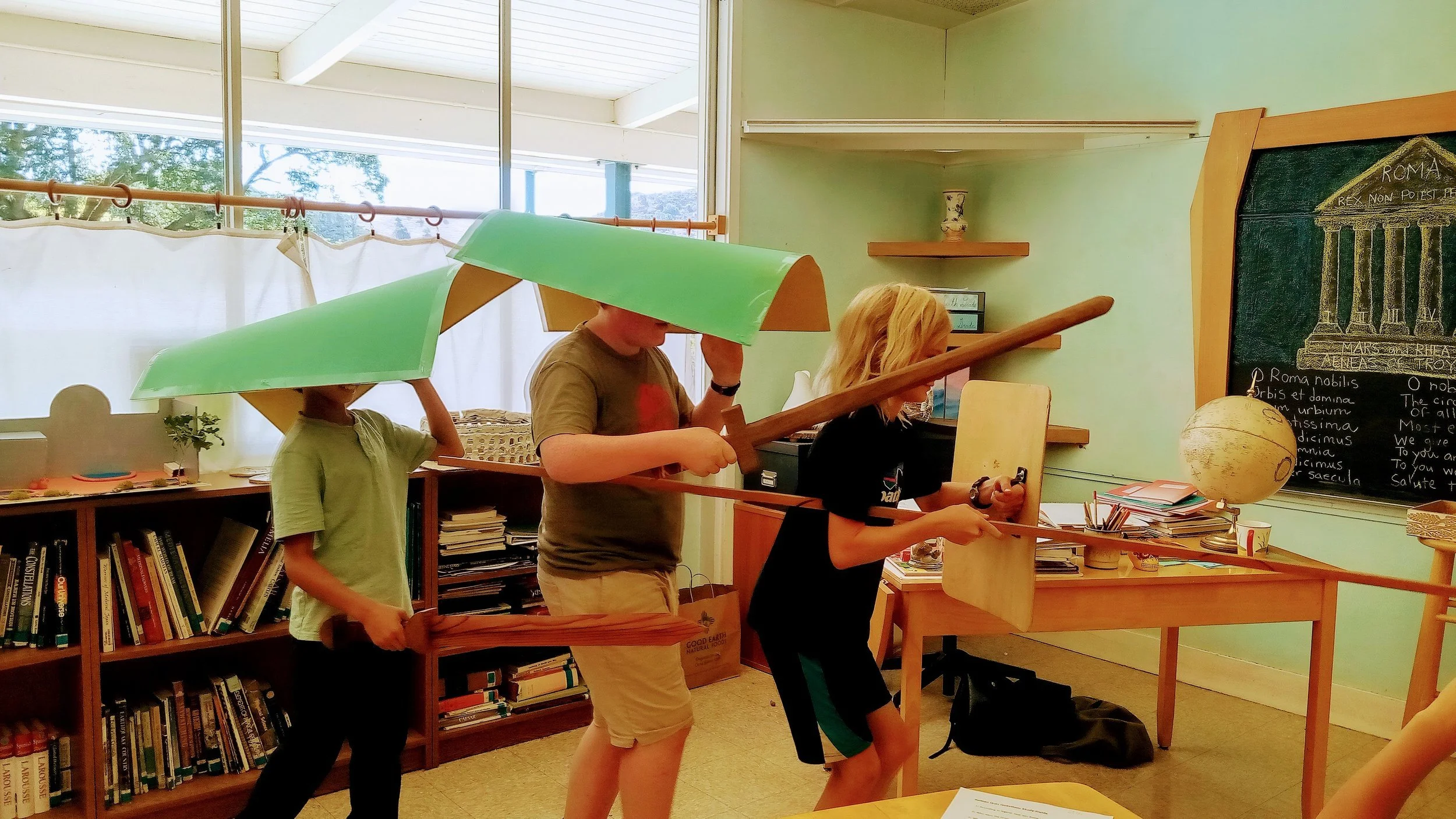
Our 6th graders brought ancient Rome to life for their classmates with research projects and presentations on the history and culture of the ancient city.
Ancient Rome Comes to Life in the classroom

Studying ancient Rome and the Middle Ages is a traditional part of the 6th grade Waldorf curriculum. This year, our 6th graders brought Rome to life for their classmates with research projects and presentations on the history and culture of the ancient city.

As always, Marin Waldorf School middle schoolers have the opportunity to connect more deeply with history and social studies through creative work, independent projects, and oral presentations that bring the material to life! See more pictures of the 6th grades amazing work here. 6th graders also connected with the art of ancient Rome by making their own mosaic pieces.

Read More
Michael Belcher Michael Belcher

The Michaelmas Challenge

As the nights lengthen and the weather begins to cool, it is time to shine our inner light, finding the courage and strength to carry us through the darkness of the winter months.  Here are some of the ways we prepare for Michaelmas at MWS.
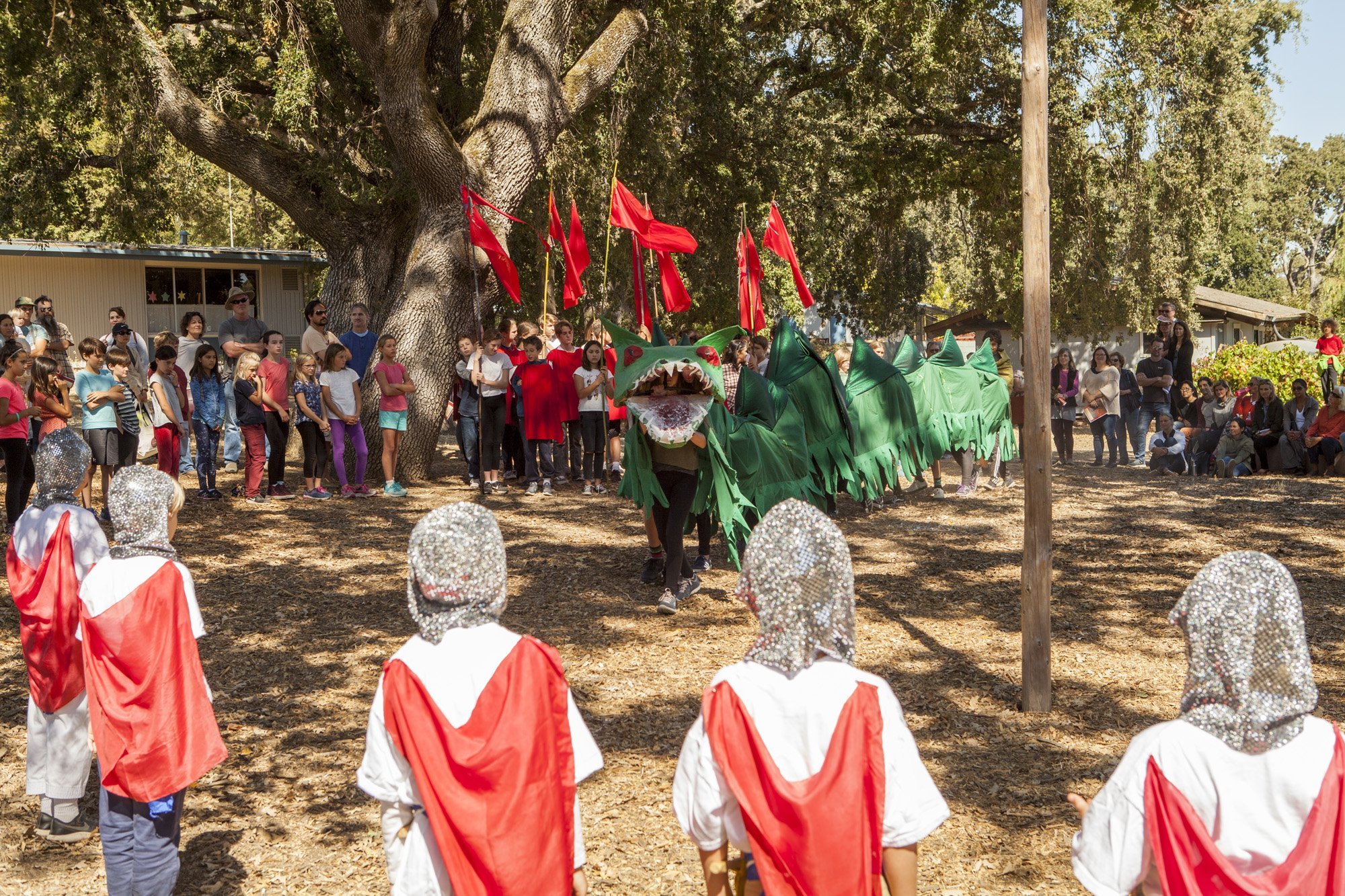
At Marin Waldorf School, we come together to celebrate the autumn season, feel the warmth of our community, and kindle our inner light at the annual Michaelmas pageant, held in late September. The first festival of the school year, the pageant recounts the story of Saint George and the battle between the archangel Michael and a dragon. Through songs and verses, the children introduce us to the story, playing the roles of farmers and blacksmiths of the village, brave knights, and the dragon itself—played by the 7th grade class—who appears amid a cloud of smoke and marching to the rhythm of a beating drum. 

The pageant is performed by grades 2 to 8, with each class taking a role that is assigned to their grade; in this way, as children grow older, they will play every role in the pageant—making the experience a rite of passage year after year. As with many of our festivals, the lessons of Michaelmas are also intertwined with the curriculum. 

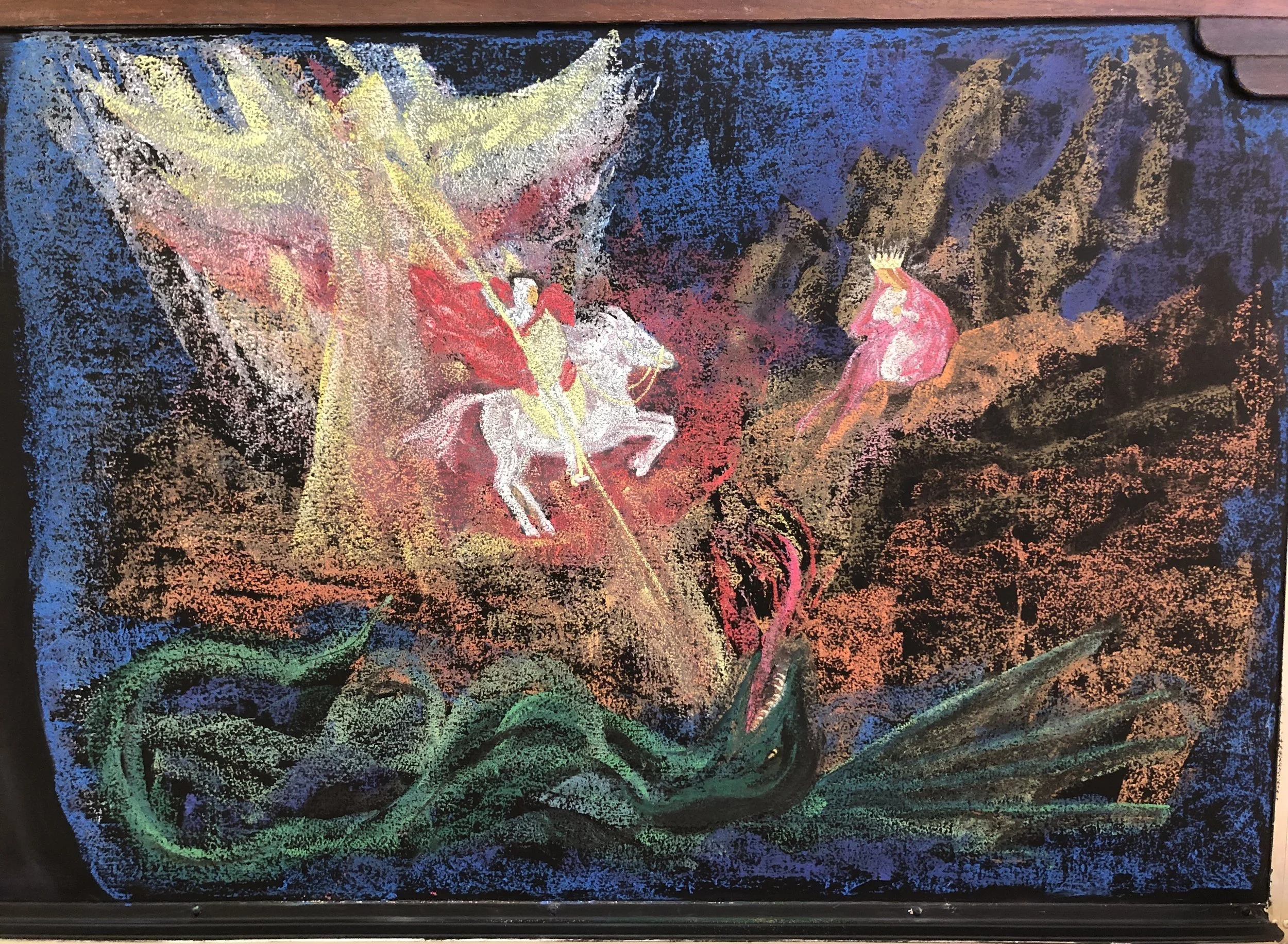
As the school year begins, second graders, who play an important role in the pageant as the brave knights who tame the dragon, hear the story of Saint George, who, with the courage and strength of the Archangel Michael, defeated a fearsome dragon that had destroyed the land and killed animals and people. (See some of their beautiful artwork illustrating the story below.)

Second graders also learn about Michael’s qualities of courage, compassion, and steadfastness as part of the larger second grade curriculum, throughout which they study the lives of inspiring people from around the world. 

As part of their preparation for the festival, each second grader prepares a wood sword to use in the pageant. “One of our amazing families made beautiful swords for the second graders,” says second grade teacher Ms. Terziev. “Today each student began sanding a sword. Once they have sanded it to their satisfaction, they will oil and polish it. When they are all finished, the students will receive a sword that someone else sanded and oiled and polished.”

Ms. Terziev’s students have also begun putting these values into practice at home. “The children are supposed to choose something they don’t normally do around the house and complete it weekly. Nolan chose to make dinner for our family,” shares second grade parent Kim. “It is as much a challenge for the parents to allow the children to do more!”

The robust way in which students are taking up the task has proved its appropriate. “Even little brother is helping. Nolan said, ‘mom and dad are off tonight’ with a giant smile on his face. They are so proud of themselves. Such a gift to us as parents to watch them be so able and feel so good.” 

In her beautiful reflections on Michaelmas (which you can read in full here), Ms. Terziev writes, “The timeless archetypes of courage overcoming destruction, good conquering evil, and love replacing fear are encompassed in this powerful story—soul food for the second grader, who is beginning to experience the feeling of separation from the oneness of early childhood. We want to help the developing child create an inner picture that can live and grow within them, throughout their life; a picture of the human being who is able to overcome fear. But, it is not only the second grader who needs this picture. In these uncertain times, we all do.”

To that end, students across the school community are engaging with the angel and the dragon, and observing the season in their classes. In 8th grade, Ms. Percey asked the class to closely observe Andrew Jones’s work “Harmony of Dragons” (pictured below). 

“This image is the artist's depiction of remaining calm in the eye of the storm—the dragons therefore represent fear and anxiety or whatever might come your way to throw you out of balance,” explains Ms. Percey. She then gave students this assignment: 


Inner World:

What might these dragons represent for you? What throws you out of balance that you need to “tame” and remain calm in the eye of the storm?
Outer World:

What do you think is at the root of throwing the world out of balance? (Nature or Society) Can you identify one thing that the world needs to “tame” or hold back so that greater balance can be achieved?

In art class, you will choose one of your above answers and create a dragon that depicts one of your answers above.

As the nights lengthen and the weather begins to cool, it is time to shine our inner light, finding the courage and strength to carry us through the darkness of the winter months.  We look forward to seeing you all at the Michaelmas pageant this year!

Read More
Michael Belcher Michael Belcher

Michaelmas Time: Kindling the Spirit

The Michaelmas festival plants a seed in our souls, a picture of courage and strength, that can take root and grow through the autumn and winter. We can return again and again to the symbols this festival presents and benefit from their abundance all winter long.
By Mia Terziev

Ahead of the Michaelmas pageant on Friday, September 29, second grade teacher Mia Terziev shared these beautiful reflections on the meaning of the festival and the spirit of the autumn season. We hope you will hold these thoughts in your heart and mind at the Michaelmas pageant next week.

At the beginning of the year in second grade, we heard the story of Saint George, who, with the courage and strength of the Archangel Michael, defeated a fearsome dragon that had destroyed the land and killed animals and people. This selfless act, and the courage with which George faced the dragon, is true inspiration for the students. The timeless archetypes of courage overcoming destruction, good conquering evil, and love replacing fear are encompassed in this powerful story—soul food for the second grader, who is beginning to experience the feeling of separation from the oneness of early childhood. We want to help the developing child create an inner picture that can live and grow within them, throughout their life; a picture of the human being who is able to overcome fear. But, it is not only the second grader who needs this picture. In these uncertain times, we all do.

In the cycle of the year from spring to autumn it is easy to feel connected with nature, with the light and warmth and beauty of the outside world all around us. We can be deeply affected in our souls by these external forces—they can lift us up and give us inspiration for growth and activity, make us feel happy and productive. When the season changes in autumn, the outside world provides less and less light and warmth. From this moment, the darkness of night grows longer. Our inner lives are now in opposition to nature. But, there is beauty, there are riches, there is a life beyond nature's cycle of death and decay. When nature turns towards her great sleep, we do not want to mirror in our souls the cold and ice of winter. We must kindle the forces of light and warmth within ourselves.

At this turning point in the year, the moment between midsummer and the winter solstice, we can look up to a being who stands for inner light and inner warmth, for inner forces of the soul that cannot be affected by the dark and cold outside. A symbol of this resistance against inner coldness and darkness is the Archangel Michael, the fighter against the dragon.

The traditional picture of Michael fighting the dragon represents the opposition between the spiritual and material tendencies in the human being. Michael wants us to awaken to our inner light, our inner strength and courage to overcome the one-sided nature of materialism. We have the freedom to kindle this inner light—our eternal nature—in times of darkness. This is not an easy task, especially in the winter when nature grows cold and dark.

The Michaelmas festival plants a seed in our souls, a picture of courage and strength, that can take root and grow through the autumn and winter. We can return again and again to the symbols this festival presents and benefit from their abundance all winter long.

Can we use the image of Michael conquering the dragon to inspire our daily striving against negative thoughts, self-doubt, unhealthy activities, etc.? Can we find the courage to let love overcome fear and anxiety? Can we see the shining rays of Michael's sword in the winter's darkest days? This is our Michaelmas Challenge.

To read more about how our students prepare for the Michaelmas pageant, click here. We hope to see you at the Michaelmas festival on Friday, September 29.

Read More
Middle School, Field Trips Michael Belcher Middle School, Field Trips Michael Belcher

Service work and adventure in 8th grade

“I am so grateful that Waldorf education encourages us to learn in this way, to be adventurous, and to be of service to our greater community,” says 8th grade teacher Rising Percey.
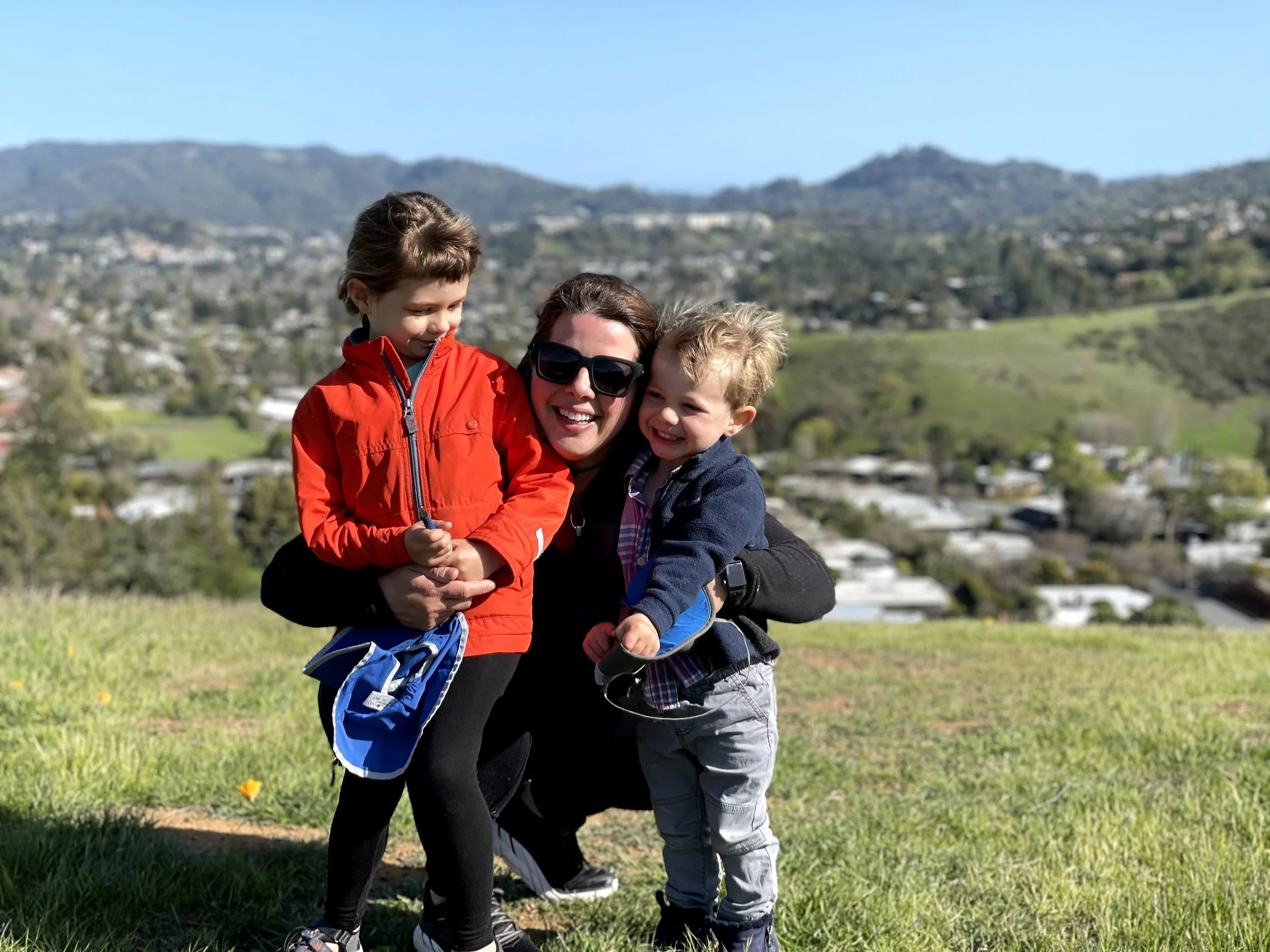
How our class of Waldorf 8th graders bond, laugh, learn

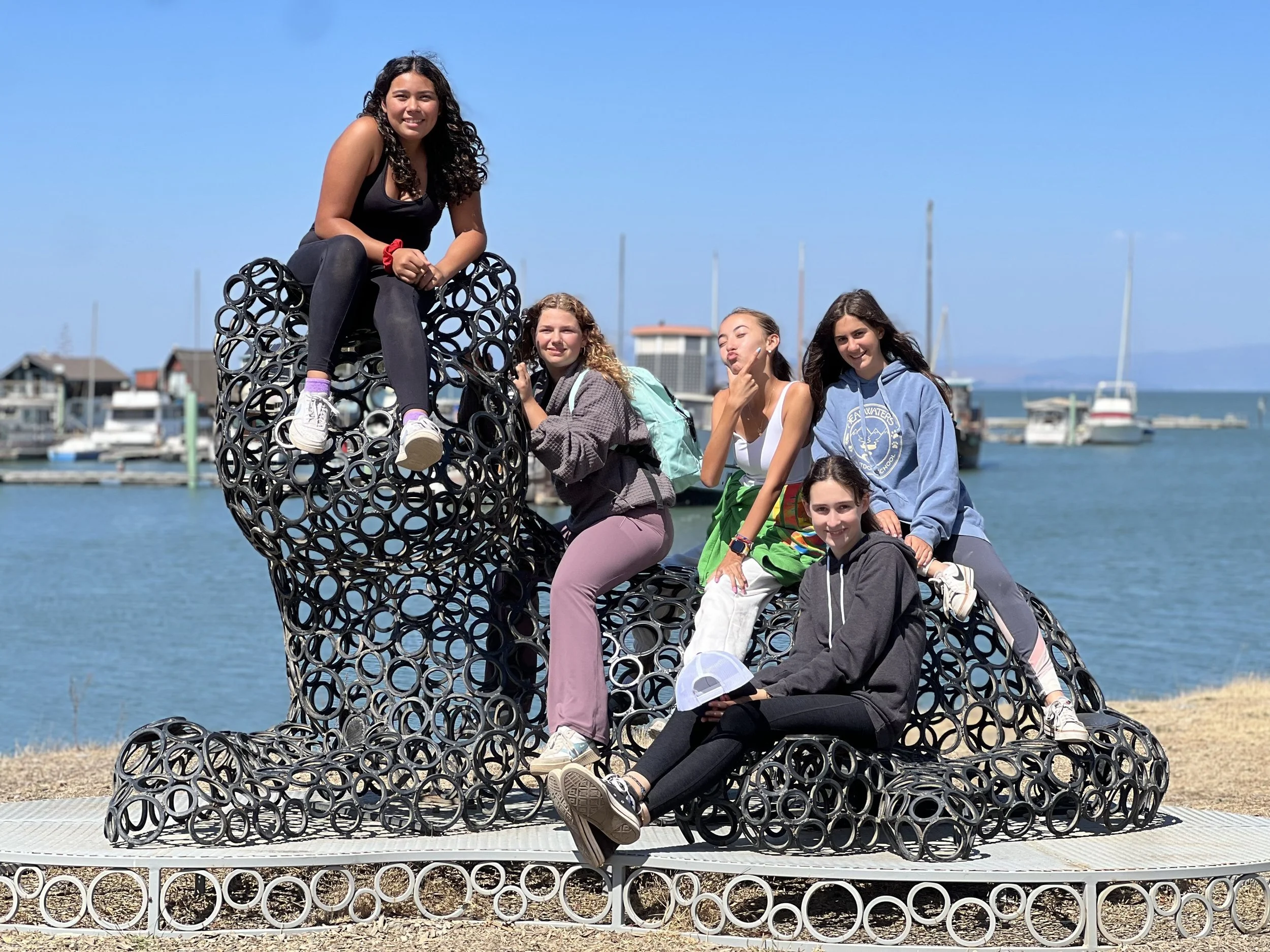
“The 8th grade was quite busy last week engaging in service work and adventure,” writes teacher Rising Percey, who led the Class of 2024 on a series of field trips and learning projects across the Bay Area last week. 

On Monday, the group participated in a service project at Lake Merritt in Oakland and camped overnight at Lake Chabot in Alameda County. On Tuesday, they headed off to volunteer at the Alameda Food Bank, followed by a sailing trip in Sausalito on Wednesday. On Thursday, the class spent the day at Green Gulch Zen Center in Mill Valley, learning more about this unique community and helping to harvest food for donation to the SF-Marin Food Bank. They concluded the week in Richmond at the Rosie the Riveter WWII Home Front museum, jump-starting the American history curriculum.

“I always like to start the year with camping and plenty of time outdoors to bond, laugh, learn experientially—and get at least a little dirty,” says Ms. Percey. And the class of 2024 did just that! 

Over five days, the 8th grade class:

  • Picked up 20 buckets of trash at Lake Merritt.

  • Painted, played, and hammered at Adventure Playground in Berkeley.

  • Camped at Lake Chabot.

  • Helped pack hundreds of food boxes and meals at the Alameda County Community Food Bank.

  • Visited the Port of Oakland (as a part of our studies of World Economic Geography)

  • Harvested 25 boxes of fresh vegetables at the Green Gulch Zen Center to be donated to the Marin Food Bank.

  • Meditated in the Zen Center’s Zendo. (Thank you to MWS 3rd-4th grade parent Steph Blank for guiding the day!)

  • Visited Rosie the Riveter WW II Home Front museum and national park in Richmond.

  • Ended the week climbing, swimming, and playing at Point San Pablo Marina.

“We are now fully immersed in the school year and ready to focus,” says Ms. Percey. “I am so grateful that Waldorf education encourages us to learn in this way, to be adventurous, and to be of service to our greater community. We built connections with each other and with the world that will stay with us forever.”

See more photos of their amazing adventures below!

Read More
Michael Belcher Michael Belcher

Meet Julia McIlroy: Bringing Magic to Middle School Math

Marin Waldorf School’s marvelous math teacher, Julia McIlroy, has always been drawn to mathematics and sciences, but she’s also seen the world from many other perspectives: as a teacher, as a prison volunteer, as a public defender, and as a mother. Read more about her here.
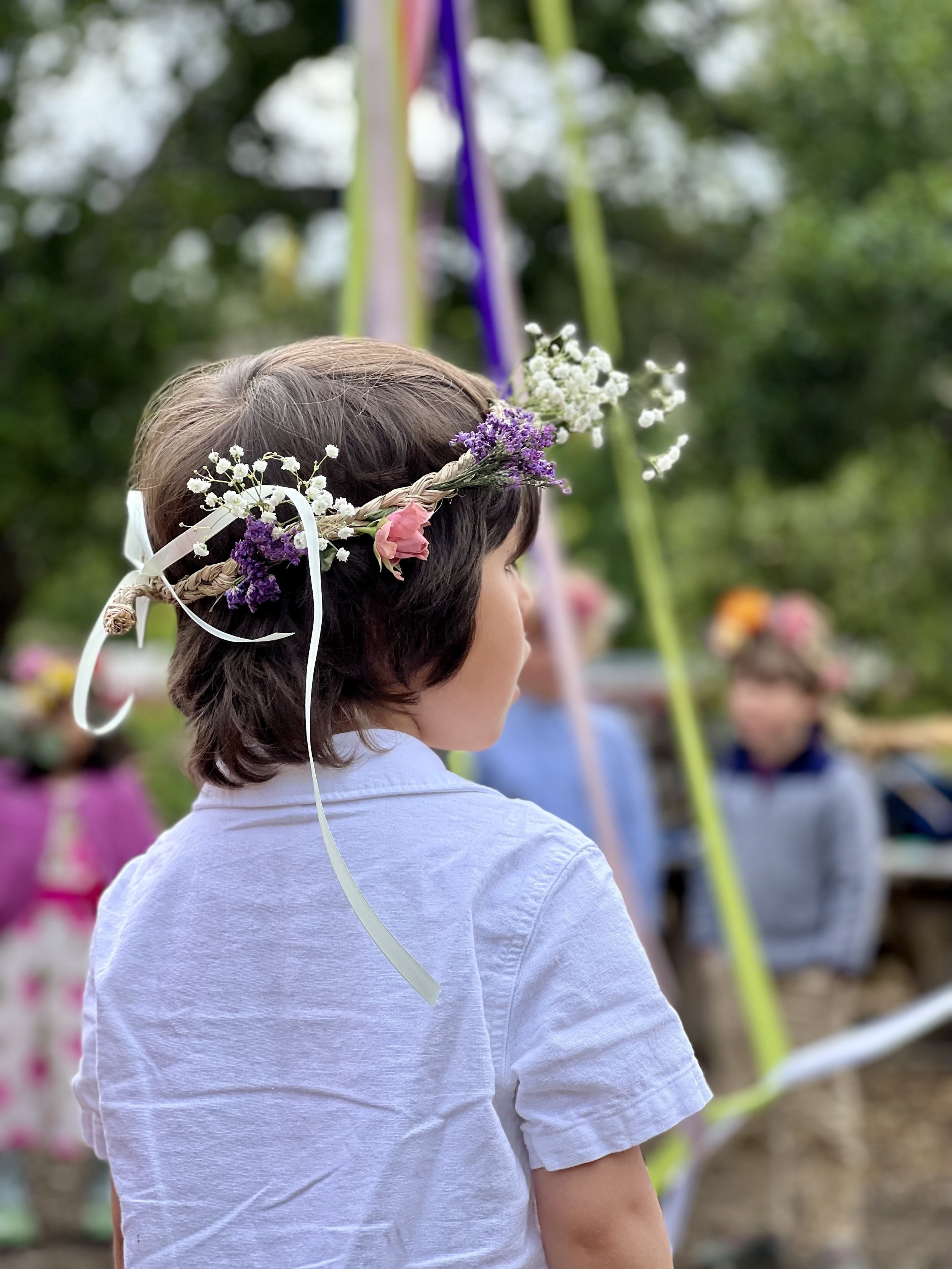
Marin Waldorf School’s marvelous math teacher, Julia McIlroy, has always been drawn to mathematics and sciences, but she’s also seen the world from many other perspectives: as a teacher, as a prison volunteer, as a public defender, and as a mother. As a graduate of Summerfield Waldorf School in Santa Rosa (which she describes as a “beautiful experience”), Ms. McIlroy learned to have a complex view of the world—and that’s just what she thinks the best students can bring to STEM fields. Learn more about her upbringing, her Waldorf education, her life as a public defender, and her approach to math education in the interview below.

Let’s start by talking a little bit about your childhood and education. Where did you grow up?
I grew up on a vineyard outside of Healdsburg, before Healdsburg was posh. My grandpa was a cardiologist, but he had a dream of owning a vineyard, so in the 70s he bought forty-five acres along the Russian River and transformed it into Chardonnay, Zinfandel, and Pinot Noir grapes. So that’s where I grew up—wild and free, roaming the countryside and playing in a winery.

My mom is a microbiologist and food chemist, so she was working when I was young and they had to find a school for me. They eventually found Summerfield Waldorf kindergarten. I remember the first time I visited the kindergarten: the classroom was so warm and inviting. You wanted to stay there for the rest of your life. 

My mom knew immediately that this is where we were supposed to be. My dad was not so convinced. But he came along. Eventually they both ended up going through the Waldorf teacher training and my mom is now a special education teacher. 

I remember kindergarten vividly: making soup and honey buns, building fairy houses in the field, and climbing trees and rocks. I still have the birthday book of drawings from all my classmates! 

I went to Summerfield through 12th grade. It was a rich experience and prepared me so well for college and law school. In fact, college felt a little easy after my rigorous high school classes. In high school, I read Emerson and Thoreau, studied Russian literature, and every year took physics and chemistry. The early and middle grades were similarly rich and I developed a deep love of learning and a strong foundation that is still benefiting me today.

Where did life take you after high school?
In high school, I had amazing teachers and I wanted to do and be everything. My biology teacher was particularly inspiring, and I thought I was going to be a biologist or maybe a doctor. Then I went to college and I really loved learning about people and how people worked, so I became more interested in psychology and sociology. There was a program that was asking for volunteers to go to prisons and interview women who had been battered. A new law at the time allowed for women who had been battered to have their sentences reduced. Our job was to go into the prisons and take their entire life history.

First of all, it’s so hard to be in a prison. Even visiting for a few hours is awful. And then the women would share their life history with me. Every one was a life of trauma and abuse that started at a young age. And then they would encounter the legal system, and the legal system would essentially do the same. They were punished for having lived a life of abuse. It was traumatizing, just hearing it. I felt I had to help. I couldn’t let the system just keep going as it was.

So I went to law school and I became a public defender. I did that for many years. What I learned is that you can help individual people, but it’s much harder to change the system. I’d keep seeing the same situations — and even the same clients — over and over again, and every time I felt that, yes, I can make this person feel seen and heard, but I can’t affect the entire system. At some point, it becomes a burden. It weighs you down.

I was teaching all along, but I think that’s really why I started spending more time teaching. Because teaching is a creative, hopeful exercise. Helping students reach their potential was healing in so many ways.

What other teaching jobs did you have?
I worked in the math department in college, and I worked as a high school substitute teacher and remedial teacher. When I was a public defender, I worked at Empire College in Santa Rosa teaching paralegals. And I helped create the San Rafael High School mock trial program.

There’s a really active mock trial program in the county, but San Rafael High School didn’t have one. We want more diversity in the legal profession, but if we exclude one of the schools in Marin that has a lot of diversity, you’re missing an opportunity. So we decided to start a mock trial program to get more students of color engaged and so they know that law is a possibility for them.

The students were remarkable—better than many attorneys that I knew. That’s how good they were! Every year there is a mock trial competition in Marin in front of real judges where the high schools compete against each other to go to the state championship. I encourage my students in middle school to go see it, because if they go to high school in Marin, they can participate.

So let’s talk about middle school! As a teacher, how do you approach math?
I am passionate about math education. My number one goal is to keep students interested and engaged in math so they will continue on with it in college and beyond. I want to have as many of our students go into STEM fields as we possibly can. Our students have a complex and ethical view of the world—I think having them in science and technology is really essential for our future. 

Math education hasn’t changed in over 100 years. The timing has changed: Schools keep shifting the curriculum younger and younger because they think that will prepare students for harder math, but it’s actually backfiring. What colleges are finding is that students aren’t actually prepared because they’re advancing in math too early and their brain development hasn’t caught up. 

If you look at the countries that are very successful in math, they often wait until kids are 7 years old to do any sort of formal math instruction. The other thing they’re doing is teaching math more conceptually. What I find is that once students figure out how to solve a problem, they’ll be able to repeat that problem 30 times. But they still won’t understand what it means. They can get a nonsensical answer and not even realize it because they’re not thinking conceptually.

How do I develop a conceptual understanding? What I do is encourage more problem-solving and active learning. I want them to be engaged in learning, so they have confidence in themselves to go out and solve any problem that they encounter. 

Part of that is having more complex work. Not just having worksheets with repetitive problems, but having complex tasks, where there are no immediate right or wrong answers. This prepares them for higher education and the workplace and keeps everyone engaged. If you have rich tasks, the students who may be behind academically can do something, and the students who are really high-achieving can take it to higher levels.

Unfortunately students believe that math is procedural work like times tables and fractions. While those are important, that’s not how math is in the real world. I went to a training at Stanford last week with a professor who is at the forefront of mathematics education, and changing mathematics education here in California and in the world. She told us about how she went to a PhD defense presentation in which there wasn’t even one number involved. It was for a PhD in mathematics, but there wasn’t even one number!

Math is really a creative, visual subject. But it is not taught that way. In fact, one of the most incredible mathematicians – she was the only woman to ever win the Fields Medal, which is like the Nobel Prize for math – would draw everything she was working on. Her daughter, who was 4 or 5 at the time, thought she was an artist because she was always drawing at the kitchen table. 

What we think of as math is not really what higher level math is. So I tell my students that just because you struggle with this one tiny aspect of math, it doesn’t mean that you can’t think mathematically and be a mathematician. It is so gratifying to watch my students become fully engaged in math and persevere with difficult material. Teaching is truly such a joy.

Interview by Julie Meade. This interview has been edited and condensed for clarity.

Read More
Michael Belcher Michael Belcher

May Flowers 2023

Our annual May Faire was a beautiful day of music, togetherness, and warmth—despite the chilly winds that visited the oak grove during the dancing! Our students performed beautifully and the audience was greatly enhanced by the presence of alumni, grandparents, and special friends.

Our annual May Faire was a beautiful day of music, togetherness, and warmth—despite the chilly winds that visited the oak grove during the dancing! Our students performed beautifully and the audience was greatly enhanced by the presence of alumni, grandparents, and special friends. As part of the preparation, every child braids and decorates a flower crown to wear to the festival. (This year, grandparents and visitors were also invited to make crowns at the community table.)

Preschool and kindergarten students also make crowns (with some grown-up helpers) and kindergartners get practice dancing the may pole at their own smaller May Faire festival in the kindergarten yard. As first graders, they’ll participate in the all-school festival.

After their own May Faire, many preschool and kindergarten families joined us in the oak grove for the main event. Accompanied by the 7th-8th grade orchestra, students in grades 1-8 danced around the may pole in increasingly complex patterns. Our faculty also dances with alumni guests—always a highlight as we welcome back recent graduates who join us for the event. This year, we added a new group to the dancers: parents, grandparents, and special friends.

Many parents volunteers contributed to making this event so beautiful—every contribution, big or small, is deeply appreciated and makes our school what it is.

Thank you to parent Steph Blank for the beautiful photos of the day!

Read More