
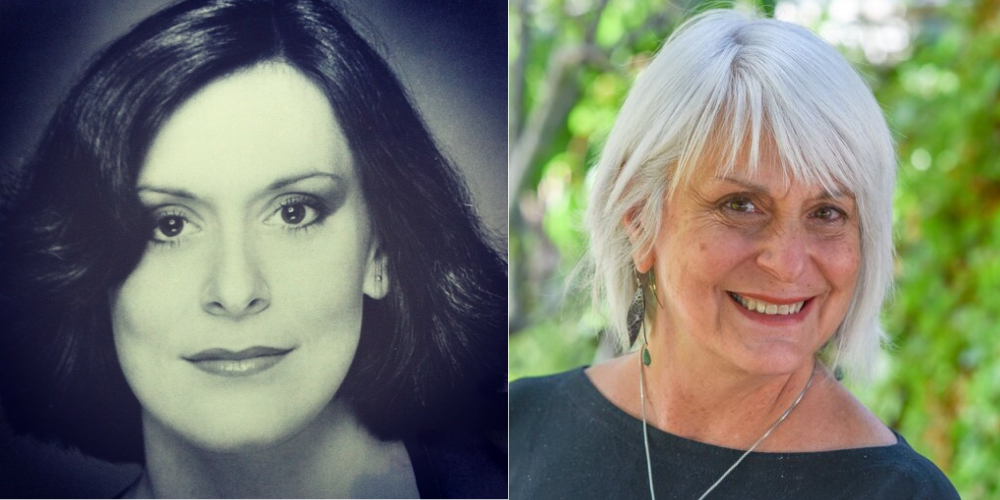
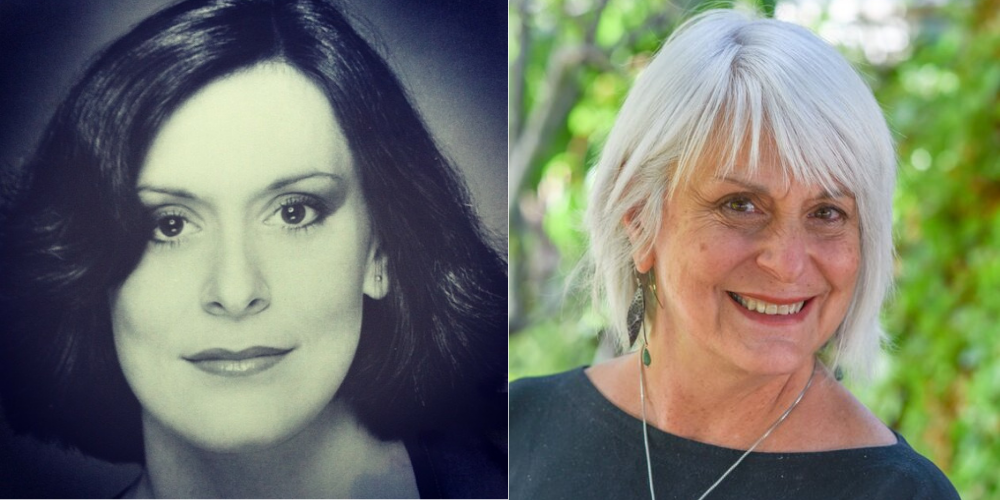
Meet Dena Malon, Our Magical Grades Director
Today, we are beginning a new (mostly) weekly column in our school newsletter and on Grandmother Oak, focused on stories, lessons, and insight from our faculty and staff. For some, becoming a Waldorf teacher is a lifelong calling. For others, a more unexpected and circuitous path led to our school. We want to share these stories, as well as lessons and stories from our students in each classroom, from preschool to 8th grade.
Today, we are beginning a new (mostly) weekly column in our school newsletter and on Grandmother Oak, focused on stories, lessons, and insight from our faculty and staff. For some, becoming a Waldorf teacher is a lifelong calling. For others, a more unexpected and circuitous path led to our school. We want to share these stories, as well as lessons and stories from our students in each classroom, from preschool to 8th grade.
Fittingly, we begin the series with an interview with our grades director, Dena Malon, whose life began in New York City, where she grew up the daughter of a professional magician—”an immaculate showman,” as she describes him—and eventually brought her to Atlanta, back to New York, and then to Northern California.
A former actress, a native New Yorker, and a longtime Waldorf teacher who joined MWS in the 2019-2020 school year, Dena Malon took the new role of grades director for 2020-2021. In the first month of school, she’s already taking a hands-on approach to the role, teaching lessons, mentoring teachers, and working directly with students in and out of the classroom.
How did you become a Waldorf teacher?
I was an actress, a long time ago. I’m from New York, and I trained there. Then I moved to Atlanta where I had a successful acting career. I became the artistic director of an educational theater company, because I always believed there were therapeutic and healing aspects in drama. I started working with children and senior adults and people in prisons and in all different kinds of communities, helping them to open up to the creativity within themselves.
Then I started working in schools primarily, using drama to help students, in grades kindergarten to college, learn how to communicate better, to write more effectively, and to become more engaged in what they were learning. Imagining opens you up, and when you write, you’re just writing down what you have imagined. So it’s very effective. I did a lot of training for teachers in using drama to enhance the curriculum and classroom management.
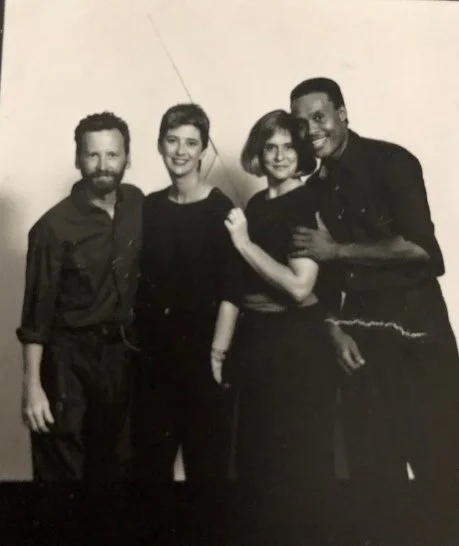
I also created issue-oriented plays that explored sexual abuse, watching too much television, uncovering your own creativity. I was the artistic director of a theater company [pictured left] and our company toured all over the southeast, bringing the arts to education.
I first read about Waldorf education in Mothering Magazine, before I had children, and I thought, This sounds incredible. Years later, I had a three-and-a-half-year-old and a newborn, and we were driving down the street and there was a sign for “The Children’s Garden: A Waldorf Kindergarten”—and I thought, oh my gosh, that’s that school that I read about. That was the beginning. I knew very little about it, but I could sense that something extraordinary was happening and I wanted my children to be a part of it.
After a few years, I knew I wanted to become more a part of it. I wouldn’t have become a teacher in any other form of education, but this was so creative, and so different, and it fascinated me—to learn about a different way of working with students. I became a first grade teacher when Max was in the third grade and Jack was in kindergarten.
How old are your sons now?
They are 28 and almost 32. And I absolutely adore them. They’ve been working remotely as creative directors for strategic communication firms for three or four years. In this capacity, they traveled all over the United States, Canada, and Europe. Jack, in particular, loves being in Mexico.
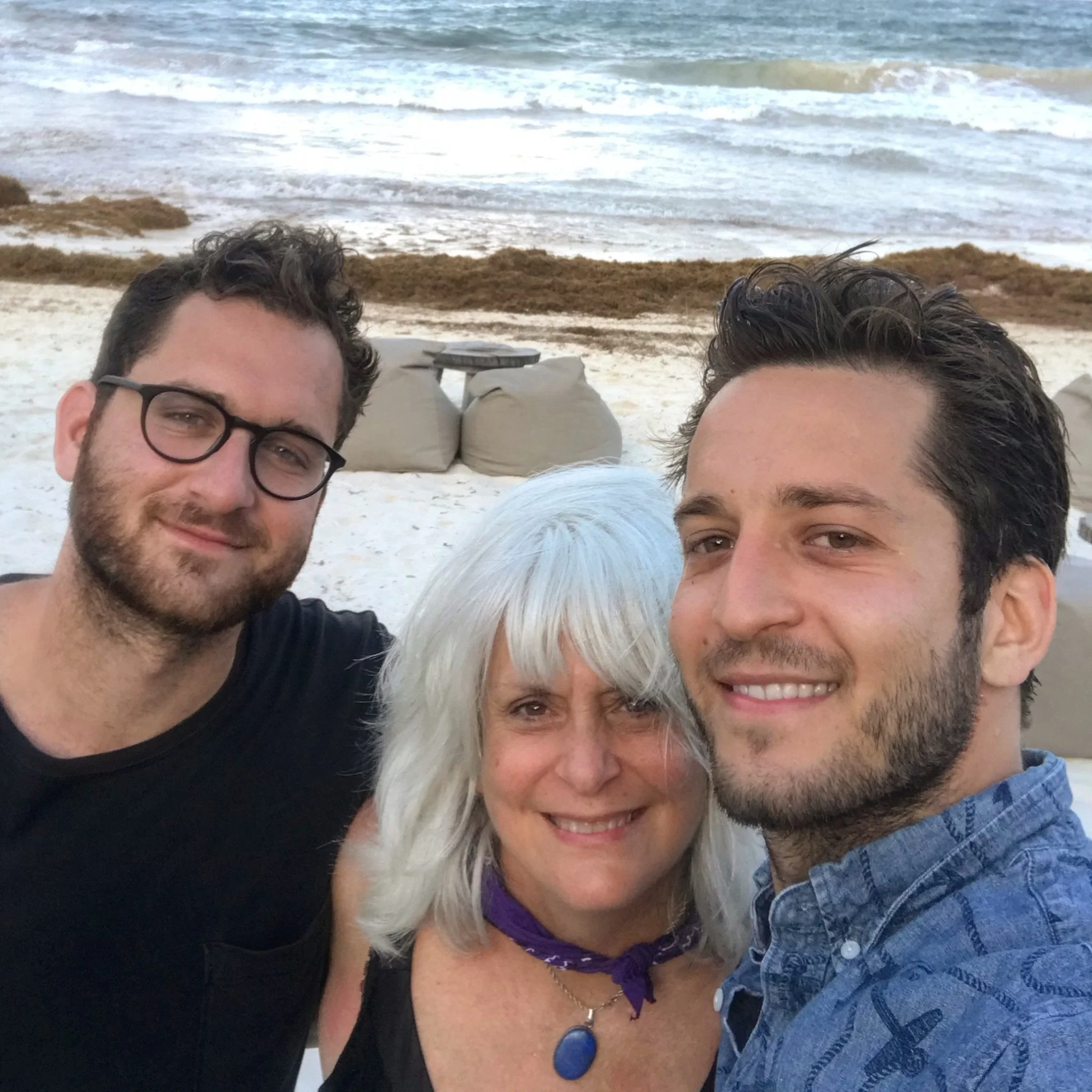
One of the most extraordinary times in my life is when I went to visit them when they were living in Tulum. We had beautiful dinners together, and the one day that they had to work when I was there they treated me to a “rebirthing experience” at a spa.
What was your childhood like?
My father was a magician. I grew up watching him perform. It was very exciting. When he did shows for children, I would get to go. He was an immaculate showman. I learned a sense of timing from him—to always leave the audience wanting more.

I always wanted him to call me up, to be one of the children involved in baking a magic cake. I would say, Please, call me up, I won’t tell anybody I’m your daughter! I just wanted to be under the spell. He never would. So when we got to the place in the act when I knew that no one else was coming up, I would say to whoever was sitting next to me, “That’s my father!”
I’ve often reflected on the fact that the first man in my life was a magician, who could make impossible things happen.
That’s very unique.
Right. So I thought I really need …
… to do something with that! I’d love to see what you do.
I have been working on a story about it.
Do you have any other ideas for writing projects?
I have been thinking about writing an imaginative one-woman performance that traces my own incarnations through history. I am married to one of the instructors from my Waldorf training, Thom Schaefer, who is the education director at Credo High School. When Thom was going to Israel to live and work—we were friends for a long while, before we were married—I told him to find the most beautiful spot in Jerusalem and shout out my name to bring me back, because I thought my story should start there, but thousands of years ago.
I love that. Did he do it?
Yes. He traveled a lot, and he began to call my name out in many places. He’d come back and he’d write me, or he’d call me, and he’d say, I was just in Turkey and I found this place… and he’d send me postcards from where he called my name.
How do you envision your role as grades director? What will you bring to our school?
Over the years, I’ve learned a lot through teaching the curriculum. I’ve taken two classes all the way through the grades, and through this, I’ve come to understand the support that teachers need.
Adult education is also important to me. I like talking to parents about the curriculum and how Waldorf schools operate. I am so grateful that at this time in my life I have been given the opportunity to share my experience with this community.
What’s something you’d like to share with parents about Waldorf teachers?
The teacher sees your child as who they are, right in front of them, but also their potential, for who they can become. You are working with the present and you’re also envisioning the future.
Finally, I wanted to ask, during this time—with the pandemic, the fires, the social unrest—any silver linings or takeaways?
We have the opportunity to learn to communicate in deeper ways. We are looking into each other’s eyes. Even unbeknownst to ourselves, we have to be more communicative with our eyes because that’s what we see. We’re learning to read more about each other, without the benefit of the whole face. Another benefit is teaching outside, which is something we will never give up!
With DEI, and the sensitivity that’s being brought up, this time is making us look at the curriculum and at our own attitudes. It’s making us even more conscious of who we are, which is very important— important for all of us.
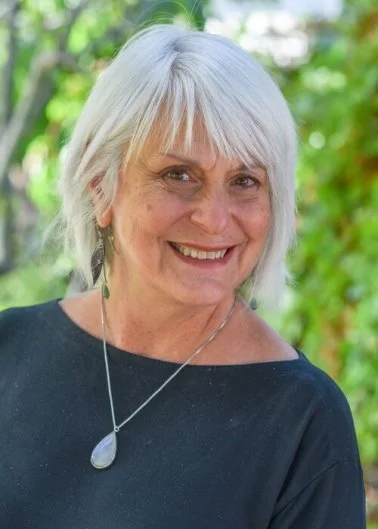
Dena Malon is the grades director at Marin Waldorf School. Thank you for sharing your story with us!
Interview by Julie Meade. This interview has been edited and condensed for clarity.
A Visit From Coast Miwok, in the Shade of Grandmother Oak
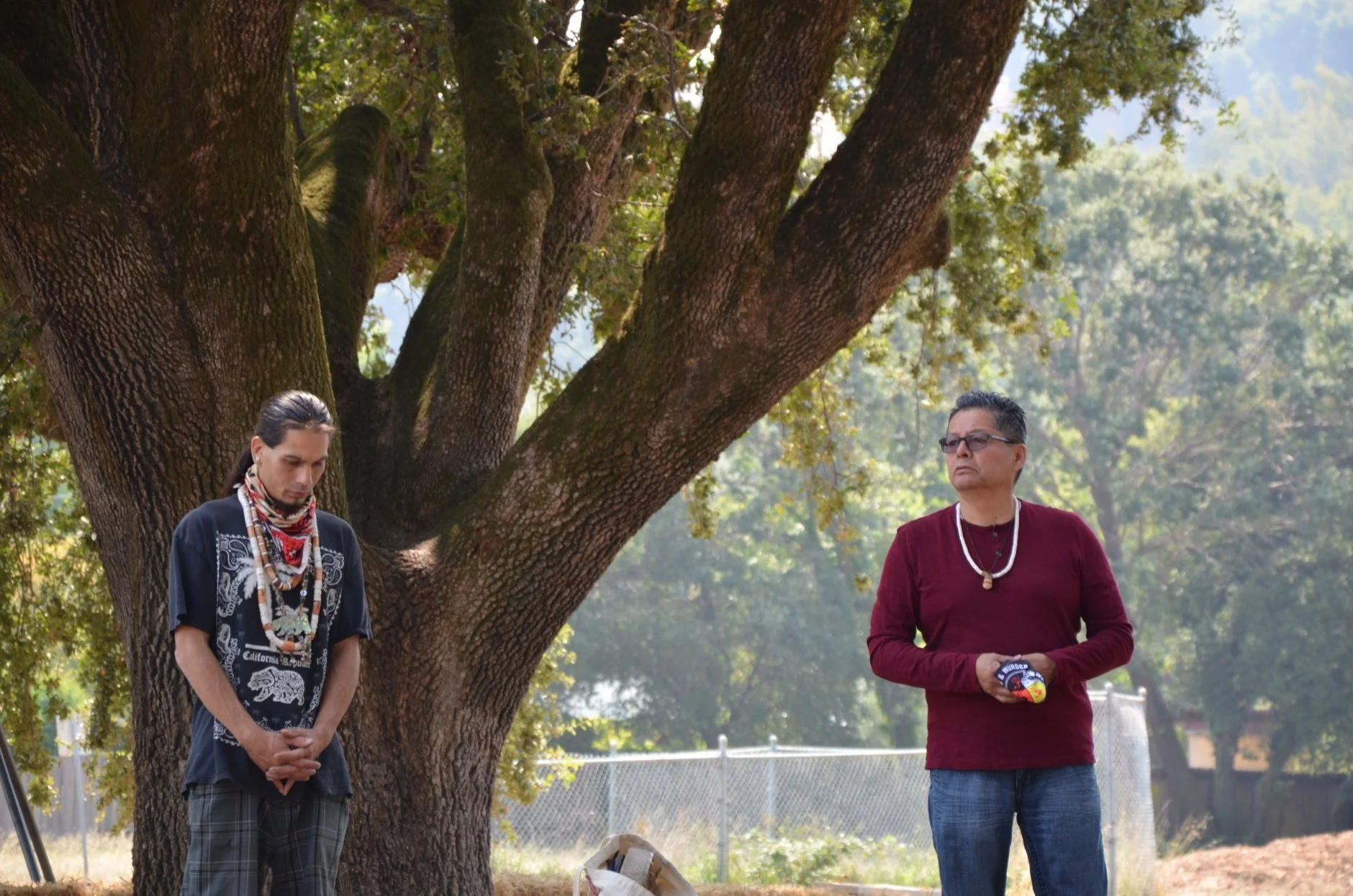
Yesterday, Dean and Jason, two representatives from the Coast Miwok Tribal Council, joined our faculty and staff on campus. We gathered in the shade of Grandmother Oak, where Dean and Jason spoke their truth, told us about their ancestors, shared their knowledge of the land, and invited us to reflect more deeply on the place we live, the land our school occupies, and the history we teach. It was a fitting start to a school year that will begin during a global pandemic, and one in which the natural world (particularly the beautiful valley oaks and bay laurel trees on our campus) will play an outsize role in our experience. To conclude, they joined us in a walk-through of our school’s outdoor classrooms, in preparation for our students’ arrival.
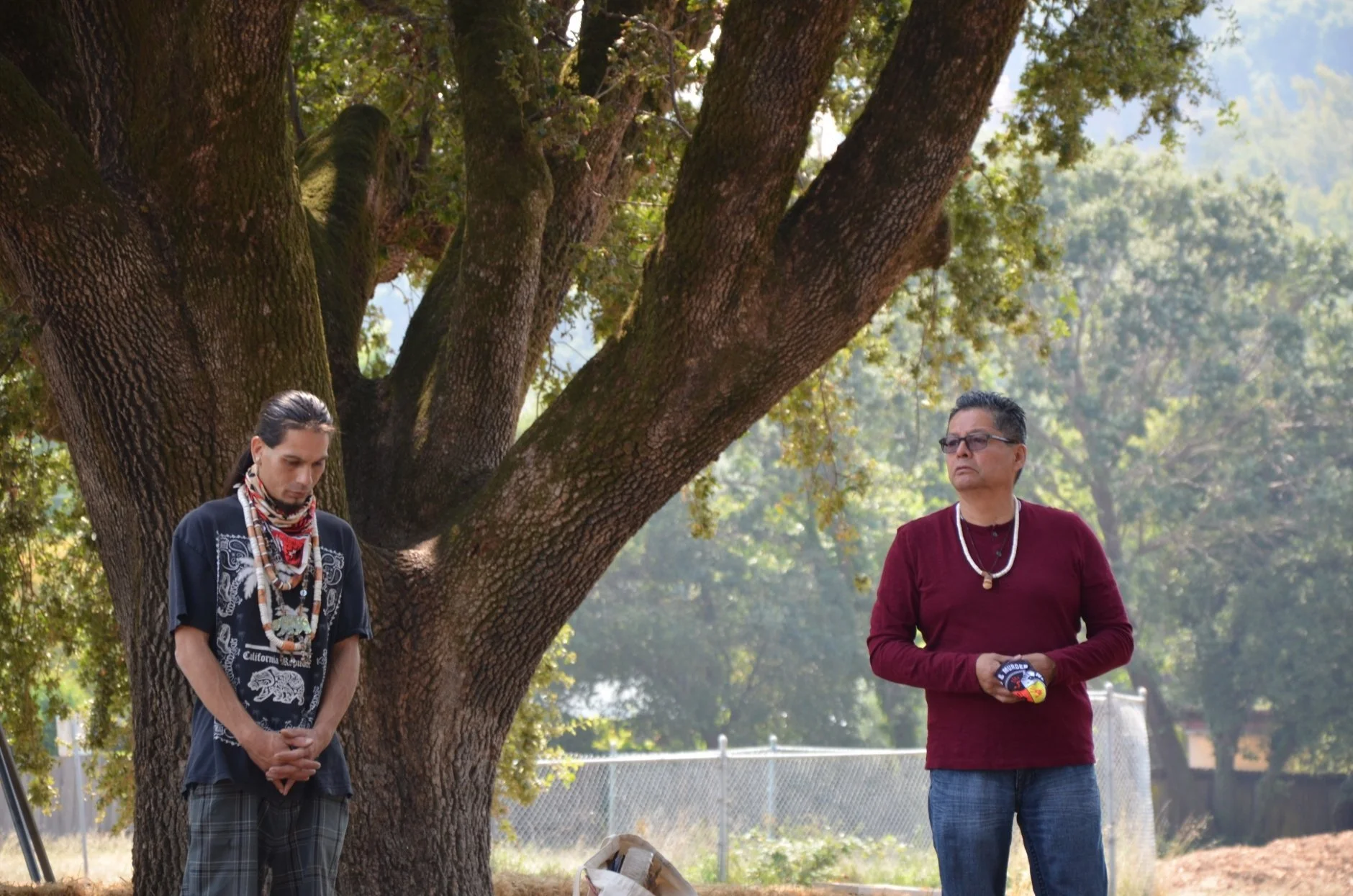
Yesterday, Dean and Jason, two representatives from the Coast Miwok Tribal Council, joined our faculty and staff on campus. We gathered in the shade of Grandmother Oak, where Dean and Jason spoke their truth, told us about their ancestors, shared their knowledge of the land, and invited us to reflect more deeply on the place we live, the land our school occupies, and the history we teach. It was a fitting start to a school year that will begin during a global pandemic, and one in which the natural world (particularly the beautiful valley oaks and bay laurel trees on our campus) will play an outsize role in our experience. To conclude, they joined us in a walk-through of our school’s outdoor classrooms, in preparation for our students’ arrival.
During the past month, our faculty and staff have been like busy bees, buzzing around campus (literally) with saws, drills, and pick-up trucks, assembling the outdoor classrooms. We have been ticking off the to do list and distributing Humanity Shields and hand sanitizer. We have been making safety plans and obsessively monitoring the air quality.
With so much to do, it felt impossible to slow down … until we were all gathered in the shade of the oak trees yesterday afternoon. Our guests, and the moment of reflection they inspired in us all, rejuvenated our mood, preparing us mentally and spiritually to welcome our students back to campus.
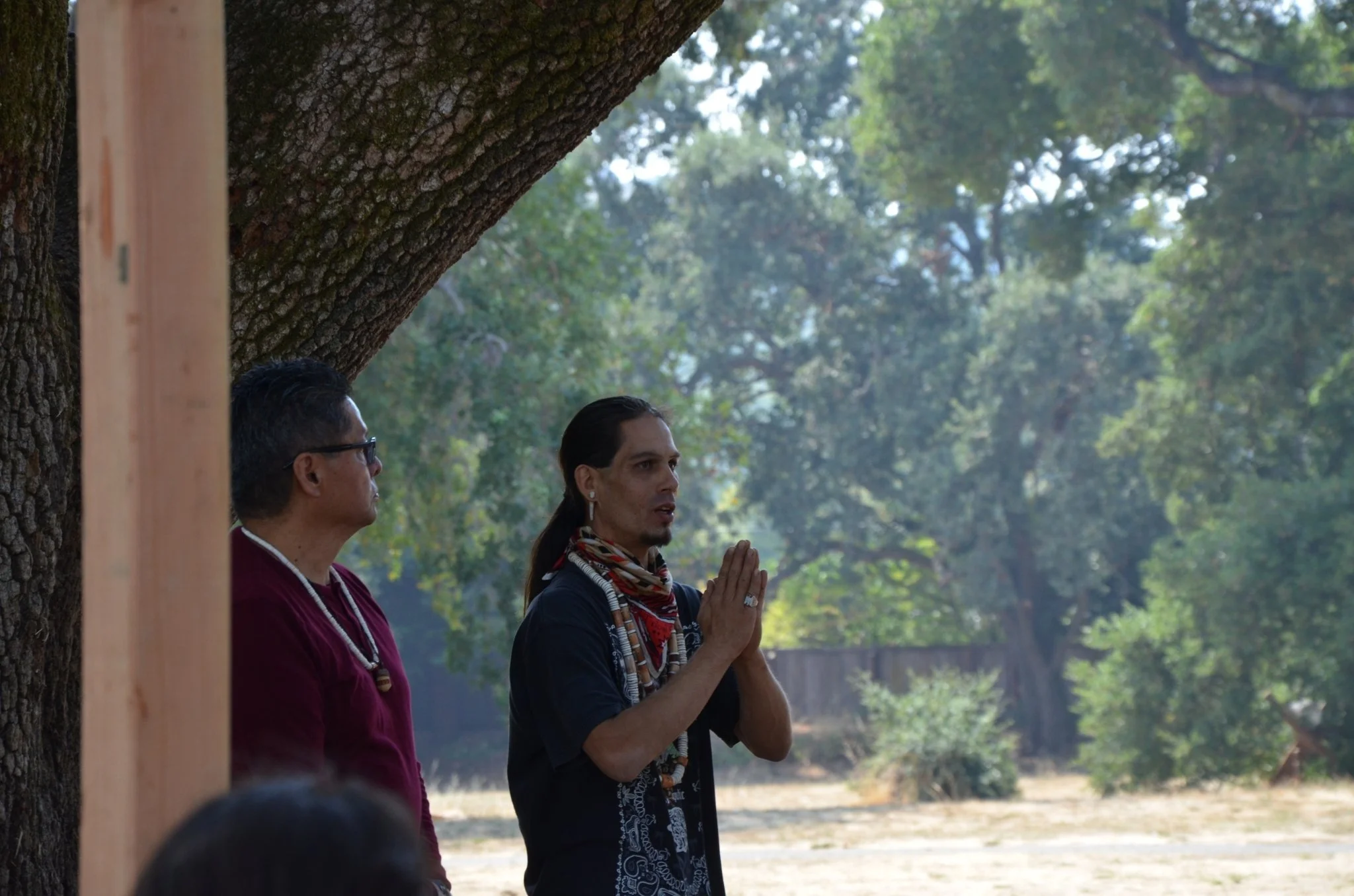
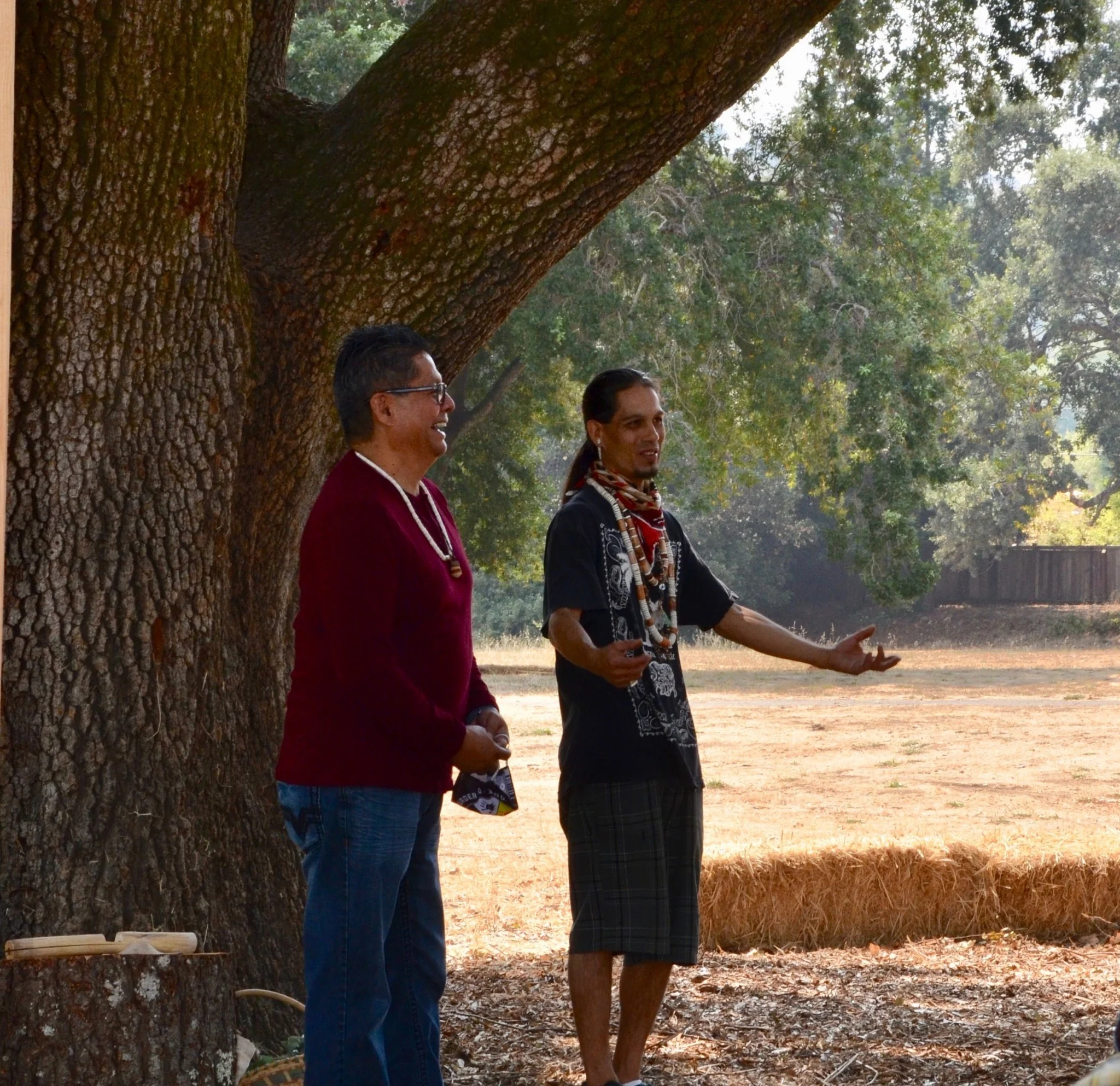
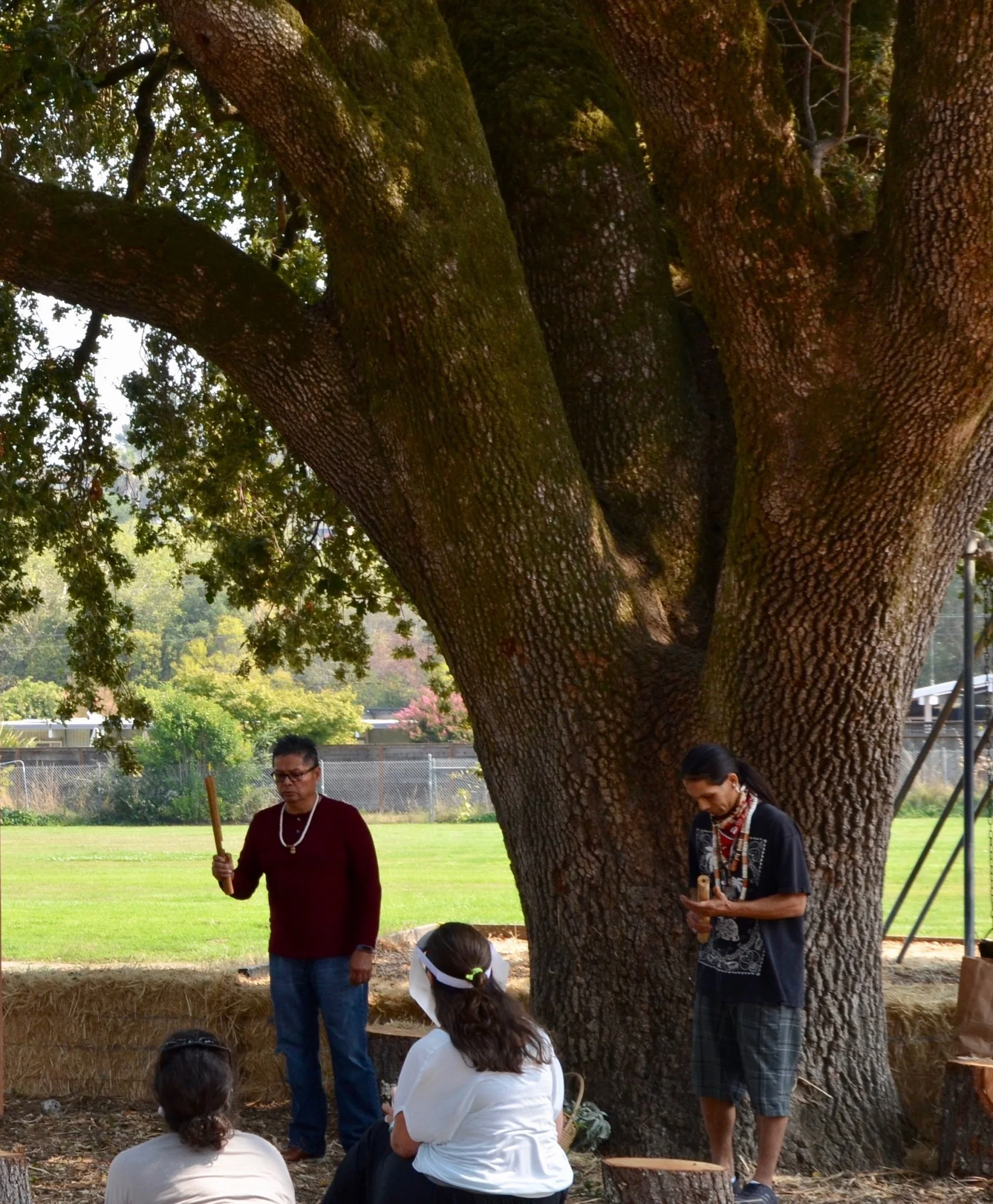
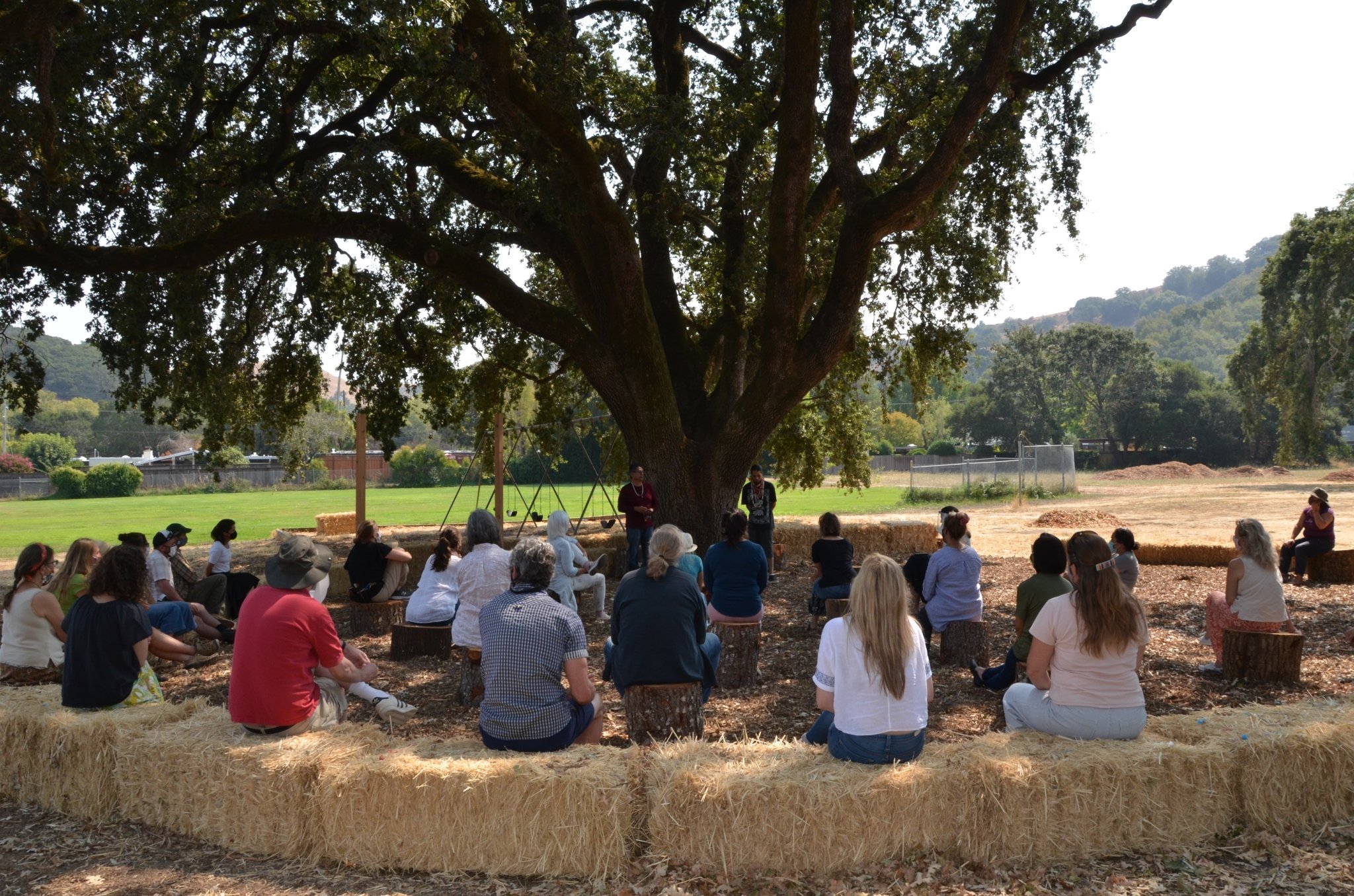
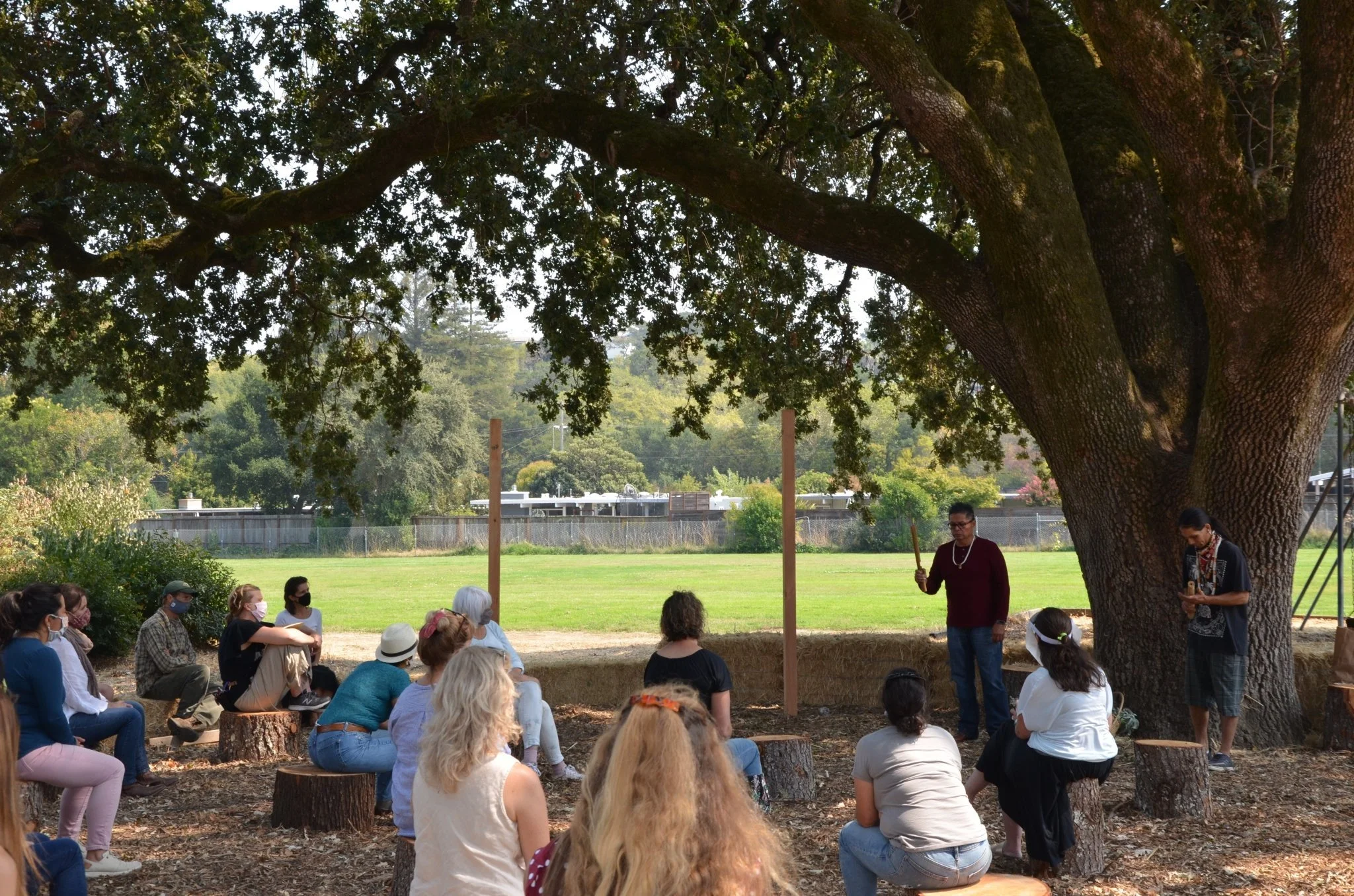
Dean and Jason, thank you! We hope we will continue to learn from you and the land this year, and into the future.
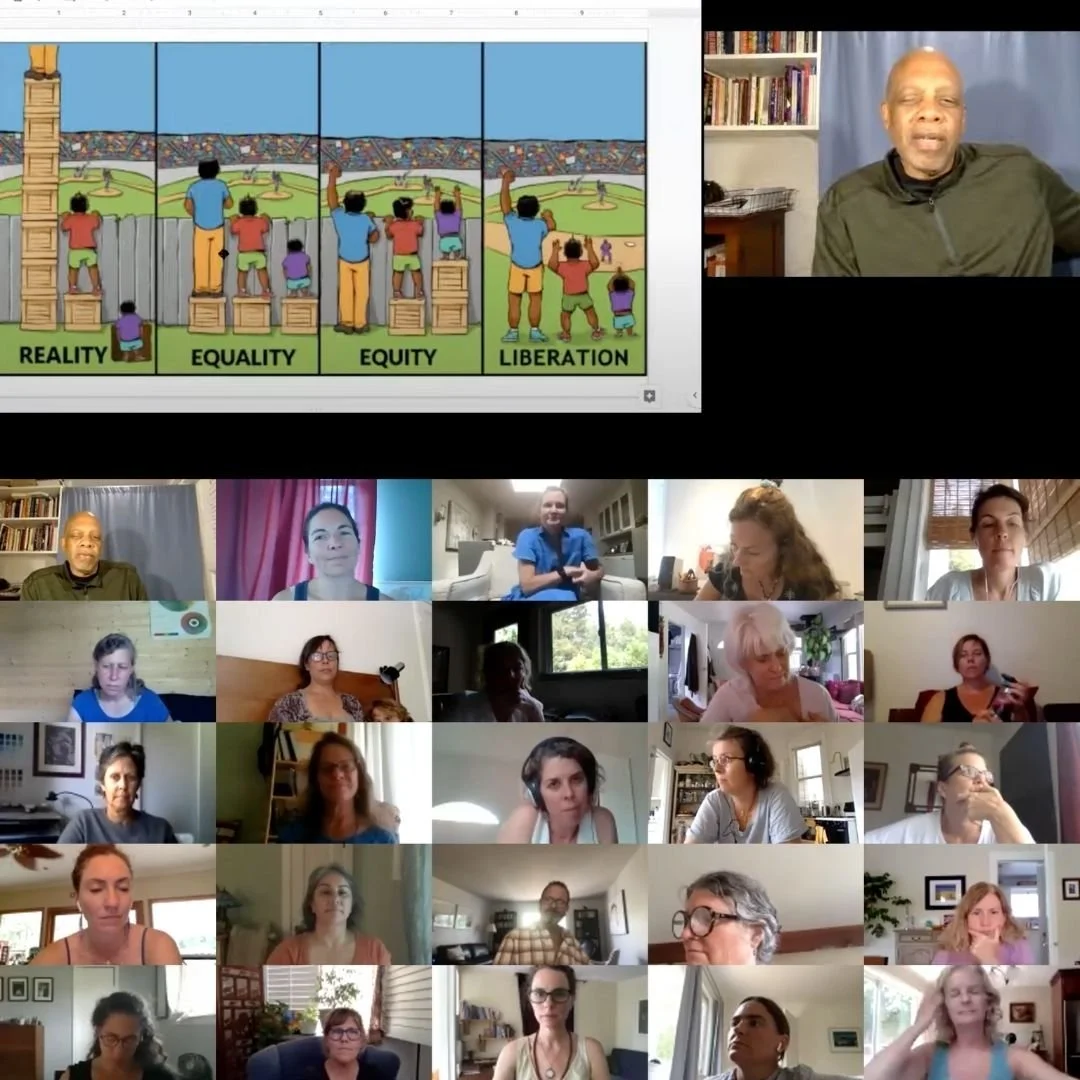
A Message From Our Diversity, Equity, and Inclusion Committee
As we mourn yet another senseless death of a Black man at the hands of police and continue to see the lives of Black, Brown and Indigenous people compromised and threatened, we are continuing to dedicate ourselves to the work of social justice and bringing your children an antiracist education.
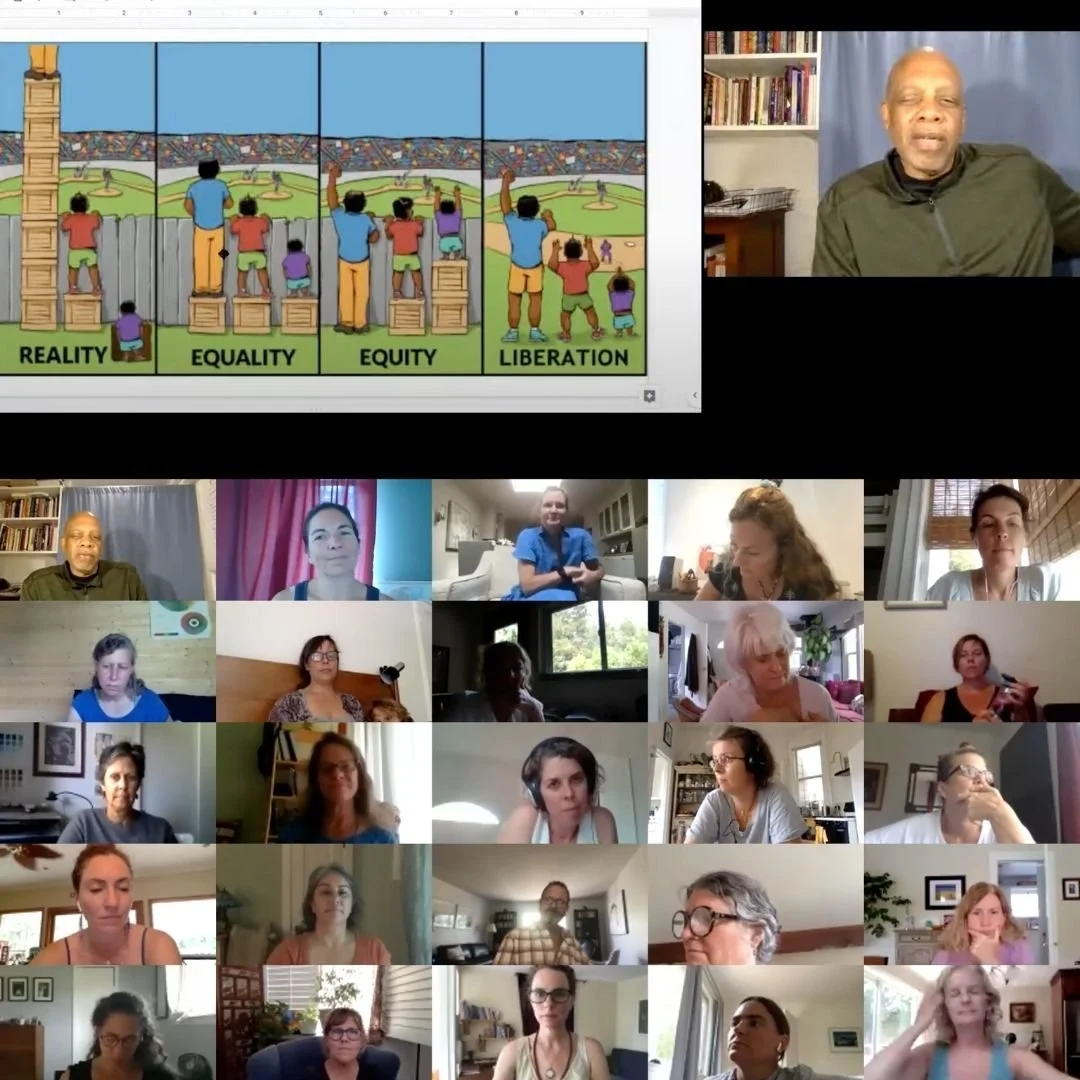
As we mourn yet another senseless death of a Black man at the hands of police and continue to see the lives of Black, Brown and Indigenous people compromised and threatened, we are continuing to dedicate ourselves to the work of social justice and bringing your children an antiracist education.
Our faculty and staff have taken up individual and collective work over the summer in looking at our curriculum with an equity lens, adding books to our libraries, creating or purchasing art that represents Black, Brown and Indigenous people, and developing ideas to broaden and strengthen our curriculum content. We have purchased crayons for each class which will broaden the capacity for different skin tones, and have watched a tutorial on how to use our colors for many various shades. But know that the work both continues and goes much deeper than that.
This summer, we welcomed Randolph Carter (bio below) to guide us through a DEI (diversity, equity, inclusion) training. As part of our DEI intensive, we read thought provoking articles, we took racial antibias tests put forth from Harvard University. It was an eye opening exercise we invite you to explore: https://implicit.harvard.edu/implicit/takeatest.html.
We looked at our own biographies and conversed about ideas related to bringing a strong antiracist education to Marin Waldorf School. Faculty and staff were grateful to share together and to deepen our understanding. We are pleased to announce that we will continue our relationship with Randolph, as we have brought him on board as an outside consultant to work with the DEI group, the staff and faculty, and the extended community.
We look forward to welcoming parents into the conversation in a formalized way, and in the meantime encourage you to reach out to us at dei@marinwaldorf.org with any comments and or questions.

As both the founder of East Ed and a member of the Black Panther Party, Randolph has devoted his career to promoting equity and diversity in education and communities. He is currently directing the campus diversity efforts at Portland Community College, Cascade Campus. He was a Fellow in the Harvard University School Leadership Program, Graduate School of Education, where he received a master’s degree in education with a school leadership qualification. He is currently a doctoral student in the School of Education Leadership and Change at Fielding University.
He was a middle school reading specialist, a school administrator, and while at the National Association of Independent Schools, he directed their equity programming and founded two of their signature projects: People of Color Conference and Student Diversity Leadership Conference. Randolph has also served on numerous school boards, including Fielding Graduate University and the Institute for Community Enrichment. He is a member of the Education Committee of the New Press. His publications include peer-reviewed articles and book reviews published in national journals.
Outdoor Classrooms Across the Country
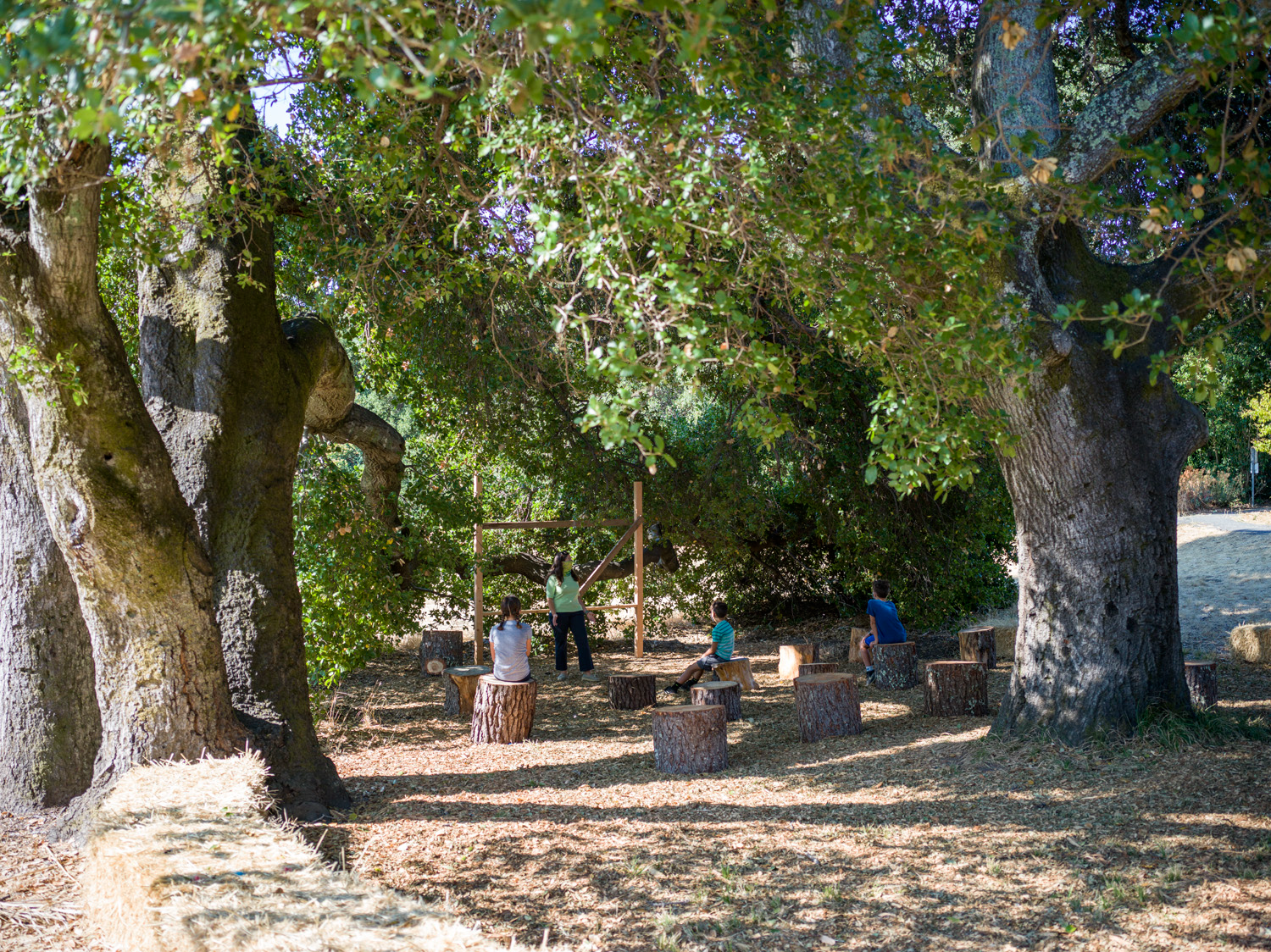
If you’ve been following along on this blog or are already a member of the MWS community, you know we’ve been working hard all summer to prepare our school’s outdoor classrooms for a safer reopening of campus this fall. Last week, our school applied for a waiver from the county and state to reopen to in-person learning on September 8.
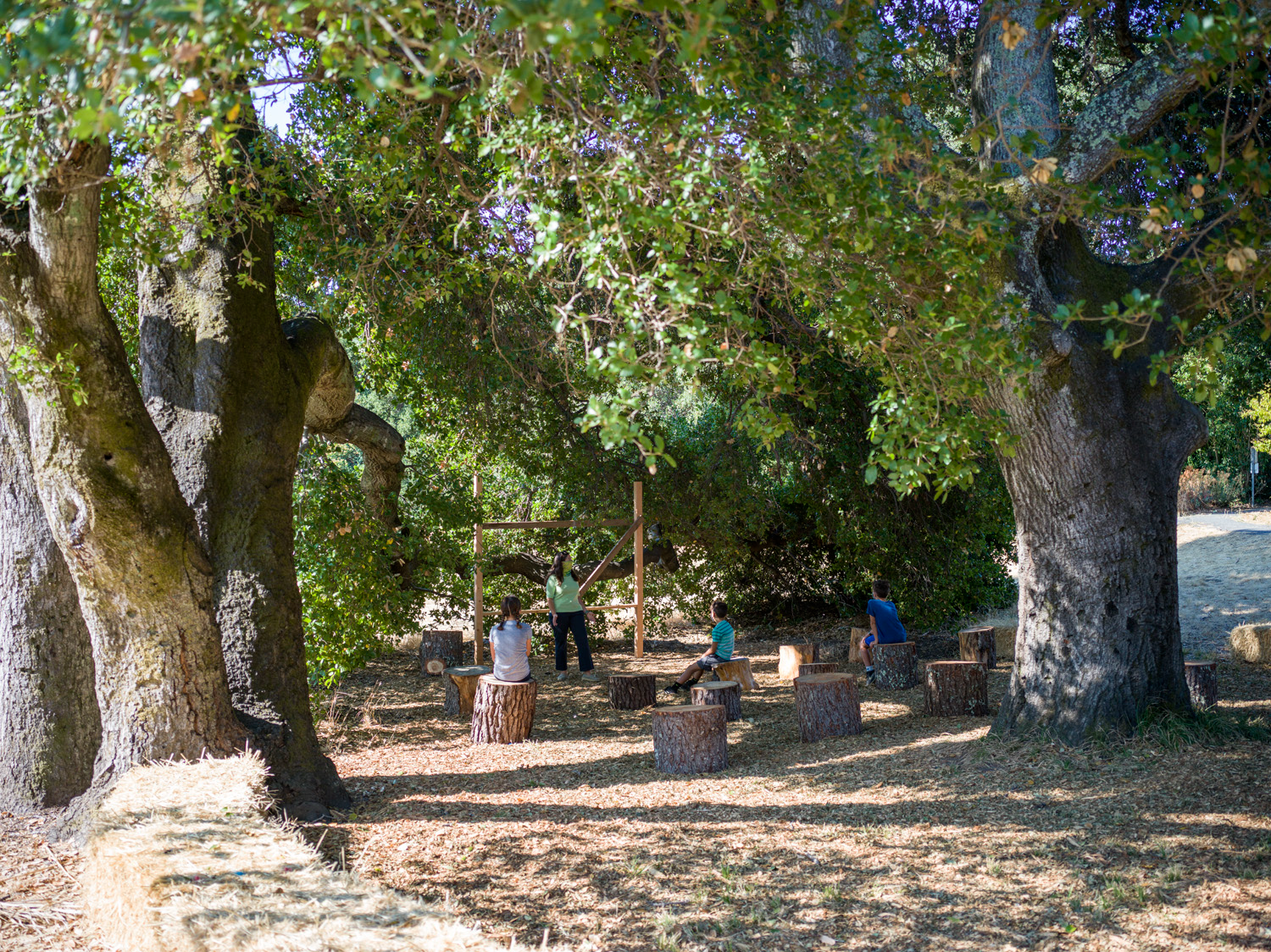
If you’ve been following along on this blog or are already a member of the MWS community, you know we’ve been working hard all summer to prepare our school’s outdoor classrooms for a safer reopening of campus this fall. Last week, our school applied for a waiver from the county and state to reopen to in-person learning on September 8.
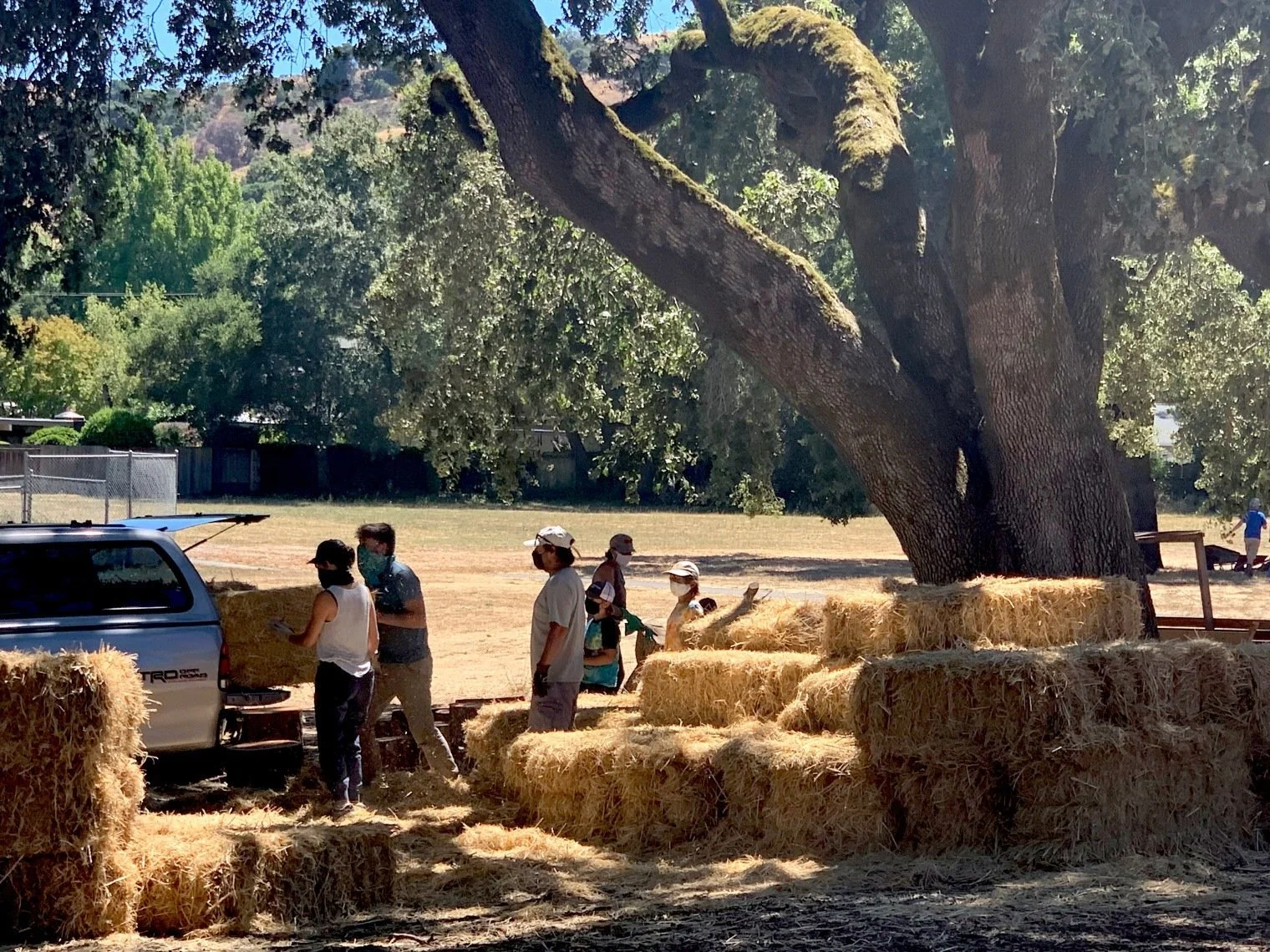
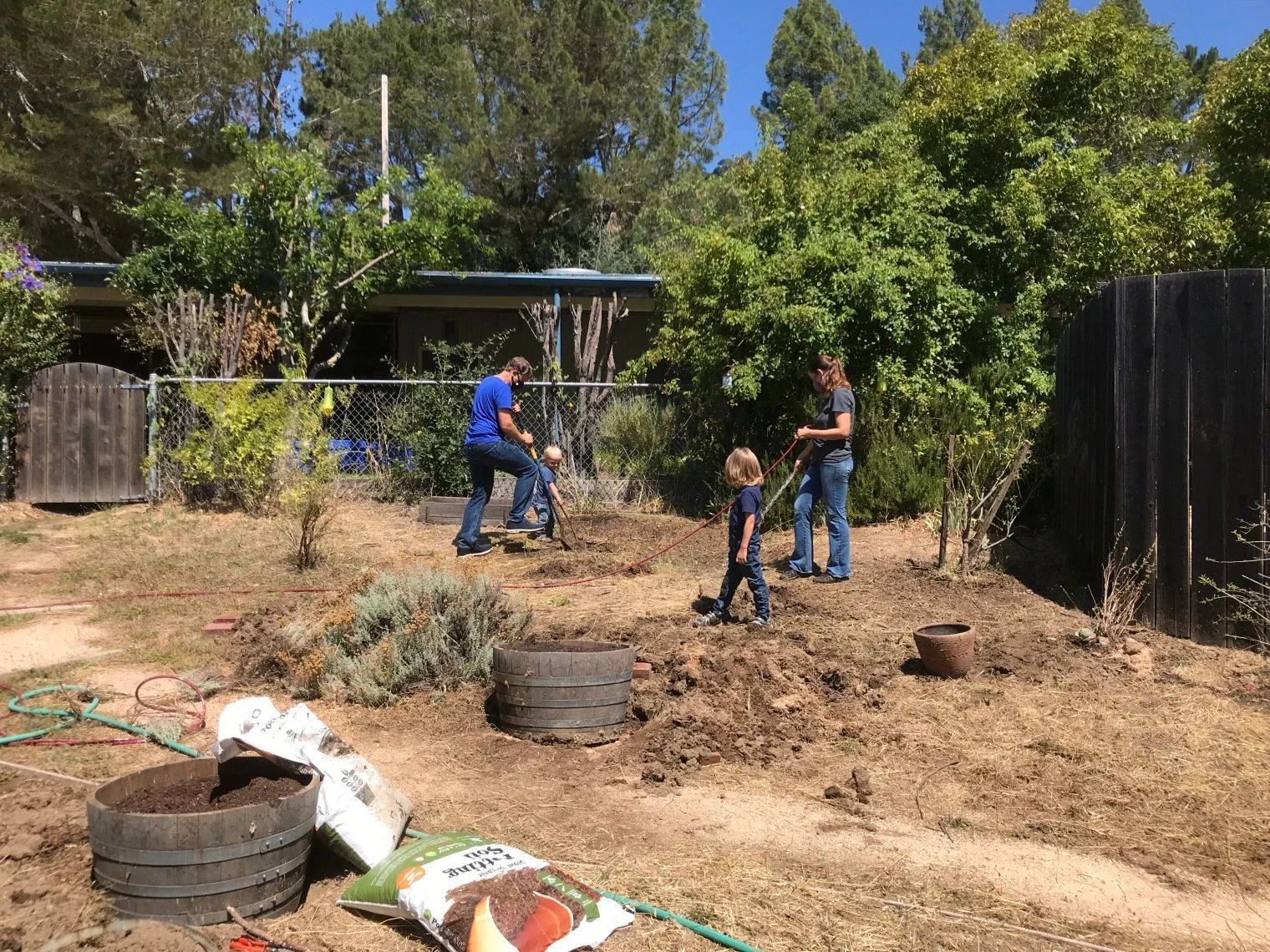
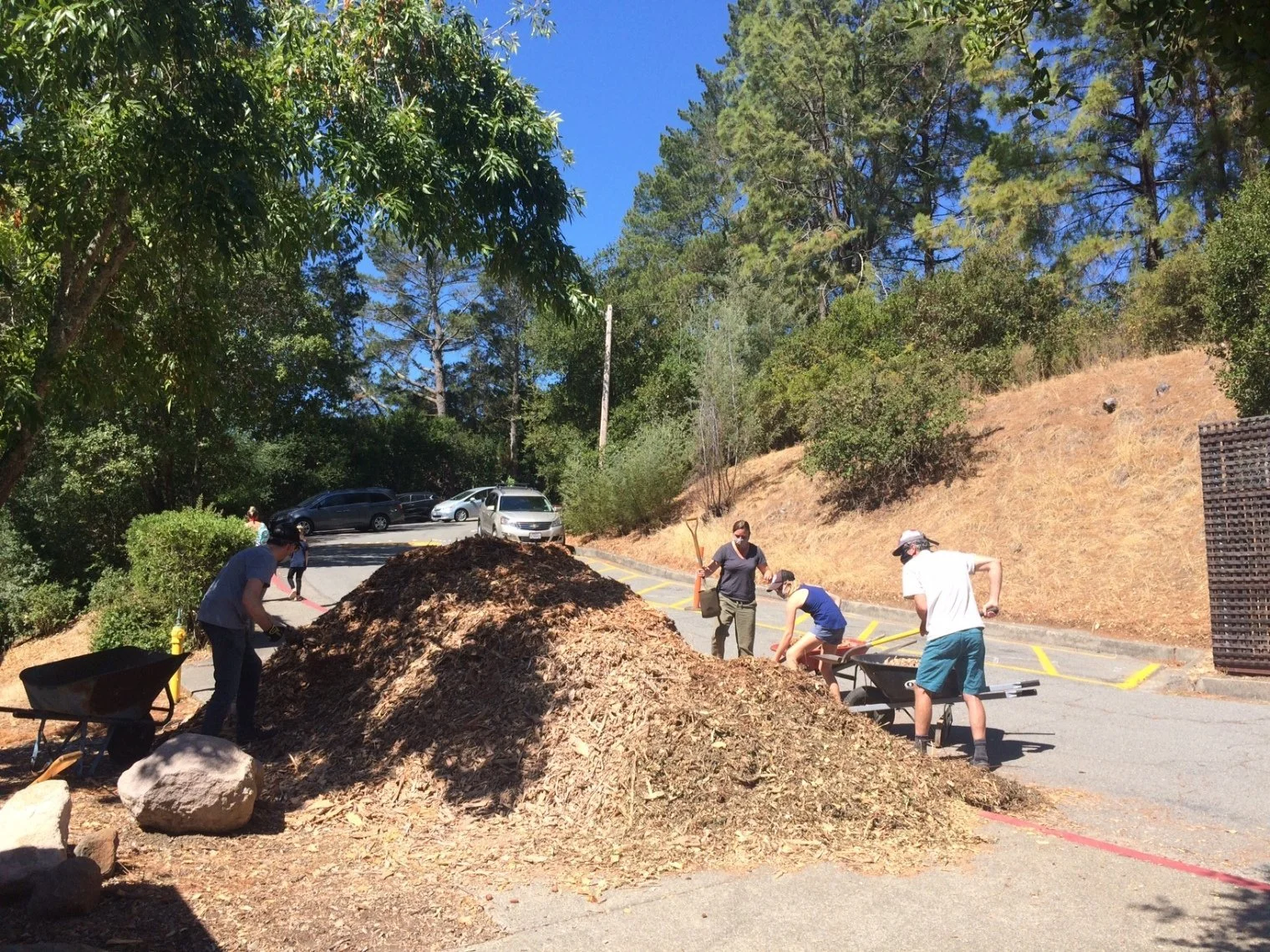
While distance learning was a challenge for our close-knit, tech-free community, spending time outdoors is right within our element as a Waldorf school, where building a relationship with and respect for nature is an integral part of education. While we wait for a response to our application for a waiver, we’ve been feeling inspired to be a part of the nationwide movement to move learning outdoors. From Sioux Falls, South Dakota, to Burlington, Vermont, teachers are pulling out whiteboards and setting up umbrellas and shade sails to create new classroom spaces. Just yesterday, New York City shared a potential plan to move classrooms outdoors, taking students to nearby parks and even into (closed) city streets!
In this story from PBS News Hour, Sharon Danks, co-founder of the National Covid-19 Outdoor Learning Initiative, says, “Schools have a lot of potential to use their grounds that they’re not tapping.”
“So in this case, in the COVID context, we think they have plenty of space outside that can augment the inside space when they’re looking to spread kids out for social distancing,” she continues. (You can read more about Danks’s project, National COVID-19 Outdoor Learning Initiative, here.)
Here in California, we have mild (if, hopefully, rainy) winters, but Danks says it’s possible to move education outdoors across climates. “We have great examples from Canada and from northern Scandinavia where they can go outside in the winter. And actually in Chicago in the pandemic in 1918, tuberculosis and the Spanish flu pandemic, they did go outside even there all winter in some schools,” she tells NewsHour.
We love seeing so many other Waldorf schools across the country redesigning their programs for outdoor learning. Just this morning, the Lake Champlain Waldorf School was featured on the Today Show segment about outdoor classrooms while a fourth grade teacher at Prairie Hill Waldorf School was featured in the national news for her unique outdoor classroom design.
Is this the beginning of a new movement in Waldorf schools and education in general?
Building Teacher-Student Relationships Through Looping
When schools closed in March, it quickly became clear how important personal relationships between students and teachers are to a productive learning environment. For some schools, turning to the innovative idea of “looping,” or keeping the same teacher with a fixed class of students for two or more years, is a way to strengthen the bonds between class and teacher. Last week, KQED shared the story “How Teacher Looping Can Ease the Learning Disruptions Caused by Coronavirus,” in which writer Kara Newhouse discusses the benefits of looping.
When schools closed in March, it quickly became clear how important personal relationships between students and teachers are to a productive learning environment. For some schools, turning to the innovative idea of “looping,” or keeping the same teacher with a fixed class of students for two or more years, is a way to strengthen the bonds between class and teacher. Last week, KQED shared the story “How Teacher Looping Can Ease the Learning Disruptions Caused by Coronavirus,” in which writer Kara Newhouse discusses the benefits of looping.
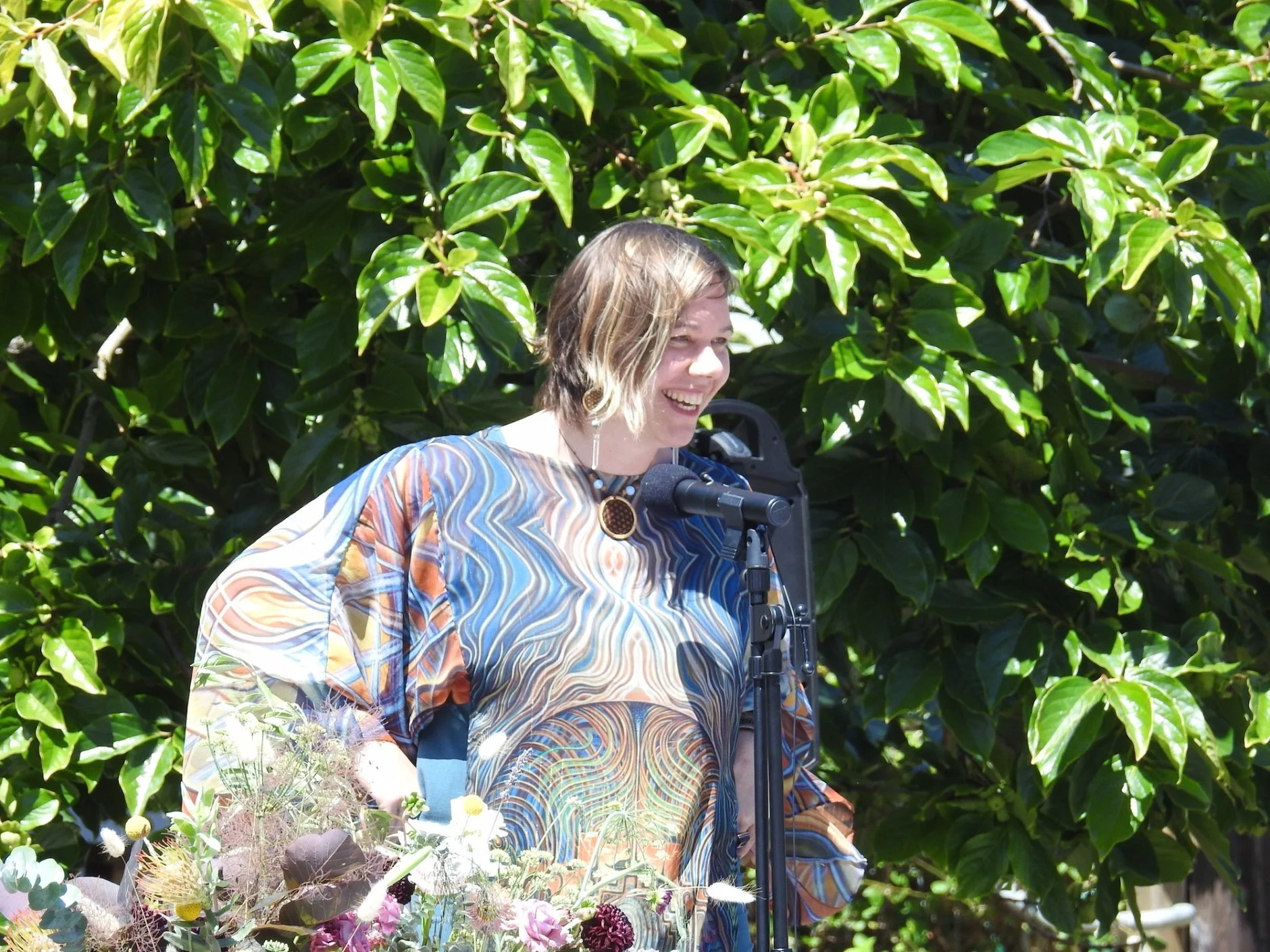
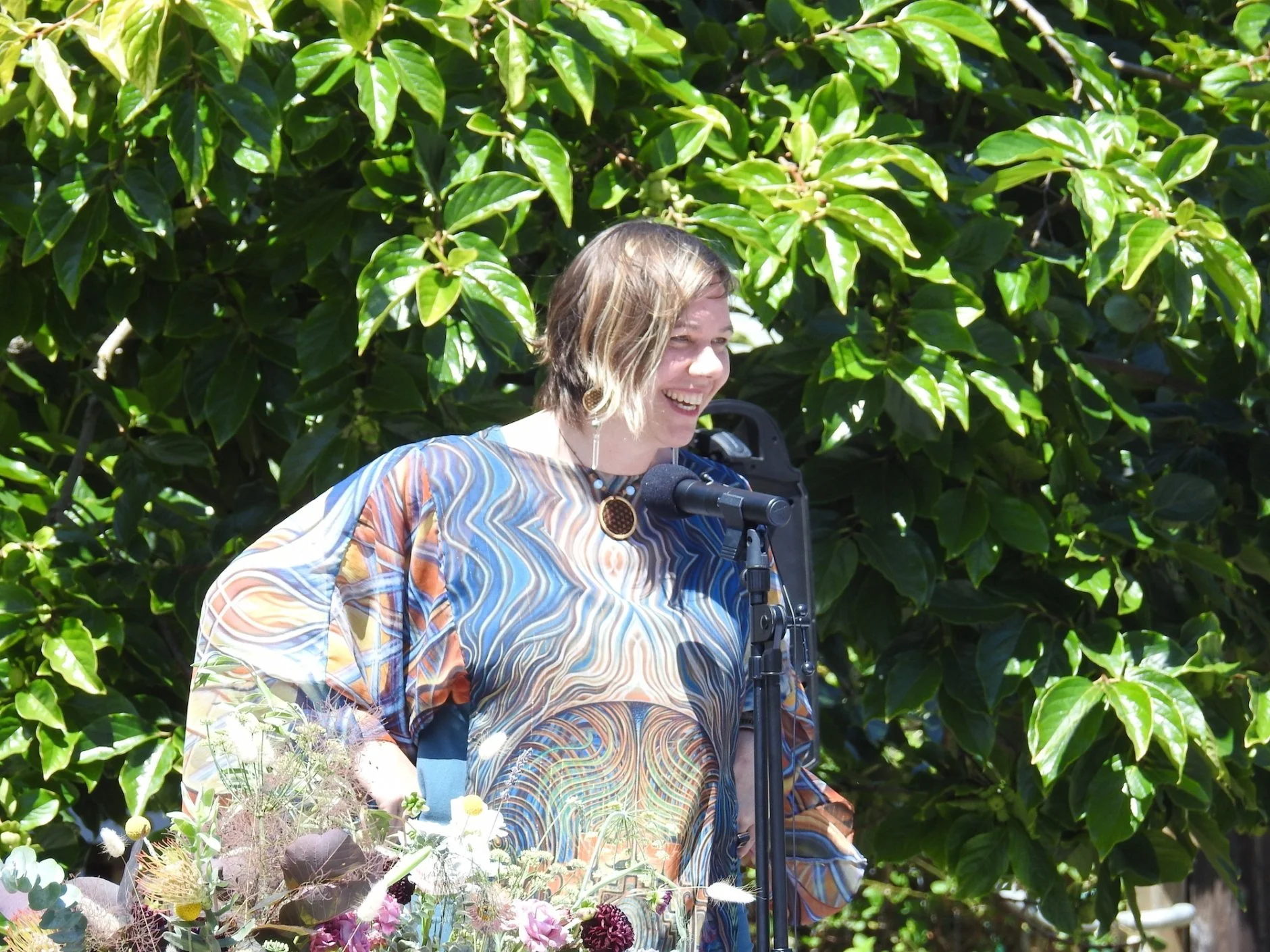
Looping is common to almost all Waldorf schools, where class teachers stay with the same group of students through the grades, in some cases from 1st through 8th. In fact, looping was incorporated into the very first Waldorf school, which opened over 100 years ago in Germany. At Marin Waldorf School, the special relationship between each class is fortified by their growing relationship with the class teacher. (A case in point, the warmth exuding from our 8th grade teacher Ms. Percey in the picture above, as she speaks to her class at our outdoor/socially distant graduation for the class of 2020. Ms. Percey had been with this class in grades 5-8, and she’ll be starting a new loop as the 5th grade class teacher in 2020-2021!)
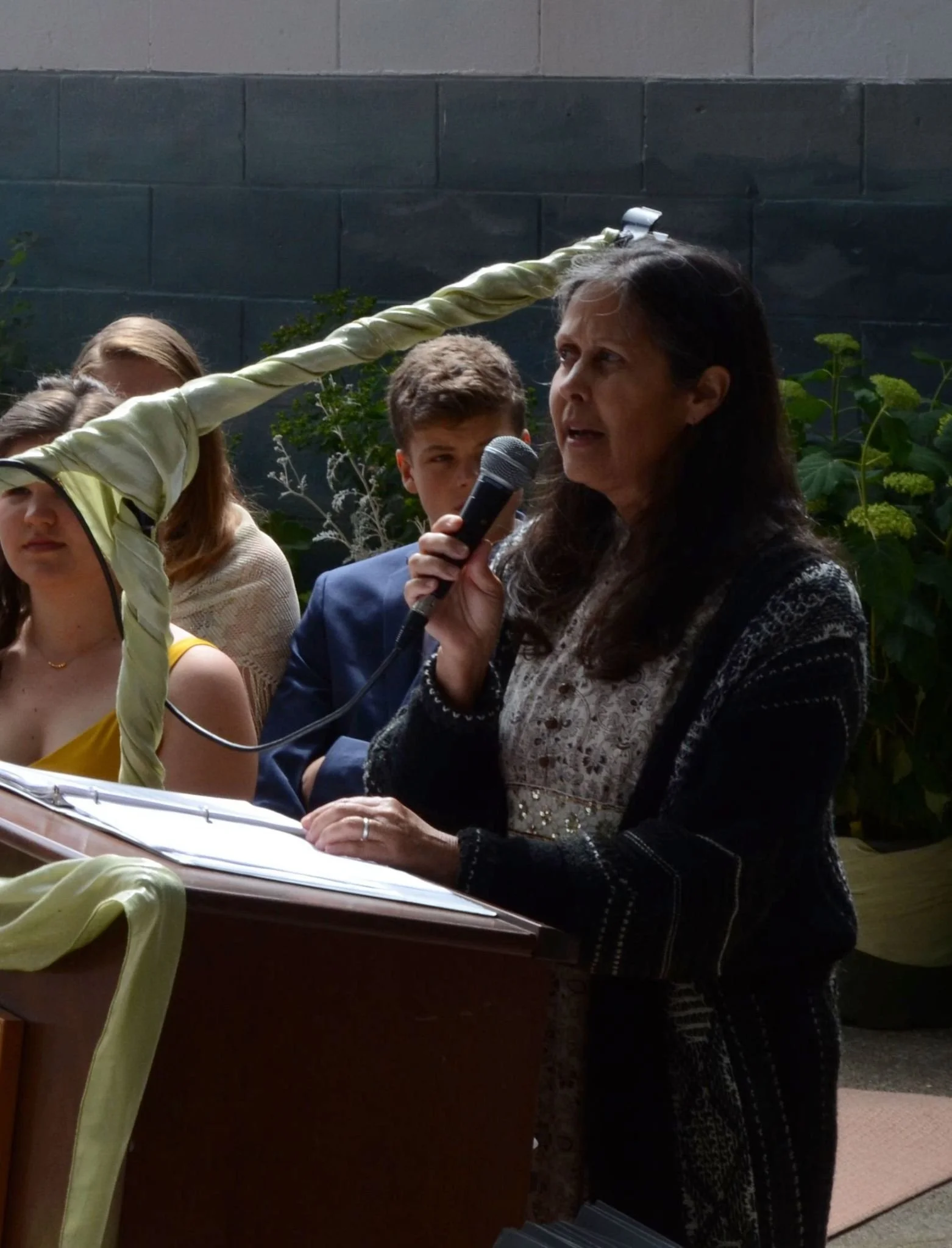
Ms. Weger took the class of 2019 from 5th grade to 8th grade. In the fall of that same year, she started first grade with a new class of students whom she’ll be teaching in second grade this coming fall.
While recent school closures may have brought the teacher-student relationship into the spotlight, there is plenty of research to suggest that looping is beneficial to students in any environment. In the article “In the Loop,” published by the AASA, The School Superintendents Association, the authors explain, “Schools that have effectively implemented the looping structure point to the following benefits: improved relationships among students and between teachers and students, more efficient instruction, higher attendance rates, reduced student retentions, fewer referrals of students to special education programs and improved student discipline.”
“Many experts are citing the importance of significant relationships in young people’s lives. As James P. Comer, who runs the School Development Program at Yale University, puts it: “No significant learning occurs without a significant relationship.”
There are similar takeaways in this piece, “Looping Leads to Long-Term Connections with Students,” at Edutopia, which credits Rudolf Steiner as the probable originator of the idea. “People are hardwired for long-term relationships,” the authors writer, “and emotional growth isn’t optimally possible without a permanent, supportive presence.”
We’ll be talking more about looping this week, as well as the other ways Waldorf education is adapting to a new educational environment… so please check back for more!
Second Nature: Learning Outdoors in Waldorf Education
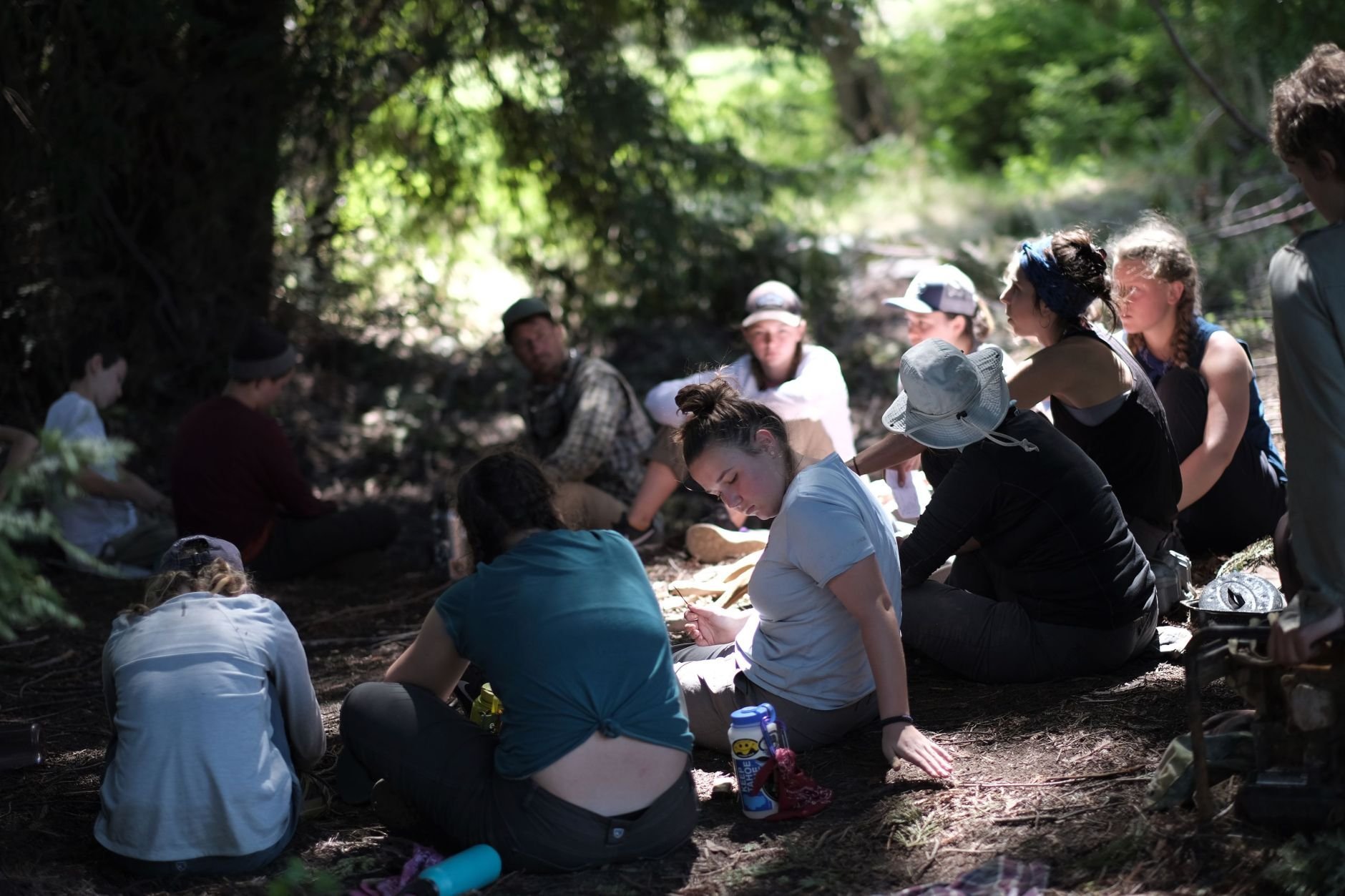
This summer, our faculty and staff are busy creating beautiful, sun-shaded outdoor classrooms across our 11-acre campus so that our students may more safely return to in-person education in September. (Read more here.) While outdoor classrooms may sound nontraditional, learning outside is, in fact, nothing new in a Waldorf school.
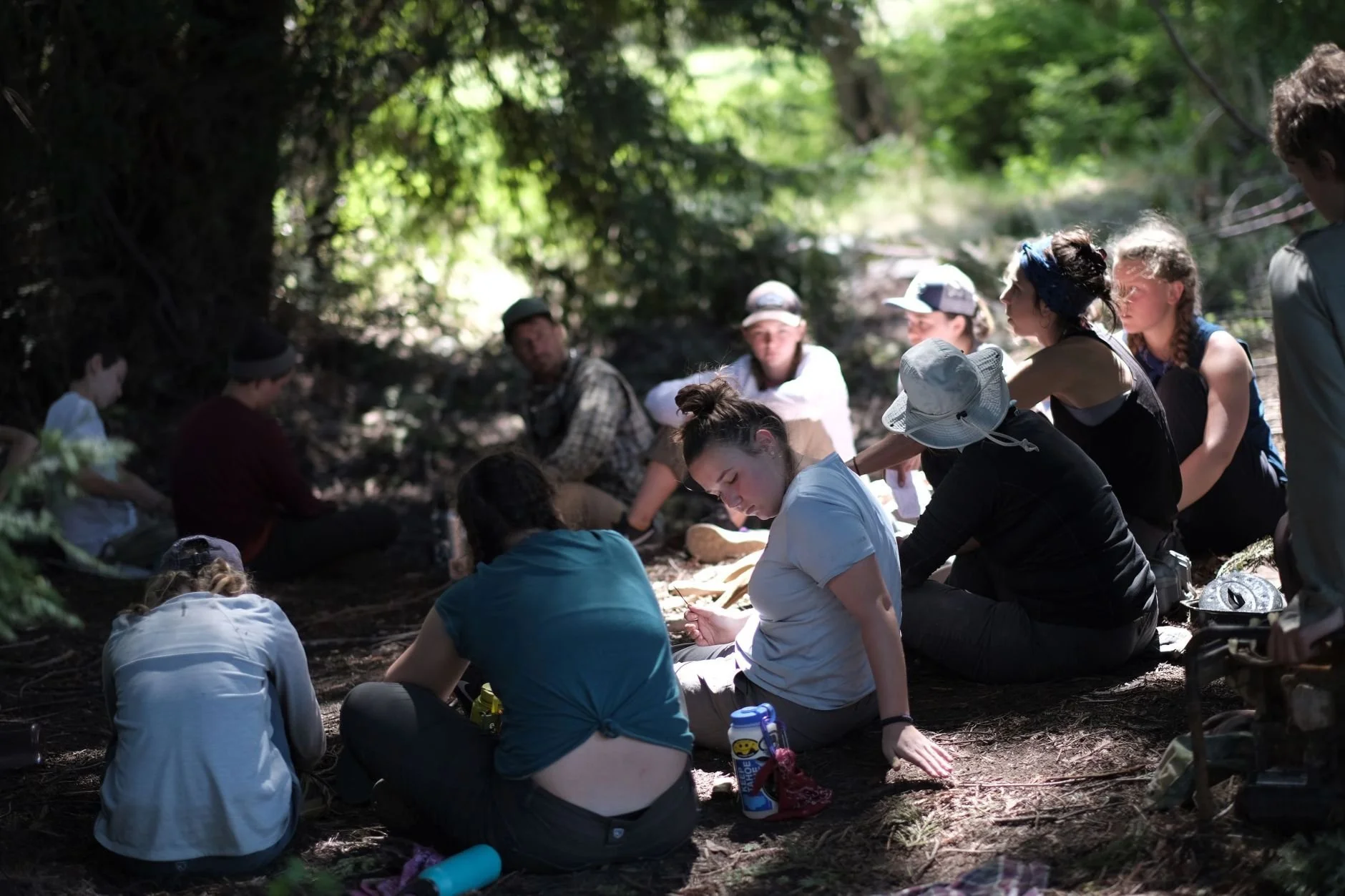
This summer, our faculty and staff are busy creating beautiful, sun-shaded outdoor classrooms across our 11-acre campus so that our students may more safely return to in-person education in September. (Read more here.) While outdoor classrooms may sound nontraditional, learning outside is, in fact, nothing new in a Waldorf school.
In Waldorf education, building a relationship with nature is central to a child’s development. Time outdoors teaches children about the Earth’s natural rhythms and cycles, allows them to experience natural phenomena before studying them in a classroom, and fortifies the child’s relationship with and respect for the natural world. To learn more about Waldorf schools and their relationship with nature, please check out this wonderful piece, “Waldorf Education and the Nature Connection,” from the blog Loving Learning by our colleagues at Philly Waldorf School.
At Marin Waldorf School students in every grade, starting in preschool, spend a large part of their day outside, rain or shine. Kindergartners take weekly hikes in the hills near campus and learn that, as the saying goes, “there is no such things as bad weather, only bad clothes.”
Throughout the grades, the relationship with nature that was built in early childhood continues through gardening, environmental education, outdoor education trips, and weekly hikes off campus.
For many of our students, a snowy ascent up Mt. Shasta or jumping into nearby Miller Creek during an environmental education class may be among their best memories at school.
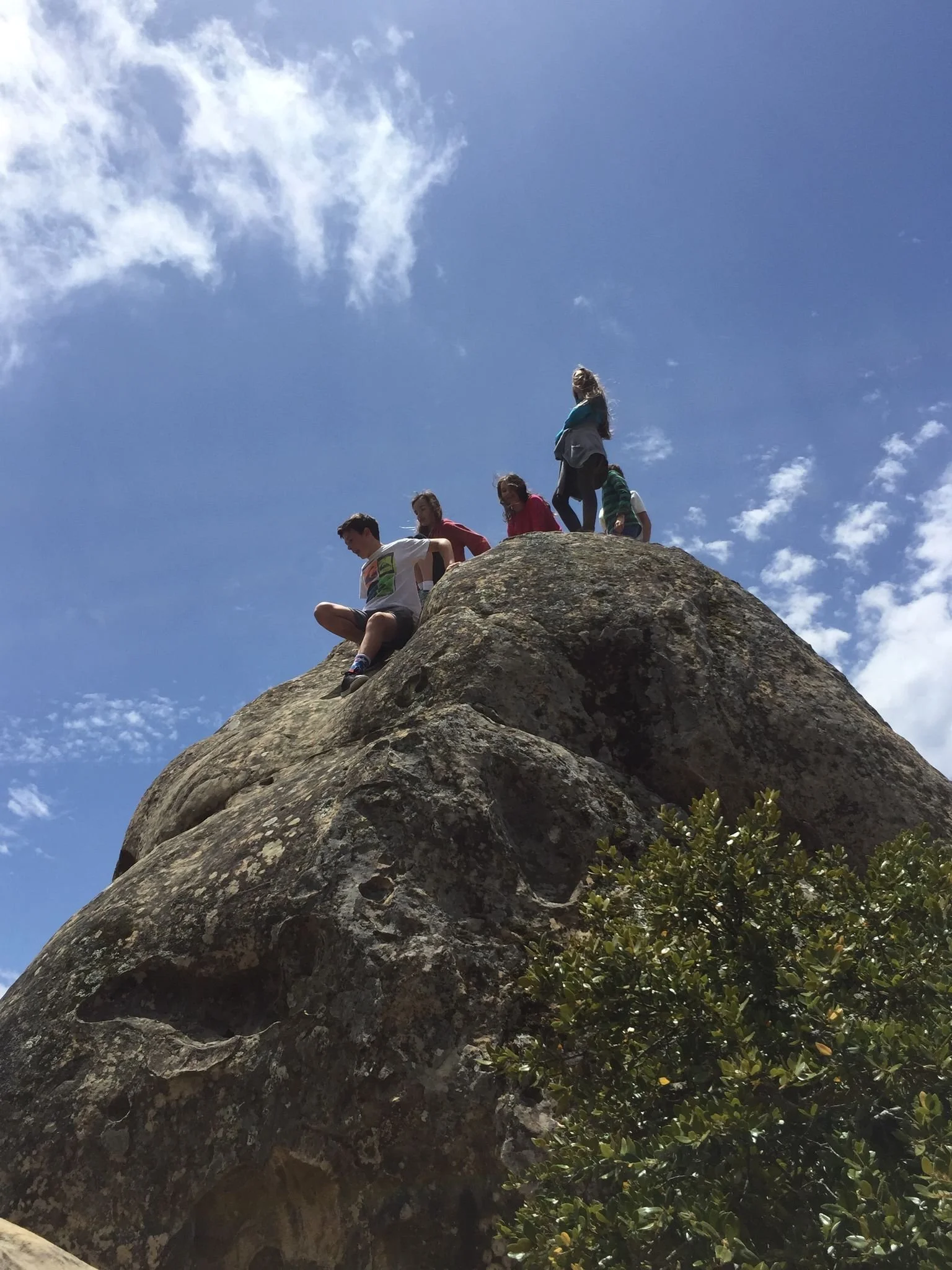
6th Grade class trip to Mount Diablo.
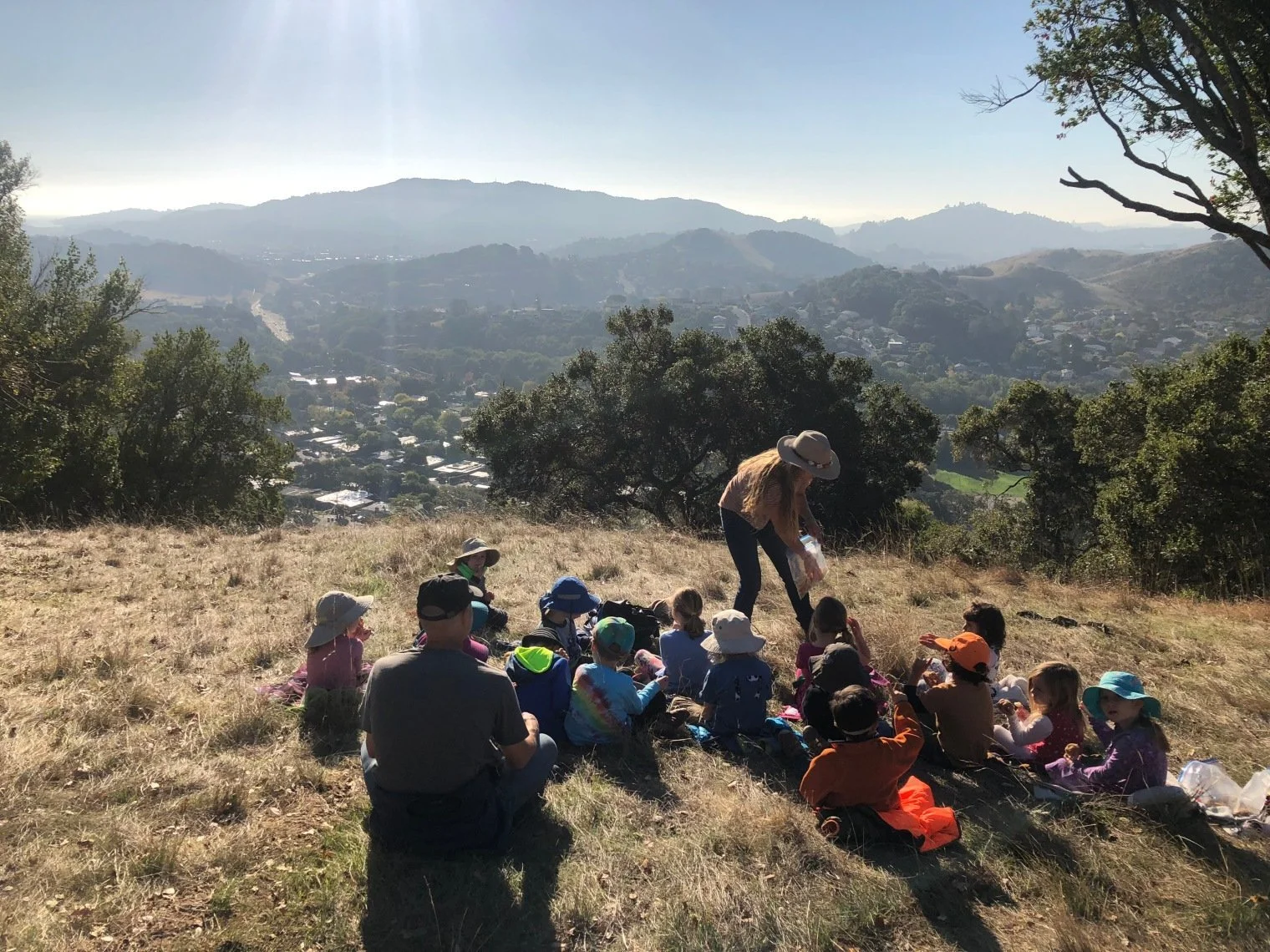
A group of kindergartners stops for a snack on their weekly hike to Dragon Mountain.
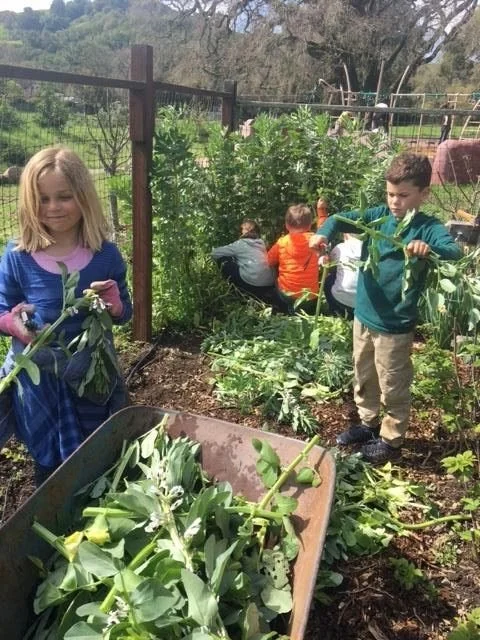
Third graders harvesting in our school’s garden.
Like Marin Waldorf Schools, many Waldorf school across the country are finding its an easy transition to create safer outdoor classroom spaces for fall 2020. Sanderling Waldorf School in Vista, California, was recently featured on their local CBS station for creating an outdoor program. Watch the story here.
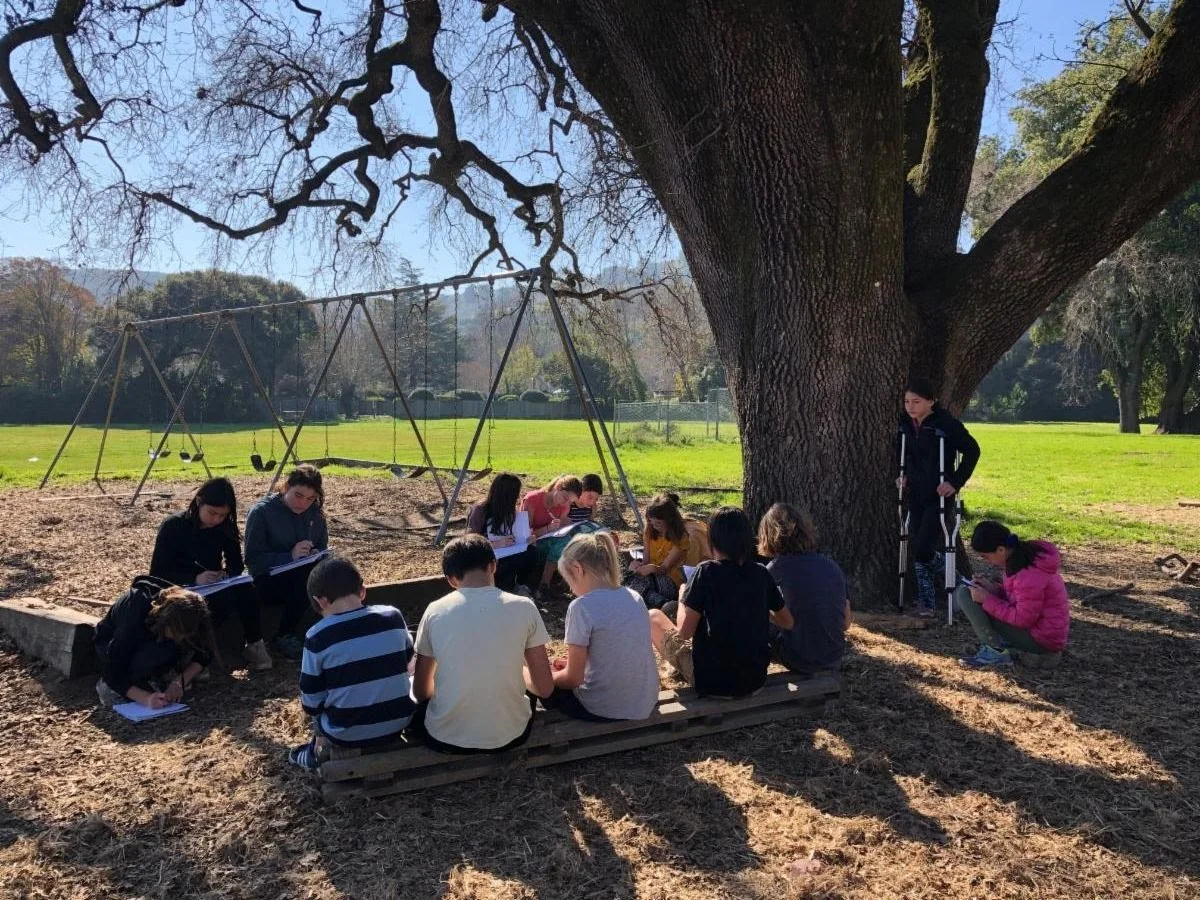
A 6th grade social ethics class takes places in the shade of an oak tree on campus.
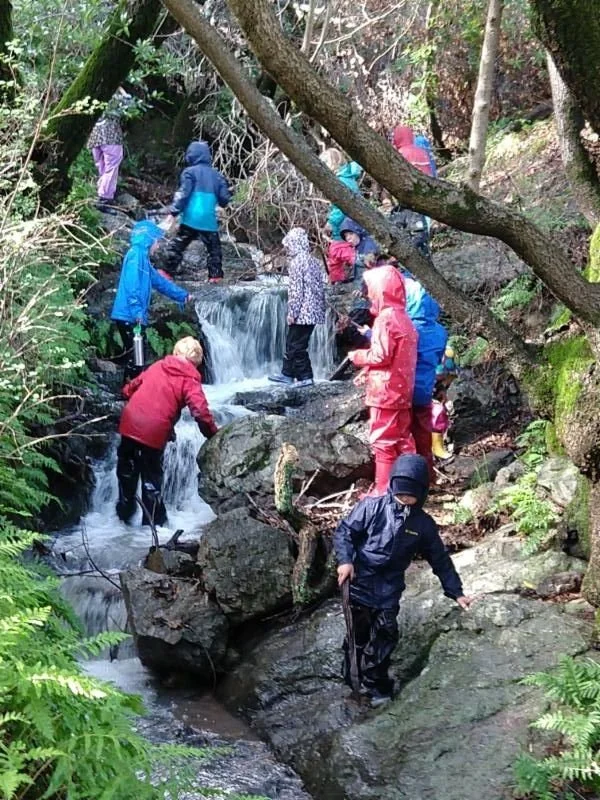
A group of first graders climbs a waterfall.
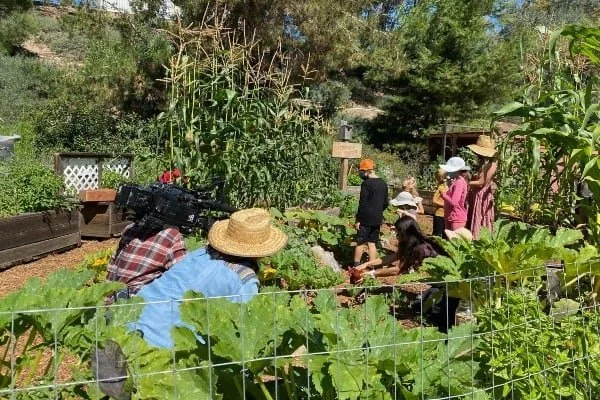
Atlanta Waldorf School was featured in the CNN article “More than ever, we need nature. It makes us and our children happier.”
The many benefits of connecting with nature and learning outside have been studied by scientists and psychologists—long before the pandemic made the reality of outdoor classrooms even more urgent. Here are a few of our favorite recent stories about outdoor learning.
Preschool Without Walls
By Lillian Mongeau
December 29, 2015
Bundle up, buttercup. A growing number of preschools are situating their classrooms under the open sky and towering trees, regardless of weather.
Can Climbing Trees Replace Preparing for Tests?
By Katherine Martinelli
April 19, 2020
Nature-based preschools are becoming increasingly popular. But what are they, and are they effective?
The Great Outdoor Classrooms
At Marin Waldorf School, we nourish the relationship between children and the natural world. Starting in early childhood, our students spend ample time outdoors, playing, hiking, and lunching beneath the oak trees. As grades students, they hike in the open space that surrounds our school, care for and study our campus flora, and work in our school’s abundant garden.
At Marin Waldorf School, we nourish the relationship between children and the natural world. Starting in early childhood, our students spend ample time outdoors, playing, hiking, and lunching beneath the oak trees. As grades students, they hike in the open space that surrounds our school, care for and study our campus flora, and work in our school’s abundant garden.
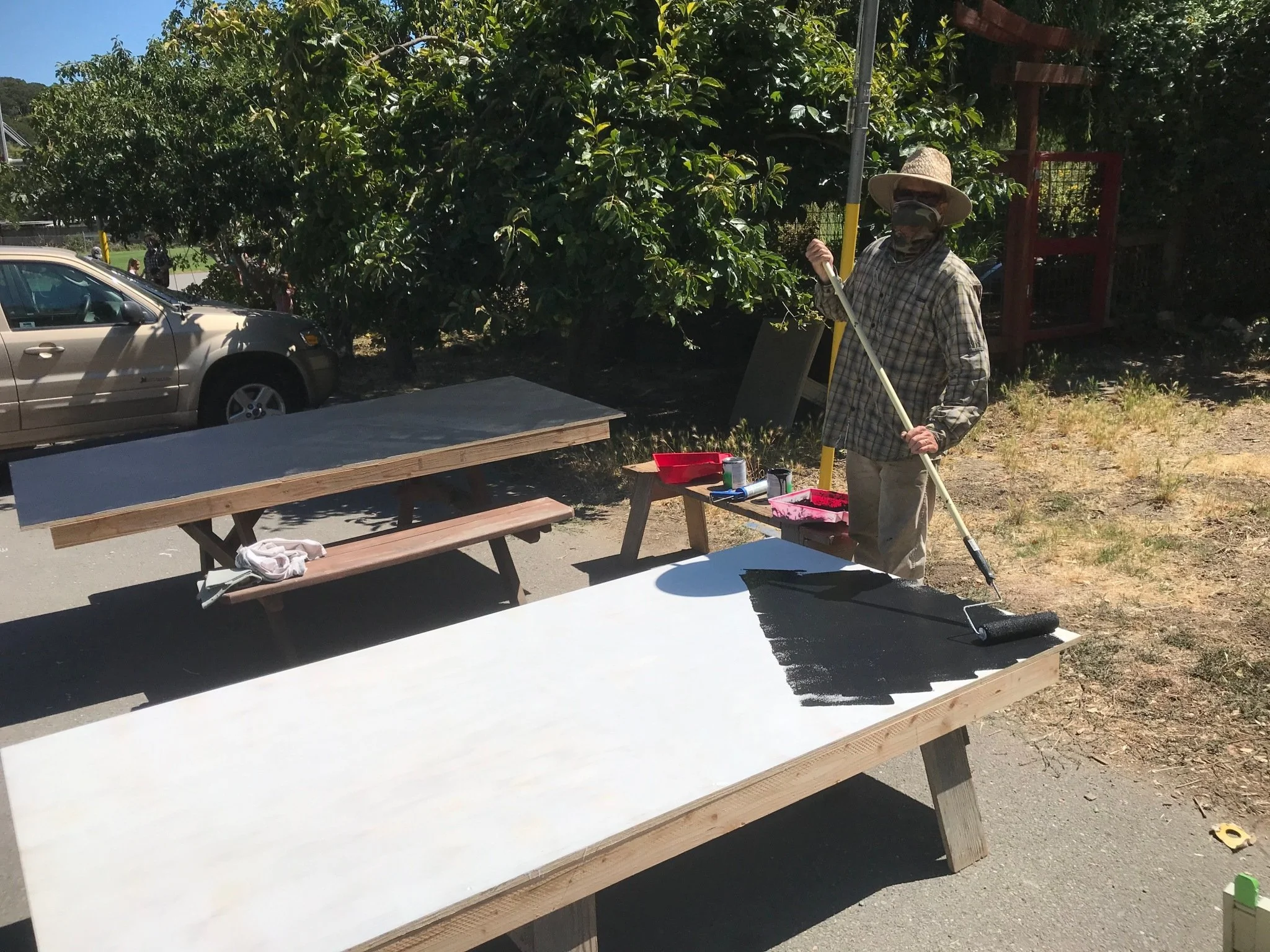
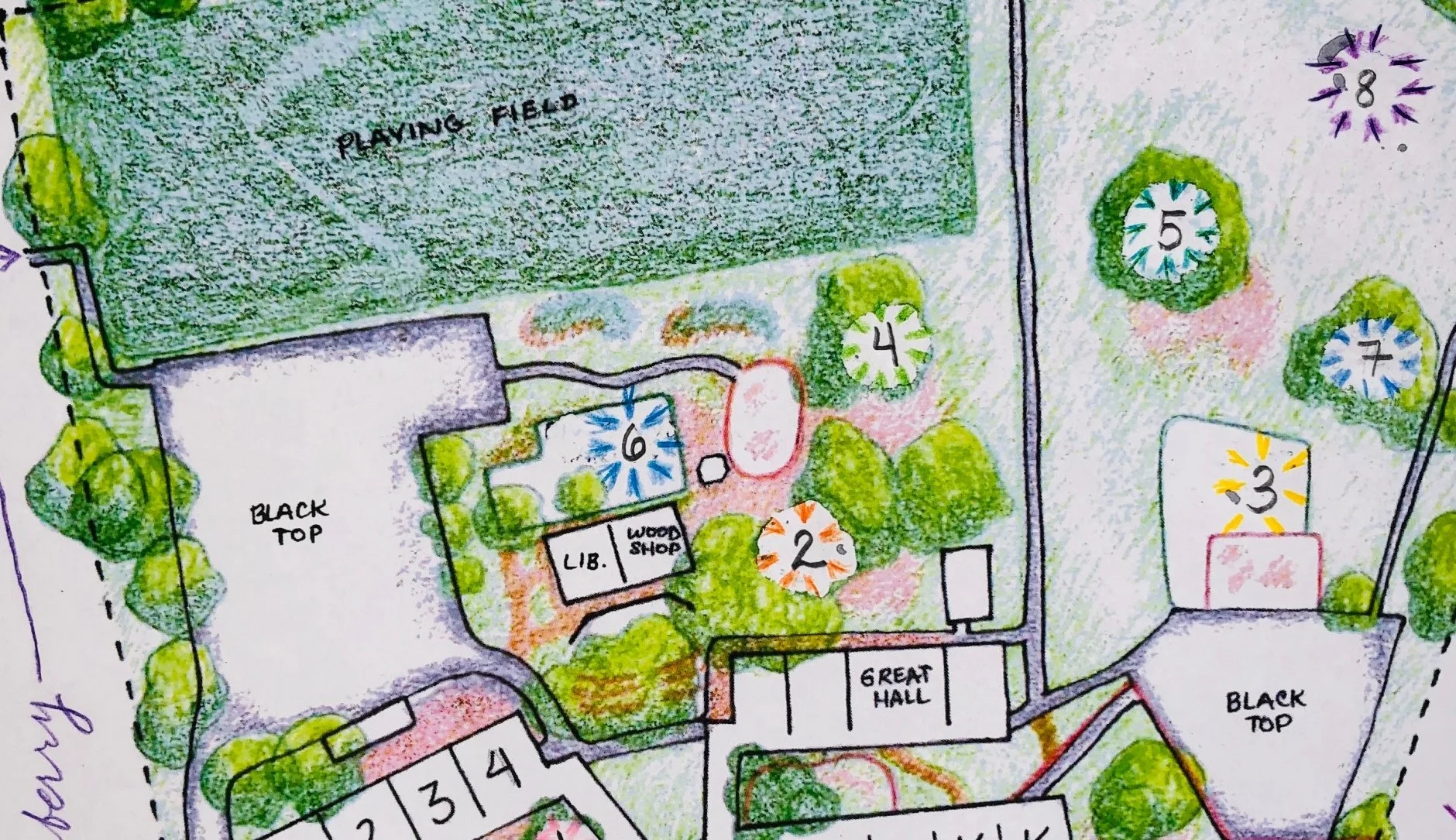
We are building on that foundation now. This summer, we are creating open-air classrooms for each grade, scattered across our 13-acre campus. (In the drawing above, you can see a snippet of our reimagined campus map, with outdoor classrooms for each grade level.) The classrooms will allow for fresh air and maximum social distancing—and of course they will also be beautiful! To the left, our woodworking teacher Mr. Neale paints one of the blackboards that will be installed in each of the classrooms. Lap desks, hay bales, and sun shades will follow.
There is strong research to suggest that outdoor classrooms would be safer for students during a pandemic, but are they effective places to teach?
Last week, many people in our community noticed this fascinating story in the New York Times (right), which documents the use of outdoor classrooms in early 20th century New York to fight rampant tuberculosis infection in the city.
The article outlines the compelling safety reasons for building outdoor classrooms (“one of the few things we know about the coronavirus with any degree of certainty is that the risk of contracting it diminishes outside — a review of 7,000 cases in China recorded only one instance of fresh-air transmission”). However, it also outlines the emotional and pedagogical benefits of being outdoors.
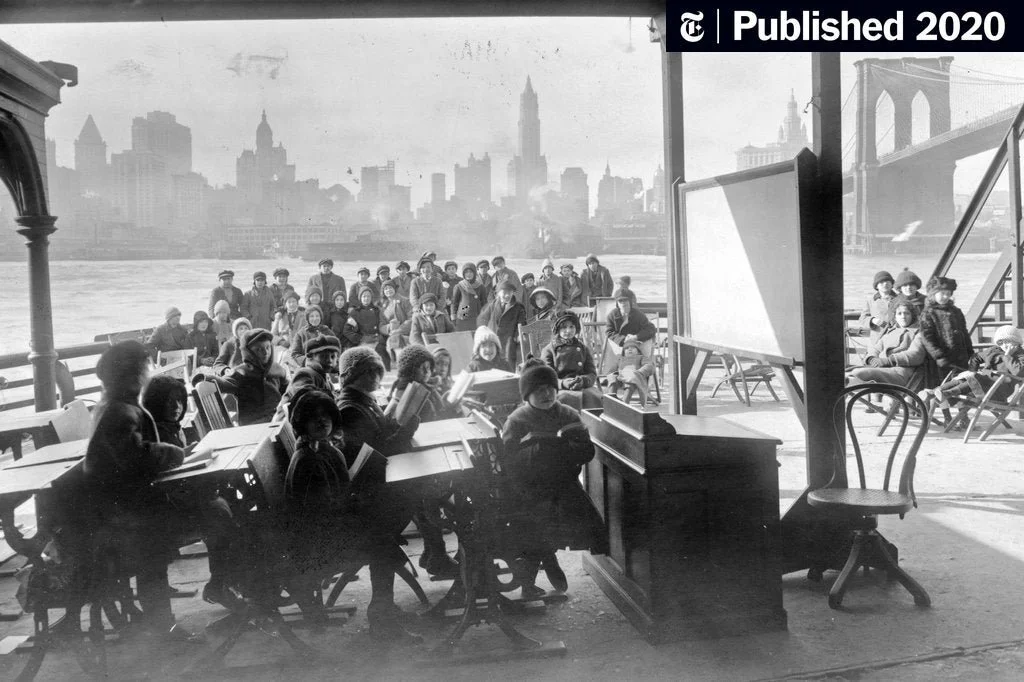
Schools Beat Earlier Plagues With Outdoor Classes. We Should, Too.
By Ginia Bellafante
July 17, 2020
A century ago, children in New York City attended classes during a pandemic. It seemed to work.
Among other compelling research, author Ginia Bellafante shares the following: “A 2018 study conducted over an academic year looked at the emotional, cognitive and behavioral challenges facing 161 fifth graders. It found that those participating in an outdoor science class showed increased attention over those in a control group who continued to learn conventionally. At John M. Patterson, an elementary school in Philadelphia, suspensions went from 50 a year to zero after a playground was built in which students maintain a rain-garden and take gym and some science classes, the principal, Kenneth Jessup, told me.”
This morning, the Marin Independent Journal shared another story, “Marin school finds pandemic workaround: the outdoors,” about the local Terra Marin School in Mill Valley, which is going to be operating outdoors this fall.
We’ll be sharing more photos and updates of our classrooms this summer, as well as more research about the benefits of outdoor learning, so please follow along.

Audio Story: “The Fairy Helpers”
Mr. DeRienzo, our school’s aftercare lead teacher, is a storyteller extraordinaire. This summer, he’s sharing a series of original audio stories featuring an imaginative cast of recurring characters, appropriate for preschool-and-kindergarten-age children (appropriate and enjoyable for older children too)!
In our first tale, Gold Monkey and Jeremy the Giant accompany Mr. DeRienzo’s sidekick Ozzi to help the fairies in the forest. It’s fun work … but silly antics always ensue when our friend Gold Monkey is involved!

Mr. DeRienzo, our school’s aftercare lead teacher, is a storyteller extraordinaire. This summer, he’s sharing a series of original audio stories featuring an imaginative cast of recurring characters, appropriate for preschool-and-kindergarten-age children (appropriate and enjoyable for older children too)!
In our first tale, Gold Monkey and Jeremy the Giant accompany Mr. DeRienzo’s sidekick Ozzi to help the fairies in the forest. It’s fun work … but silly antics always ensue when our friend Gold Monkey is involved!
If you liked that story, subscribe to the whole series on the registration page here! New stories will be posted every Monday, Wednesday, and Friday from June 22 to July 17.
All material © Rod DeRienzo 2020. Please do not share or distribute without express permission from Mr. DeRienzo and Marin Waldorf School.
First Grade Math: Bird by Bird
This week, our First Grade teacher, Ms. Weger, shared this lesson from the last block of the year.
The First Grade students have been reviewing the four math processes of addition, subtraction, multiplication and division in their last three-week block of the year. Typically, a nature story of some kind is told, and the children follow along, inwardly calculating as they go.
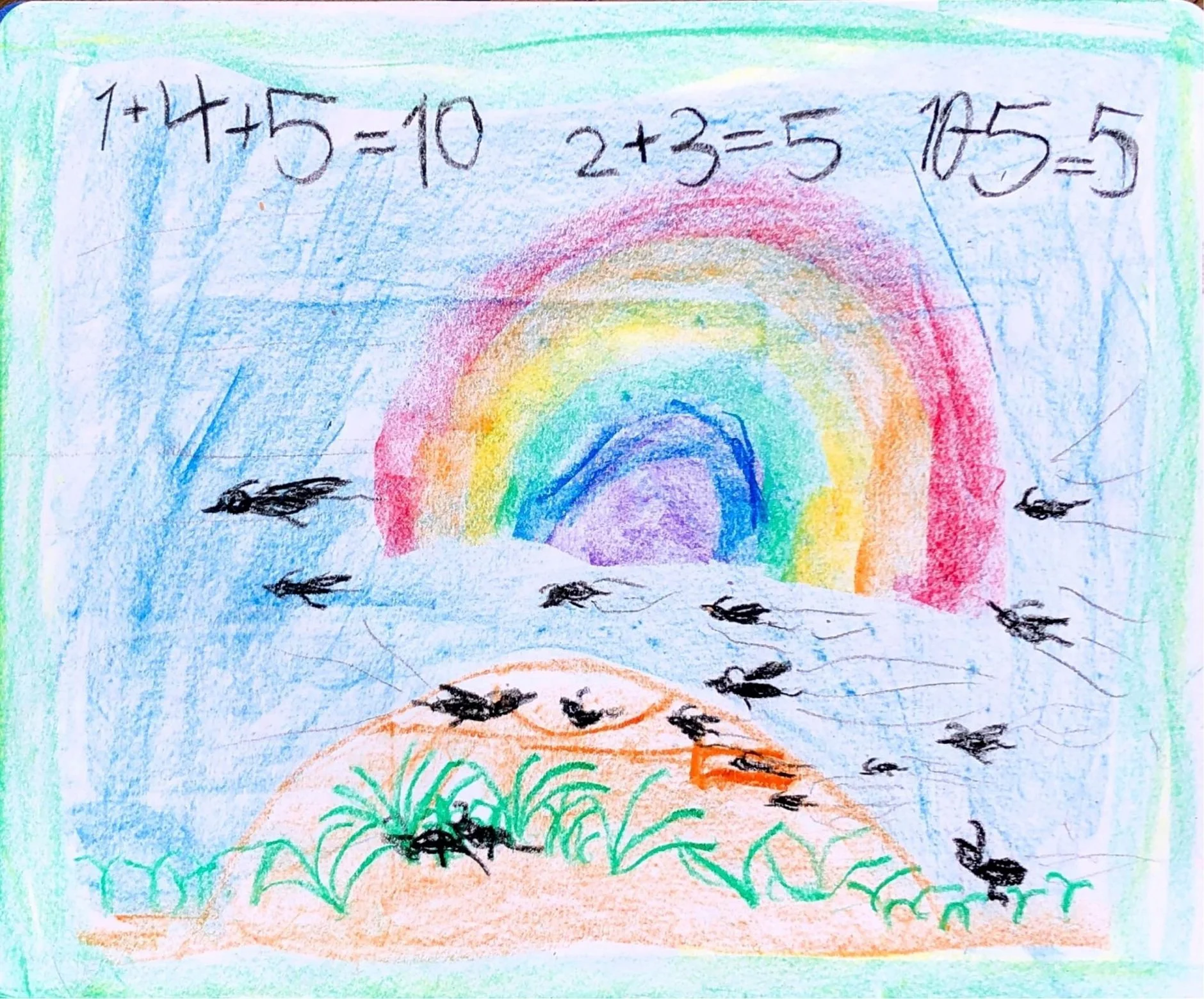
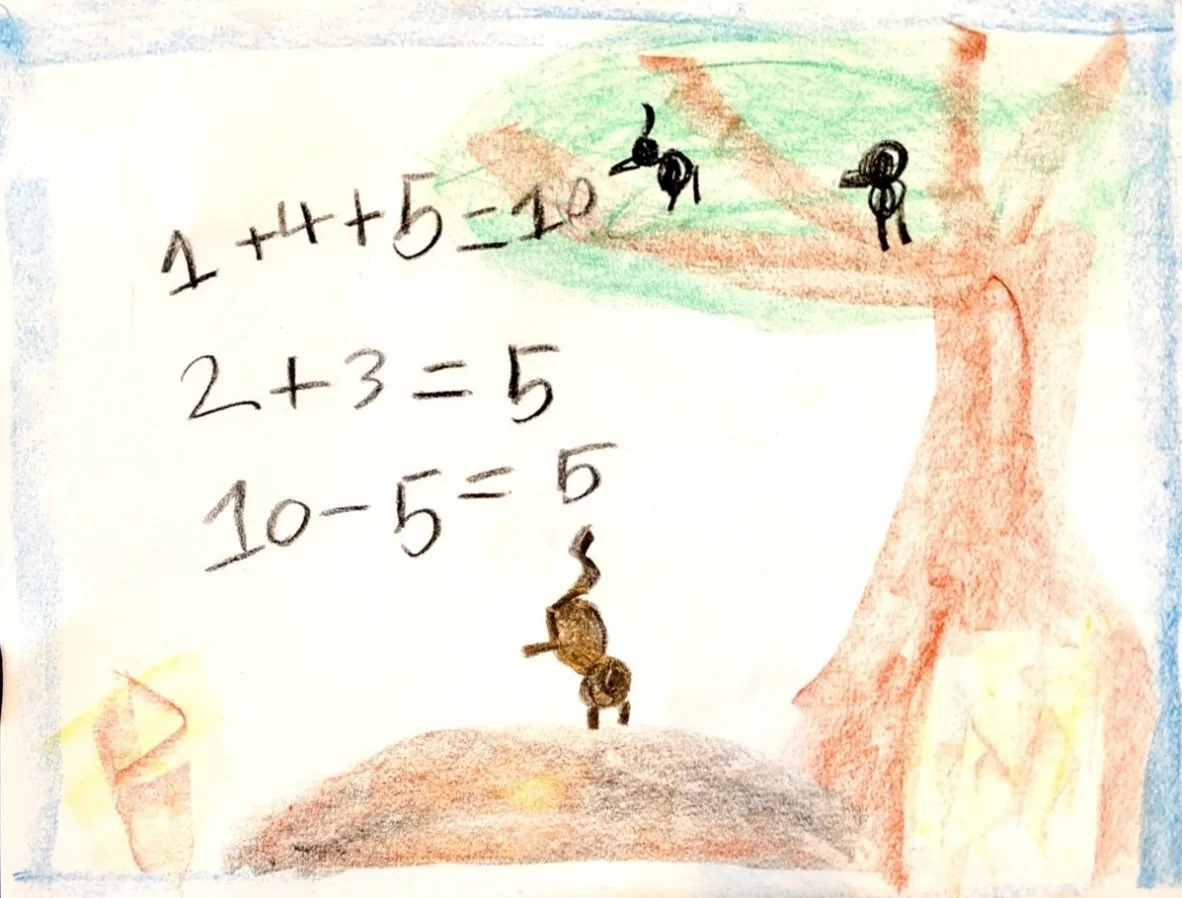
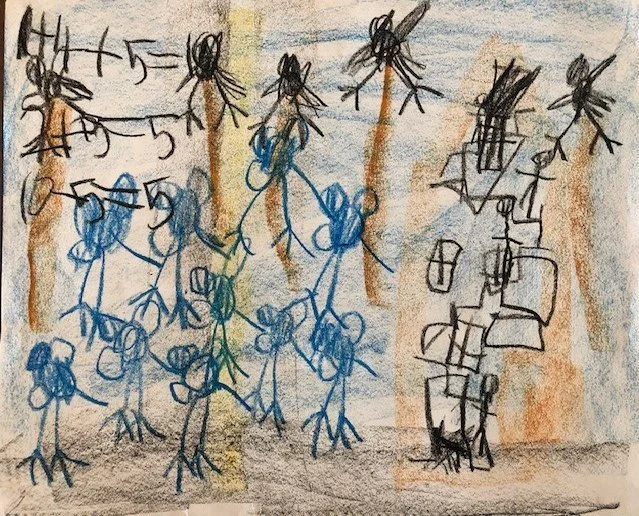
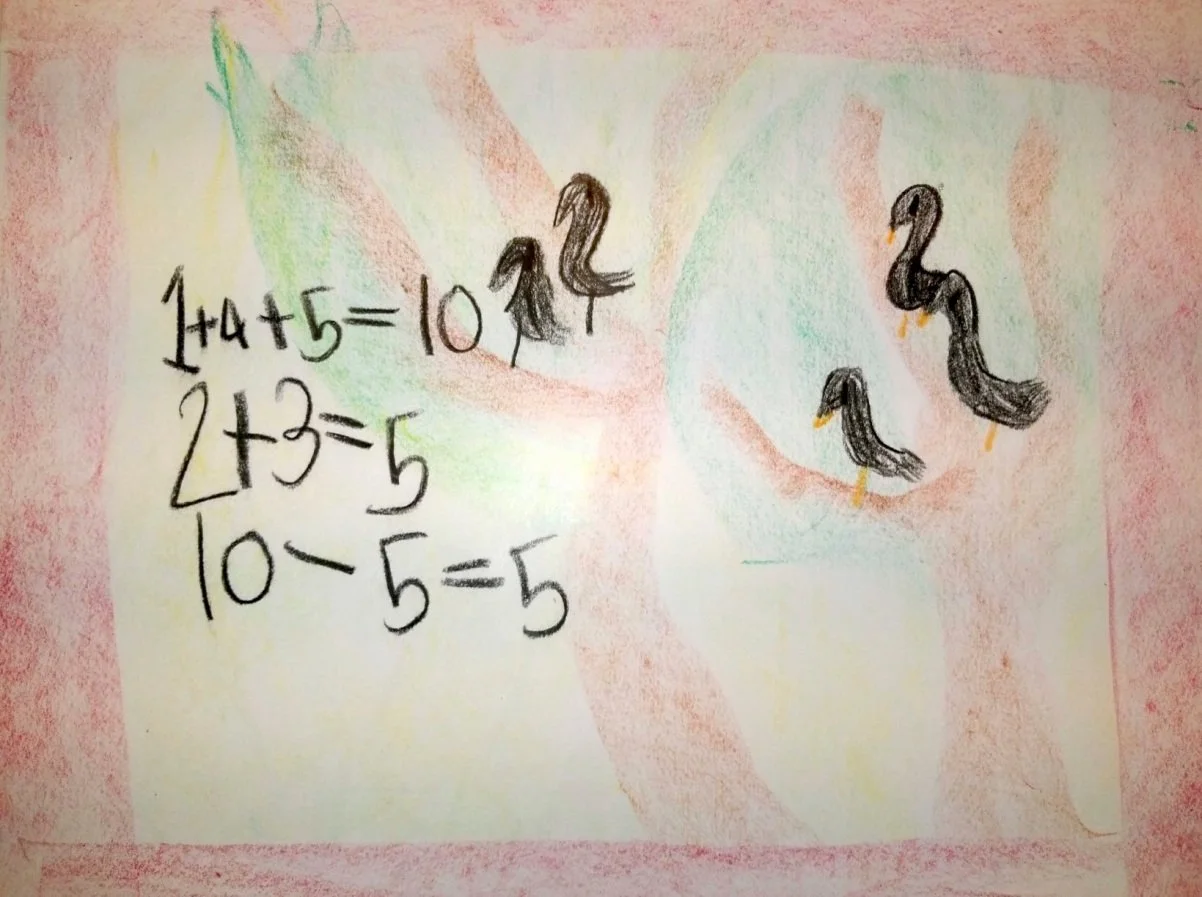
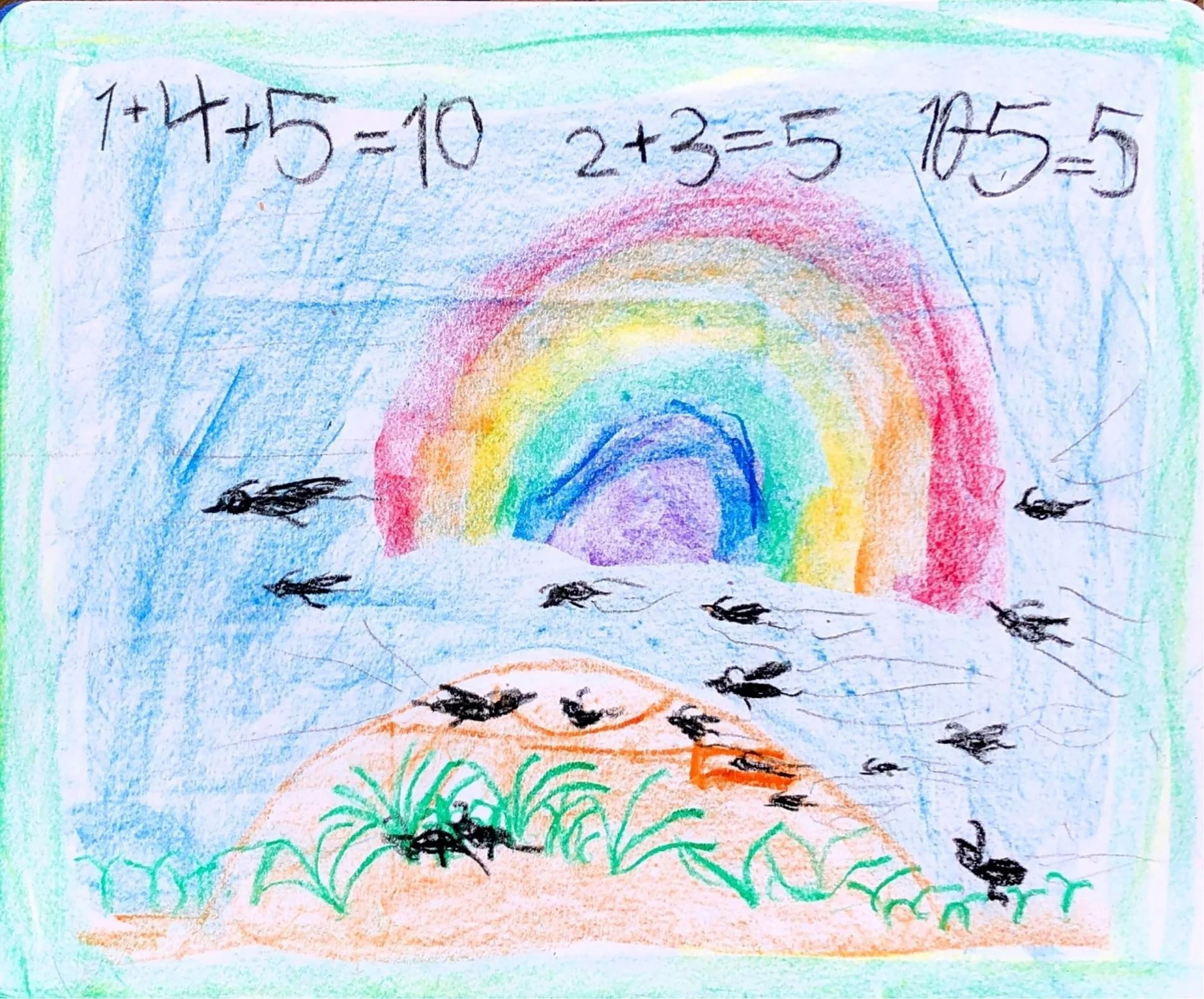
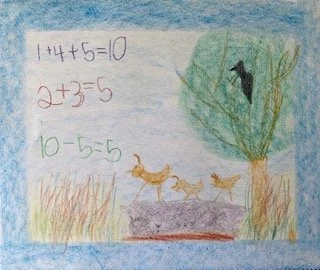
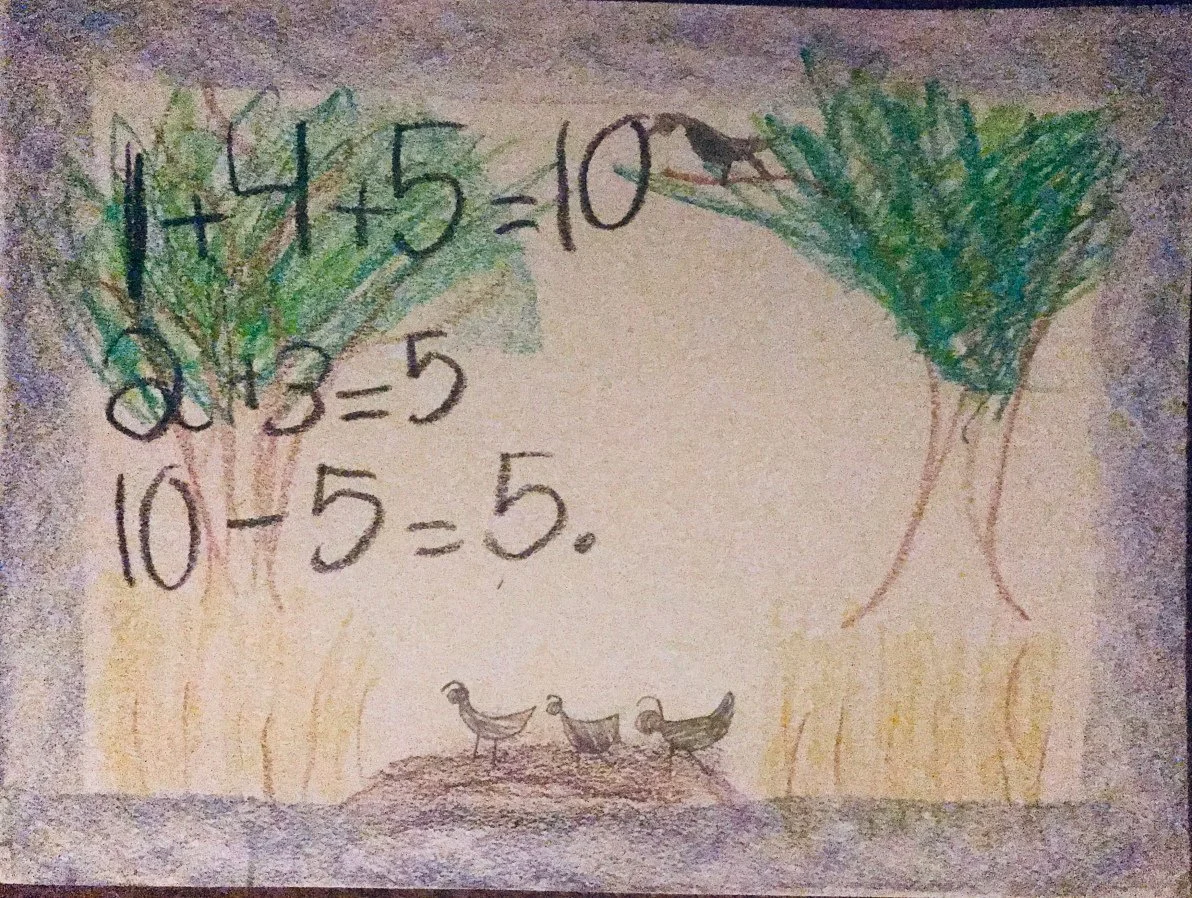
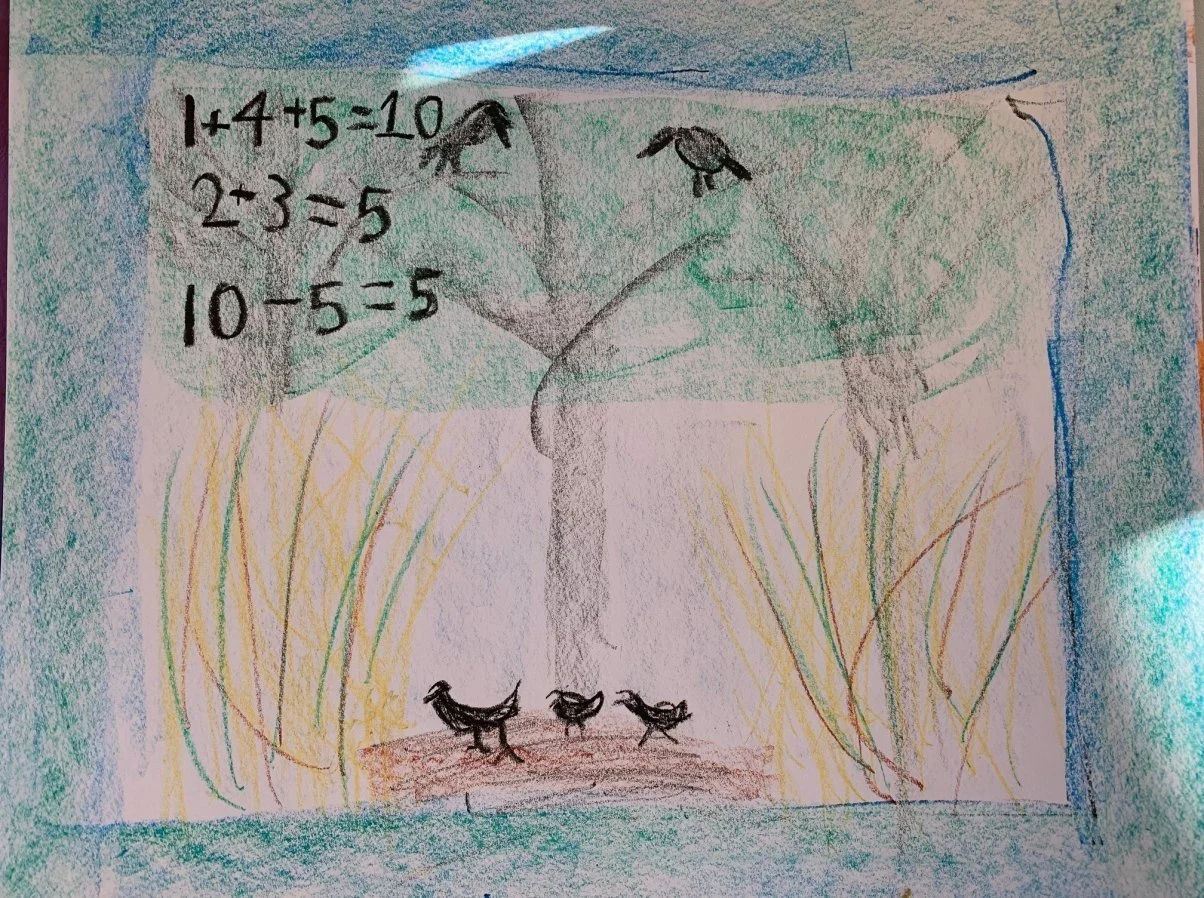
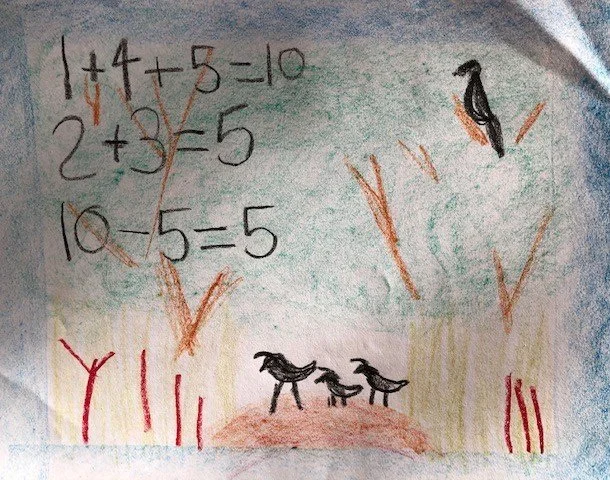
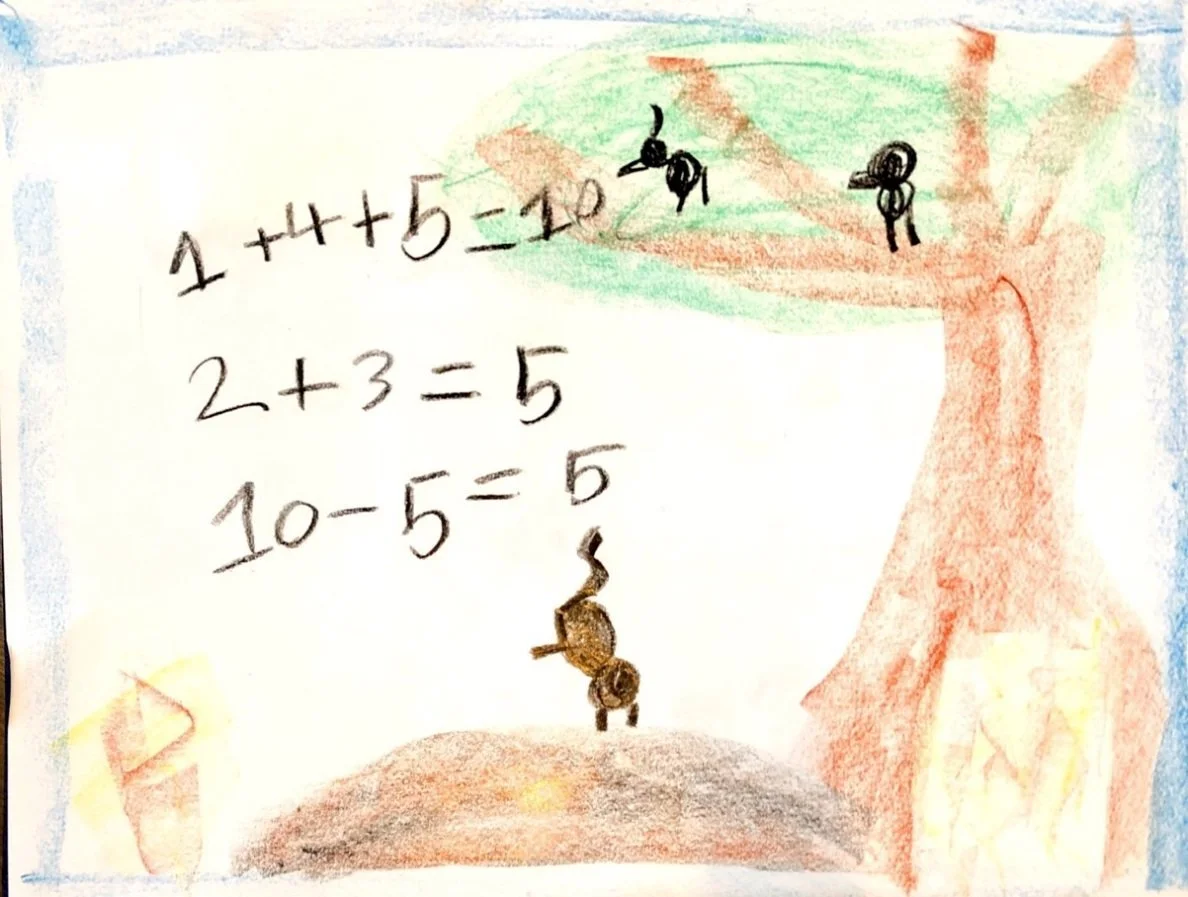
During this block, the main lesson concluded with the students writing their math sentences from the nature story in their books with a drawing of their choosing. Here is the math story:
This week, our First Grade teacher, Ms. Weger, shared this lesson from the last block of the year.
The First Grade students have been reviewing the four math processes of addition, subtraction, multiplication and division in their last three-week block of the year. Typically, a nature story of some kind is told, and the children follow along, inwardly calculating as they go.
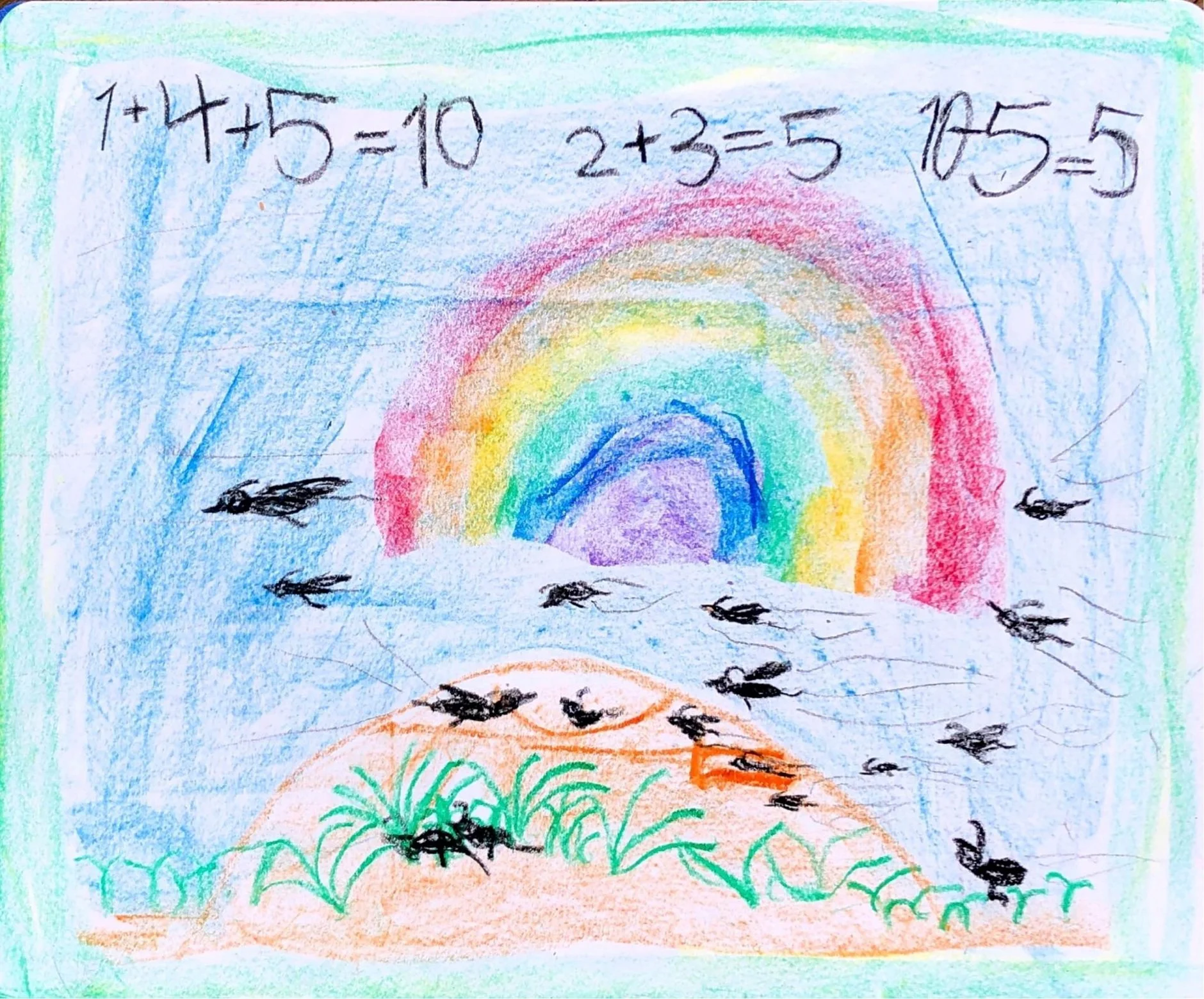
During this block, the main lesson concluded with the students writing their math sentences from the nature story in their books with a drawing of their choosing. Here is the math story:
The birds have become a symphony of sound from the trees since their babies hatched earlier this Spring! While walking, I noticed a family of quail cross the road. First the mama quail, and then 4 juvenile quail, and then 5 more juvenile quail. Including the mama, how many quail are there? _____. As the quail finished crossing the street, the crows started shouting at each other from the Bishop Pine trees above. There are 2 crows in one tree, and 3 crows in the other. How many crows are there? _____. How many more quail are there on the ground than crows in the trees? _____.
And here are some of the images the students created in response:
If you’d like to read more about the Waldorf curriculum’s approach to teaching math, The Chalkboard blog from Waldorf School of Moraine has a great introduction “Why is Waldorf Math Education Unique and Powerful?“
2nd Grade Haikus
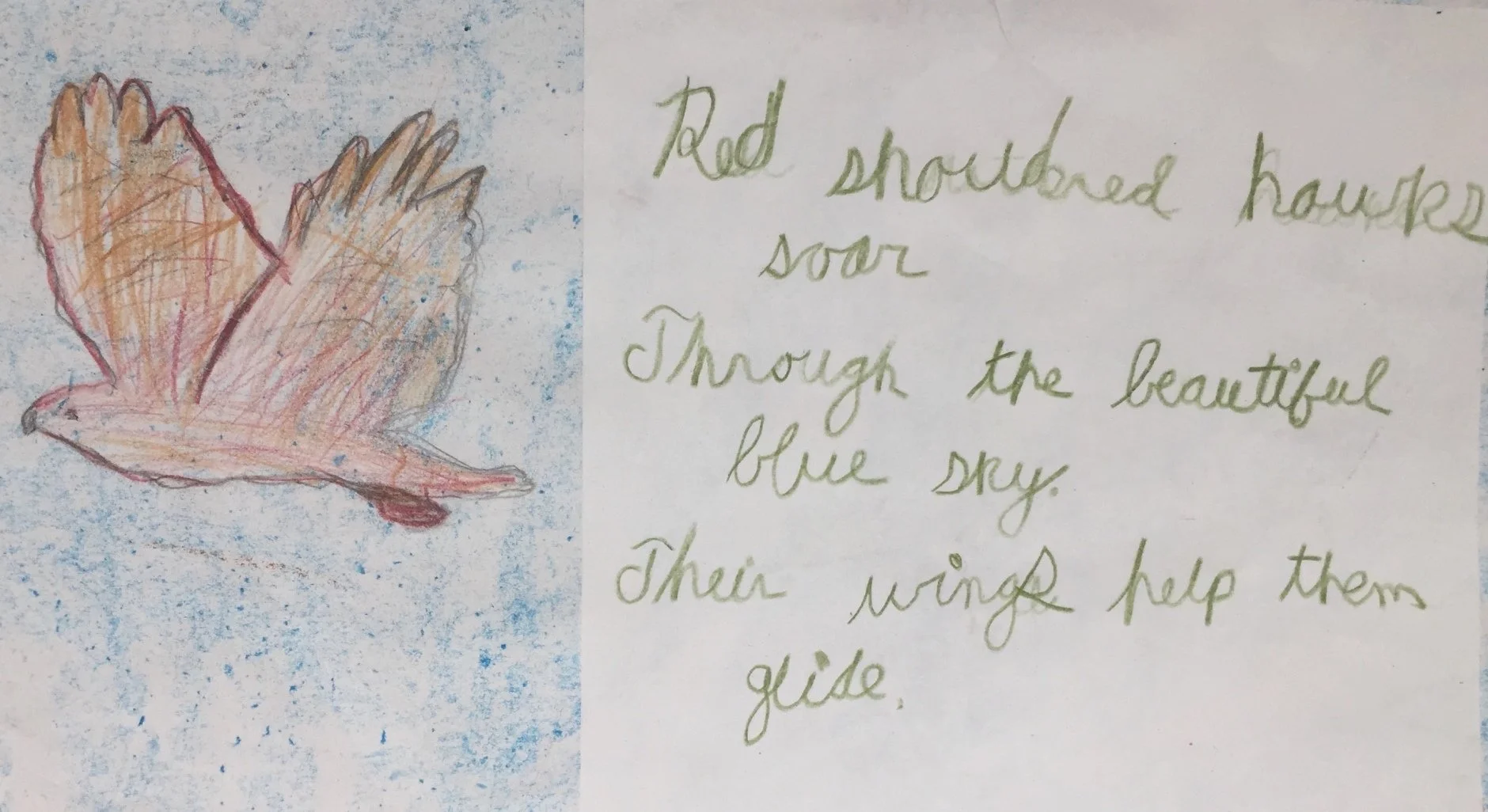
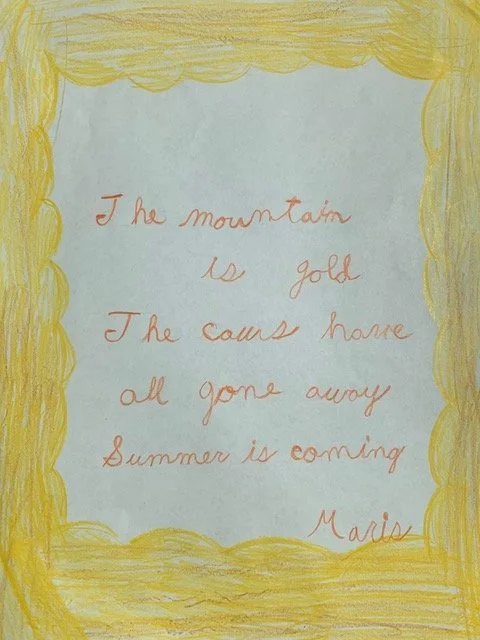
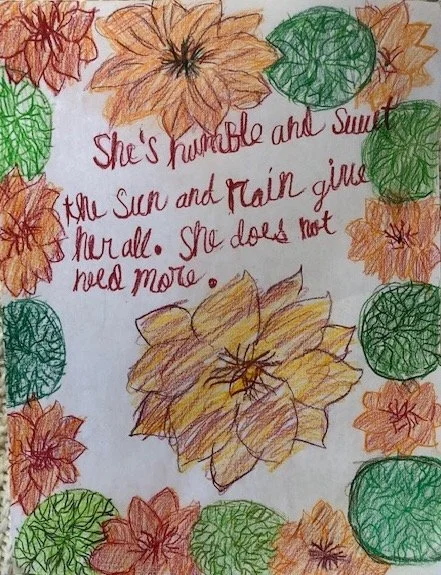
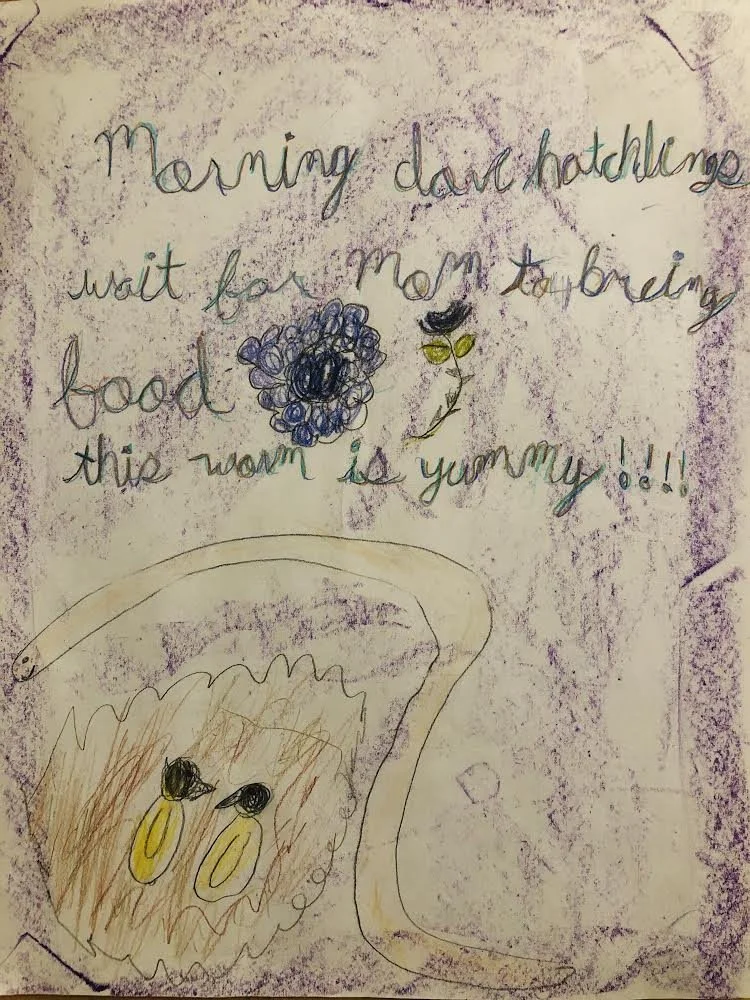
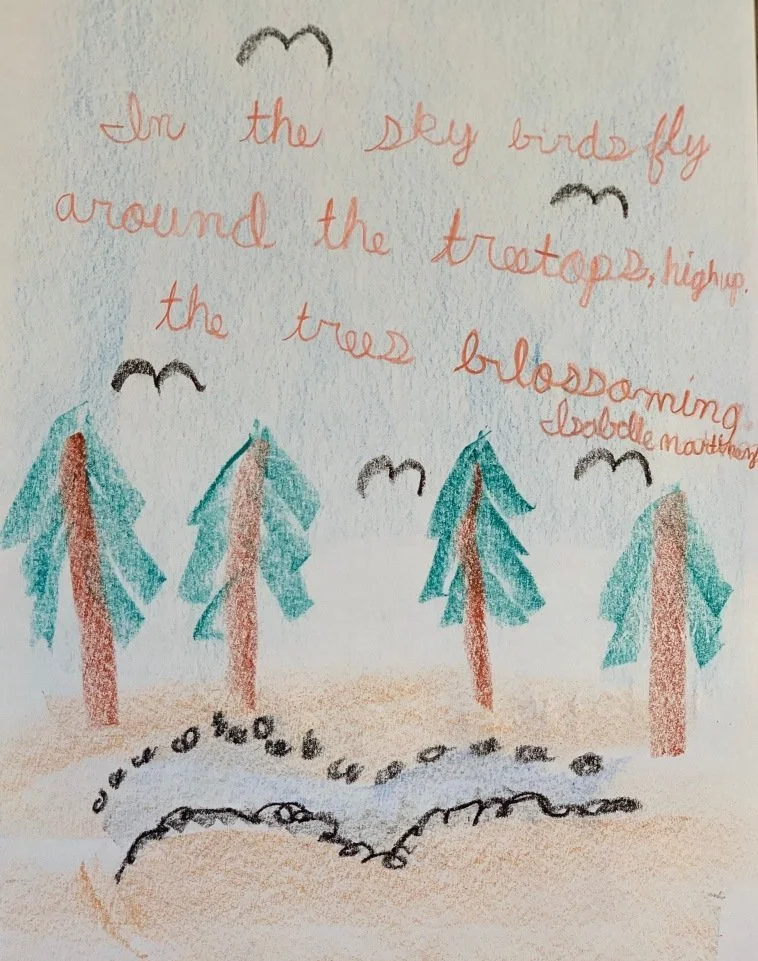
This week, 2nd Graders demonstrated their creativity, as well as their understanding of parts of the English language, by composing and illustrating haiku poems that describe the world around them. Below, our 2nd Grade teacher Ms. Martin shares her lesson, as well as some samples of student work.
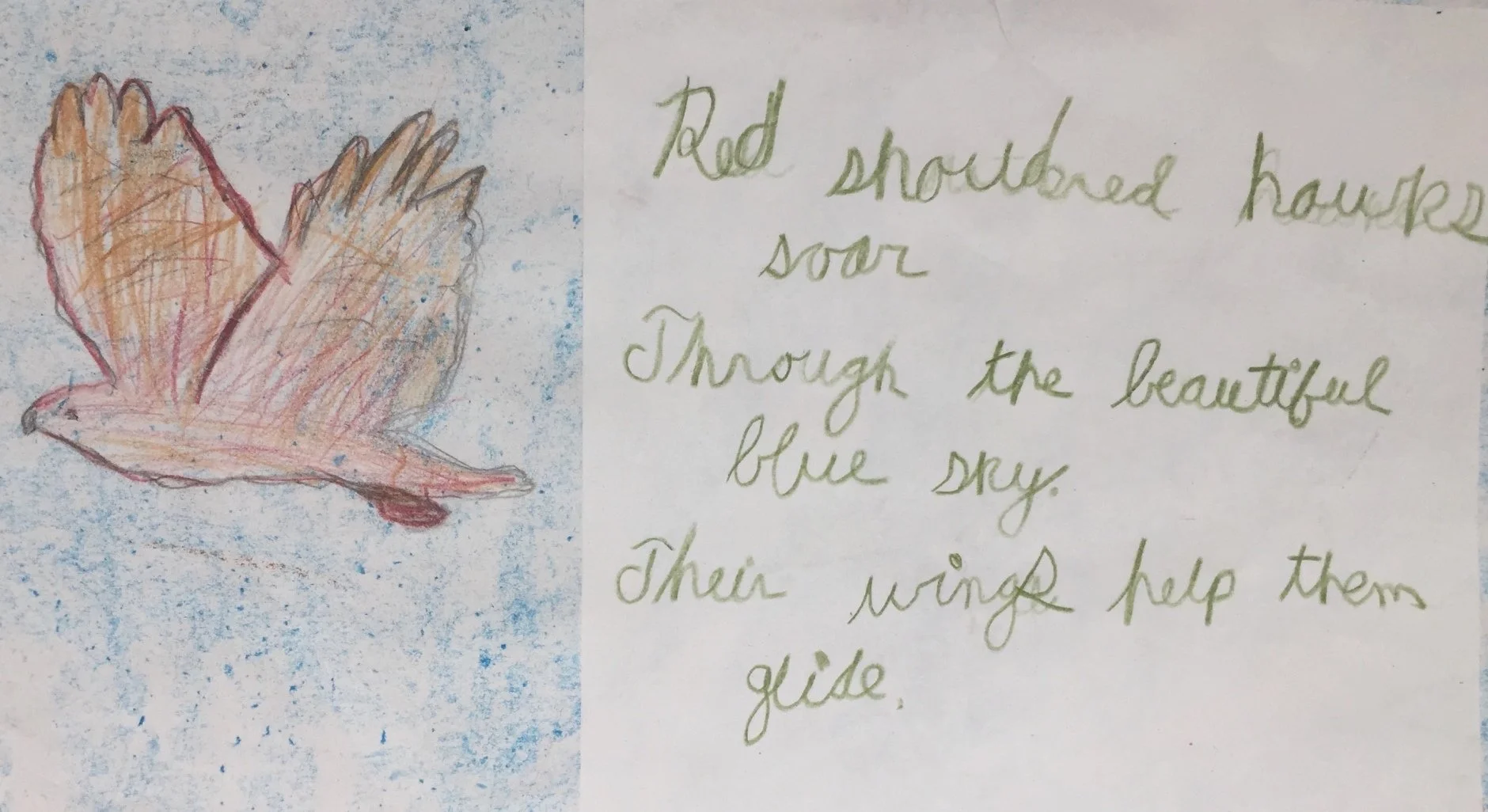
This week, 2nd Graders demonstrated their creativity, as well as their understanding of parts of the English language, by composing and illustrating haiku poems that describe the world around them. Below, our 2nd Grade teacher Ms. Martin shares her lesson, as well as some samples of student work.
Dear second grade children,
In these past few weeks, you have learned about naming words (nouns), doing words (verbs) and describing words (adjectives) and have seen how they work together to make a sentence. Now, in writing a haiku, you are using these parts of a sentence , and also your senses! What do you see, taste, feel, hear? Remember, a haiku is a short poem that captures a moment in time. It is a small window into a moment or an experience. We have heard many stories of saints and sages in these past few weeks!
Do you think Francis of Assisi observed nature? Remember how he communicated with the birds and the wolf of Gubbio? Odelia did not have her eyesight from the time she was born until she was a young woman, and yet she knew of the ways of nature. She felt the wind on her cheeks and could feel the flowers growing in a way most of us are not familiar with. Do you remember that Kee-ten (the Native American author, Mourning Dove) had to learn as a child to listen to the river, the wind and all of nature which was trying to speak to her?
When we sit still to listen and see the tiny creatures of the earth, or the twinkling stars on an early morning, or the intricate, colorful wings of a butterfly, we too are listening to nature! What is it trying to teach us? What moment in time would you like to share?
In order to write your haiku you must:
Choose a topic
Sit, listen, observe
What would you like to share? Count the syllables. A haiku is 3 lines, with the first and last line being 5 syllables and the middle line being 7 syllables.
Write your haiku!
Here is the haiku I wrote, inspired by the fawns I saw in front of our
classroom.
Two fawns in tall grass.
Spotted, brown and white they lay,
Curious and calm
The most famous haiku poem of the most famous haiku poet in Japan.
古池や 蛙飛び込む 水の音
The old pond
A frog leaps in.
Sound of the water.
The syllables are different in Japan than they are in English!
Thank you, children, for doing your best work in writing your Haikus. I look forward to seeing what you have created.
Warmly,
Mrs. Martin
A Knight’s Challenge
The interdisciplinary and experiential nature of Waldorf education encourages students to explore topics with their hands, with their hearts, through art, and through doing. A few days ago, we highlighted the way our gardening teacher, Ms. Betsyann, tied the 7th Grade curriculum to work in the garden with a video about spirals in the natural world.
The interdisciplinary and experiential nature of Waldorf education encourages students to explore topics with their hands, with their hearts, through art, and through doing. A few days ago, we highlighted the way our gardening teacher, Ms. Betsyann, tied the 7th Grade curriculum to work in the garden with a video about spirals in the natural world.
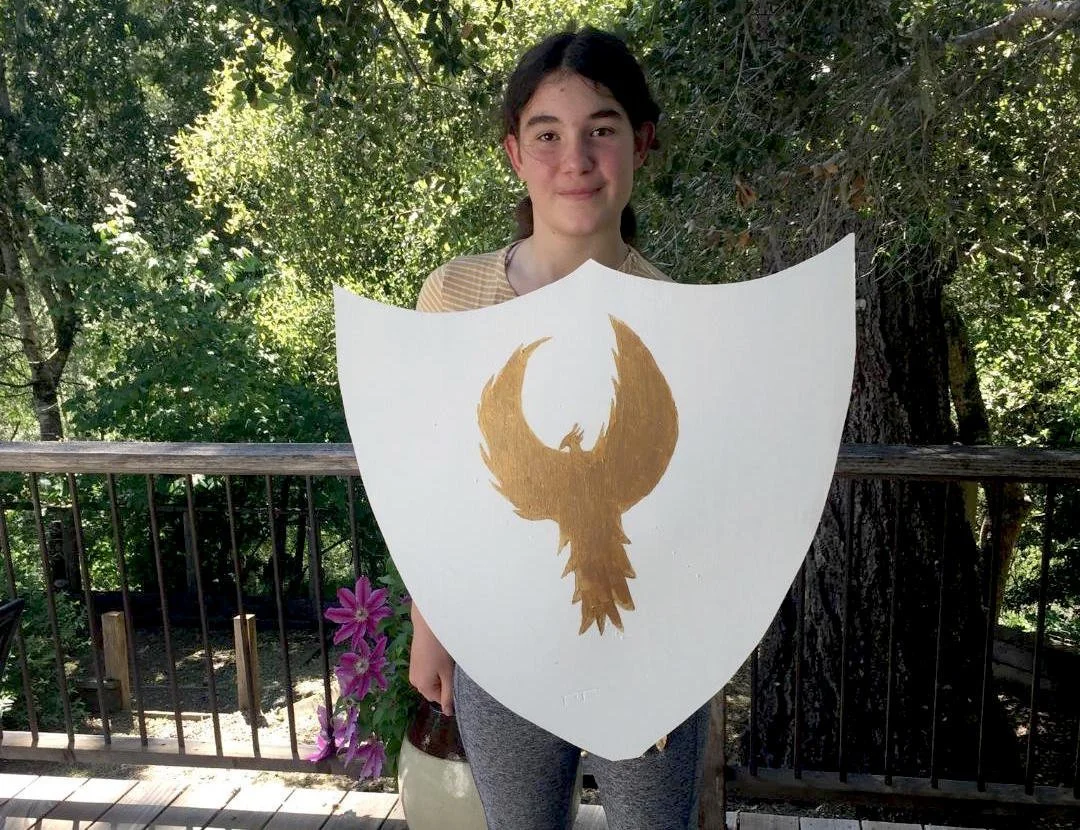
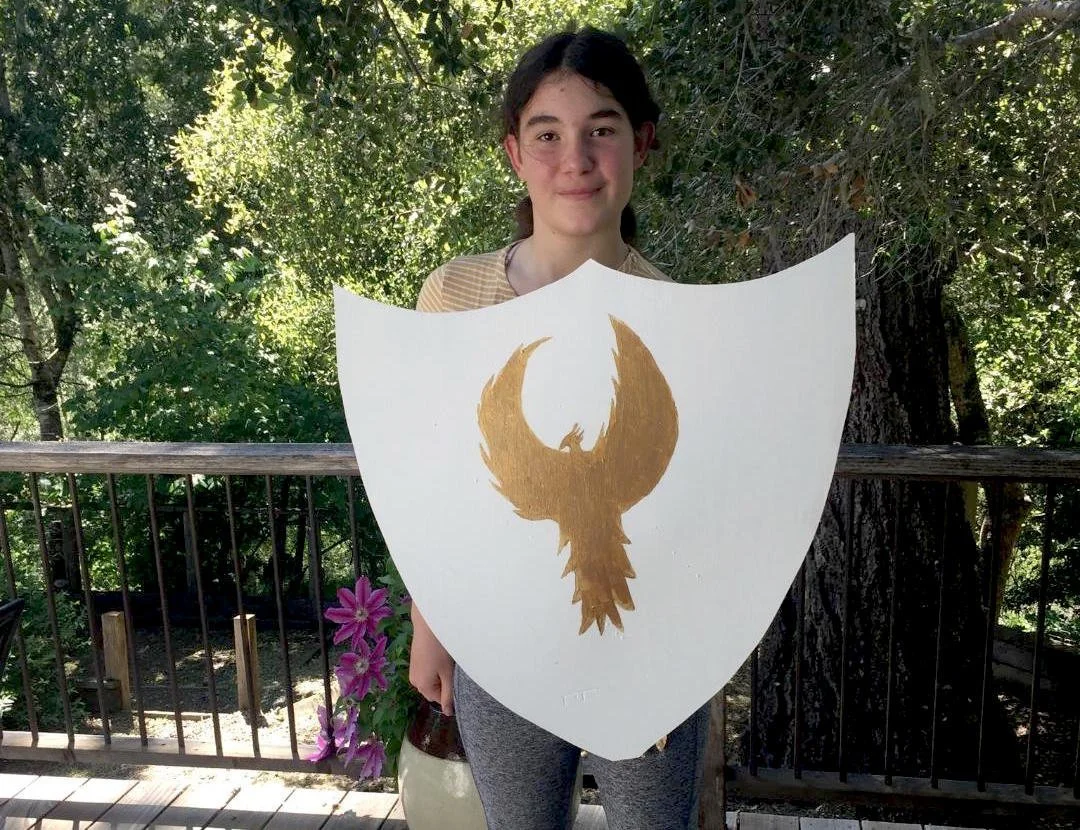
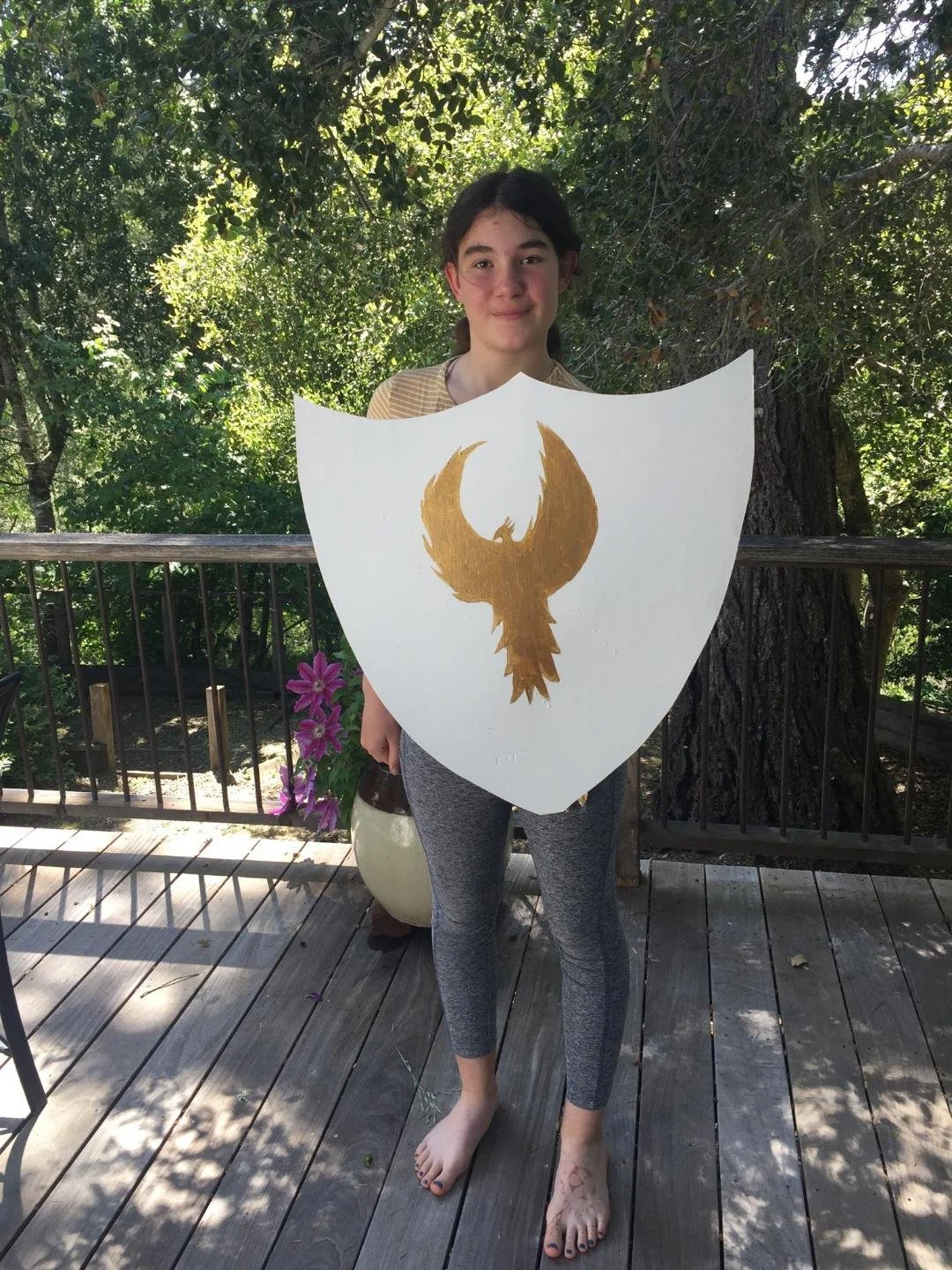
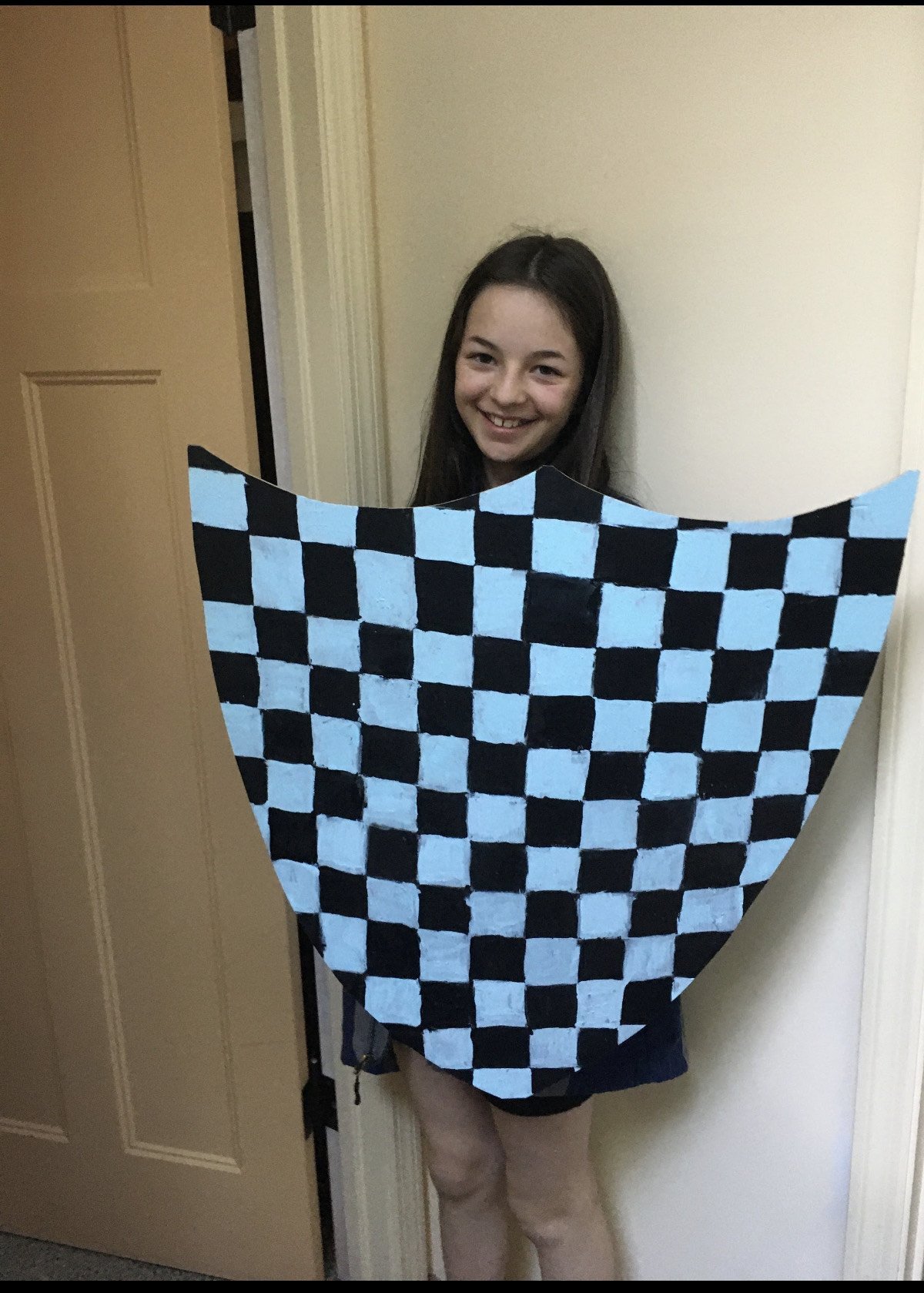
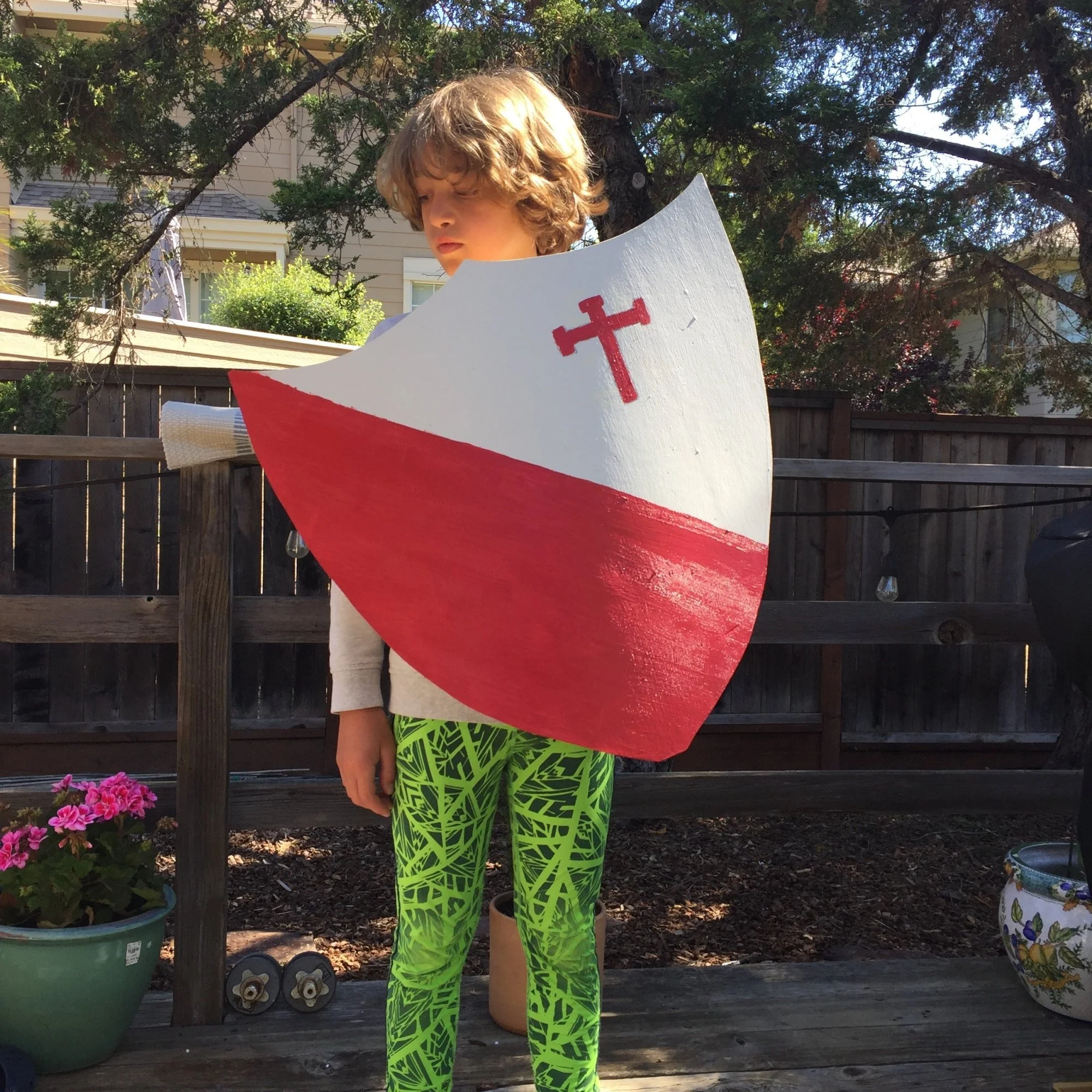
In the video (left), our woodwork teacher, Mr. Neale, helped bring the 6th Grade study of the Middle Ages to life by providing students with materials and instructions for creating and painting their own knight’s shield.
The project dovetailed with 6th Grade Ms. Terziev’s “Knight’s Challenge,” in which she asked 6th Graders to complete a series of tasks to become like modern-day knights.
Here are pictures of some of the 6th Graders’ fine work on display!
Click here to see other pictures from 6th Grade main lesson books during the Middle Ages block.
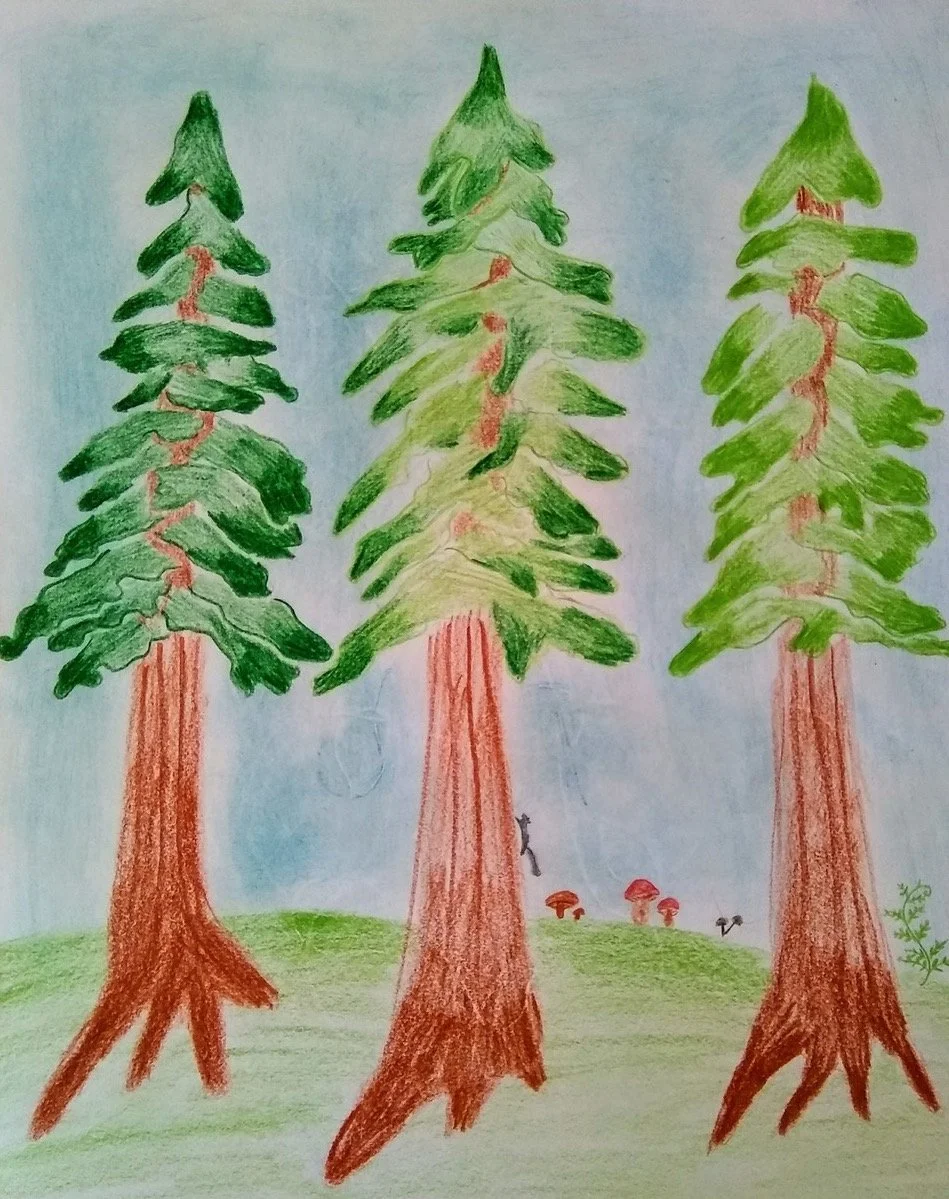
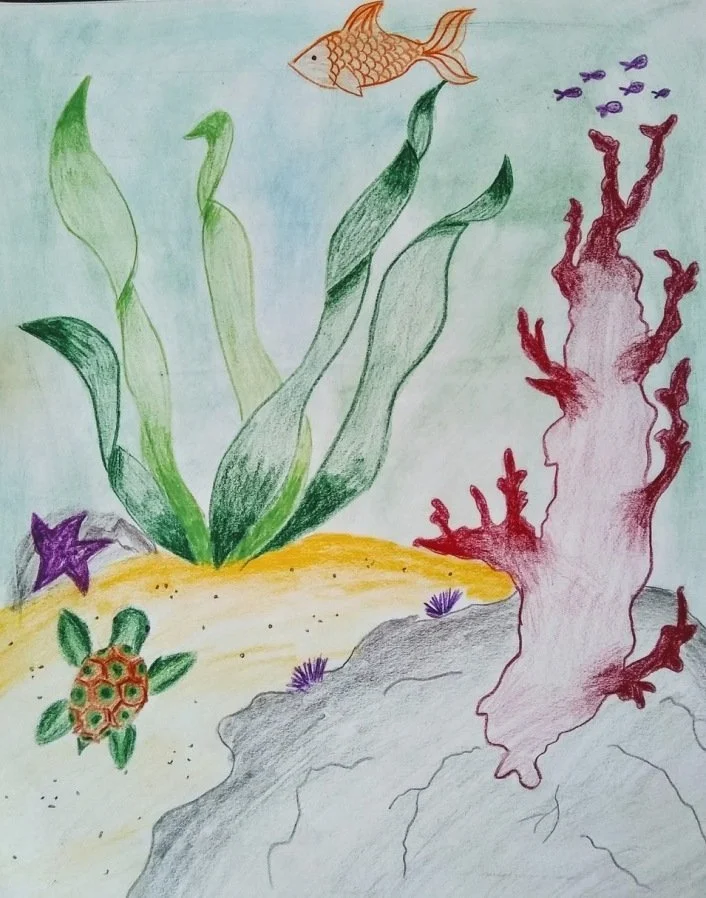
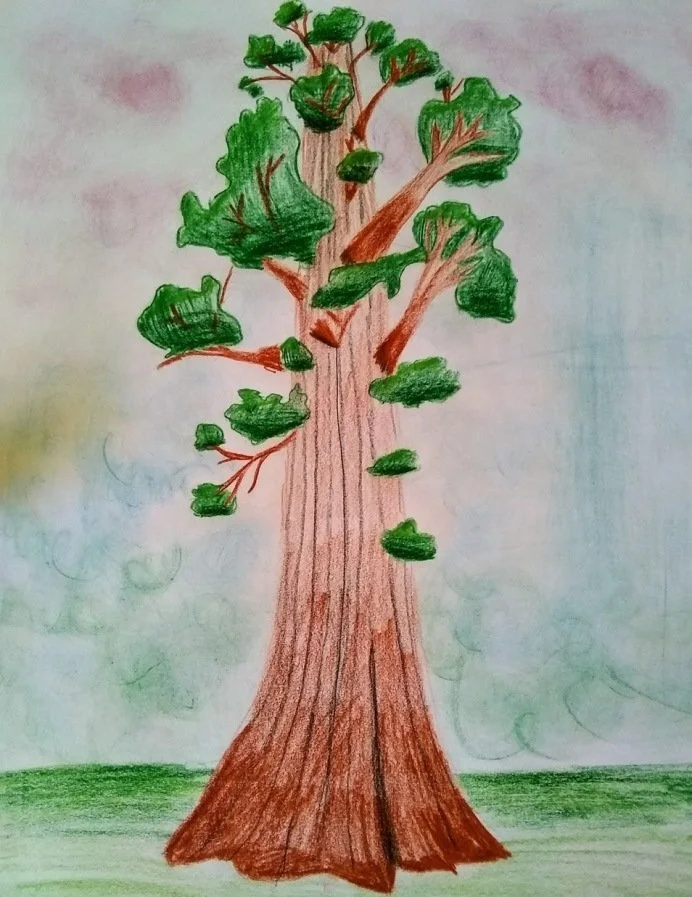
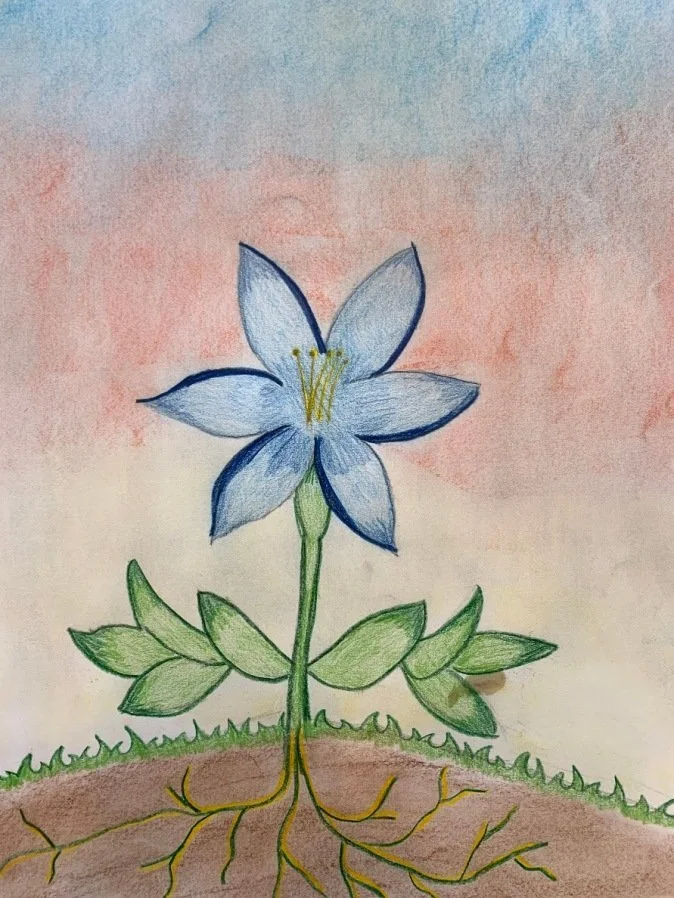
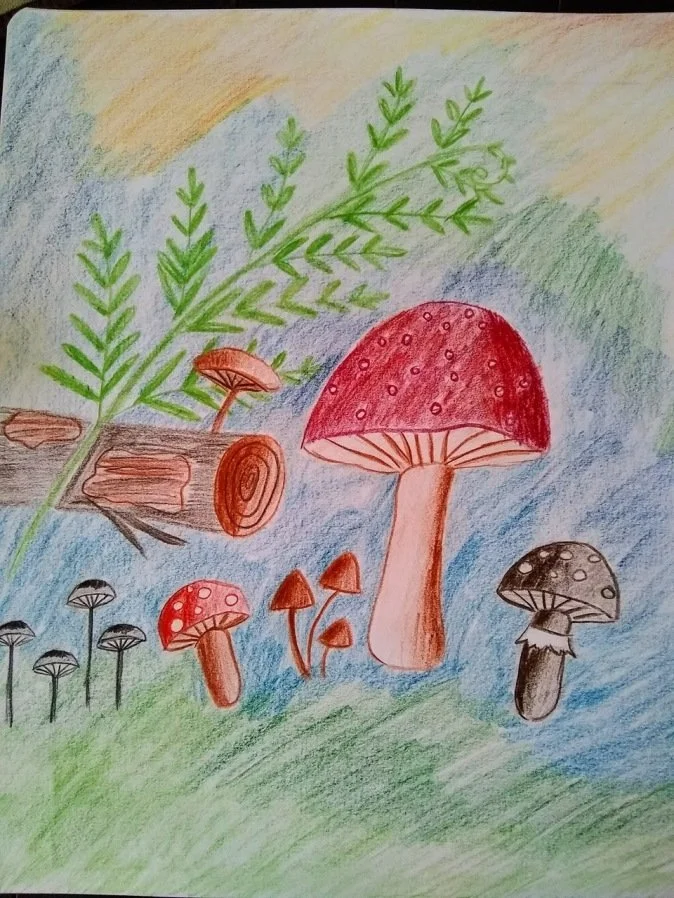
Gallery: 5th Grade Botany Drawings
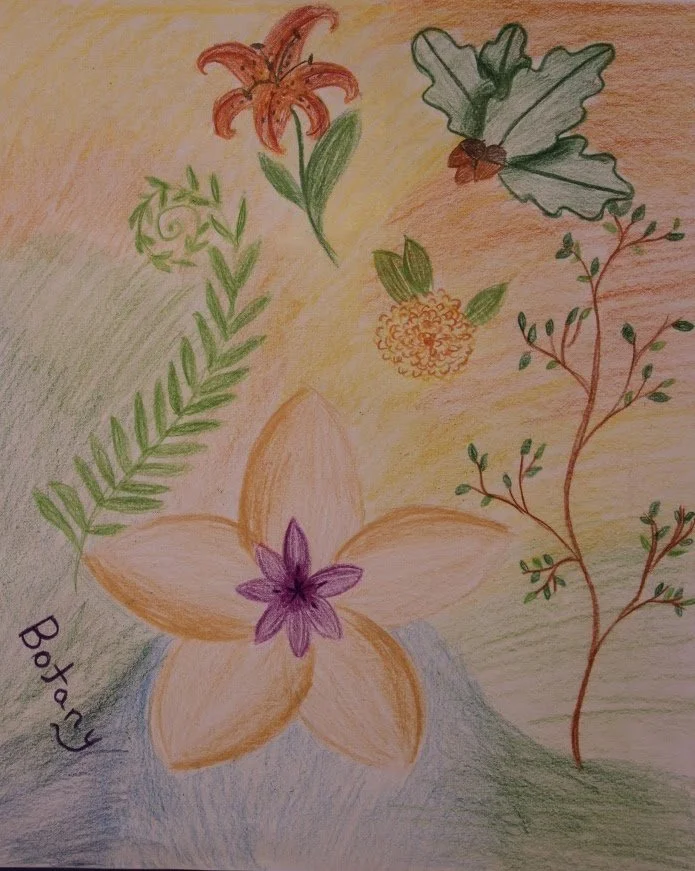
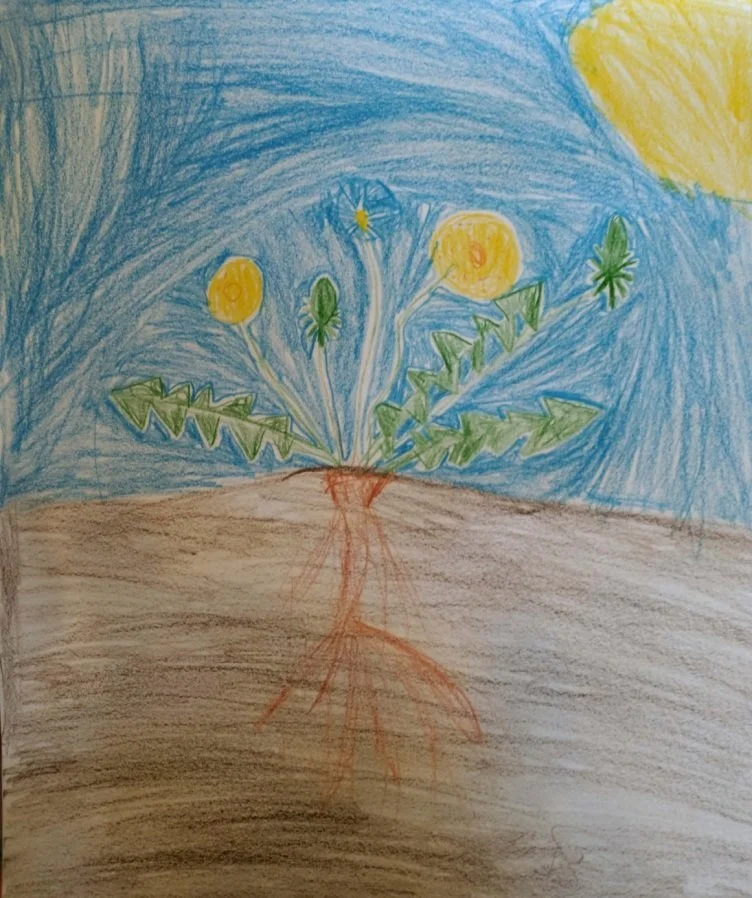
Fifth Grade’s botany block begins with the study of mushrooms, working its way to trees and flowering plants. Our 5th Grade teacher, Mr. Stopeck, shared these wonderful main lesson pages created by his students.
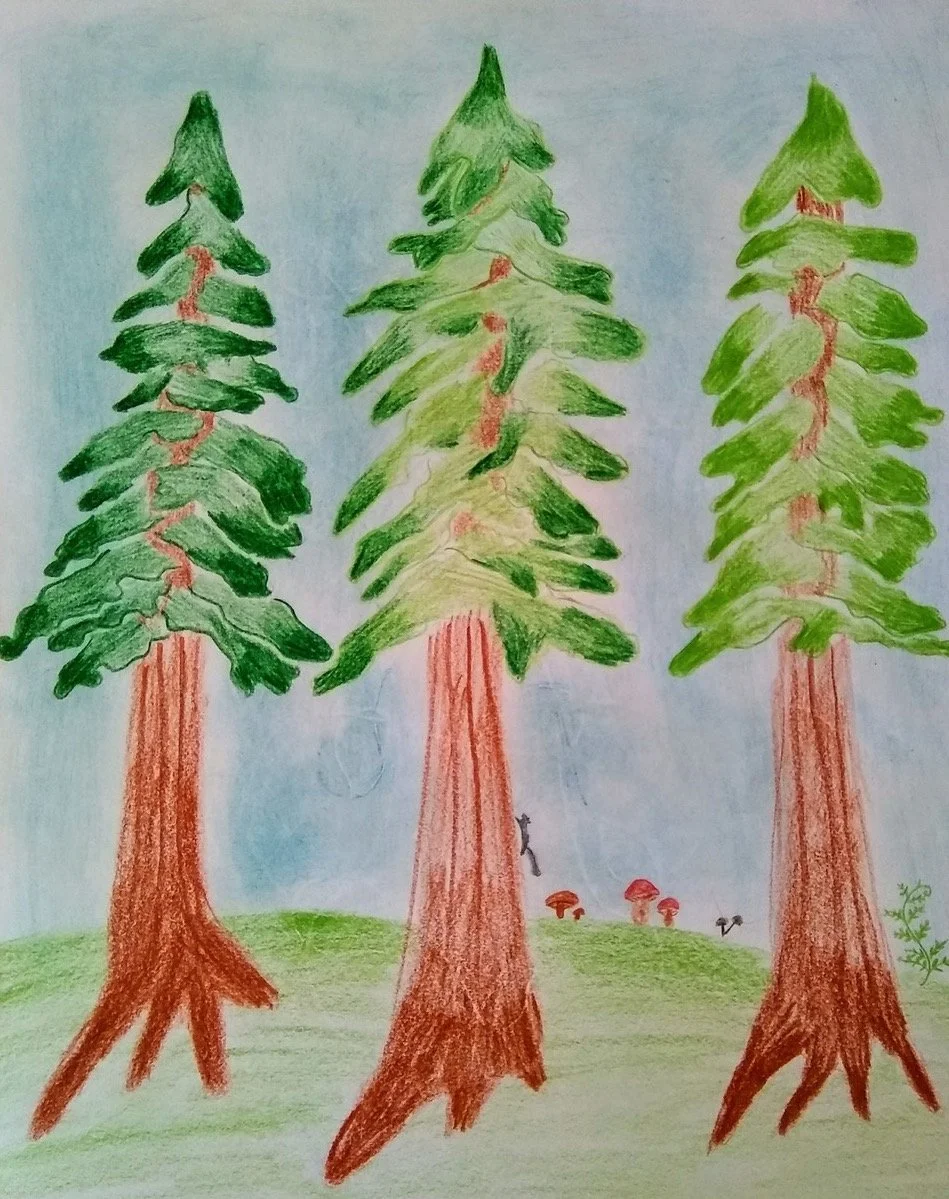
Fifth Grade’s botany block begins with the study of mushrooms, working its way to trees and flowering plants. Our 5th Grade teacher, Mr. Stopeck, shared these wonderful main lesson pages created by his students.

The Vortex: A 7th Grade Lesson (Video)
Throughout the grades, the Waldorf curriculum is interdisciplinary and experiential, helping students make connections between different subject matter and to understand their place in the natural world. This week, our gardening teacher, Ms. Betsyann, shared this example of how two subjects can be beautifully integrated in the 7th Grade curriculum.

Throughout the grades, the Waldorf curriculum is interdisciplinary and experiential, helping students make connections between different subject matter and to understand their place in the natural world. This week, our gardening teacher, Ms. Betsyann, shared this example of how two subjects can be beautifully integrated in the 7th Grade curriculum.
Ms. Betsyann explains:
“Kristine Deason asked for a small contribution about the marvels of the world of nature as they relate to the Fibonacci sequence or golden spiral. The common vortexes that we see in nature are tornadoes, dust devils, rivers, eddies, tidal action, hurricanes, and leaf swirls. In this video I chose to concentrate on the vortex created in a Biodynamic stir.”
Outdoor Ed: Portable Hand-Washing Station
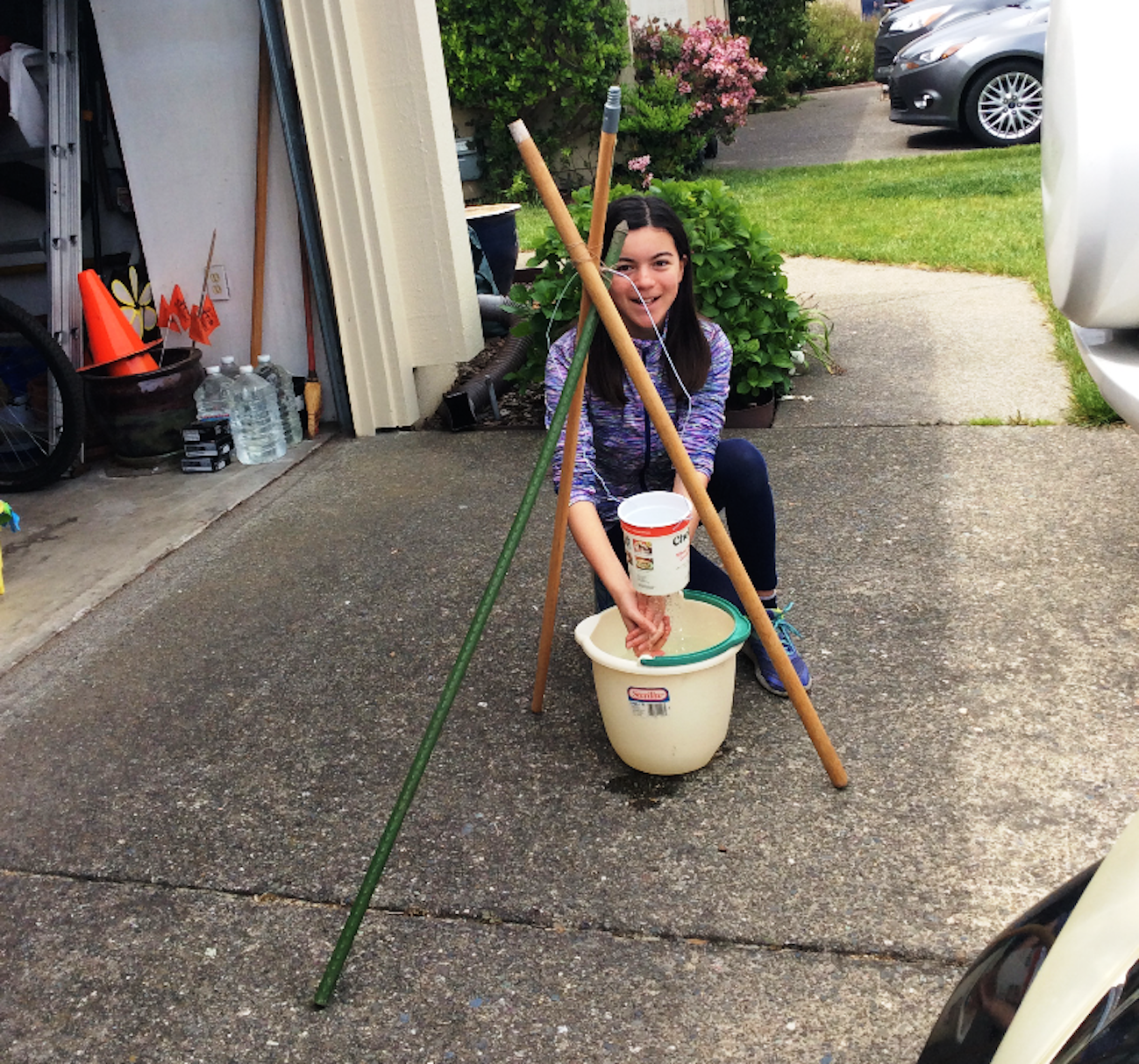
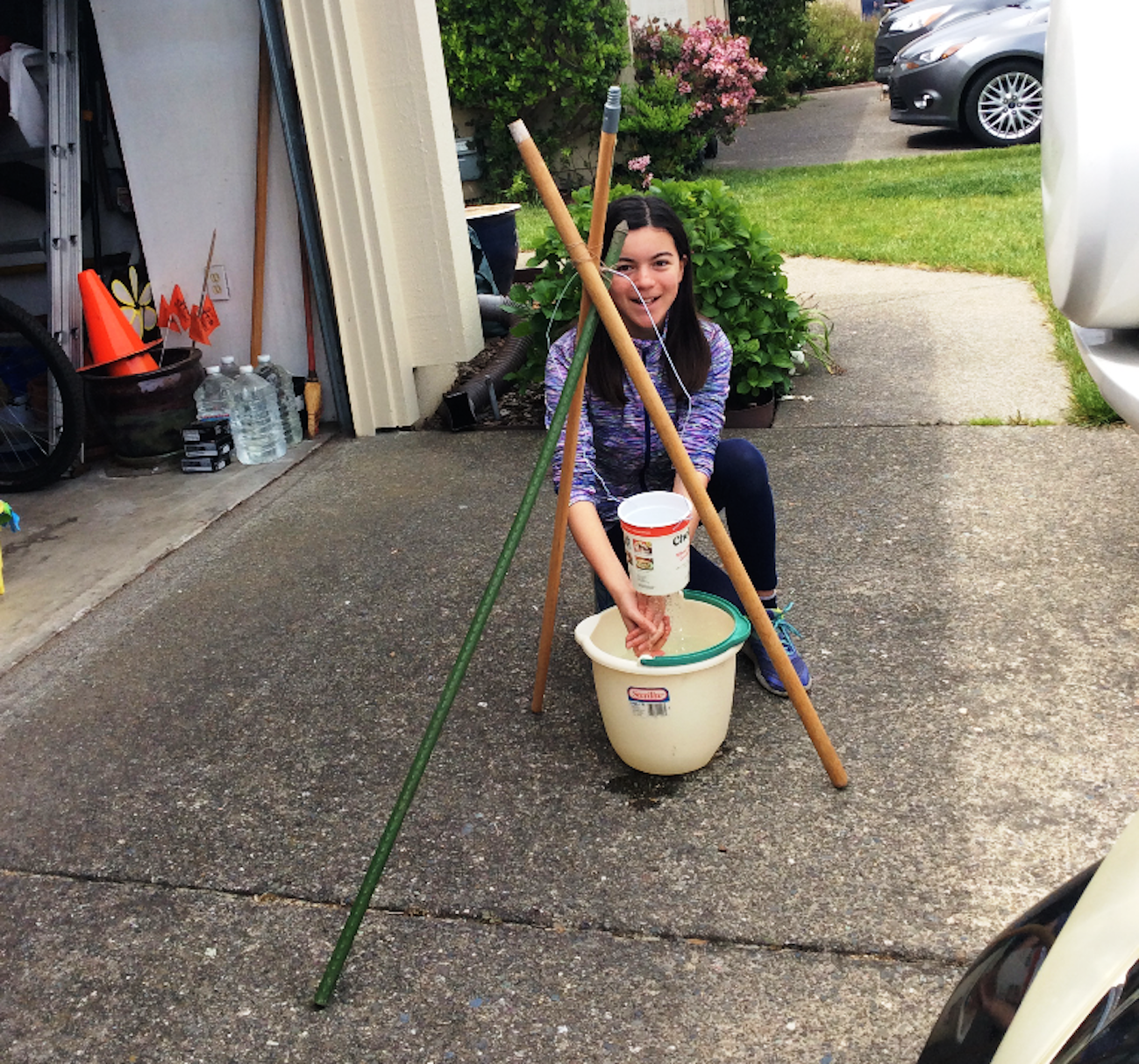
The class: Outdoor Education. The challenge: to create an outdoor hand-washing station using everyday things you can find in your home.
In this video, our outdoor ed teacher Mr. Neale shows middle school students how he created a simple apparatus you can use to wash your hands when camping, on a kayaking trip, or at the beach.
The class: Outdoor Education. The challenge: to create an outdoor hand-washing station using everyday things you can find in your home.
In this video, our outdoor ed teacher Mr. Neale shows middle school students how he created a simple apparatus you can use to wash your hands when camping, on a kayaking trip, or at the beach.
Create a portable and water friendly wash station for field trips and camping trips.
Materials
Bucket or wash tub
16 oz plastic cup ( yogurt cup)
24 inches of string
12 inches of wire (coat hanger)
A nail or screw for making holes in cup
3 sticks 48 inches long or longer, broomstick size
The featured image at the top of this post shows the handmade station created by 6th Grade student Zoe at home! Nice work.
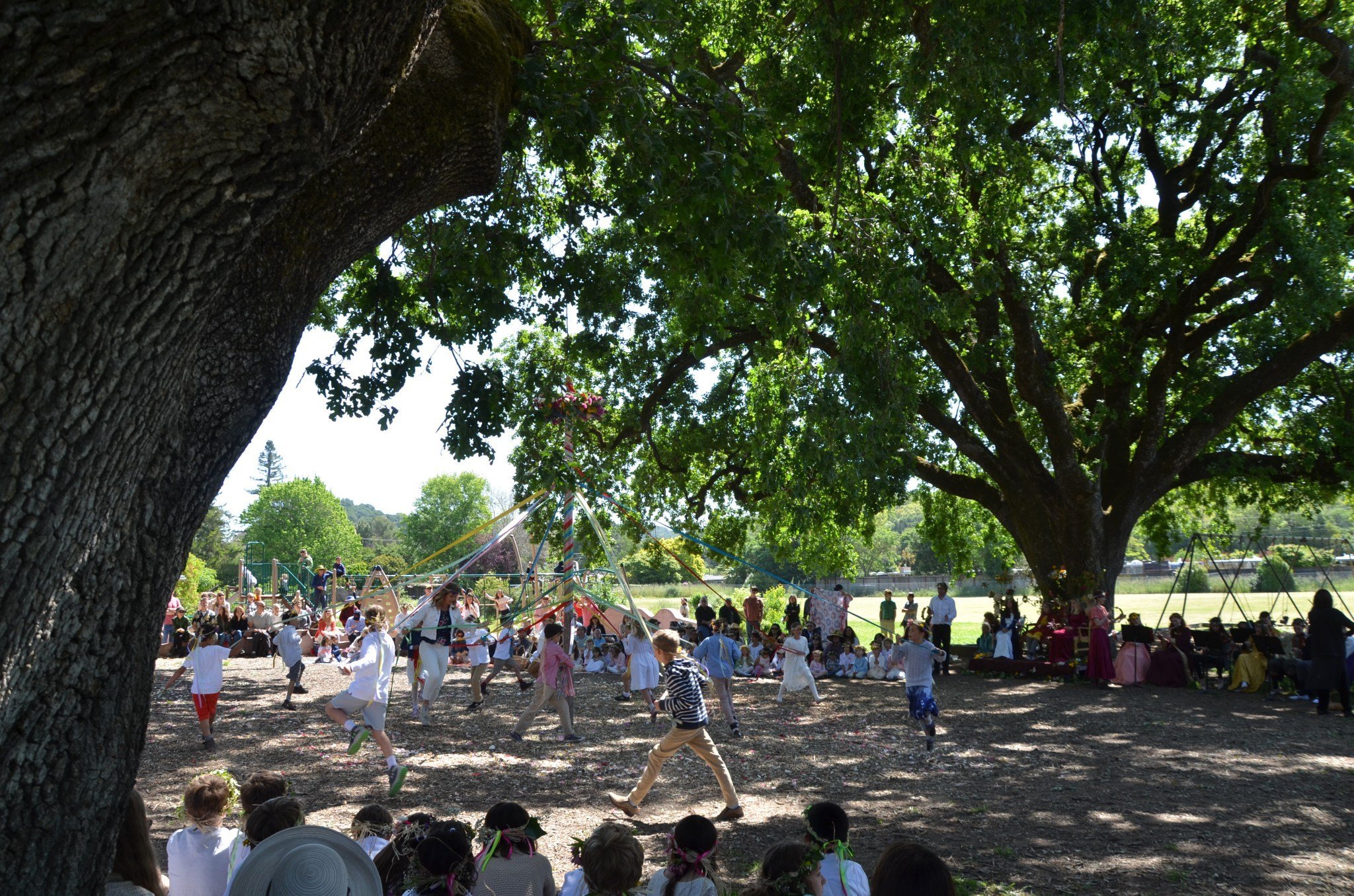
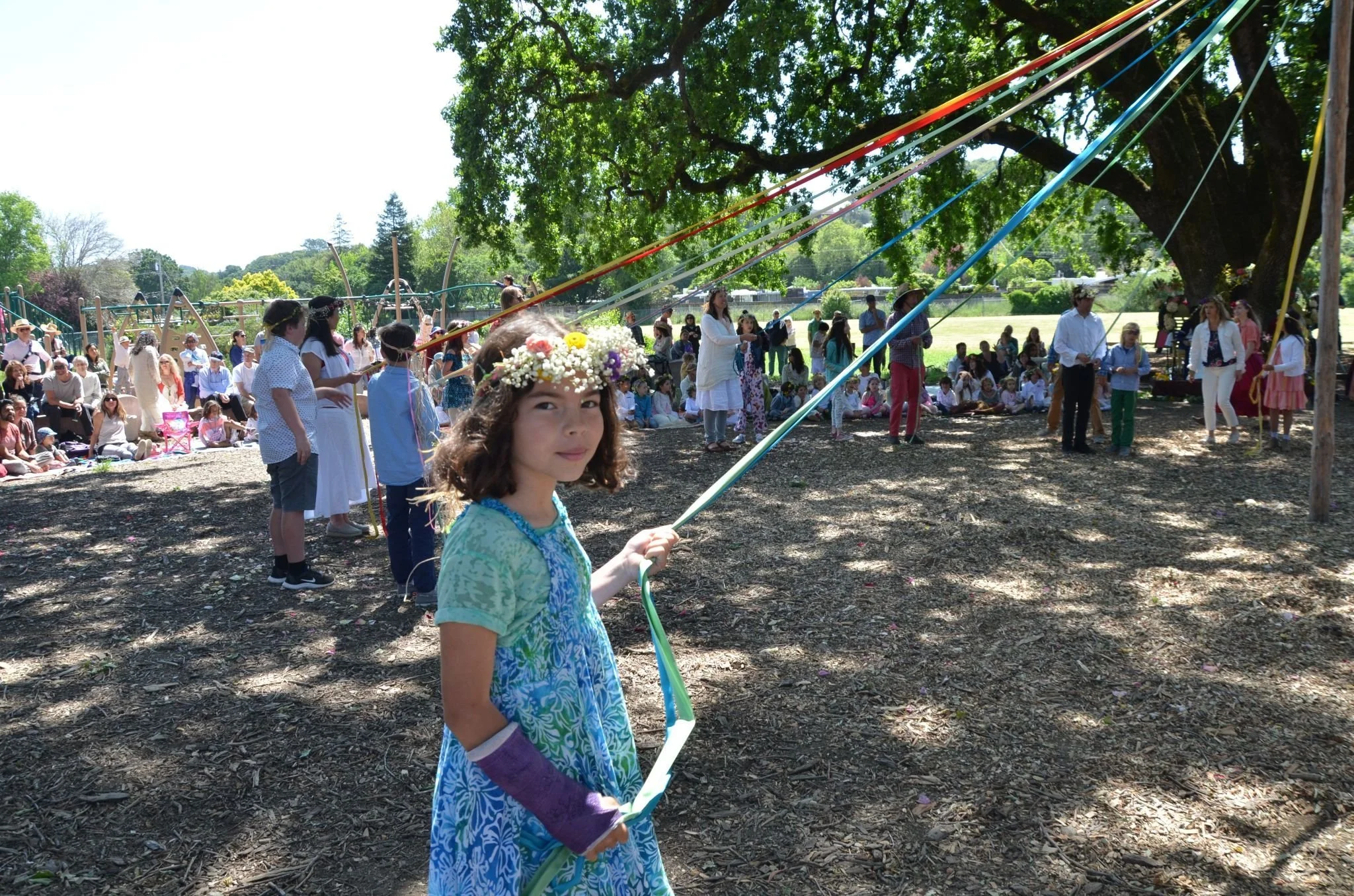
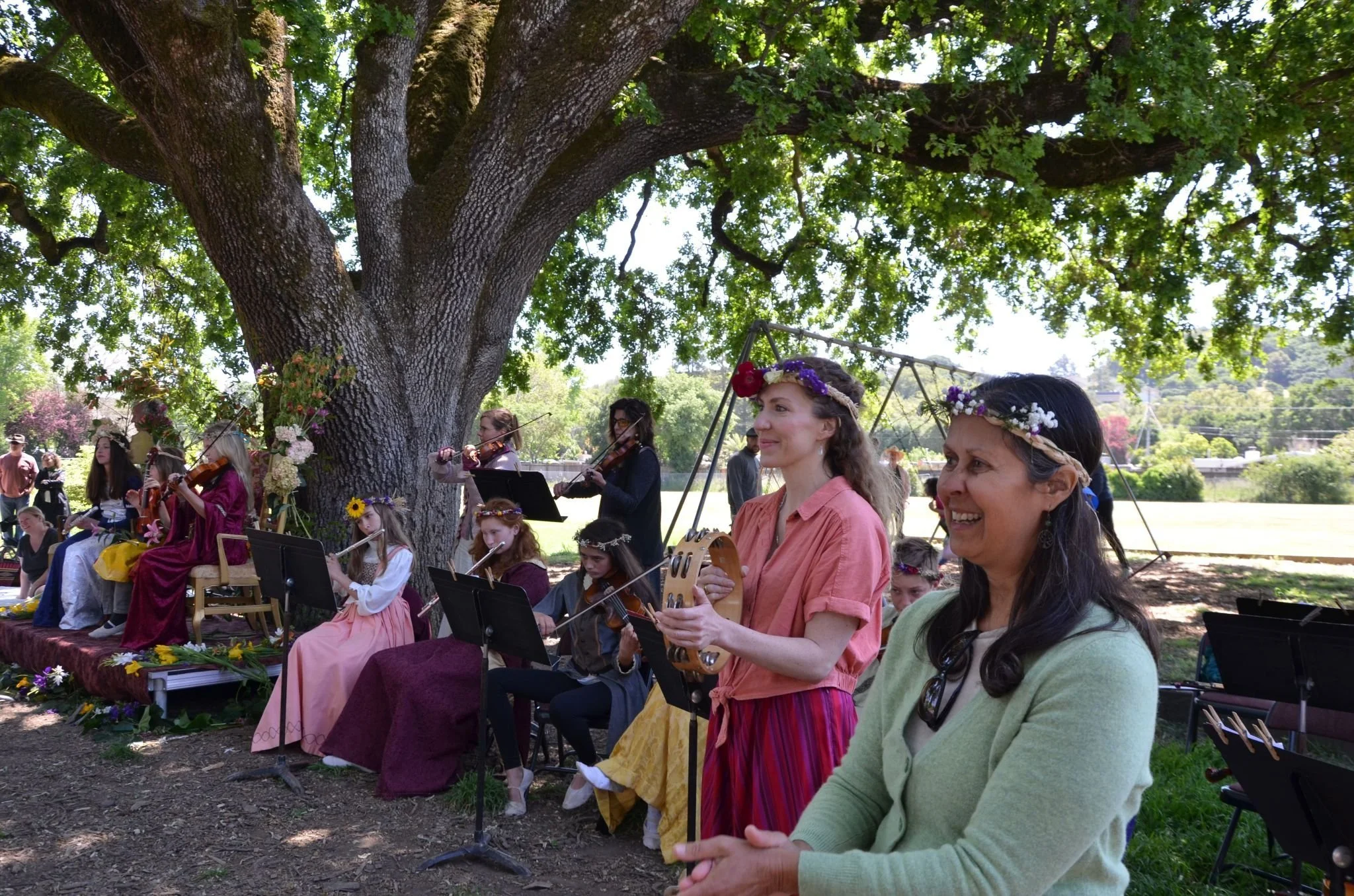
It’s Spring! Flower Projects to Celebrate May Faire
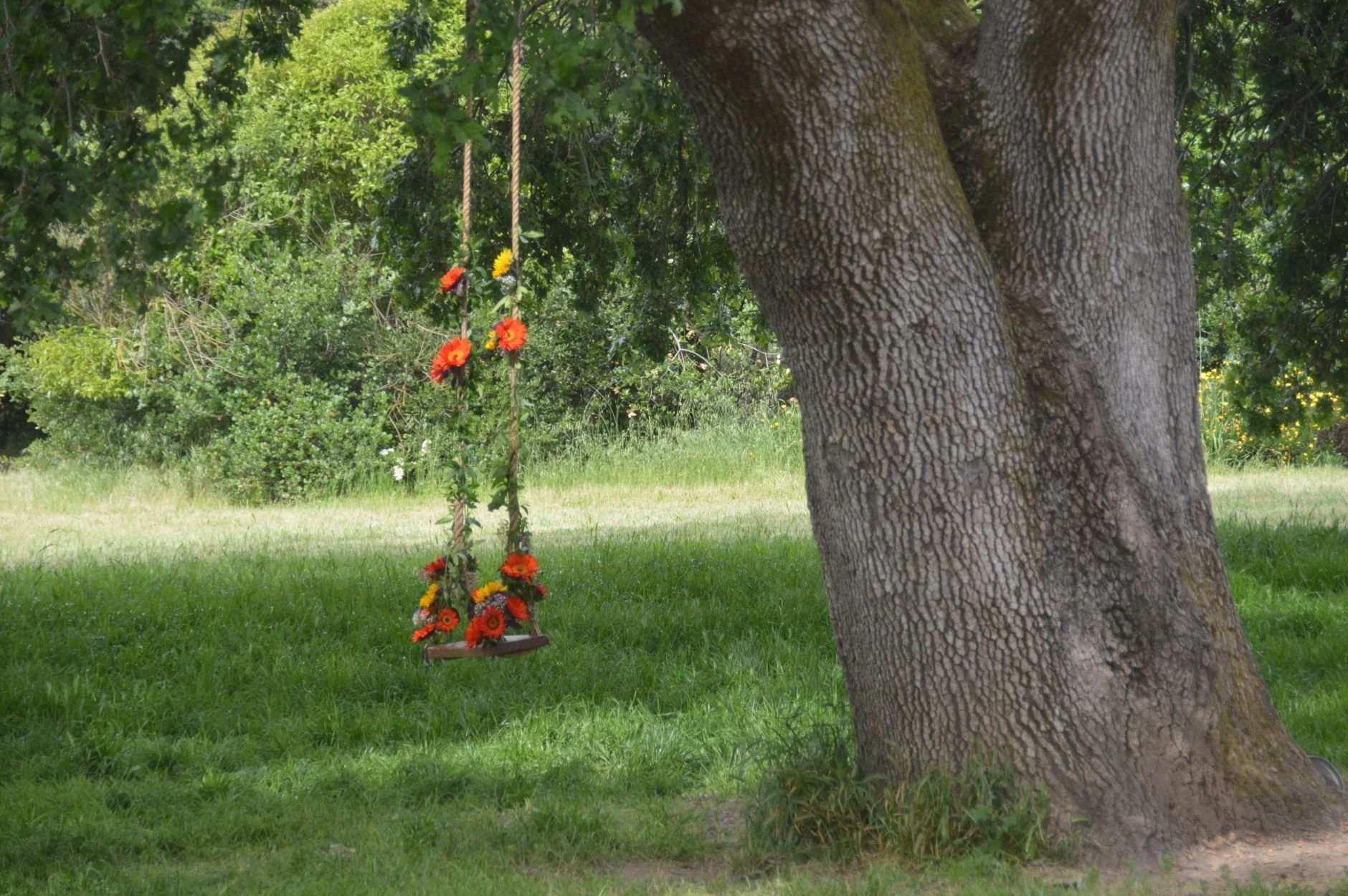
Our annual May Faire is a celebration of spring and of community. While our campus is closed, we have a plan to celebrate the hope and beauty of springtime together, in addition to spreading that joy to our neighbors, friends, and grandparents, who were supposed to be the guests of honor at this year’s May Faire (stay tuned for more information on that!).
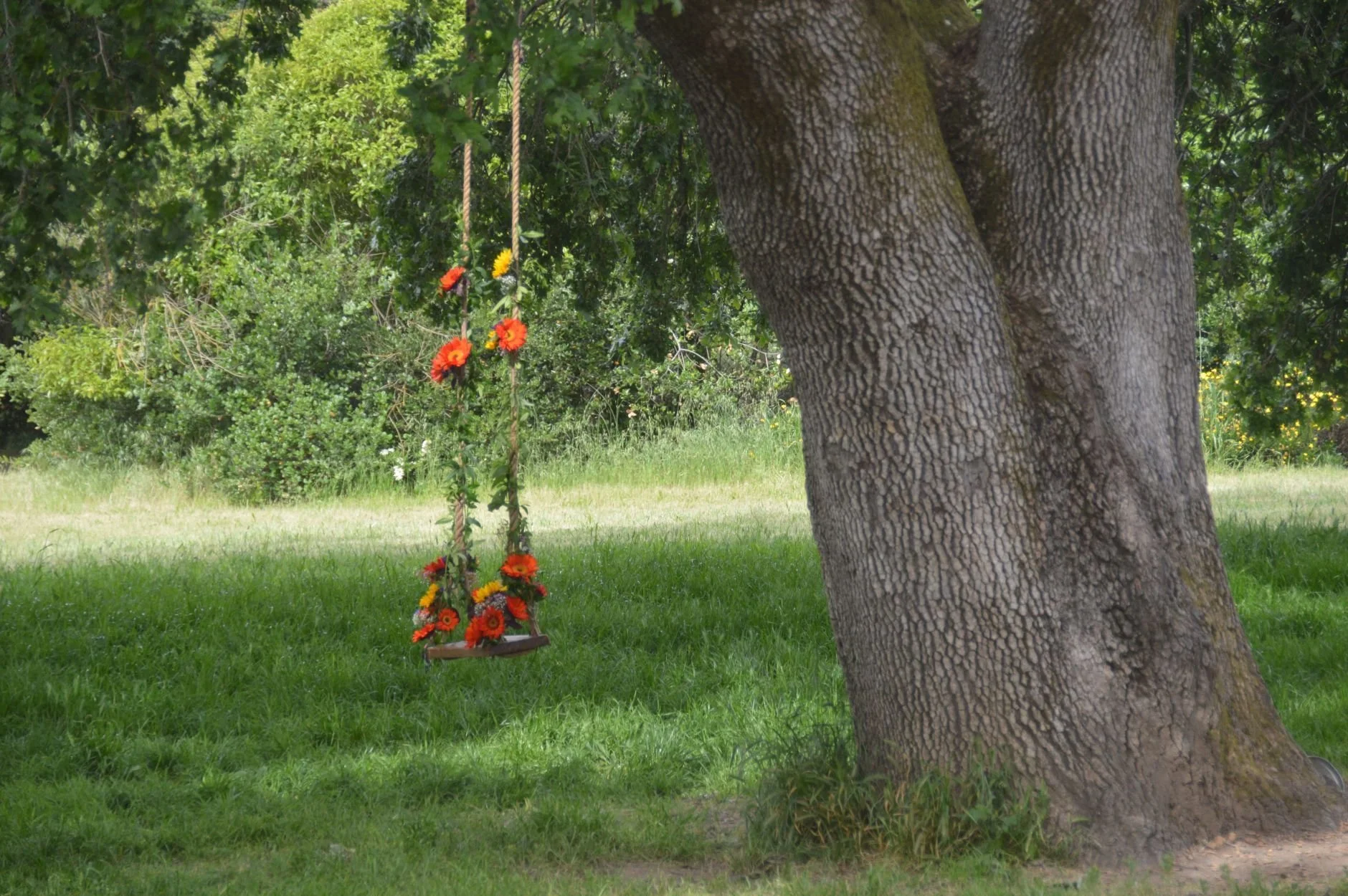
UPDATED WITH MORE RESOURCES! Our annual May Faire is a celebration of spring and of community. While our campus is closed, we have a plan to celebrate the hope and beauty of springtime together, in addition to spreading that joy to our neighbors, friends, and grandparents, who were supposed to be the guests of honor at this year’s May Faire (stay tuned for more information on that!).
Flower Crowns
At school, every student and teacher (as well as many parents) create flower crowns from fresh flowers woven into a ring of braided raffia. If you have an abundant garden at home or a stash of silk flowers to use, making a crown is the traditional way to celebrate May Faire. Our colleagues at the Pasadena Waldorf School have some wonderful suggestions for creating May Faire baskets and flower crowns, as well as other May Faire beauty, at home. Here’s another video tutorial for making a fresh flower crown with floral wire or headband.
Missing the raffia or floral wire? Here is a lovely tutorial for creating a finger-knit crown with fresh flowers from Cedarwood Waldorf School. Or you could try this Celtic-knot headband made of an old T-shirt.
Missing the garden roses? Try one of the flower-making tutorials we’ve recommended below.
Folded Paper Flowers & Recycled Paper Flowers
Tiny hands could help create these pretty accordion paper flowers, as well as the pastel-swirl coffee filter flowers from First Palette. Westside Waldorf School created this awesome video tutorial on creating a paper flower crown. If you have some more time on your hands, these recycled paper flowers from Rock ‘n’ Roll Bride look amazing when complete.
For more elaborate bouquets, Origami Guide has a step-by-step guide to creating paper lotus flowers. Choose a piece of paper that won’t rip easily, and don’t worry if your corners start looking worn as you fold and fold: the result is lovely when the flower is complete. This video shows you how to create surprisingly pretty paper flowers using Post-it notes.
Draw Flowers
For younger children, this bubble-flower hydrangea project from A Piece of Rainbow would be fun and easy to replicate! Here’s a guide to drawing flowers from artist Kate Kyehyun Park at My Modern Met, as well as this step-by-step guide to drawing roses.
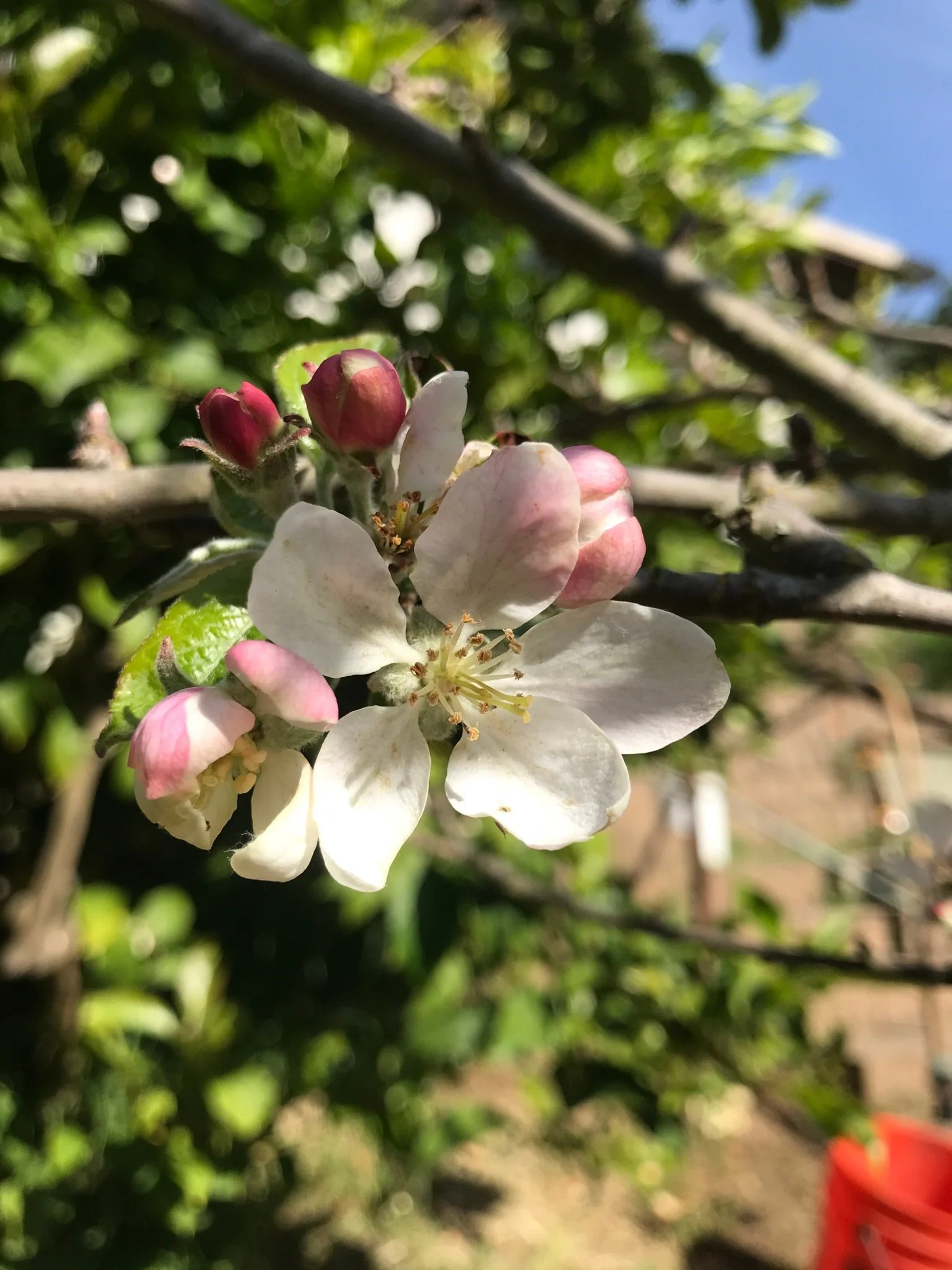
Photo by 6th Grader Alina
Use Wildflowers
Here is a video tutorial for creating a flower crown out of ubiquitous golden dandelion flowers.
You can also collect and dry wildflowers, or gather them for a May Faire basket.
What other creative ways can we celebrate the blossoming of spring? Please share your ideas for making flowers at home with us by emailing grandmotheroak@marinwaldorf.org.

Lord Geoffrey and the Power of Storytelling
This month, our 3rd, 4th, and 5th Grade students are participating in an elective story time on Zoom with our lead aftercare instructor Mr. DeRienzo. Using his imagination and a natural flair for storytelling, Mr. DeRienzo has created a series of wonderful adventures for Philip and Suzette, two child thieves who in previous stories were adopted by King Navarre of Córdoba. In the story we’ve shared below, Philip and Suzette must overcome dragons and wizards to deliver a special wedding gift to the king’s cousin Lord Geoffrey.

This month, our 3rd, 4th, and 5th Grade students are participating in an elective story time on Zoom with our lead aftercare instructor Mr. DeRienzo. Using his imagination and a natural flair for storytelling, Mr. DeRienzo has created a series of wonderful adventures for Philip and Suzette, two child thieves who in previous stories were adopted by King Navarre of Córdoba. In the story we’ve shared below, Philip and Suzette must overcome dragons and wizards to deliver a special wedding gift to the king’s cousin Lord Geoffrey.
This imaginative story was originally told to lower grades students, but it’s appropriate for younger (and older) children as well.
Listening to stories, fairy tales, legends, folk tales, and fables are an integral part of the Waldorf curriculum, throughout early childhood and the early grades, leading students in upper grades to their study of biographies, history, and culture. In the grades, academic subjects are often approached through stories, and students at Waldorf schools become keen and curious listeners.
Not surprisingly, many Waldorf teachers (like Mr. DeRienzo!) are skilled storytellers, holding their students’ attention rapt and teaching them to deeply comprehend a story or fable.
To read more about storytelling in Waldorf schools, our colleagues at the Eugene Waldorf School have a good description of the power of stories in our curriculum.
Why Waldorf? Let Our Alumni Answer That Question
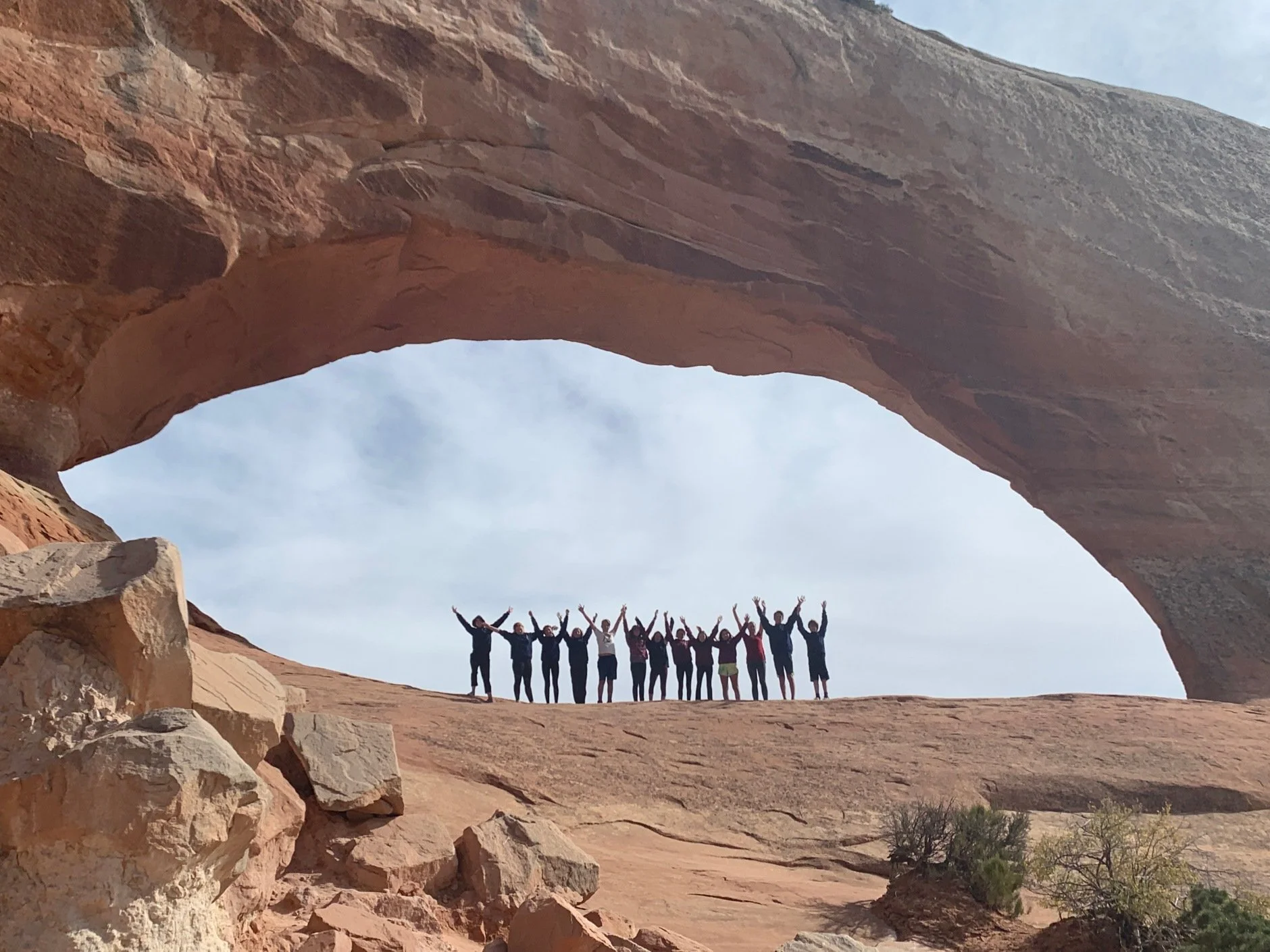
The capstone of our annual admissions Open House in January, the alumni panel is always a highlight of the day.
Listening to the experiences and reflections of a diverse group of graduates reminds us why Waldorf education is unique, and how it builds a foundation of creativity, independent thinking, and confidence that lasts a lifetime.
Here is the unabridged video of our 2020 alumni panel.
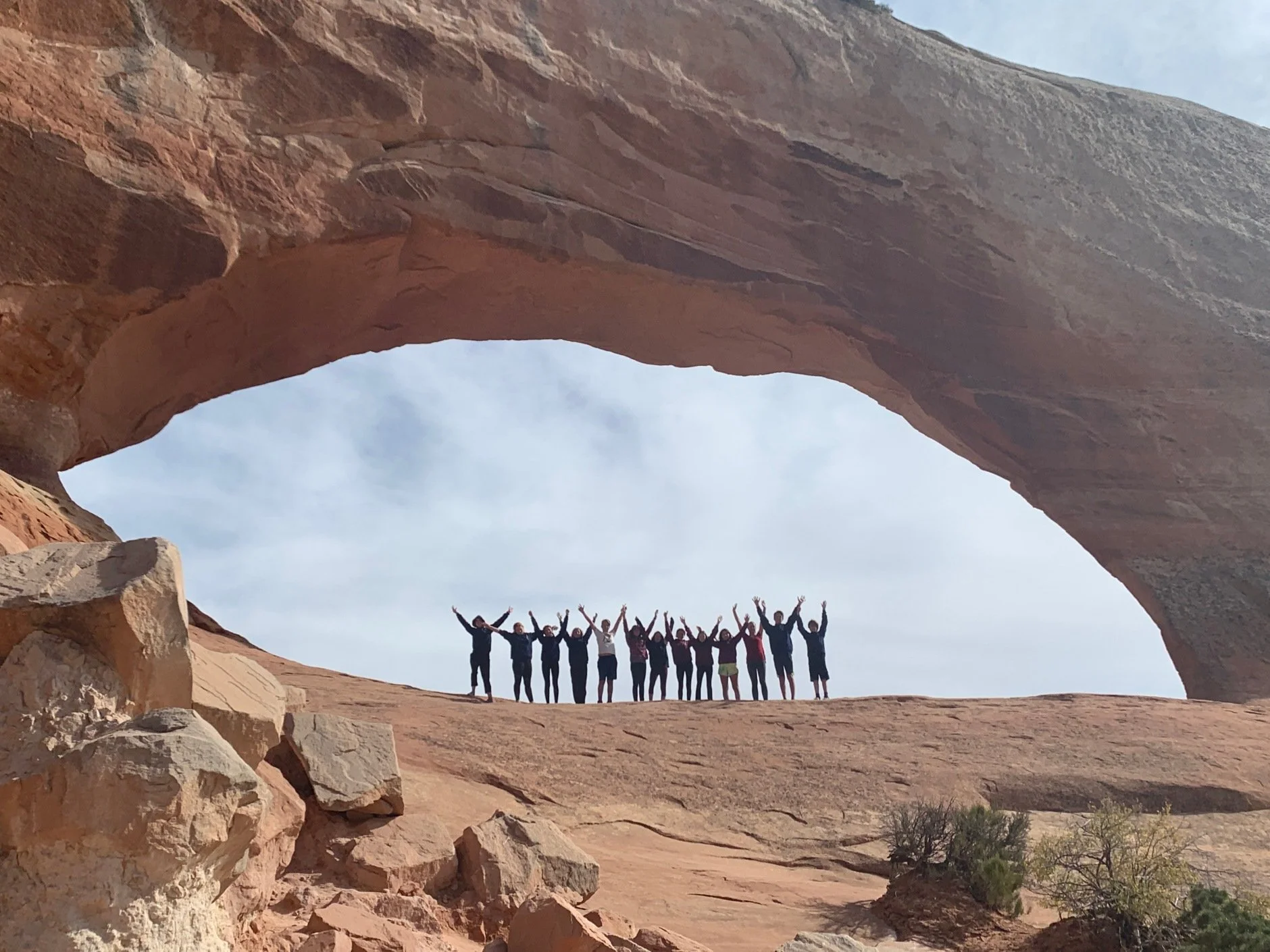
The capstone of our annual admissions Open House in January, the alumni panel is always a highlight of the day.
Listening to the experiences and reflections of a diverse group of graduates reminds us why Waldorf education is unique, and how it builds a foundation of creativity, independent thinking, and confidence that lasts a lifetime.
Here is the unabridged video of our 2020 alumni panel.
Are you an MWS alumni? We’d love to hear from you! Please email grandmotheroak@marinwaldorf.org and let us know how you are.
Middle Ages Main Lesson Books (… and What Is a Main Lesson?)
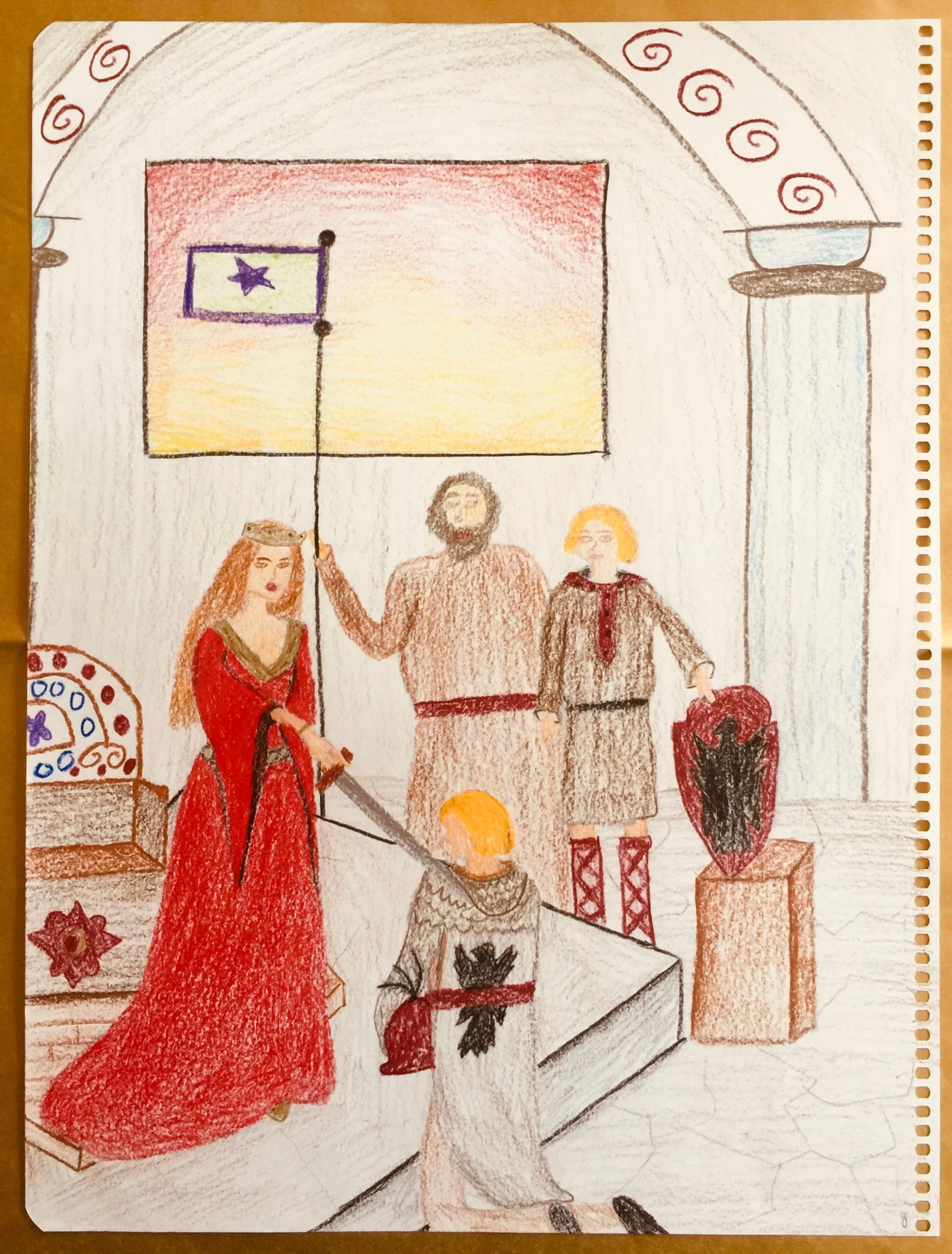
Yesterday, we shared a beautiful lesson on the Middle Ages created for our distance learning program from 6th Grade teacher Ms. Terziev. Part of the learning process throughout the Waldorf curriculum is the creation of a main lesson book: with the teacher’s guidance, students create their own illustrations and summaries of the material presented in class.
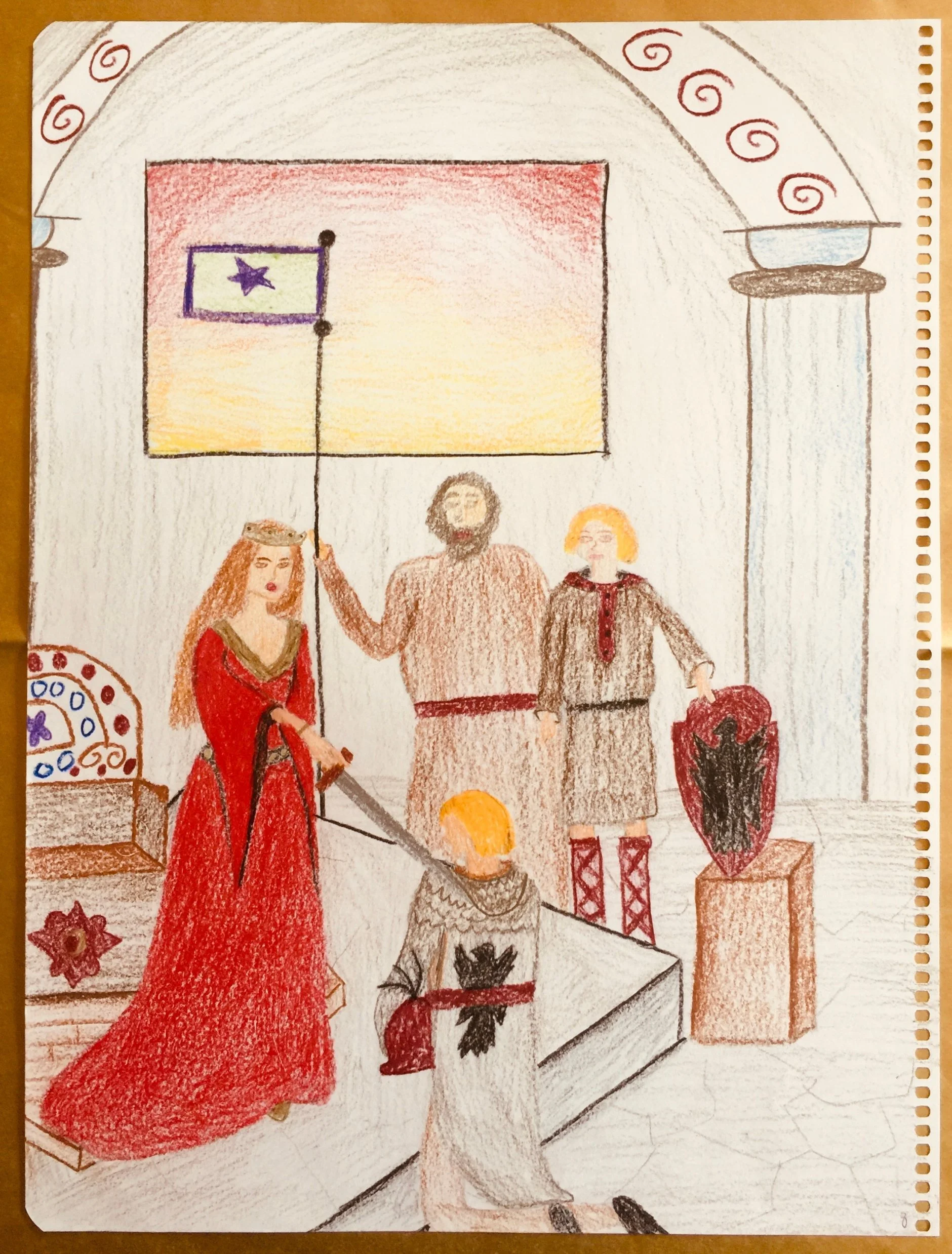
Yesterday, we shared a beautiful lesson on the Middle Ages created for our distance learning program from 6th Grade teacher Ms. Terziev. Part of the learning process throughout the Waldorf curriculum is the creation of a main lesson book: with the teacher’s guidance, students create their own illustrations and summaries of the material presented in class.
The creation of a main lesson book is one of the ways Waldorf teachers incorporate art, creativity, and meaning into every lesson, while also encouraging recollection and a personal connection to the material. In a Waldorf school, children don’t reference textbooks to remember their lessons, but their own handmade work.
Below, some images from this year’s 6th Grade main lesson books during their Middle Ages block.
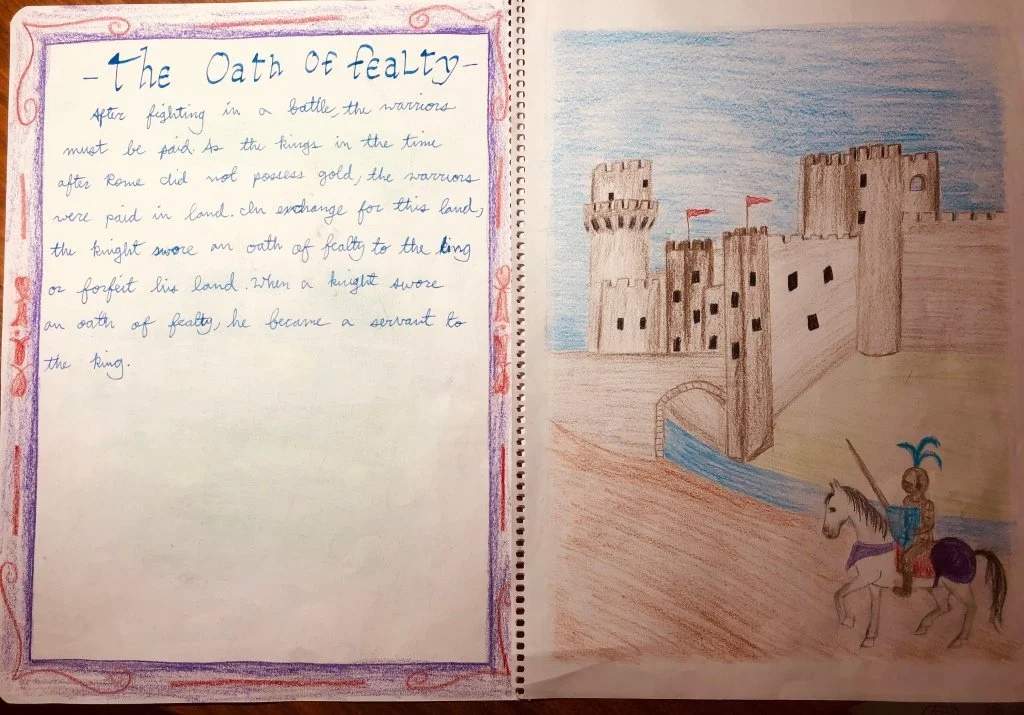
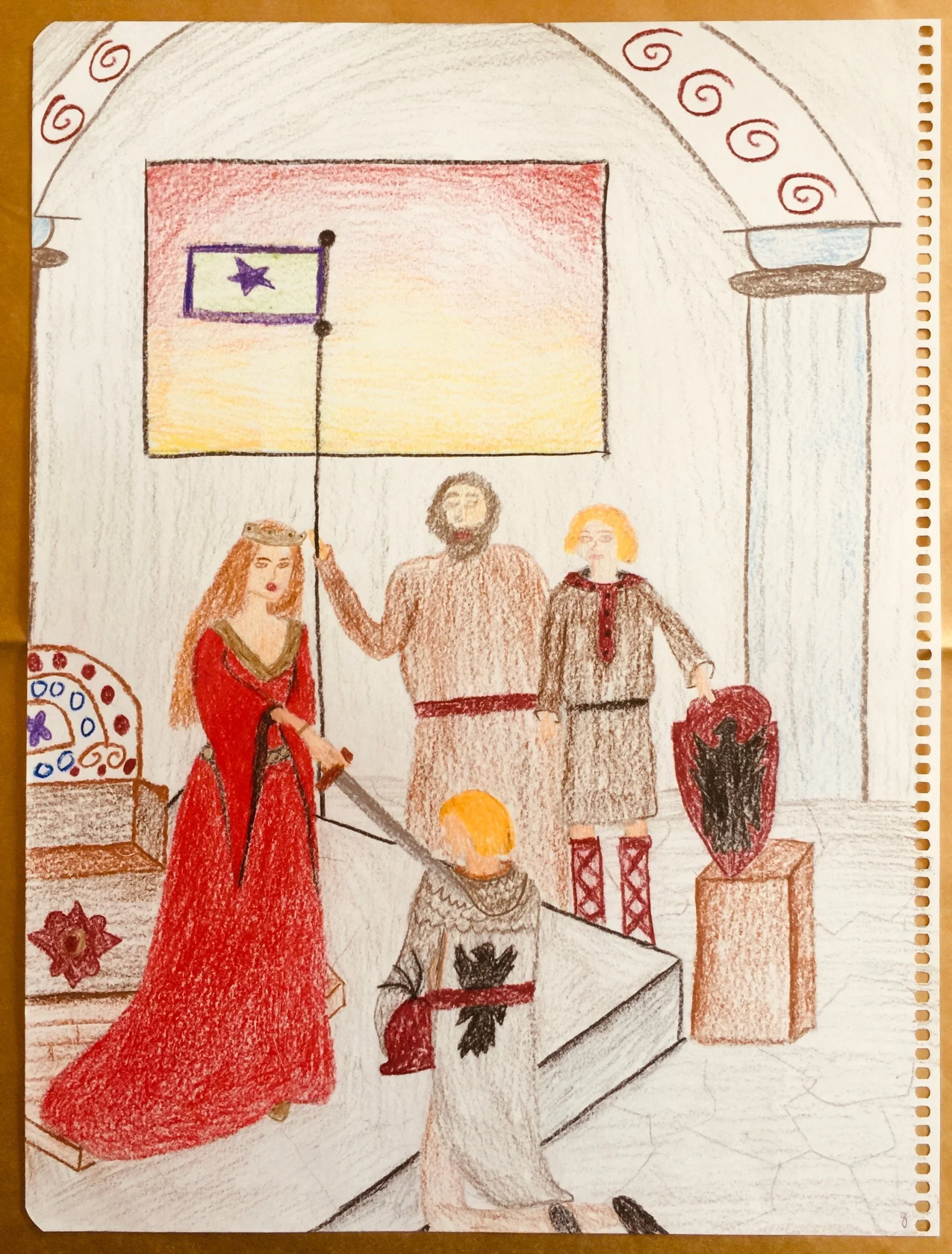
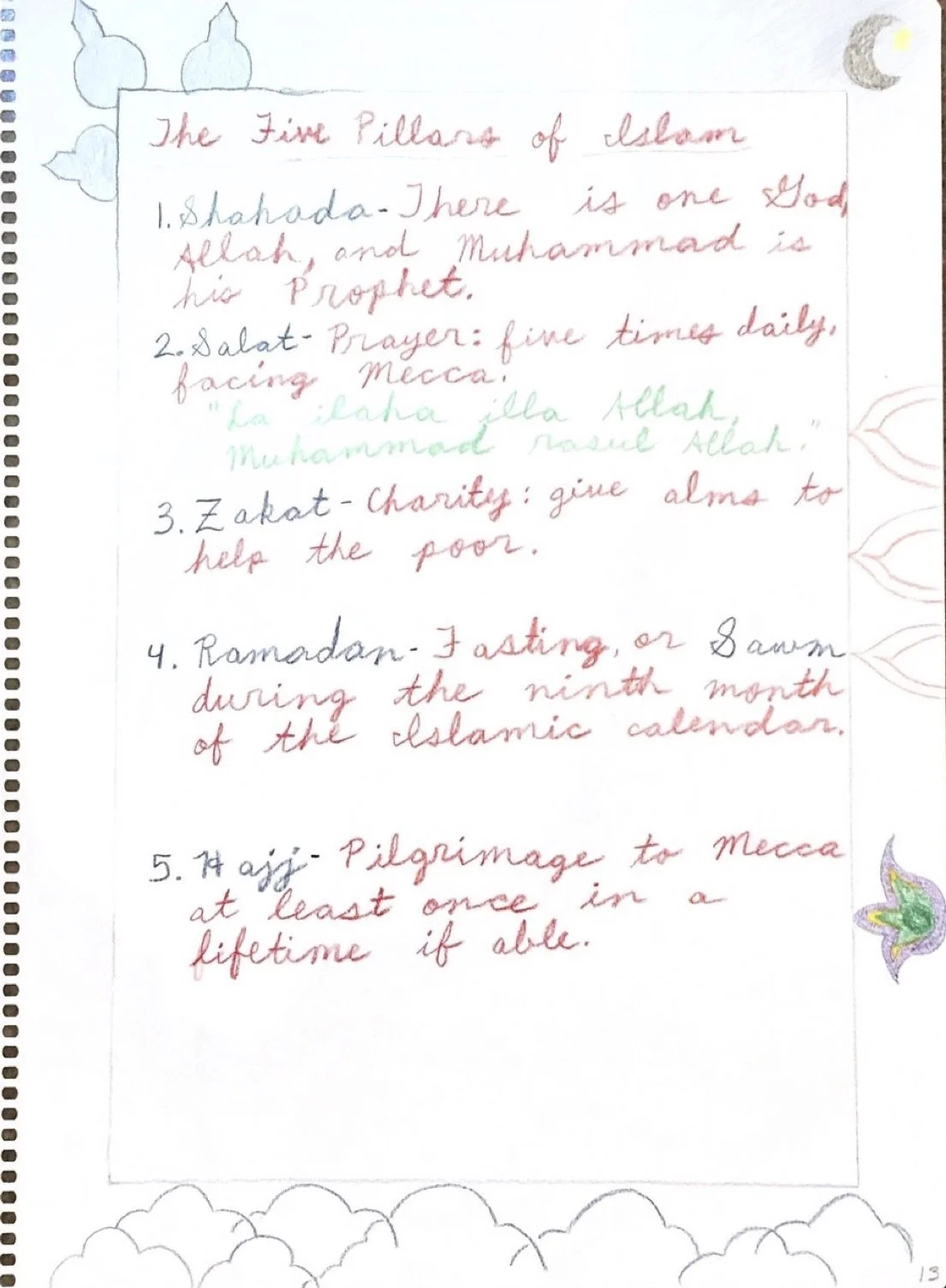
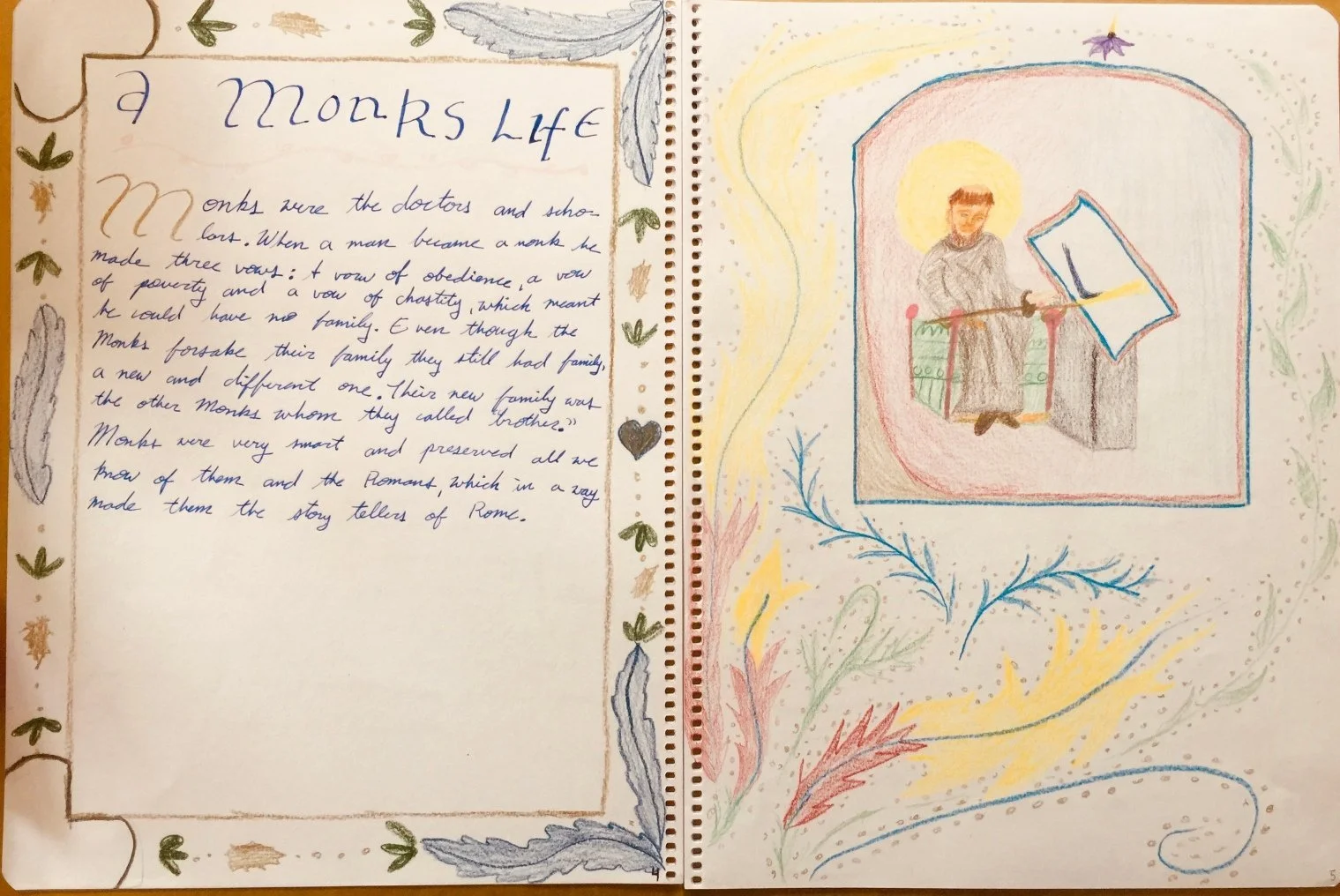
If you’d like to learn more about main lessons, Summerfield Waldorf School in Santa Rosa, California, offers a primer on main lessons, main lesson books, and how they support learning and retention. Click here to read “Where Are the Textbooks? The Use of Main Lesson Books in Waldorf Education” from Summerfield Waldorf School.
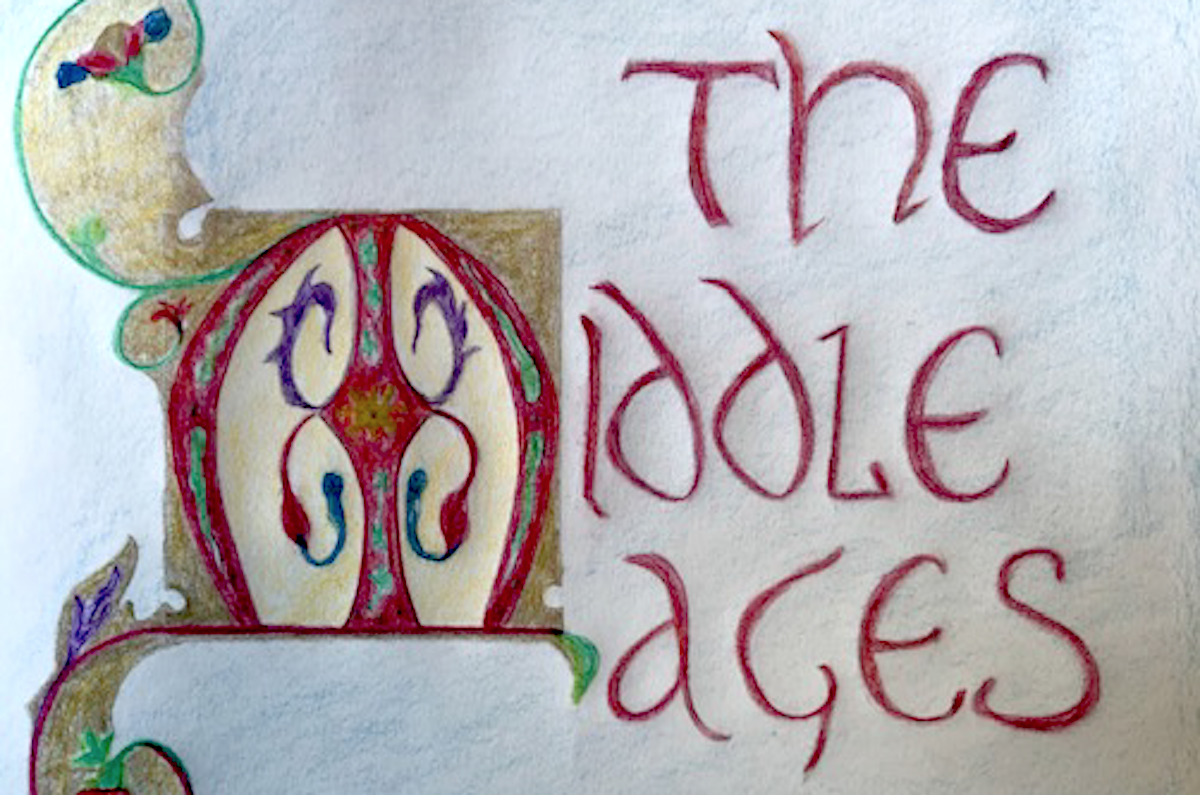
Illuminating Main Lesson Books
In a recent distance-learning lesson created by our 6th Grade teacher Ms. Terziev, students received a step-by-step guide to creating a medieval-style title page (see above) for their main lesson books.
If we’d been a classroom setting rather than at home, Ms. Terziev would have presented the material during the morning main lesson, which starts every morning at a Waldorf school, and lasts about two hours. Main lesson subjects are taught in blocks of two to four weeks, enabling the students to focus intensively on one subject at a time — in this case, the 6th Grade is studying the Middle Ages.
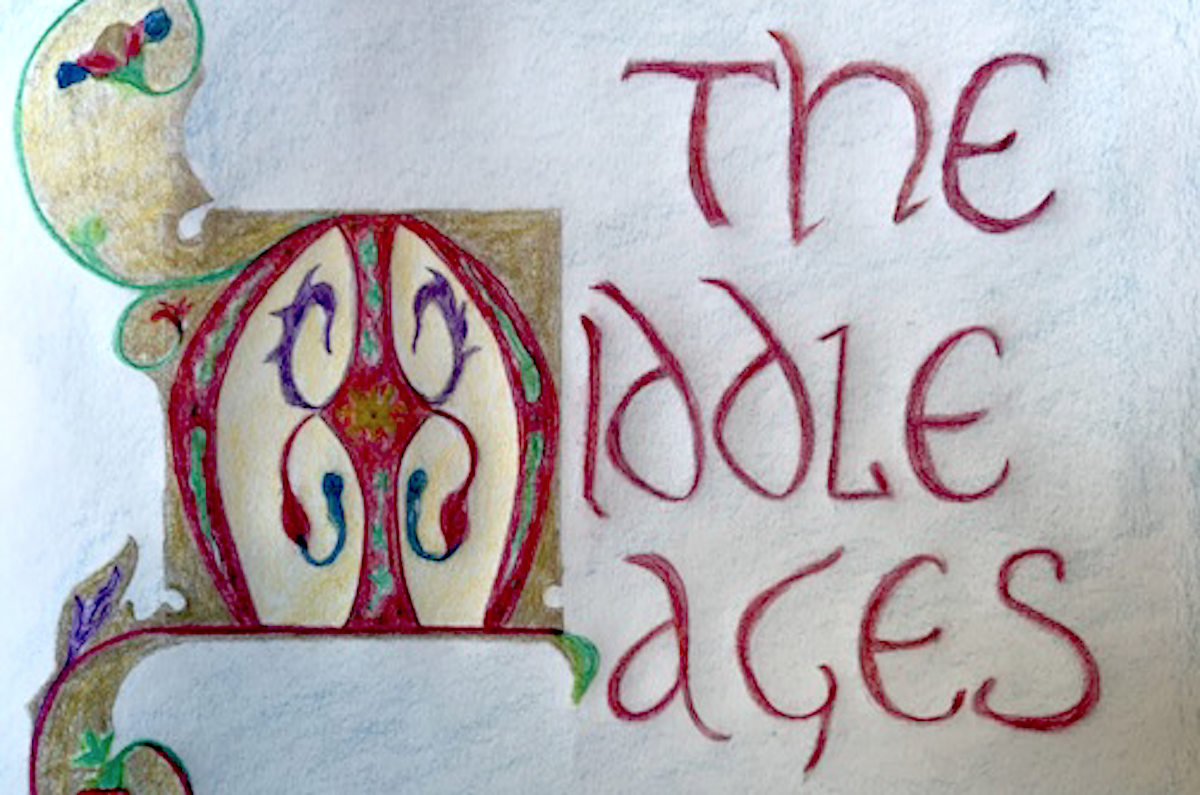
In a recent distance-learning lesson created by our 6th Grade teacher Ms. Terziev, students received a step-by-step guide to creating a medieval-style title page (see above) for their main lesson books.
If we’d been a classroom setting rather than at home, Ms. Terziev would have presented the material during the morning main lesson, which starts every morning at a Waldorf school, and lasts about two hours. Main lesson subjects are taught in blocks of two to four weeks, enabling the students to focus intensively on one subject at a time — in this case, the 6th Grade is studying the Middle Ages.
Below, read Ms. Terziev’s lesson and see how she walked students through the creation of a beautiful title page in medieval style.
Good morning, Dear Sixth Grade! Happy Friday. Here is the plan for today:
1. Go outside and sketch your plant from a different place than you have previously. Be sure to note the time of day when you are sketching. Pay attention to what is going on around your plant. Are there insects, birds, other creatures? What is the soil like where your plant grows? Show the soil in your sketch. Show a little bit of what surrounds your plant.
2. Get your colored pencils, ruler, graphite pencil and Page 1 ready at your workstation.
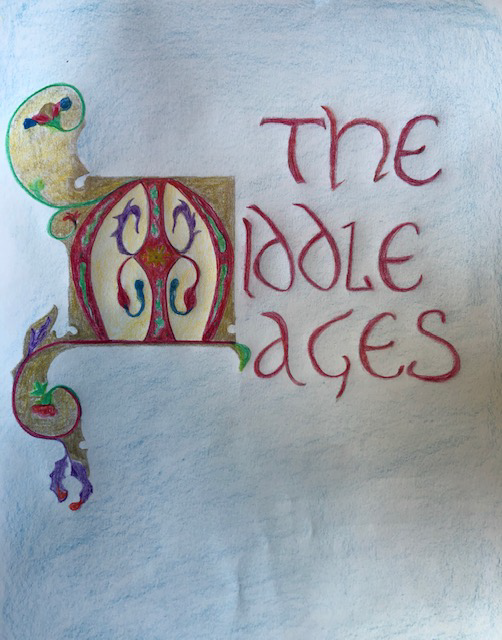
3. While you are listening to the voice recording, complete the title page (see examples).
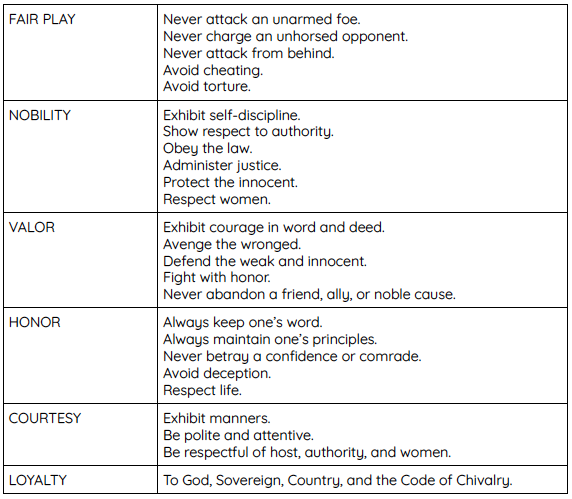
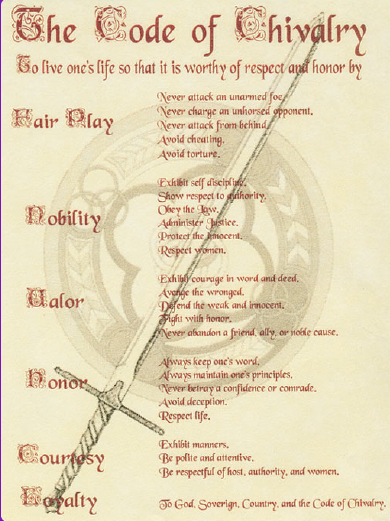
4. Put the Code of Chivalry onto page Page 11. Format it like the one in cursive. Make a border of your choice and make the title in uncial font. I have added the words typed up in case you can’t read the cursive one very well.
5. Journal entry: Which of your immediate family members (the people you live with) has the best manners? Describe.
Step 1
Make three, 1 inch channels for the words
To the left of the three channels, make a box that is 3 inches on each side
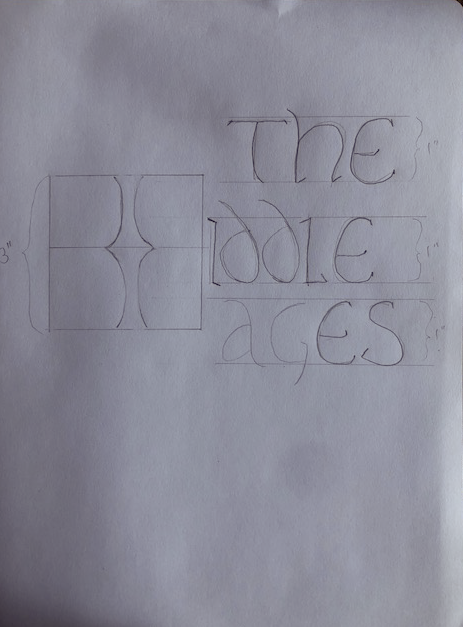
Step 2
Start adding designs to the “M”
Make the letters double-thick
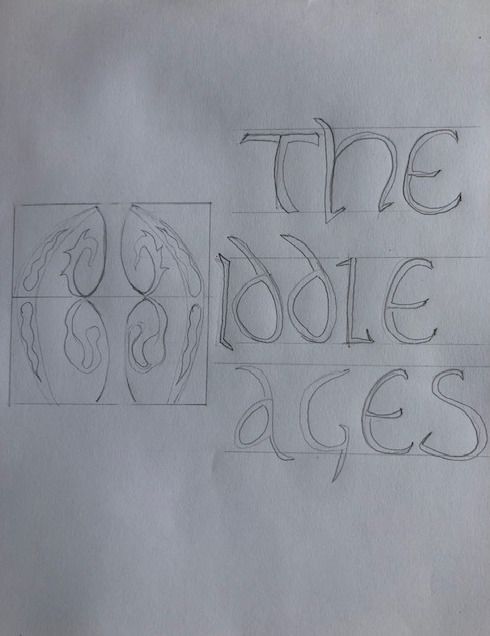
Step 3
Color in the letters
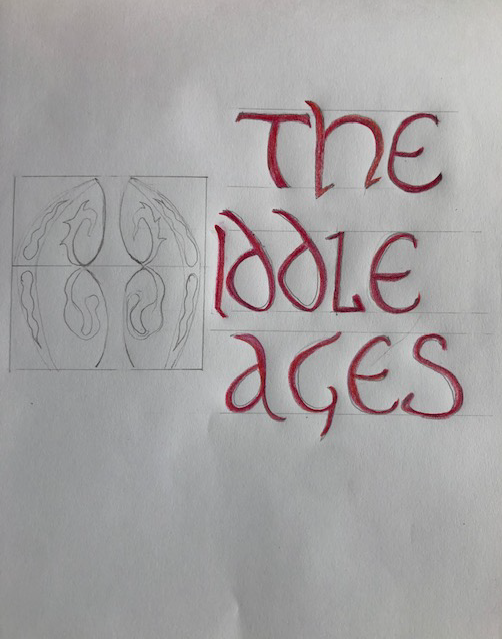
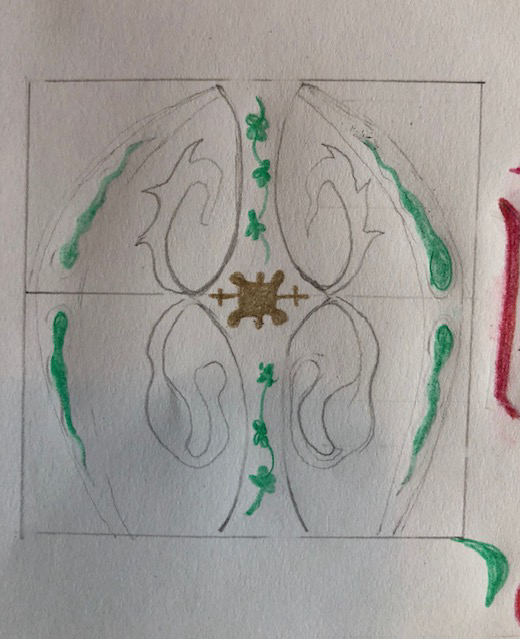
Step 4
I used all large pencils: red, light and dark green, blue, purple, yellow and metallic gold.
Shade the background with light blue. You can smoosh if you want.
The Final Page
2021 Alumni Panel: Meet Our Alums!
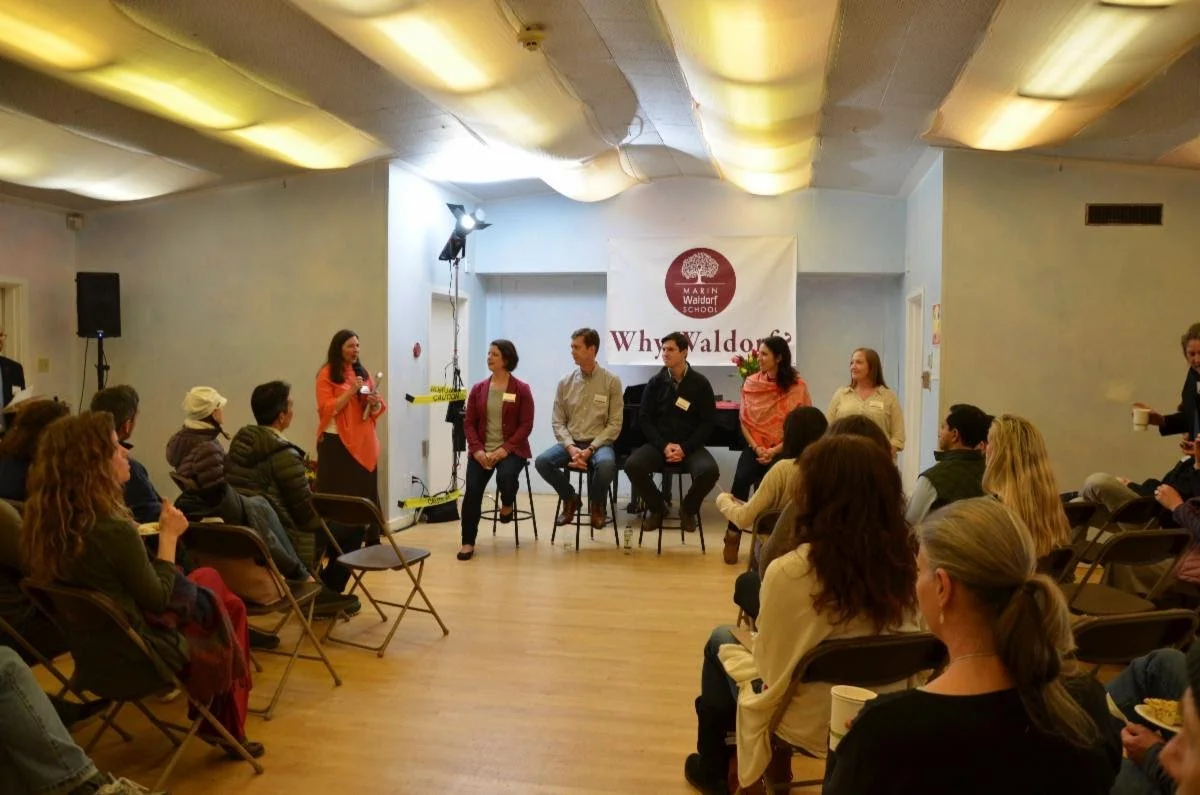
The alumni panel is always a highlight of our admissions Open House, concluding the day… and often running way over time as the audience jumps to ask questions! This year, we hosted our alumni panel on Zoom, featuring four amazing Waldorf alumni.
Listening to the experiences and reflections of a diverse group of graduates reminds us why Waldorf education is unique, and how it builds a foundation of creativity, independent thinking, and confidence that lasts a lifetime.
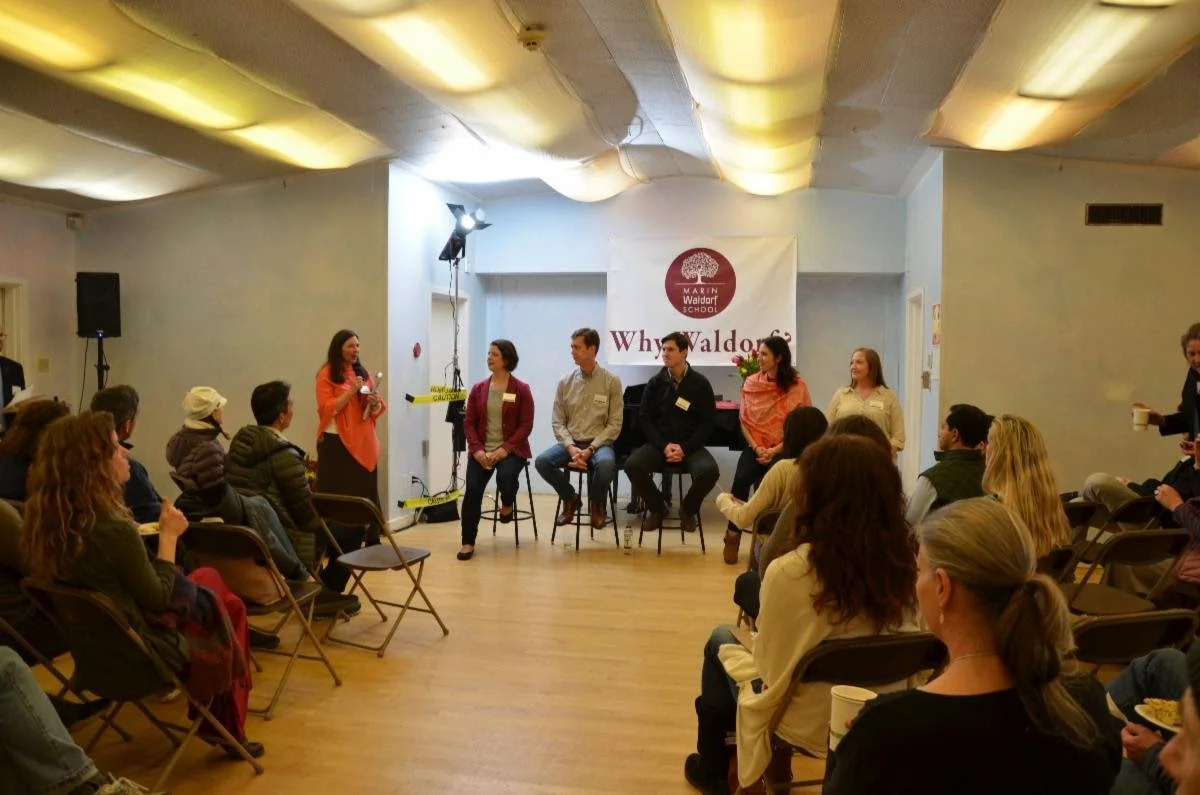
The alumni panel is always a highlight of our admissions Open House, concluding the day… and often running way over time as the audience jumps to ask questions! This year, we hosted our alumni panel on Zoom, featuring four amazing Waldorf alumni. (Scroll down for their bios.)
Listening to the experiences and reflections of a diverse group of graduates reminds us why Waldorf education is unique, and how it builds a foundation of creativity, independent thinking, and confidence that lasts a lifetime.
Huge gratitude to our student musicians Angelo, Carter, and Emma, as well as to our four panelists for a wonderful morning. Here’s a little background on our four speakers.
Alberta (MWS Class of 2012)
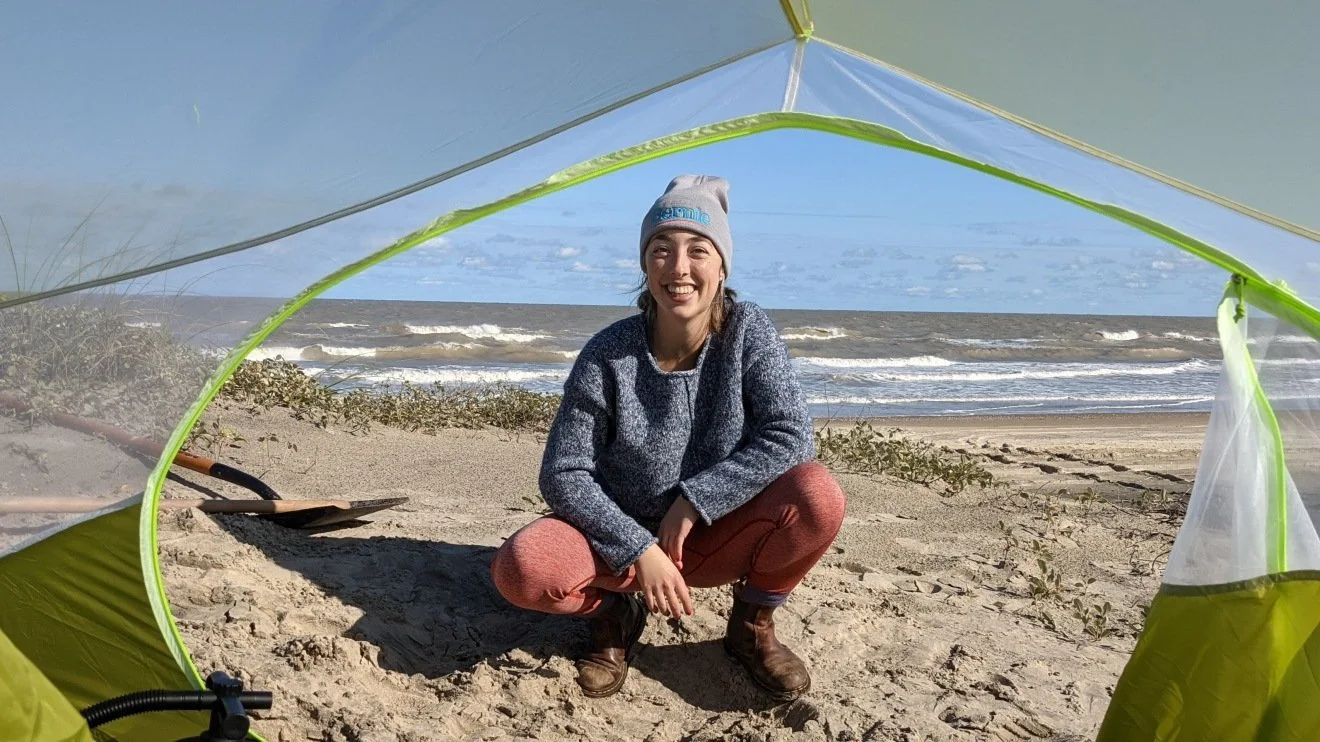
Alberta (she/hers) attended Marin Waldorf School from Kindergarten until graduating in Kristine Deason’s class of 2012. She attended high school at Marin Academy. Alberta also spent one semester at the Mountain School in Vermont, a rigorous program in which high school juniors from across the country spend a semester farming, studying in the old barn, and even camping out for three nights alone in the mountains.
Alberta was then awarded the national Questbridge Scholarship for low-income high-achieving students, with a placement at Wellesley College. During her time there, she worked as a Research Assistant for a Sociology Professor, a tutor for the Economics Department, a farm hand at an off-campus Coop, an Admission Office interviewer, and a restaurant hostess. Alberta also designed her own major in the inter-departmental Peace and Justice Studies program—her Waldorf upbringing had taught her the inevitable inextricability of diverse disciplines when seriously studying any topic.
After studying abroad for 6 months in Buenos Aires and conducting 5 months of internships in Havana, Cuba (with a local artist collective and with Oxfam), Alberta decided to dedicate herself to immigration advocacy here in the United States. After graduating (virtually) from Wellesley in Spring of 2020, she moved down to Texas’ Rio Grande Valley to work as an Unaccompanied Child Legal Specialist with the American Bar Association’s pro-bono project. She eventually plans on attending law school to continue advocating for immigrant justice.

Max (Waldorf School of Atlanta)
Max’s journey through Waldorf education began as a three-year-old in Morning Garden at the Waldorf School of Atlanta. And while it technically came to an end upon 8th grade graduation from the same school, the Waldorfian experience has proven life-long thanks to Max’s extremely good fortune in having Dena Malon, Grades Director for the Marin Waldorf School, as his mother.
Max’s post-Waldorf experience thus far has unfolded in precisely the unexpected manner one would expect from an anthroposophically-minded anthropomorph. Upon graduating from Sarah Lawrence College—where, as a theater student, he developed an interest in the (un)constitutionality of life imprisonment sentences for minors after doing research for a role in David Lindsay-Abaire’s Rabbit Hole—Max moved to Washington, D.C., to serve as deputy manager for SCOTUSblog, a publication covering the United States Supreme Court.
After a well-timed tour of duty in legal journalism during which the Supreme Court enjoyed some of its highest-profile terms in decades and SCOTUSblog won a Peabody, Max decided to take his eurythmy-derived talents over to the wide world of consulting, joining public-policy consulting firm Hamilton Place Strategies. There, he helped clients like GE, the Bezos Foundation, FedEx, and the One Campaign advocate for policy outcomes on issues related to early childhood education, technology, innovation, economic development, and everything in between.
Max has since returned to Hamilton Place Strategies as the firm’s Creative Director, after spending two years living and working on the road in both the US and abroad with his brother—the two siblings having started a consulting firm from inside their Volkswagen Vanagon. Three weeks into their roadtrip, the firm was acquired by a policy-focused creative agency founded by President Obama’s White House Art Director, and the itinerary was extended indefinitely.
Max is currently pandemic-ing in Bend, Oregon, where he spends his time fly fishing, rock climbing, wood working, cello playing, and planning trips to Montana in the van.

Jarrett Cherner (MWS Class of 1995)
Jarrett Cherner is a pianist, composer and bandleader based in Brooklyn, New York. His first instrument was the violin, which he began playing at age 7, followed by the piano and drums at age 12. After graduating from high school, Jarrett earned concurrent degrees at Tufts (B.S., Mathematics) and New England Conservatory (Jazz Piano Performance).
Jarrett’s debut album, Burgeoning, was released in 2006, and earned recognition from the ASCAP Young Jazz Composer Awards. In 2008, Jarrett moved to New York to pursue graduate studies at Manhattan School of Music. He was a semifinalist at the 2011 Montreux Jazz Piano Competition and had the honor of performing solo piano at the Whitney Museum as part of Jason Moran’s 2012 BLEED residency.
Jarrett has toured throughout the U.S. as well as South America, Canada, Mexico, and Europe, as both a leader and sideman. Today, he is an adjunct professor at Franklin & Marshall College in Lancaster, Pennsylvania, and he teaches through the New York Jazz Academy, both privately and via Skype from his Brooklyn studio. His most recent album, Tone, with vocalist Sarah Elizabeth Charles, was released in 2020 on BaldHill Records.