Social-Emotional Learning at Marin Waldorf School
Emotional intelligence can't be bought or rushed. It develops with the slow emergence of identity, and the gradual accumulation of life experiences. — Kim John Payne, Simplicity Parenting
"Now is the time for leaders, across sectors, to develop new ways for students to learn that are more directly, and more dynamically, tied to where our economy is going, not where it has been. Critically, that involves bringing the same level of rigor to training around people skills that we have brought to technical skills," write authors Aneesh Raman and Maria Flynn in a 2024 op-ed New York Times, discussing the importance of developing deep human capacities in the age of artificial intelligence.
From Davos to Silicon Valley, thought leaders expect human skills to become increasingly coveted as AI and other technologies change the role of human beings in the job market. But the benefits of learning emotional intelligence goes beyond future job prospects. Research shows that programs that teach social and emotional skills can have a direct positive impact on academic performance, relationships, and confidence in students over the long term. In a time Most important, building deep and meaningful relationships are the foundation of a satisfying and meaningful life.
At Marin Waldorf School, building a healthy social environment and emotional intelligence in our students is fundamental to our work—and you can see it. Our students are eager learners, resilient in the face of challenges, and confident interacting with each other and their teachers. How do we teach these skills?
How Do We Teach Emotional Intelligence?
Social-emotional skills are embedded into every aspect of the curriculum—and it shows in our warm and close-knit school community.
Strong Class Culture
Close teacher-student relationships and intentionally small class sizes bolster our students' self-confidence and sense of belonging within the MWS community. Here, students benefit from working with the same team of teachers over multiple years, creating an environment in which each student is individually seen and supported. (Click here to read more about how we build strong teacher-student relationships through a practice called looping.) Importantly, our teachers model compassion and kindness, and ask our students to do the same. We also promote open conversations between parents and teachers, building a trusting relationship with the child’s needs at the center.
Sign up here to visit our beautiful Lucas Valley campus during a school day to see our classrooms in action.
Collaborative Learning
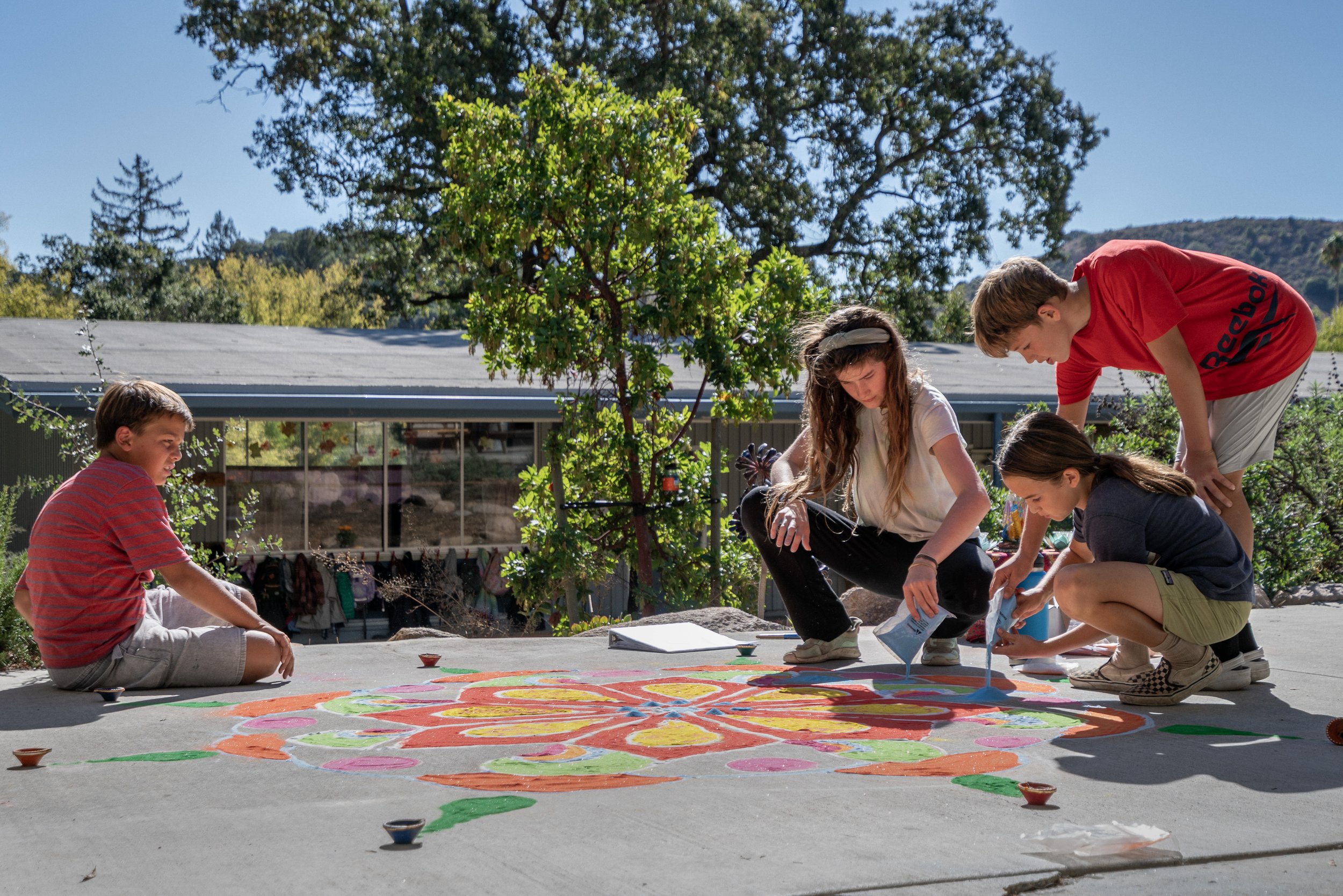
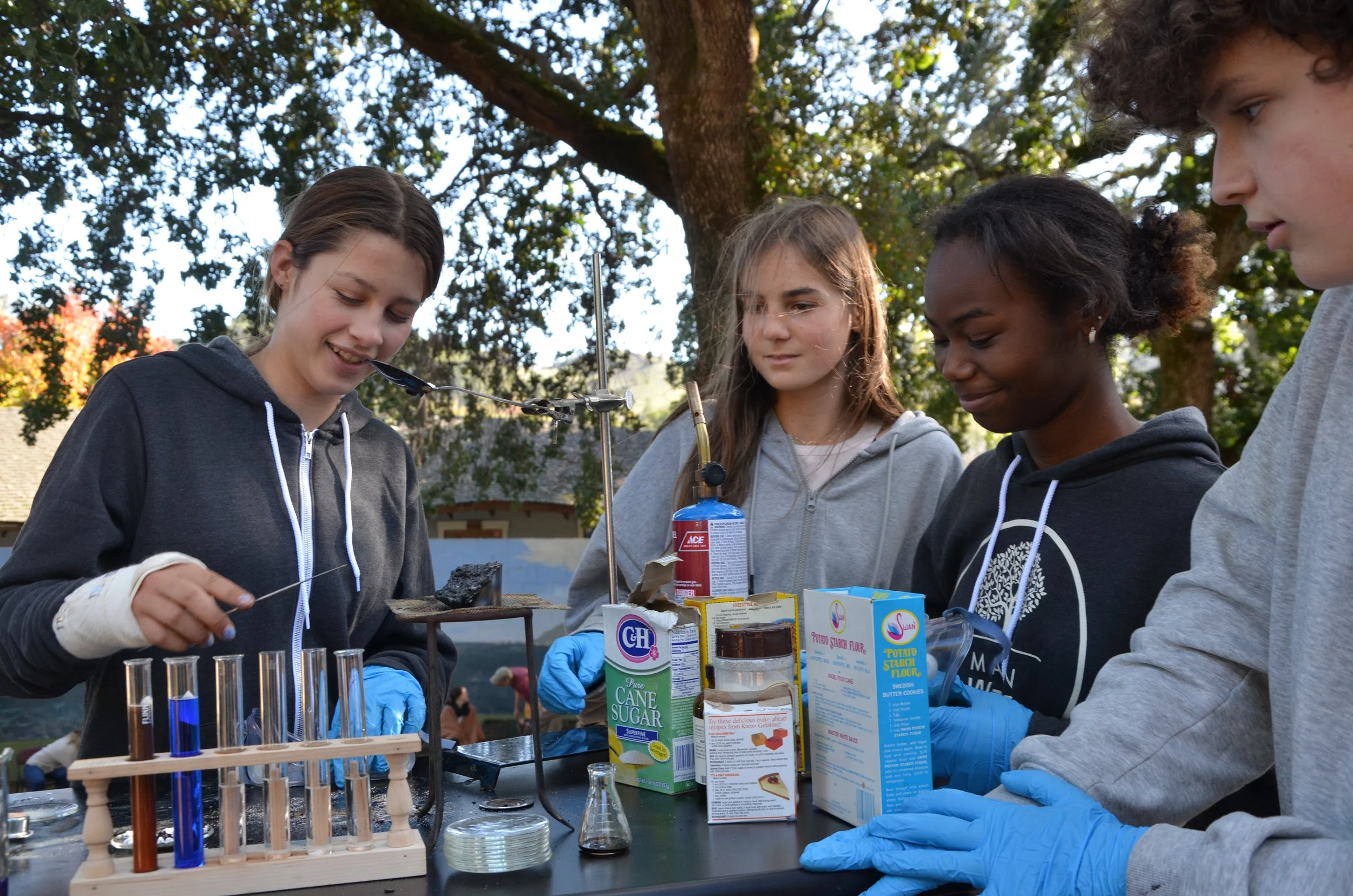
Starting in preschool and kindergarten, Marin Waldorf School emphasizes cooperation and collaboration in the classroom, with ample time for both guided group work and unstructured play. In the grades, we place tremendous value on activities that encourage students to work together, whether that’s building a motor with a partner in 8th grade physics class
Music and Ensembles
When it comes to group activities, music, in particular, encourages students to cooperate and listen to each other—one of the many reasons that both choir and instrumental music are such a big part of our curriculum. Students in grades 1-8 also collaborate every year while rehearsing and performing their annual class play.
A Close-Knit School Community
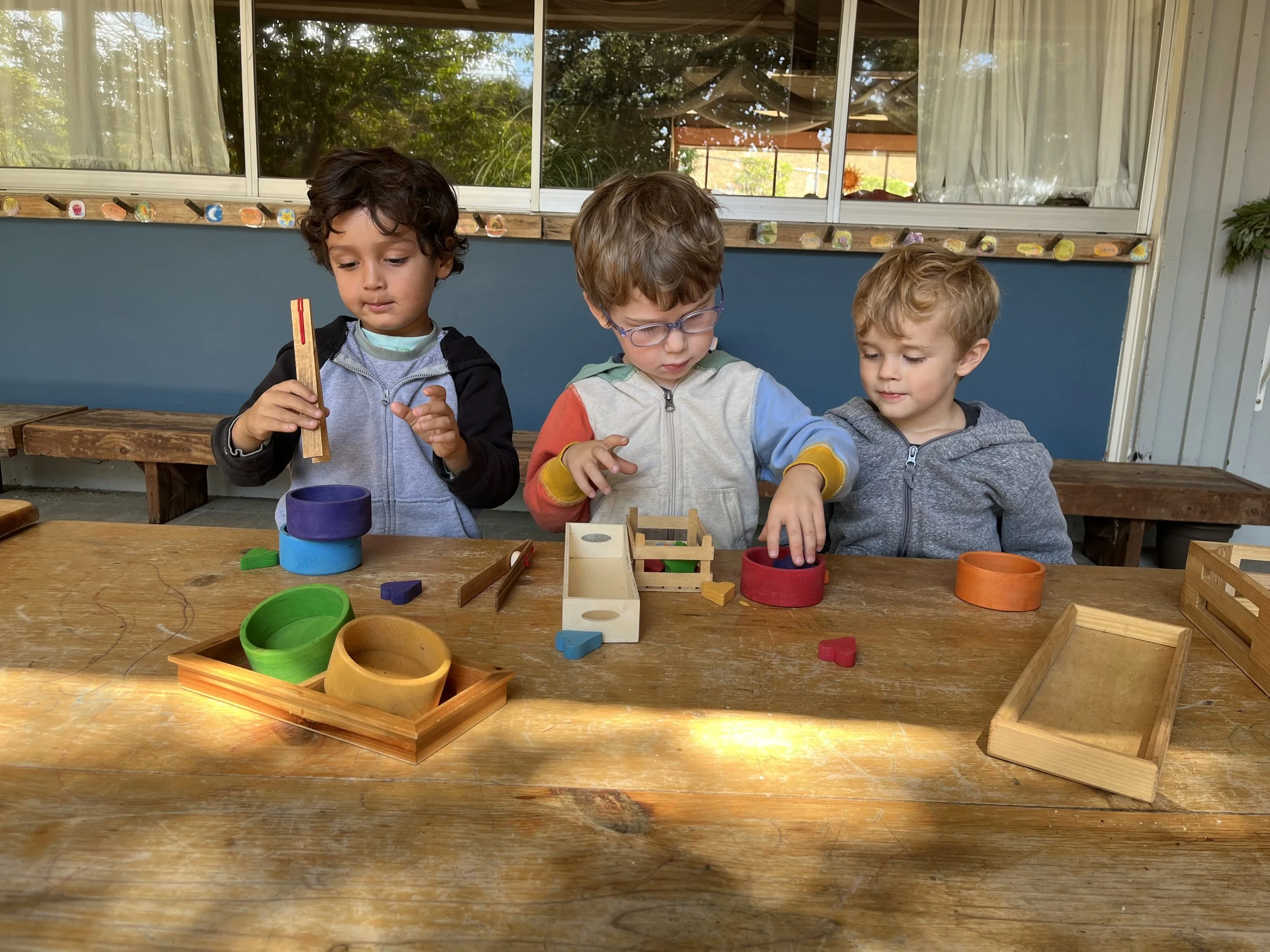
In our close-knit school community, children get to know each other across ages and grade levels. Both preschool and kindergarten classrooms are mixed-age, laying the groundwork for the cooperative community feel in grades 1-8. Our 1st grade-8th grade buddy program unites our oldest and youngest graders, while students in grades 1-8 get an opportunity to play together during recess, twice daily. Frequent all-school assemblies and festivals, from the Michaelmas pageant to the annual Lunar New Year assembly, bring the entire school community together. Importantly, we want families to be involved in their children’s lives and education.


A Thoughtful Approach to Technology
At Marin Waldorf School, our rich interdisciplinary education emphasizes hands-on experiences, human relationships, and creativity. We don’t use tech in the classroom, unless it is required for assisted learning.
A Real-World, Hands-on Approach
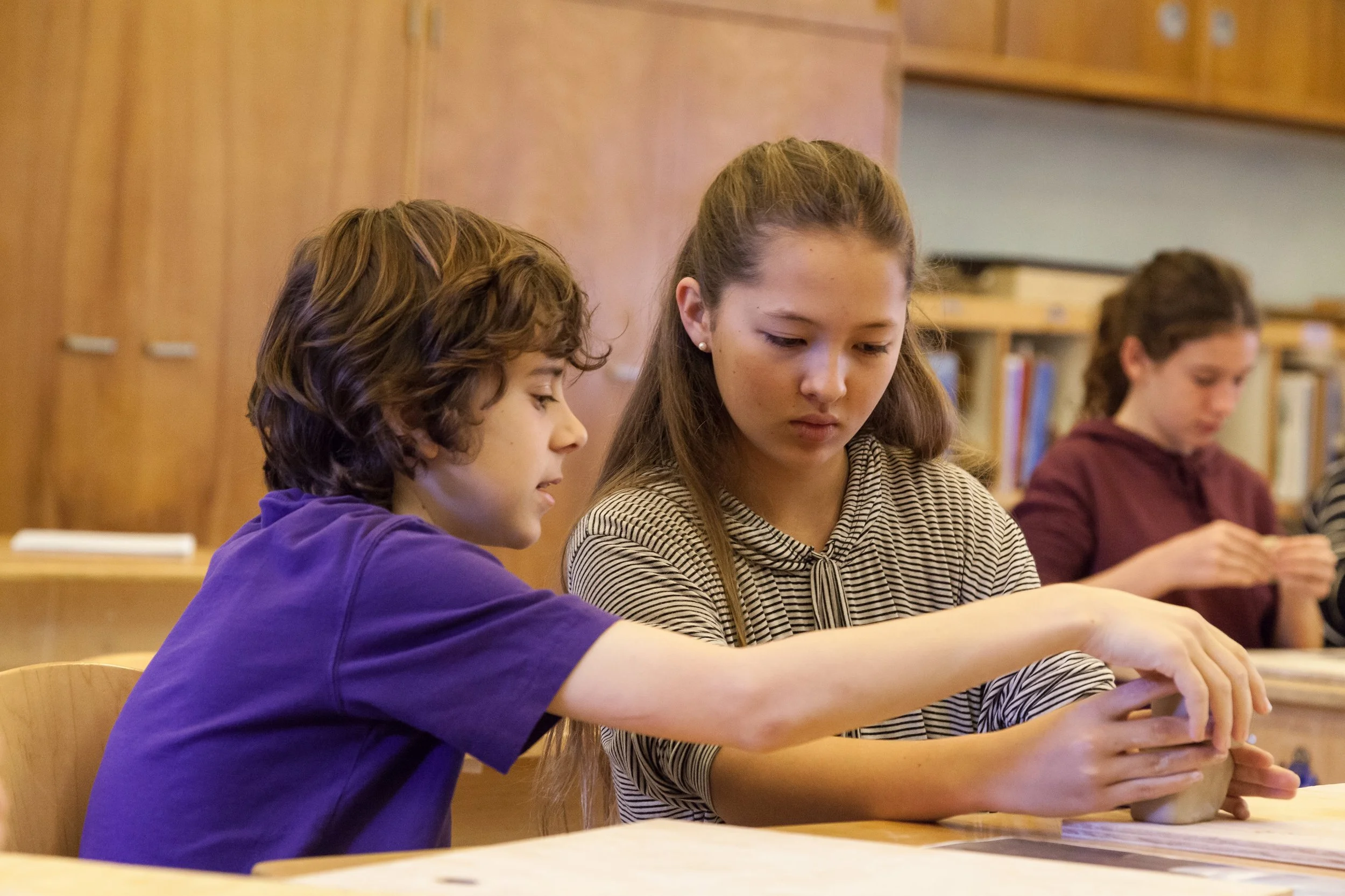
Our curriculum and pedagogy are based on the understanding that, as best-selling author Jonathan Haidt writes in his new book The Anxious Generation, “Experience, not information, is the key to emotional development.” In place of tablets and technology, children are encouraged to build social skills through group work and free play; to develop their imagination and creativity through the arts, music, and stories; and to boost their bodies and brains with experiential activities, from games to knitting to woodwork.
A Program in Social Ethics for Middle Schoolers
Research shows that programs that explicitly teach social-emotional skills can have a lifelong positive impact on learning, social skills, and confidence in children. Starting in middle school, students at MWS participate in an articulated program in social ethics and social emotional learning, which includes topics like technology and its responsible uses, anti-bias education, sexual ethics, and health. These discussion-based classes are an opportunity for students to share their thoughts and questions in a supportive adult-guided environment.
Would you like to see our dynamic and social classrooms for yourself?
Sign up for a campus tour with our admissions director here.


Why Do We Teach Social-Emotional Skills?
In recent years, social emotional learning, or SEL, has become an increasing focus in elementary and middle school education. Research has repeatedly shown that there are many benefits to teaching social-emotional skills in school, including the following.
Improved Learning Outcomes
Teaching SEL is linked to improved academic achievement in students—over the long term. Studies have shown that students who participated in SEL programs saw an 11 percentile increase in their overall grades and better attendance.
A Sense of Belonging and Improved Mental Health
Researchers show that social and emotional skills reduce anxiety and enhance emotional regulation, resilience, and confidence.
Positive School Culture
Emphasizing social-emotional skills creates more inclusive and supportive classrooms, decreasing conflicts and bullying, and promoting a sense of belonging among students.
Skills for an Unknown Future
Not only is SEL linked to improved student performance and overall well being in school, it promotes the uniquely human capacities—like communication, collaboration, and empathy—that are expected to become increasingly critical in the future.
Sign up for a campus tour with our admissions director here.