elementary school
At Marin Waldorf School, a child's education in academic subjects includes hands-on learning through music, painting, sculpture, movement and woodworking. Grades 1-4 is a time for children to understand the relationship between themselves and the world around them. Providing space and encouragement through this developmental stage enables the child to become stable, balanced and self-sufficient.
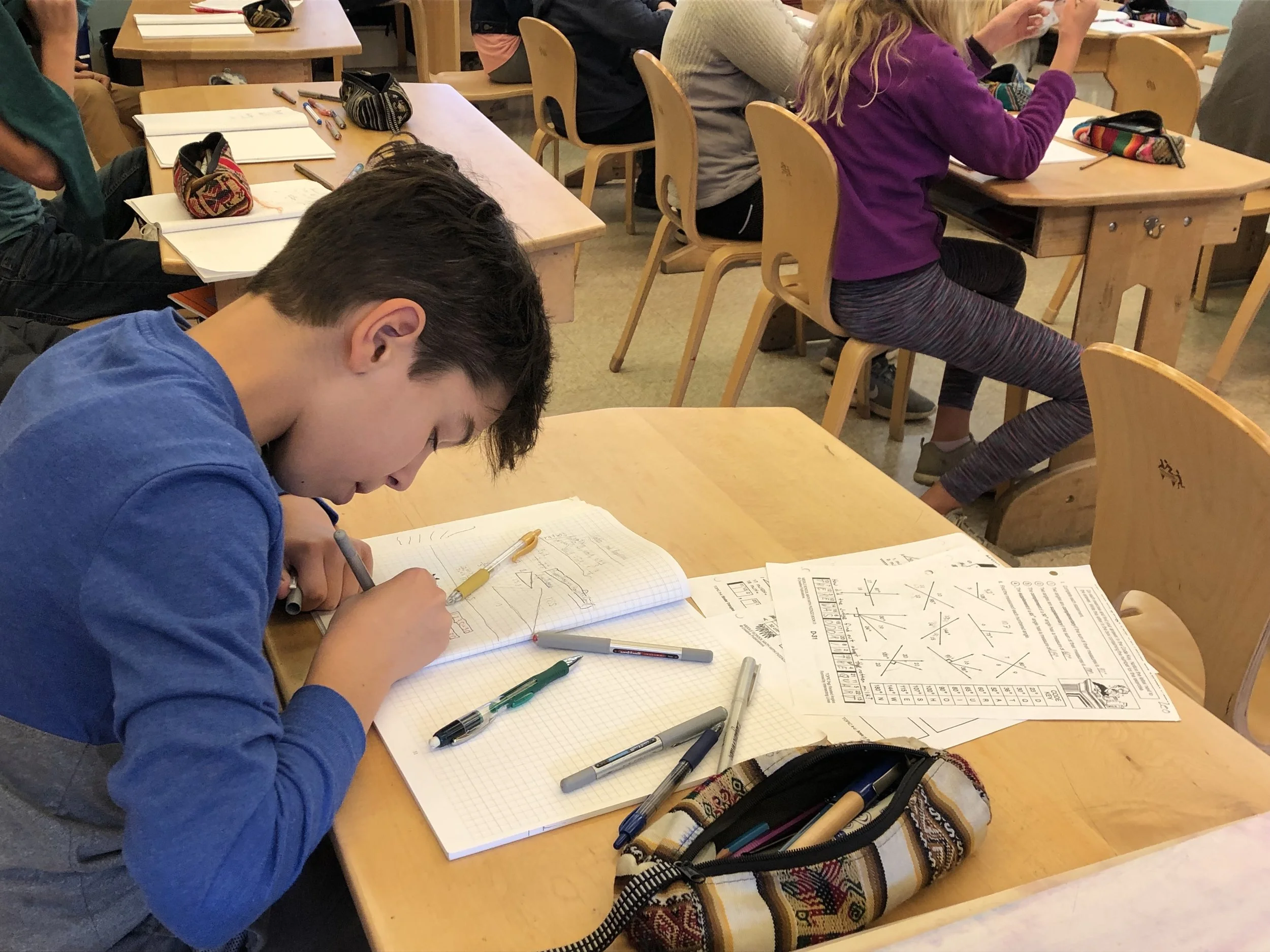
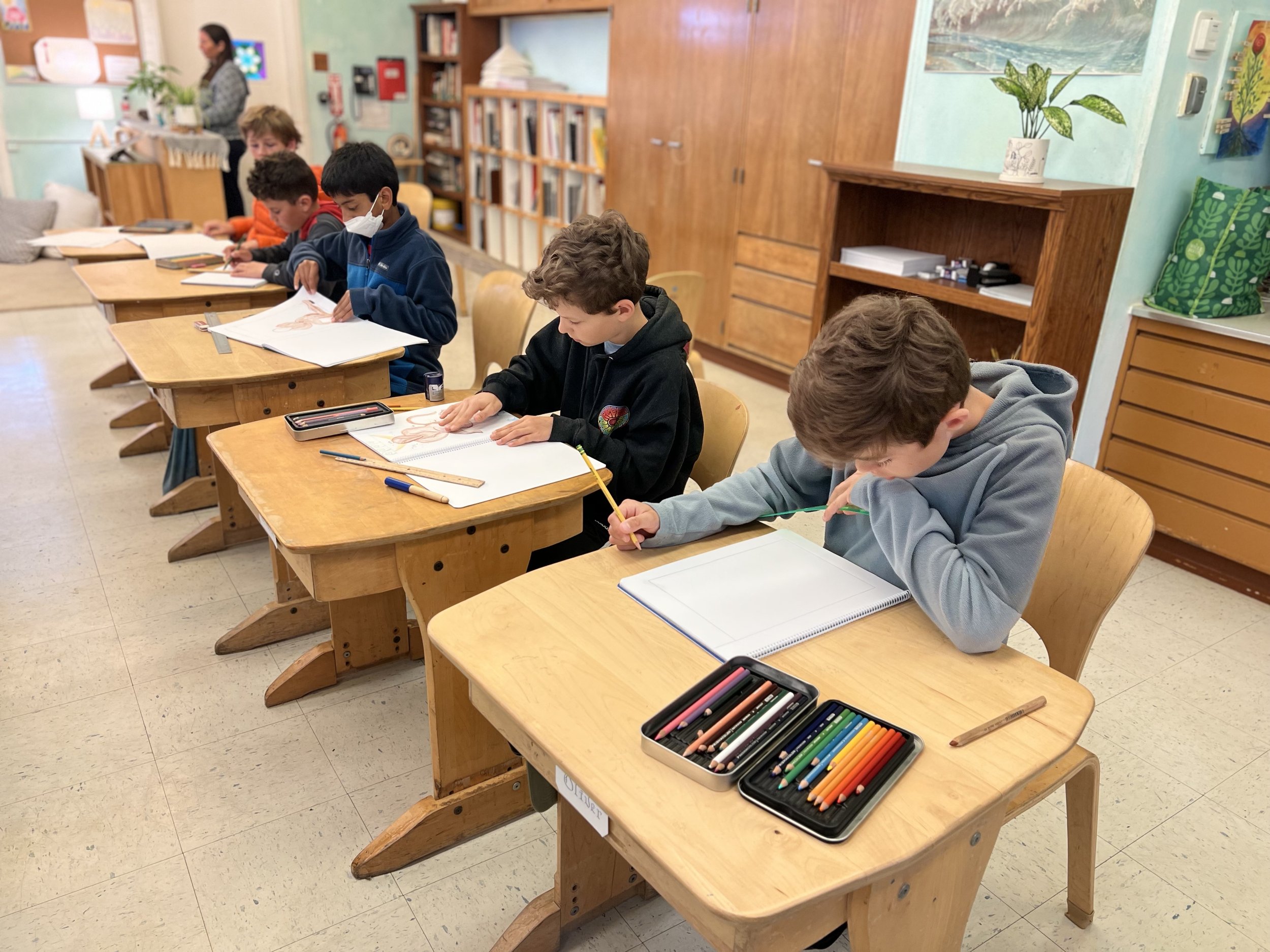
Marin Waldorf School honors a wide diversity of learning profiles. As an educational community, we value the individuality of each child and work to support each students’ intellectual, social, emotional, and physical needs.
Assessments
Every year, new students, as well as those in 2nd and 5th grades, undergo a multi-subject skills assessment to confirm that their learning is progressing as expected. Students in other grades are screened annually if they have previously received assistance or exhibit signs of needing extra support. All grades students also receive periodic skills checks in literacy and math.
With over a decade of experience supporting children with diverse learning profiles, our Educational Support Director, Greer Lanzet-Ourian—known to our students and families as Ms. GLO—brings a fresh perspective and learning expertise to Marin Waldorf School. She is a Certified Dyslexia Practitioner, specializing in structured literacy and multisensory math. Her background includes participation in several neuroscience studies at the UCSF Dyslexia Center, coaching educators at Charles Armstrong School, and teaching in inclusive classrooms in Brooklyn, New York. Ms. GLO combines her research-based instructional strategies with the Waldorf approach that engages the head, heart, and hands.
Differentiated Instruction
For both accelerated learners and students who need extra support, there are systems in place to tailor the learning experience to best meet their needs.
In some cases, there are students receiving the same content as their peers, but with a different style of instruction or expected quantity of output. This could look like:
Ms. GLO joining the class and working with students one-on-one throughout the period.
Accommodations to scaffold writing. such as graphic organizers or spell checkers.
Accommodations in math like equations or math facts to support multi-step problem solving.
Academic intervention looks different in every grade because it is based on:
The developmental needs of each age group.
The individual academic and social-emotional needs of the children.
The dynamic of the cohort.
1st Grade
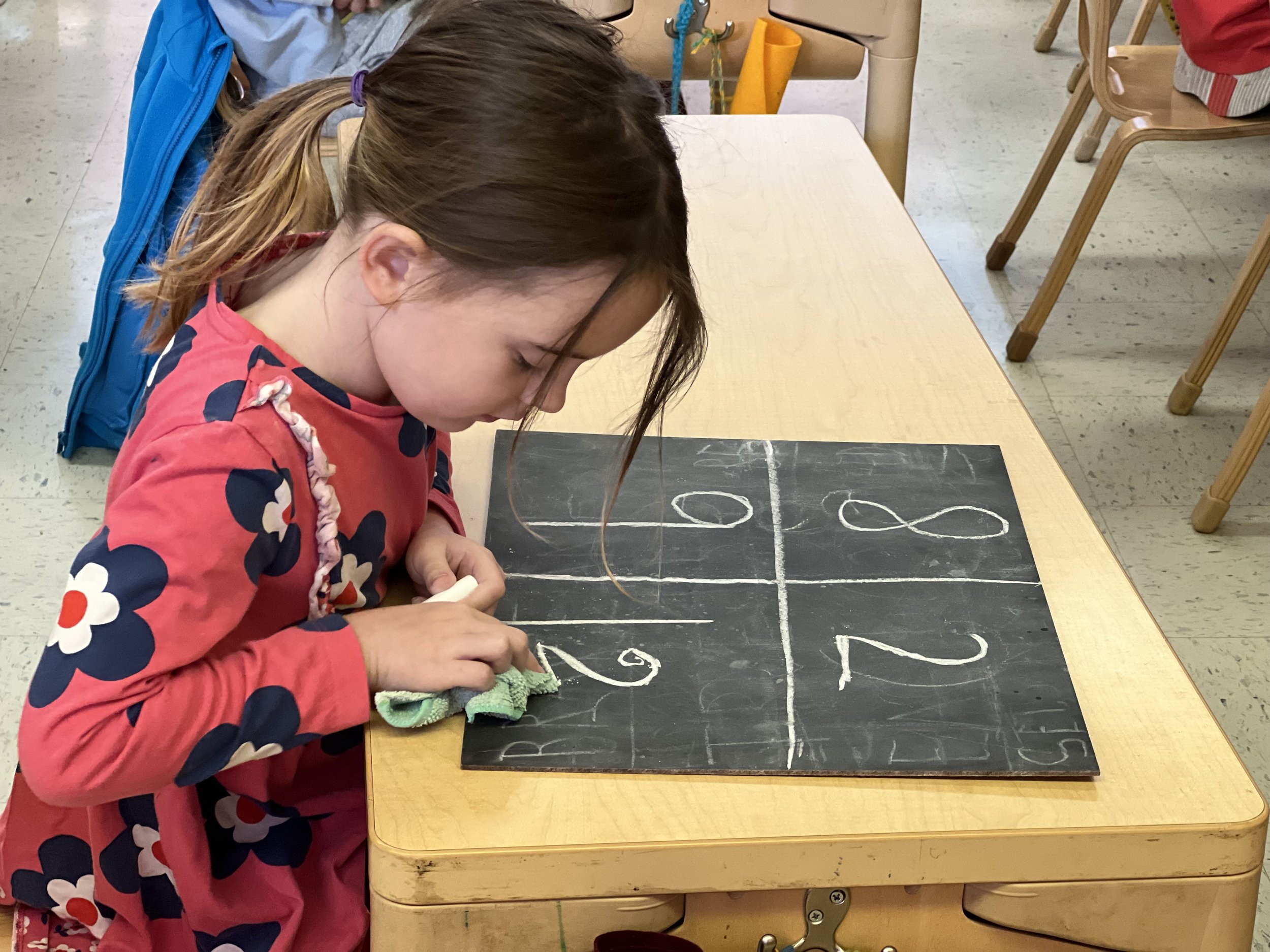
In 1st grade, students build foundational skills in numeracy, math, writing, and literacy while also learning to be good citizens of their classroom and school community.
Language Arts & Literacy: Fairy tales and children’s stories from around the world; listening, auditory memory, and comprehension skills; reciting verses and poetry; learning to identify and write letters and construct simple sentences with proper punctuation and cases.
Math: The four processes (addition, subtraction, multiplication, and division), simple number programs, Arabic and Roman numerals, skip counting, and pattern recognition. Read more about our multisensory approach to math here.
World languages: Spanish and Mandarin
Arts, Crafts, and Music: Watercolor, form drawing, knitting, bee’s wax modeling, recorder, choir, theater and performance, pentatonic flutes
Movement: Collaborative games
2nd Grade
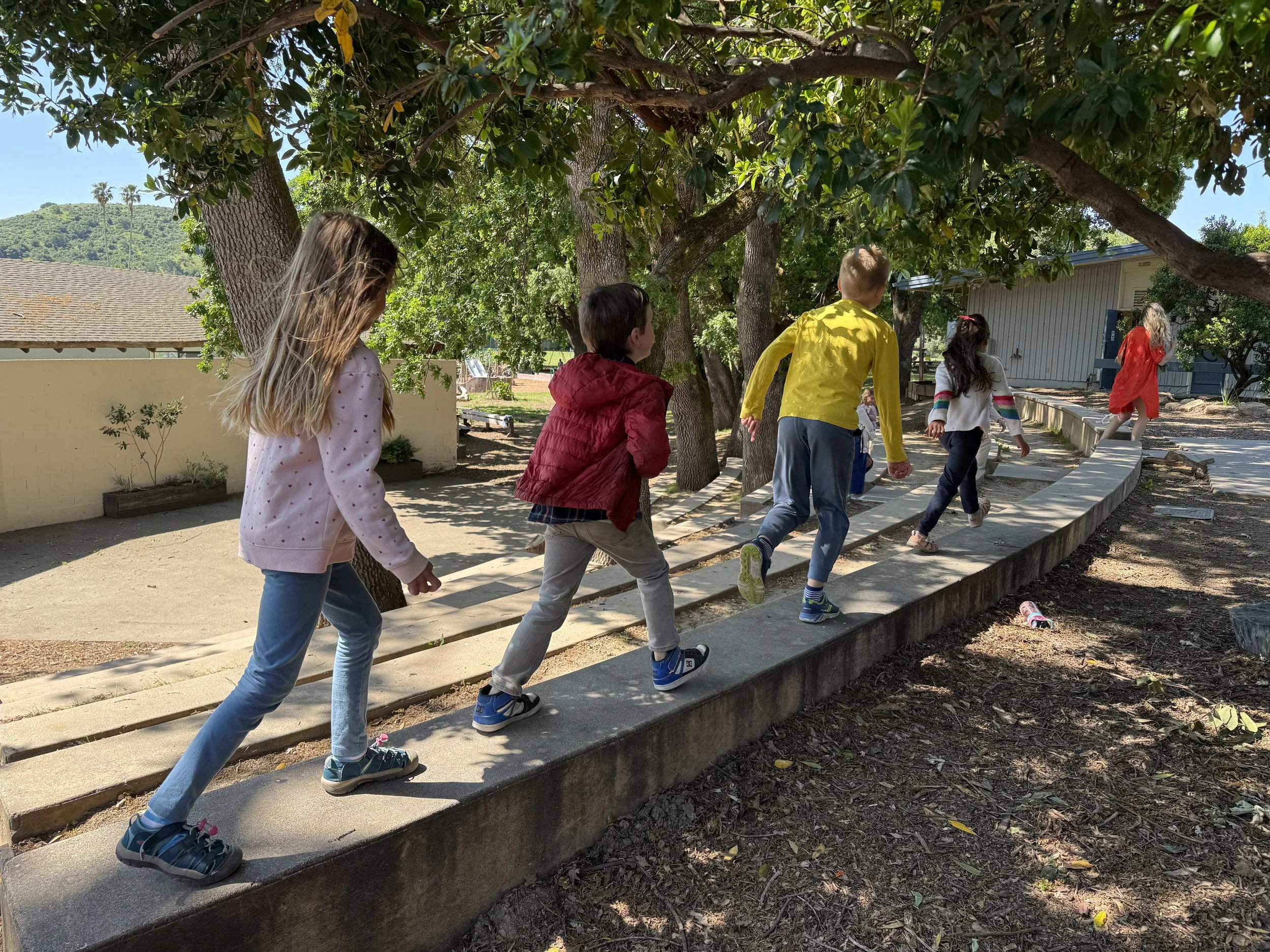
Confident at school and comfortable with their classmates, 2nd graders are eager learners, ready to build on the skills and capacities they developed in 1st grade.
Language Arts & Literacy: Fables, legends, and stories of heroic individuals from around the world; recall, sequencing, and memorization skills; identifying complex consonant and vowel teams, identify parts of speech; writing more complex sentences and compositions.
Math: Mental math and the times tables; the four processes (addition, subtraction, multiplication, and division); multi-digit multiplication and long division.
World languages: Spanish and Mandarin
Arts, Crafts, and Music: Watercolor, form drawing, crochet, choir, theater and performance, pentatonic flute, bee’s wax modeling
Movement: Collaborative games
3rd Grade
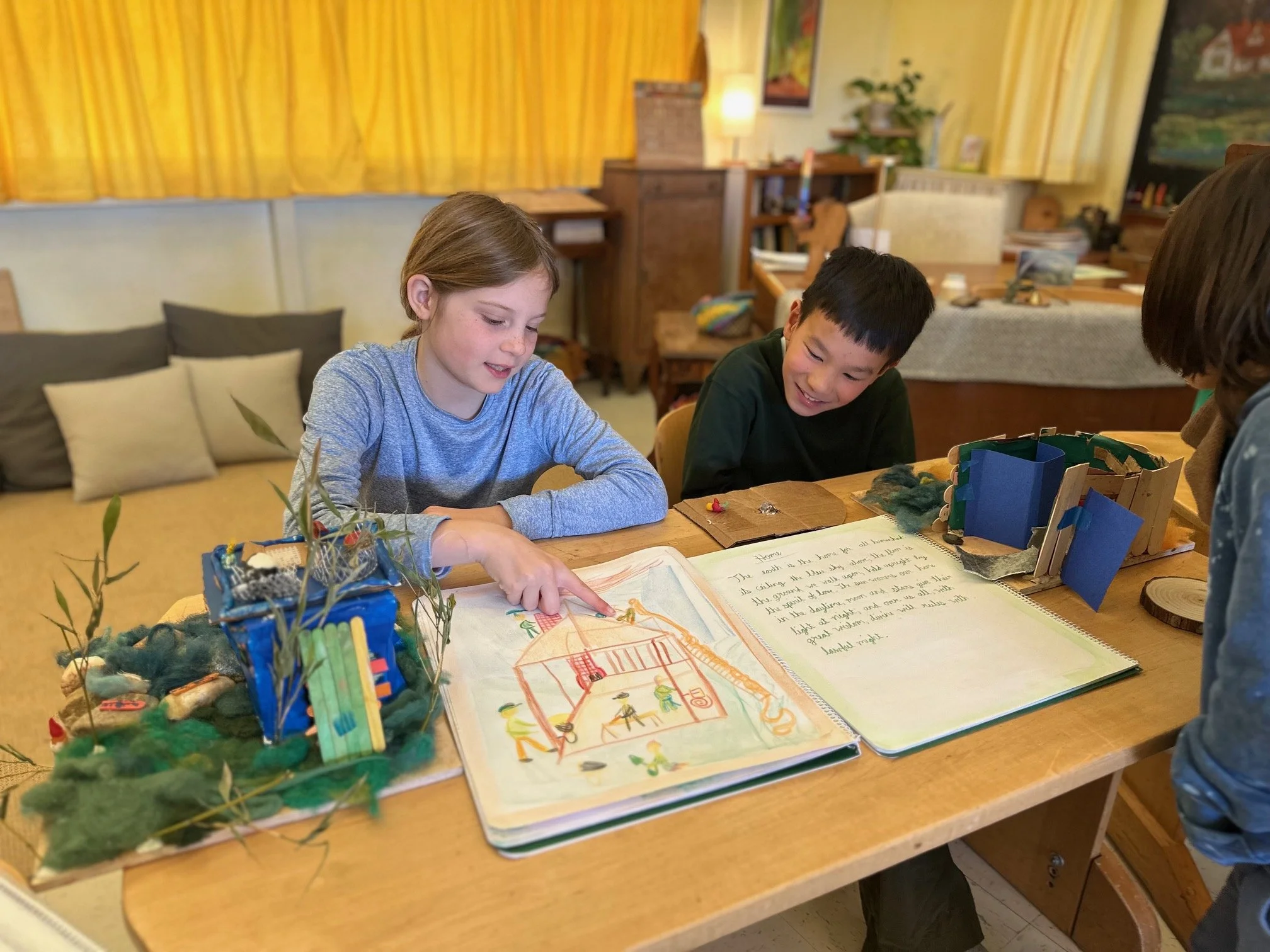
The study of practical arts like farming, gardening, shelter-building, and cooking are the heart of the 3rd grade curriculum.
Language Arts & Literacy: Compositions, self-editing, complex complex phonemes, sight words; Native American tales and Old Testament stories; spelling and vocabulary
Math: Telling time; measurements, weight, and volume; money; double-digit multiplication and word problems
World languages: Spanish and Mandarin
Arts, Crafts, and Music: Watercolor, form drawing, embroidery, bee’s wax modeling, recorder, singing in rounds and canons, choir, theater and performance
Movement: Collaborative games
Outdoor education: 3rd grade farm trip to Three Springs Farm
4th Grade
By 4th grade, our students are capable and enthusiastic learners, ready to dive into more complex math, science, language arts, and history.
Language Arts & Literacy: Tenses, syntax, and comparative adjectives; handwriting, punctuation, and paragraphing; Norse mythology, independent compositions; research reports,
Math: Fractions (adding, subtracting, multiplying, dividing); working with mixed numbers
Social Studies: local geography and indigenous history
World languages: Spanish and Mandarin
Arts, Crafts, and Music: Stringed instrument (violin, viola, cello), watercolor, form drawing, cross-stitch, recorder, singing in rounds and canons, choir, theater and performance,
Movement: Collaborative games
Outdoor education: Overnight field trip