Structure and Story: Our Approach to Literacy in Grades 1-5
In elementary school, Marin Waldorf School’s innovative and research-backed approach to literacy fosters capable and enthusiastic readers, writers, and communicators.
When a recent 7th grade class staged a production of The Imaginary Invalid by French playwright Molière, you might have been surprised to see 1st and 2nd graders held rapt by the 17th-century prose—and quick to laugh at the play’s many gags and parodies.
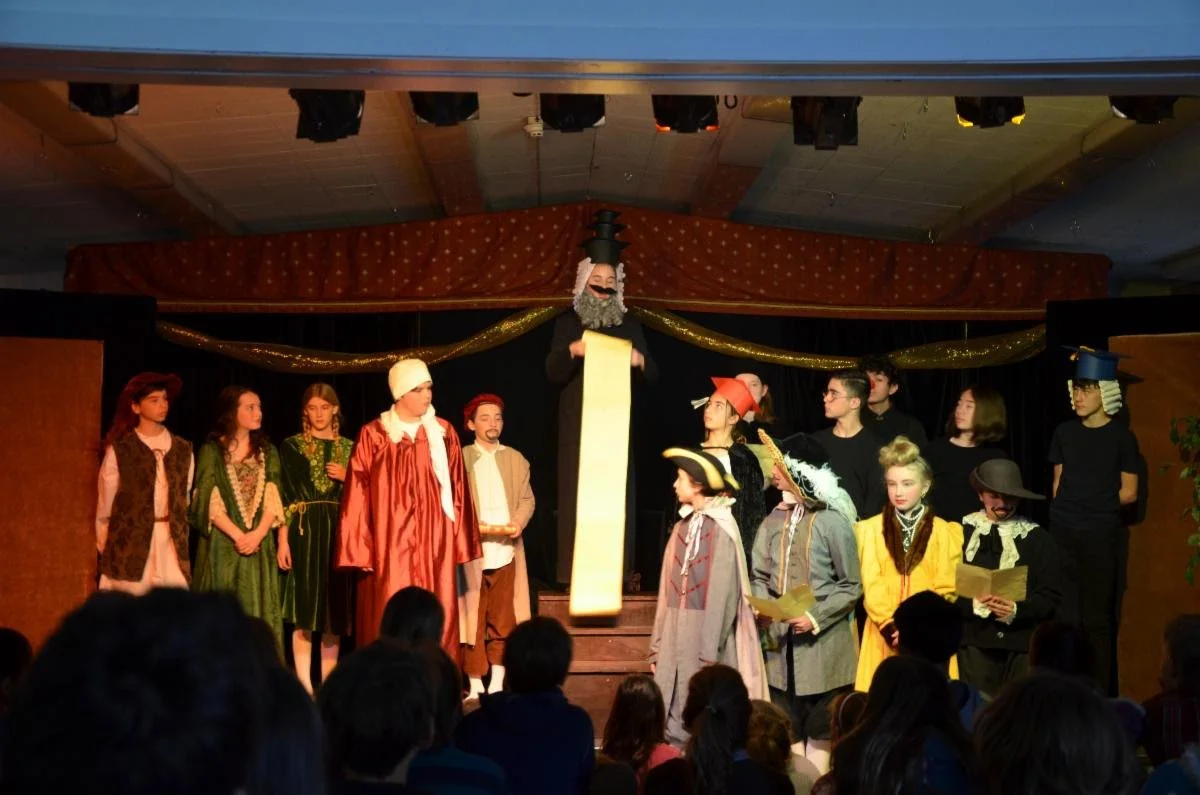
The Class of 2021 performs Moilere’s The Imaginary Invalid.
At Marin Waldorf School, children aren’t intimidated by difficult vocabulary, complicated plot lines, or sophisticated syntax—in fact, they begin listening to complex stories in preschool and kindergarten, and continue to learn through folktales, mythology, biographies, theater, poetry, and other written and oral texts throughout elementary school.
A focus on rich language and storytelling is just one of the many ways our school’s literacy program is unique. Here, through a creative and research-backed approach, we teach our students to read and write with confidence and skill, while thoughtfully encouraging a love of reading, writing, and language that will last throughout their lifetime.
Read more about our approach to literacy below.
Age-Appropriate Instruction
Waldorf education is based on a deep understanding of human development and current scientific research about how children learn. Research shows that when reading and writing skills are taught at an appropriate age, the experience is far more likely to be positive and self-motivated.
At Marin Waldorf School, the approach to literacy is carefully sequenced to build foundational skills—like comprehension, vocabulary, and mental picturing—before beginning formal instruction in reading and writing in 1st grade. Our goal isn’t to rapidly build up reading skills to meet benchmarks, but to guide students in becoming engaged, capable, and confident readers and writers, who will find joy in literature and language throughout their lifetime.
“The job of teaching is to assess where your children are and give them the most appropriate teaching related to their level of development," says Dominic Wyse, a professor of education at University College London, in an article on early literacy published by the BBC. With this in mind, our program approaches literacy from multiple angles, building diverse and complementary skills.

Creative and Multisensory Literacy Learning
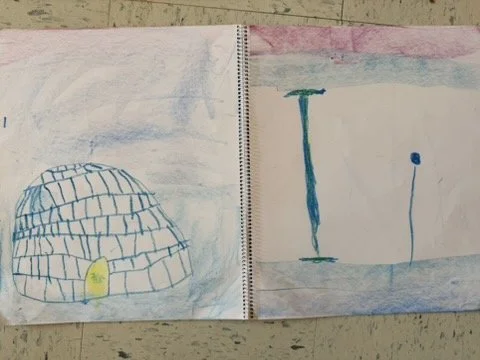
Our core literacy curriculum follows a carefully designed scope and sequence that emphasizes the joy and creativity in learning to read and write. In 1st grade, letters are introduced through imaginative stories and pictures, allowing children to form a personal connection with each symbol. From these, children begin building simple words and sentences.
The study of letters, their sounds, and their qualities is complemented by a range of multisensory activities that support foundational literacy, such as form drawing, listening to fairy tales, reciting verses, and illustrating stories, among other activities. This work is in turn complemented with a program in structured literacy (see below) that continues throughout elementary school.
The multisensory approach to learning supports the development of increasingly complex literacy skills over the course of 2nd and 3rd grade, with students beginning to take on independent reading at home, learning the basics of grammar, and building vocabulary and spelling rules, among other foundational skills. Class teachers continue to build these abilities through art, movement, recitation, music, and story, creating an environment rich in language and creativity.
A Program of Structured Literacy
Alongside our school’s innovative language arts curriculum, class teachers are trained in structured literacy, using a research-backed approach to instruction that breaks reading, writing, and spelling down into smaller skills involving letters and sounds.
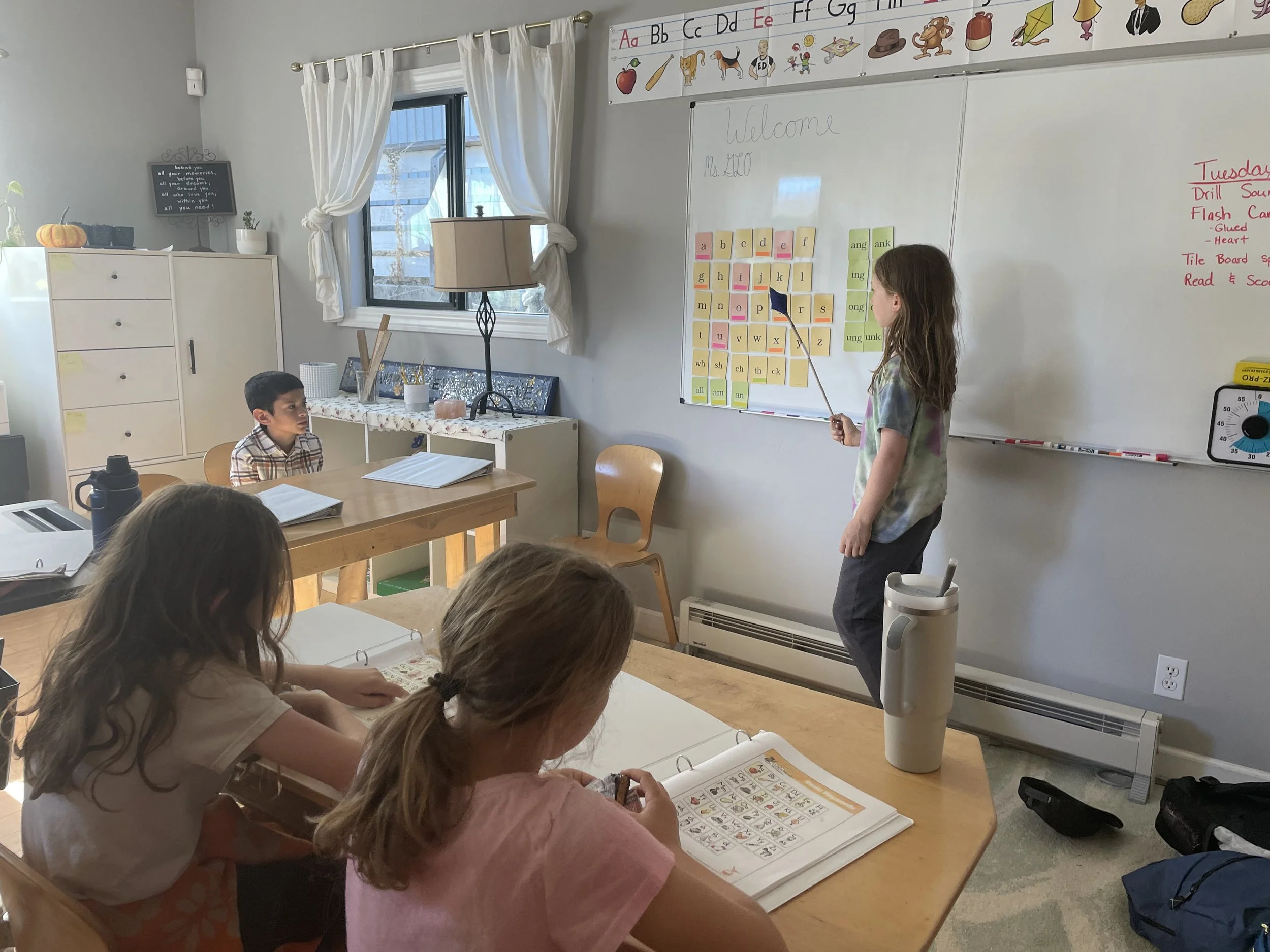
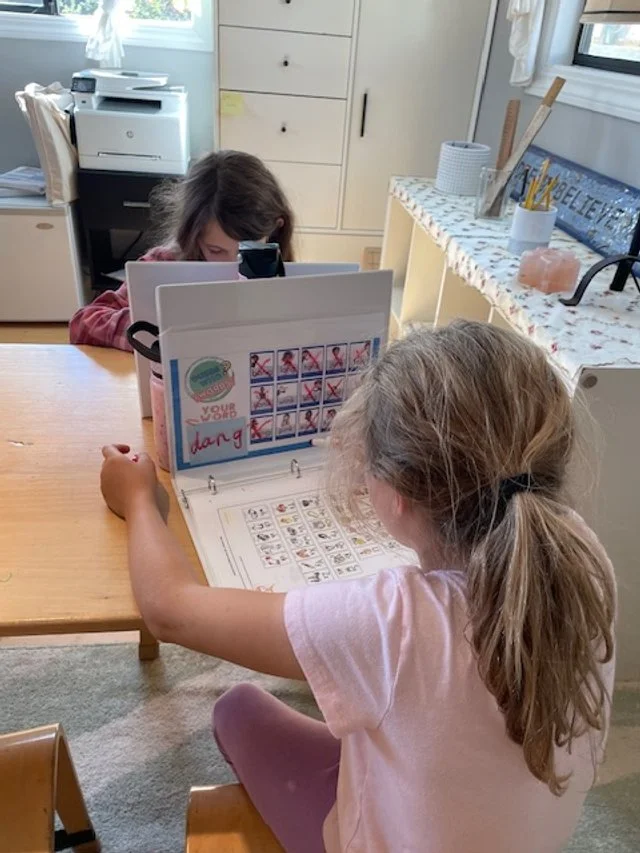
Structured Literacy begins in 1st grade with weekly word study classes and expands in 2nd grade and 3rd grade language arts, as students dig deeper into phonics and decoding skills. In these grades, students continue to build literacy skills at their own pace and level, but many reach new fluency.
As part of our effective structured literacy program, teachers are supported by our educational support director and literacy expert Greer Lanzet-Ourian. Working together with faculty, Ms. GLO assesses students against national benchmarks and the MWS Scope and Sequence.
A Focus on Story Across the Curriculum
At Marin Waldorf School, literacy is woven into the curriculum across subject areas, connecting reading and writing with history, science, mathematics, and the arts. This integrated approach means that literacy goes beyond decoding words, prompting children to “read to learn” and to understand the world through language.
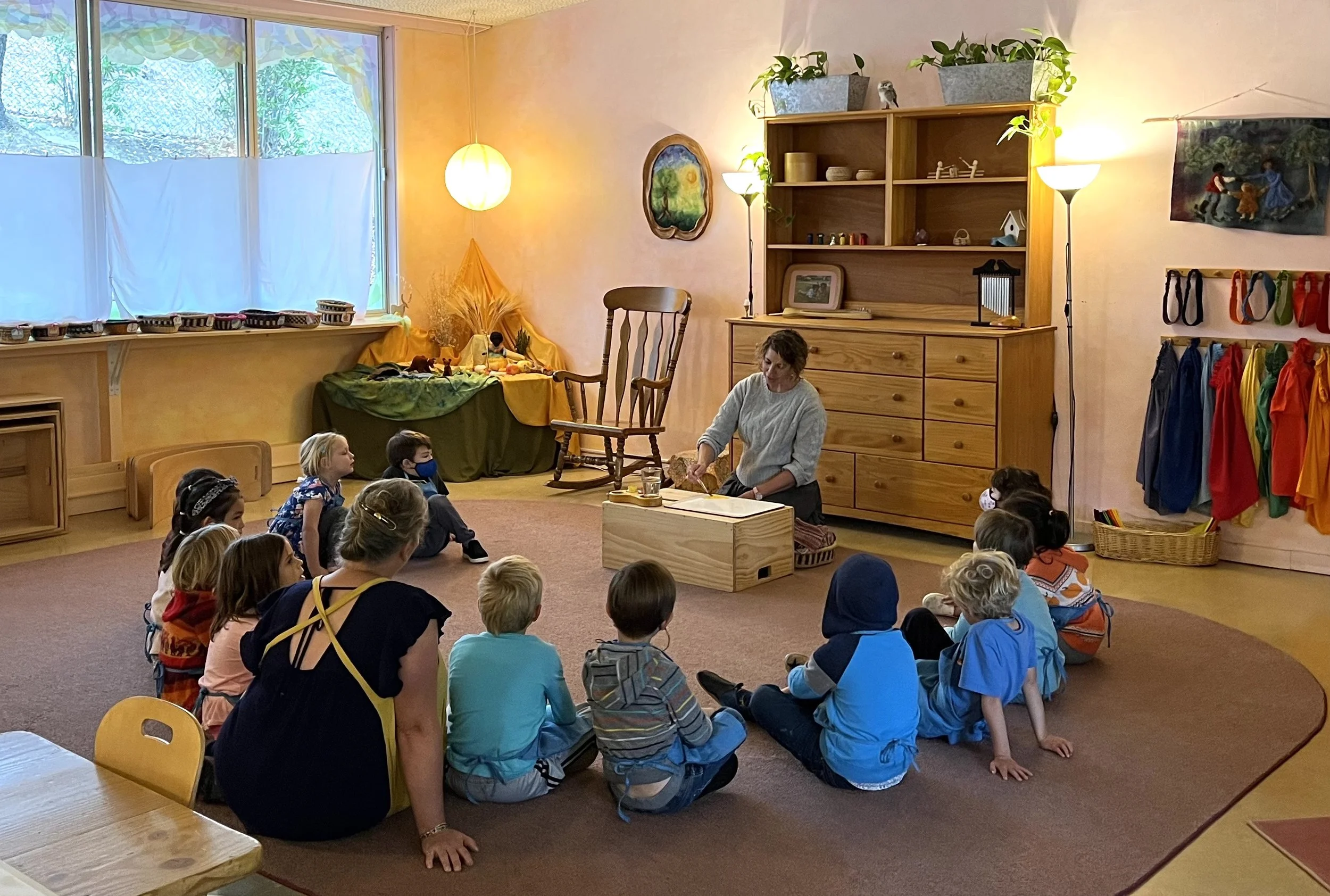
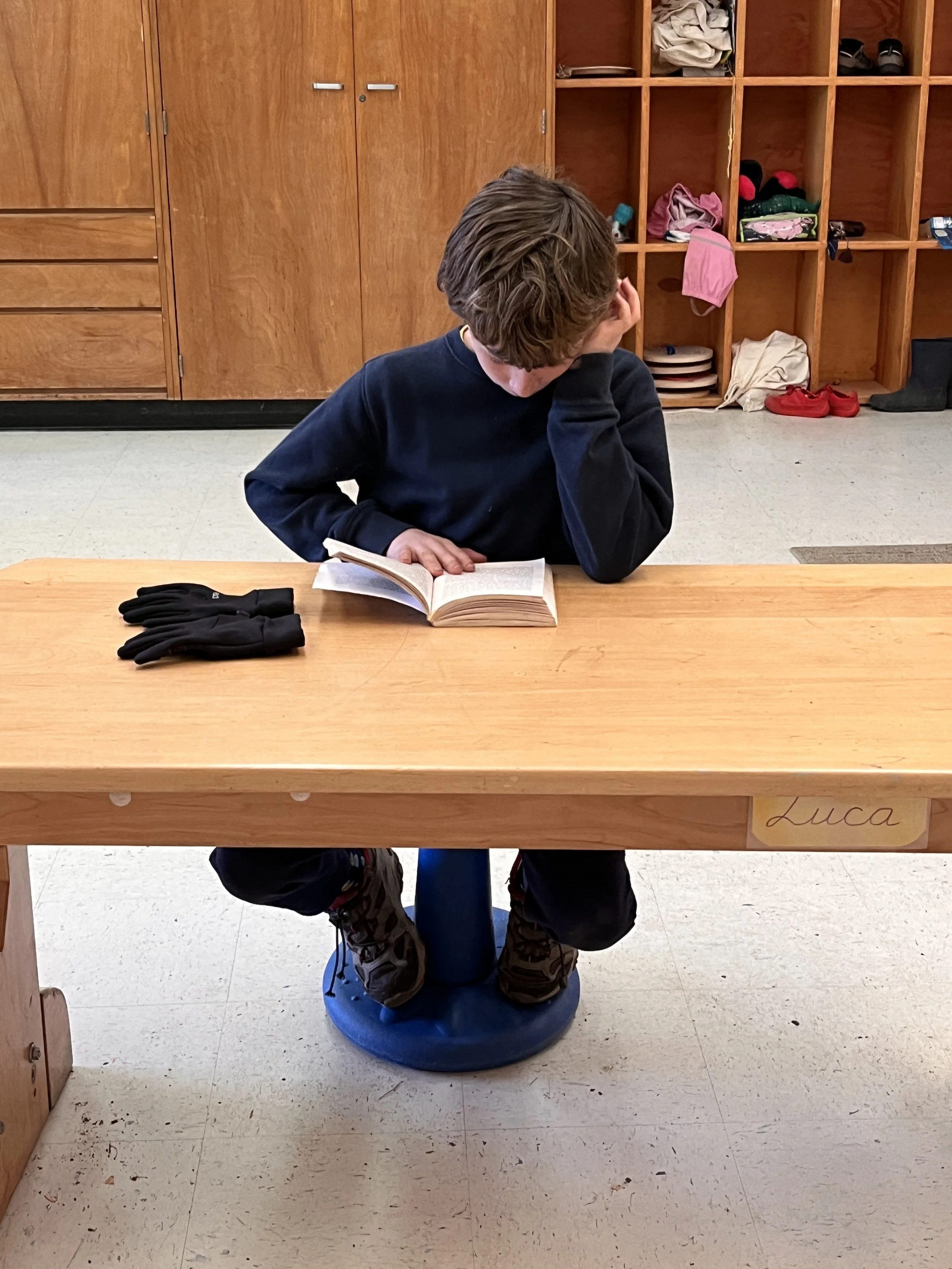
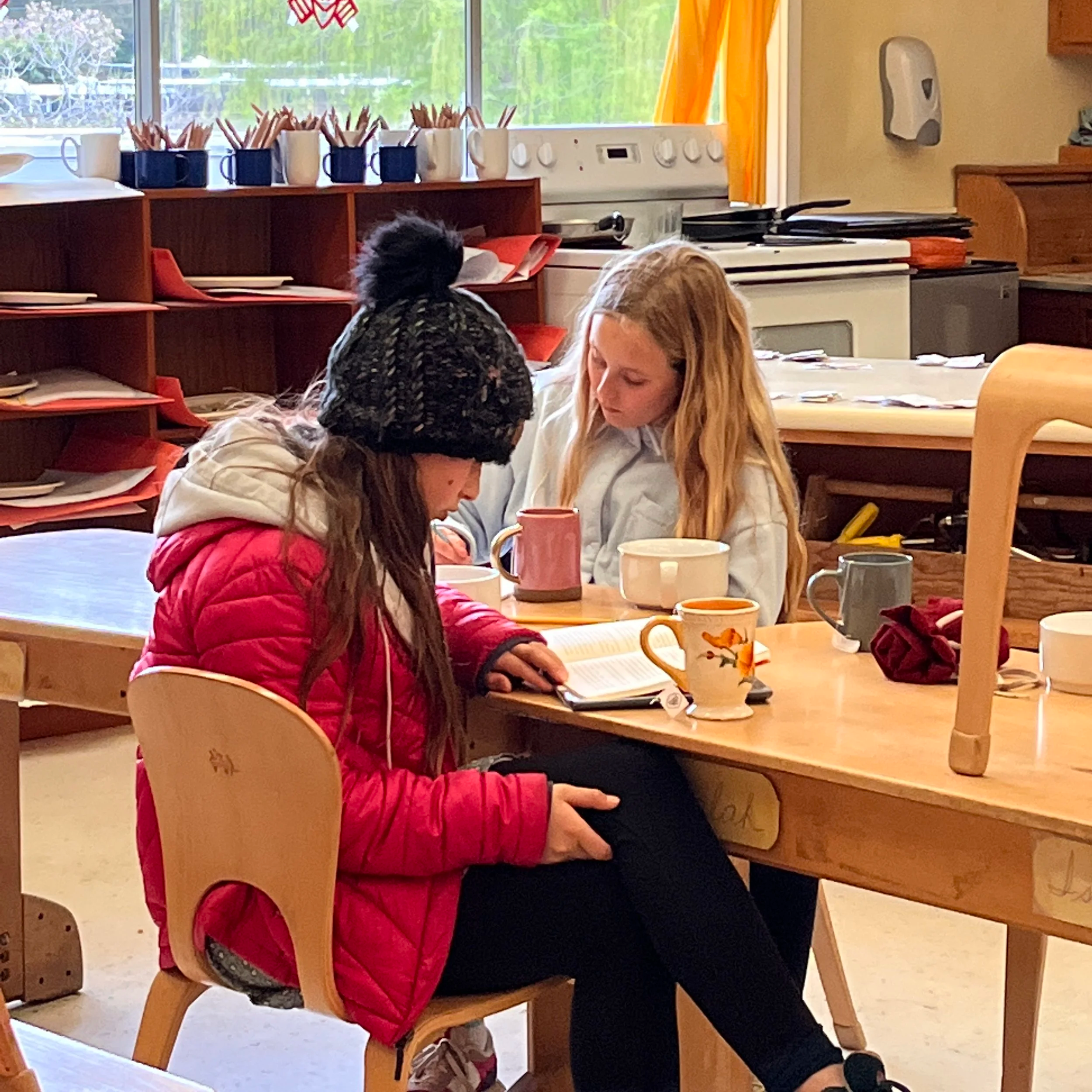
Structured literacy instruction continues throughout elementary school; with this support, students become confident, competent, and enthusiastic readers by 3rd and 4th grade, ready to tackle longer chapter books and readers at home and at school, and—importantly—to discuss and analyze their reading in class.
As children become more competent readers, they also have an opportunity to become more independent in their reading. In every Marin Waldorf School classroom from 1st to 5th grade, there’s a cozy nook with bookshelves, pillows, a rug to recline on, and maybe a couple of beanbag chairs. It’s a space for silent reading, often used on rainy afternoons or during the last half of a language arts class.
Speaking and Public Performance
A strong emphasis on public speaking, oral communication, and performance distinguishes the Marin Waldorf School approach to literacy, contextualizing reading and writing skills within the larger world of communication and connection.
According to a 2022 article from the BBC, “Studies also show that reading ability is more closely linked to a child's vocabulary than to their age, and that spoken language skills are a high predictor of later literary skills.” Building on that understanding, students at MWS memorize and recite verses and poems as a class, memorize lines for their class play, sing and perform seasonal songs, and read out loud—learning pronunciation, building vocabulary, and building confidence in public speaking through these activities.

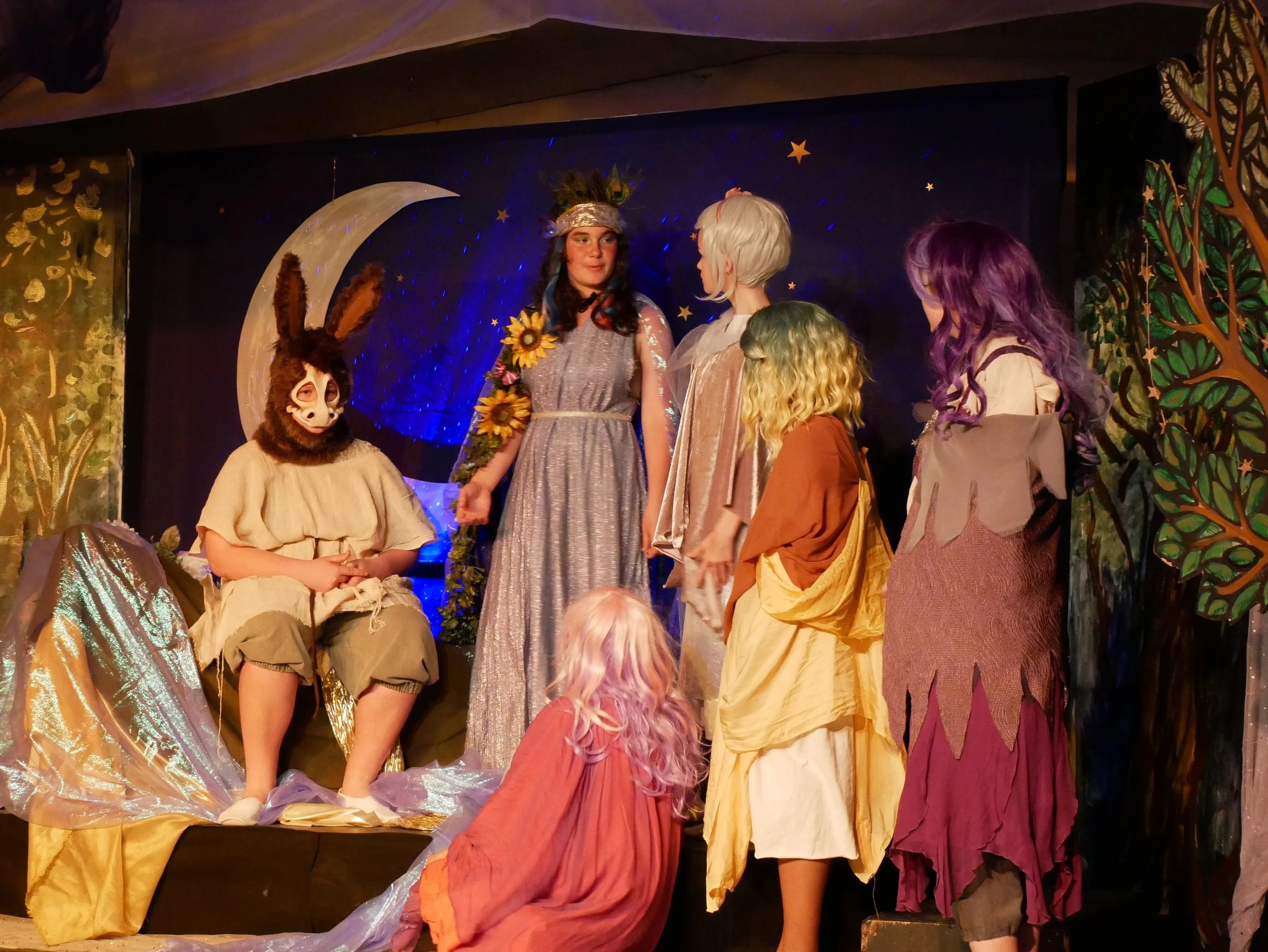
Drama is likewise an integral part of building communication skills at MWS. Each class puts on an annual play—such as the 7th grade’s wonderful Moliere—which encourages students to engage deeply with texts and their meaning, in addition to supporting their presentation and public speaking skills. Importantly, students also have the opportunity to watch each other perform, giving younger students an opportunity to look ahead to the skills and experiences that await them in later years.

Get to Know Marin Waldorf School
Give your child the joy of reading! Learn more about Marin Waldorf School’s approach to literacy and language arts. Sign up for a campus tour or schedule a phone call with our admissions team here.